L.A. City Bikeway Mileage Tanked in Fiscal Year 25-26
This is Streetsblog L.A.’s annual review of the past year of L.A. City bikeway implementation – the good, the bad, and the meh. In Fiscal Year 2025-26, the city’s output was 16.2 lane-miles of new or improved bike facilities. This is less than half of the 35.6 miles completed last fiscal year, and is just over half of the city’s ~30 miles/year average for the past decade. It is the lowest annual total since FY 2018-19.
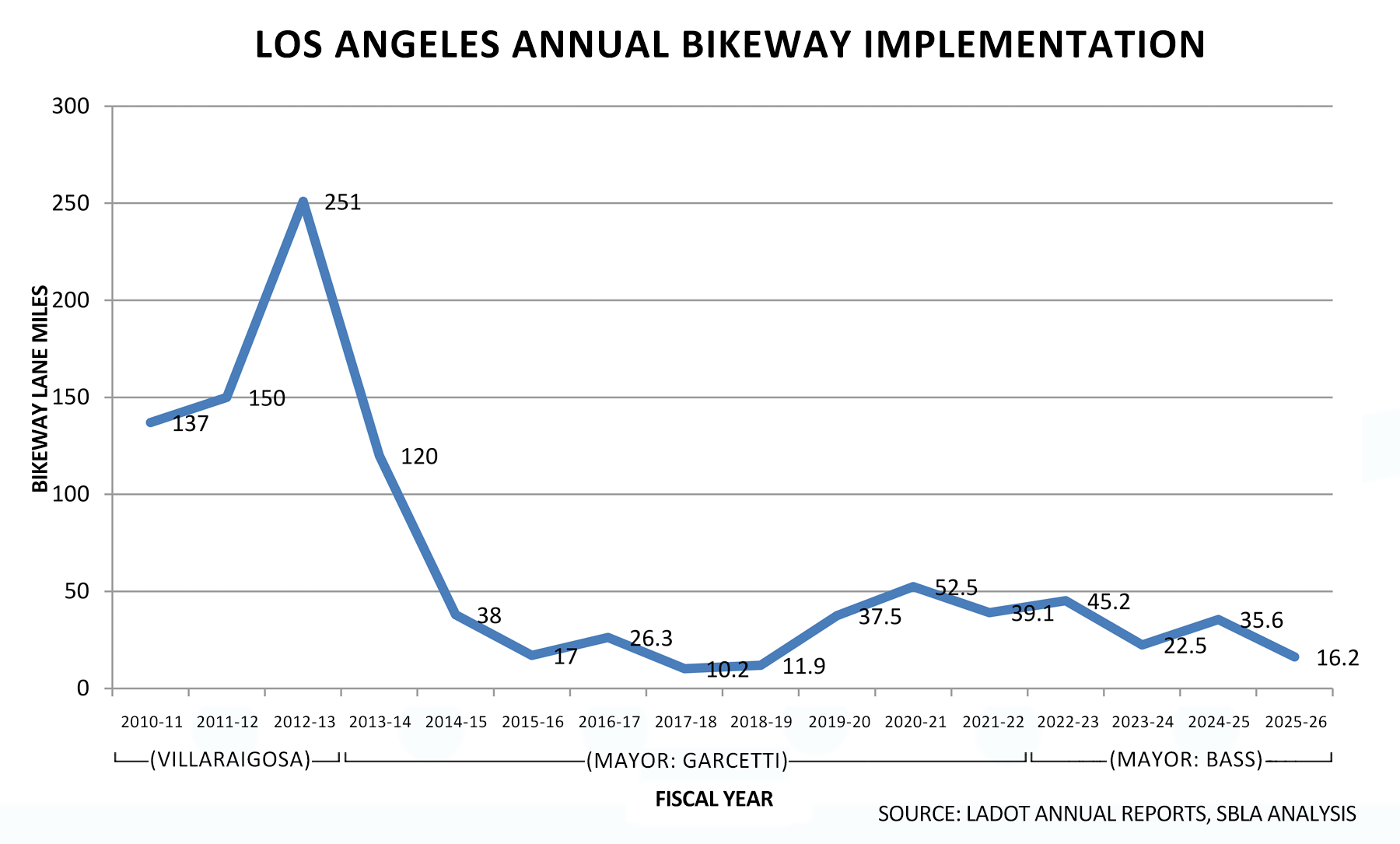
Bikeway mileage data is from the Transportation Department’s (LADOT) FY2425 bikeways list [page 2], reconciled in SBLA’s annual spreadsheet. This post uses LADOT’s “lane-miles” standard, which counts a two-way one-mile-long facility as totaling two lane-miles.
The FY25-26 19-mile total includes 7.5 miles of new bikeways, 5.3 miles of removed bikeways, and 14.1 miles of bikeway upgrades.
You read that right, L.A. removed five miles of bike lanes. More on this below, but for the East San Fernando Valley light rail, Metro and LADOT chose to “replace” existing Van Nuys Boulevard bike lanes with a shorter stretch on Terra Bella Street.
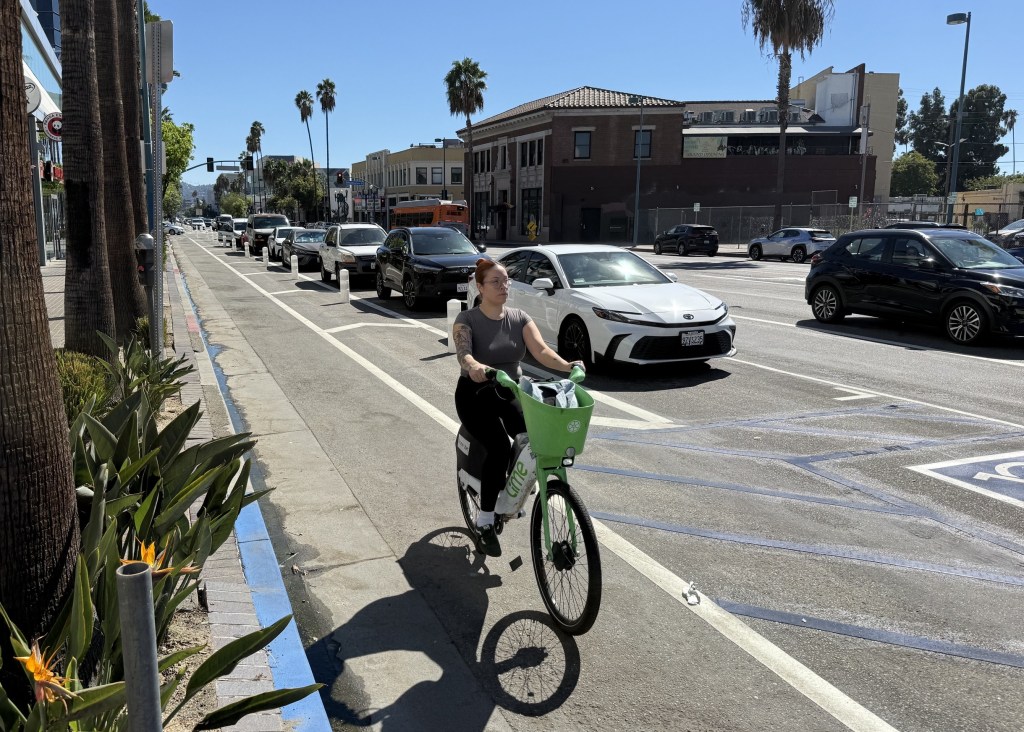
This annual SBLA post tallies higher quality projects (though bicyclists disagree on what constitutes a quality bikeway). Overall, this year’s output was mostly higher quality. Not counting bike routes (generally near-worthless sharrows), this year’s (quality net) output was 1.1 new lane/path lane-miles. The city managed to add only just over one new lane-mile to its bike lanes/paths network in a full year. Significant quality upgrades (upgrades resulting in protected bikeways) totaled 9 lane-miles, much of it in Griffith Park and on MLK. These upgrades are positive and needed, but they do not further extend the city’s inadequate bike network at all.
The quality projects total 10.1 miles this year, compared to 35 miles last year.
Below are some factors that influenced this year’s output:
- Project Delays – L.A. is having a difficult time getting bike projects done. Delayed projects are sometimes watered down, sometimes canceled. As the timelines drag out, project supporters are subjected to multiple rounds (often years) of public input meetings and car-centric surveys. The city too often cancels grant-funded projects, forfeiting the funding received.
The most high profile delay example is Forest Lawn Drive bike lane improvements, initially announced in 2023 as expected to be installed in 2024, then delayed for several years. In May, Mayor Karen Bass formally directed city departments to pause the safety upgrade; now it appears that state legislation could kill the project.
Many less high profile bike projects – Chandler Boulevard (now under construction), Westwood Boulevard, Sunset Boulevard, Marmion Way, Jefferson Boulevard, the L.A. River (central and Valley projects), Exposition path, etc. – have suffered significant delays. - Street Resurfacing Changes to Resist to ADA/HLA – For at least the past half-dozen years, LADOT has installed many new bikeways and upgrades during Bureau of Street Services (StreetsLA) road resurfacing. This connection was largely broken over the past year, when StreetsLA changed resurfacing practices, largely to avoid installing features now required under ADA (Americans with Disabilities Act) and Measure HLA (Healthy Streets L.A.). From July through much of April, StreetsLA stopped fully resurfacing streets, instead shifting to inefficient “large asphalt repair” [video explainer]. Then, from late April through June, StreetsLA resumed some resurfacing, though they focused almost entirely on resurfacing streets without sidewalks [video explainer] and avoided streets designated for bikeways.
Previously, resurfacing typically coincided with 5-15 miles of new/upgraded bikeways. In FY25-26, no new bike bikeway coincided with resurfacing. Just two upgrade projects (Sherman Way and part of MLK) coincided with about 2.9 bikeway-lane-miles of resurfacing. - Protected Bikeway Hardening – This year, LADOT began reporting a new category of bikeway projects: “hardening.” The department has been adding new concrete and rigid plastic barriers, mainly to beef up existing plastic-bollard-protected bike lanes. This new hardening is welcome and makes cyclists safer. Streetsblog has included newly hardened mileage as bikeway upgrades.
The Good
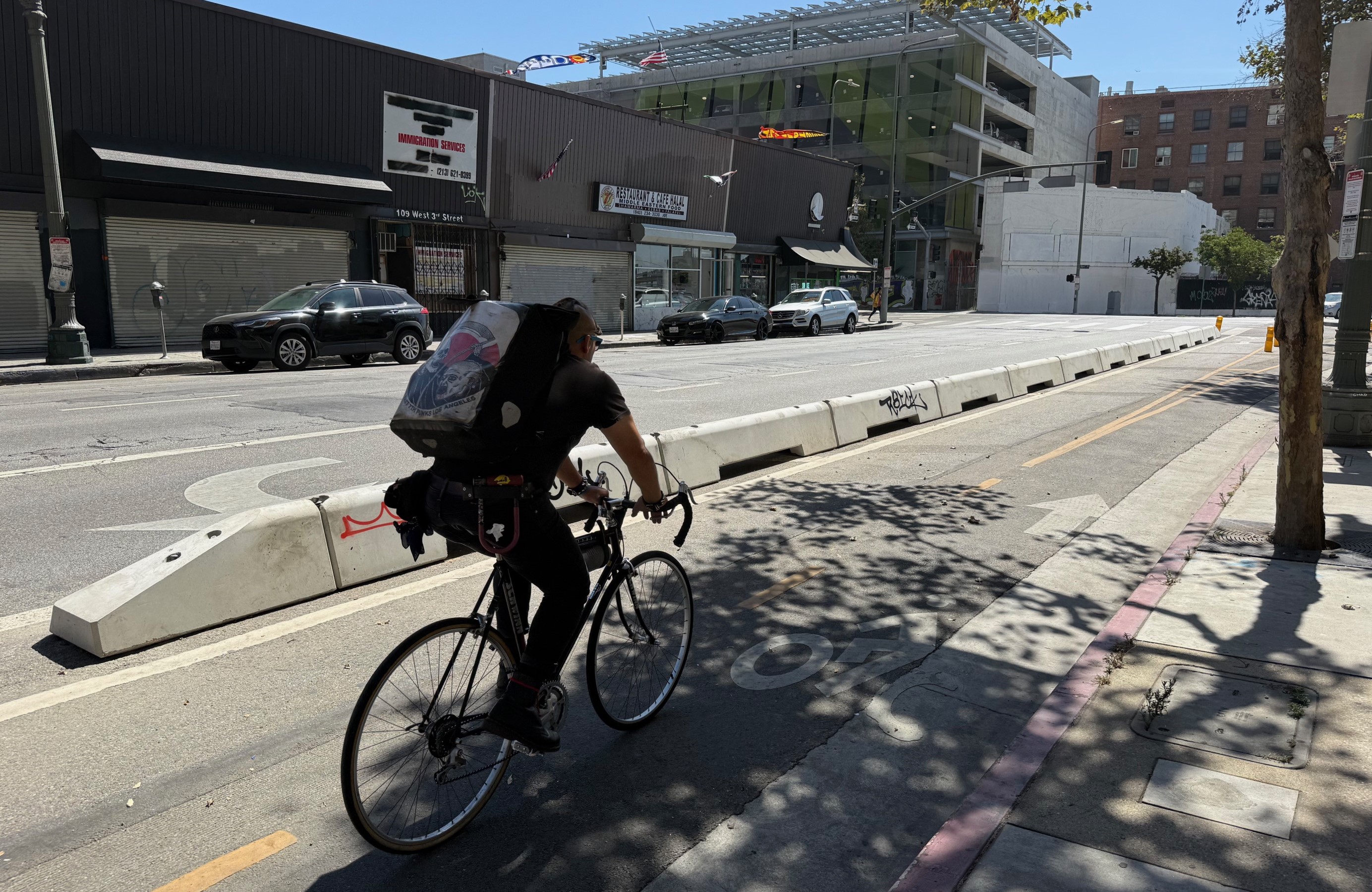
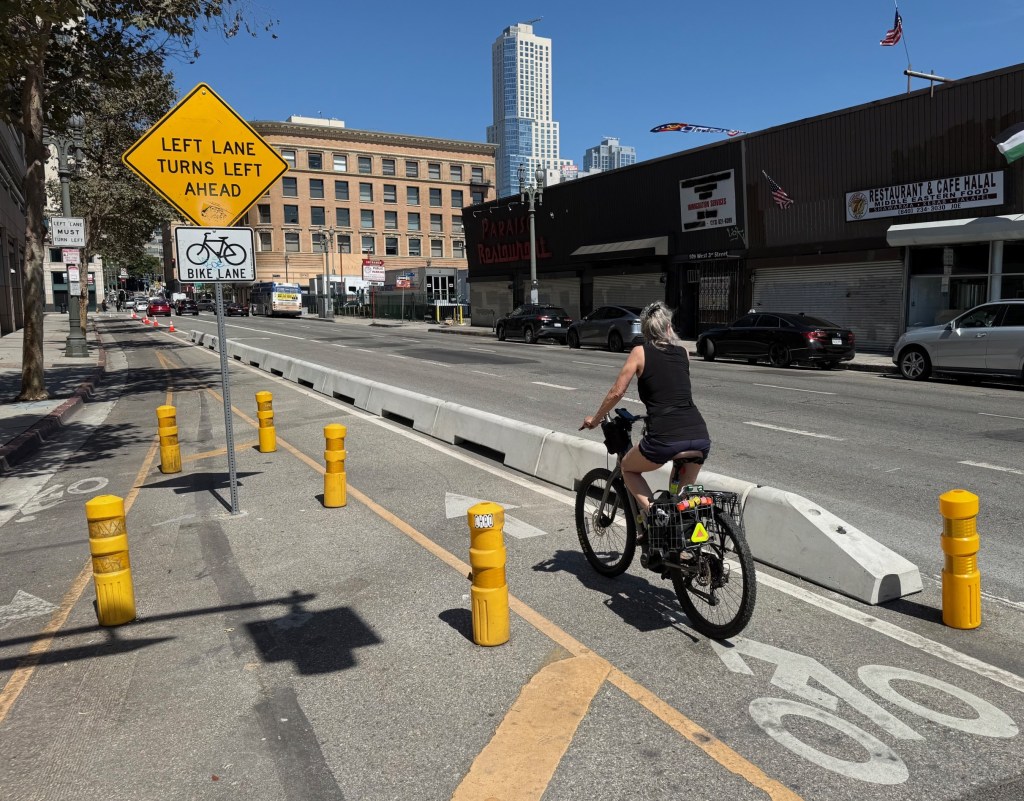
One of the most promising LADOT initiatives last year was the the city’s first Toronto Barriers, on 3rd Street in downtown Los Angeles. Modular Toronto Barriers are built out of concrete and stand about two feet tall, sort of like a mini-Jersey Barrier. Third Street’s overall installation measures about 600 feet – from Main Street to Spring Street. The concrete bike lane protection says strong and permanent and safe in ways that the city’s typical plastic-bollard-protection cannot.
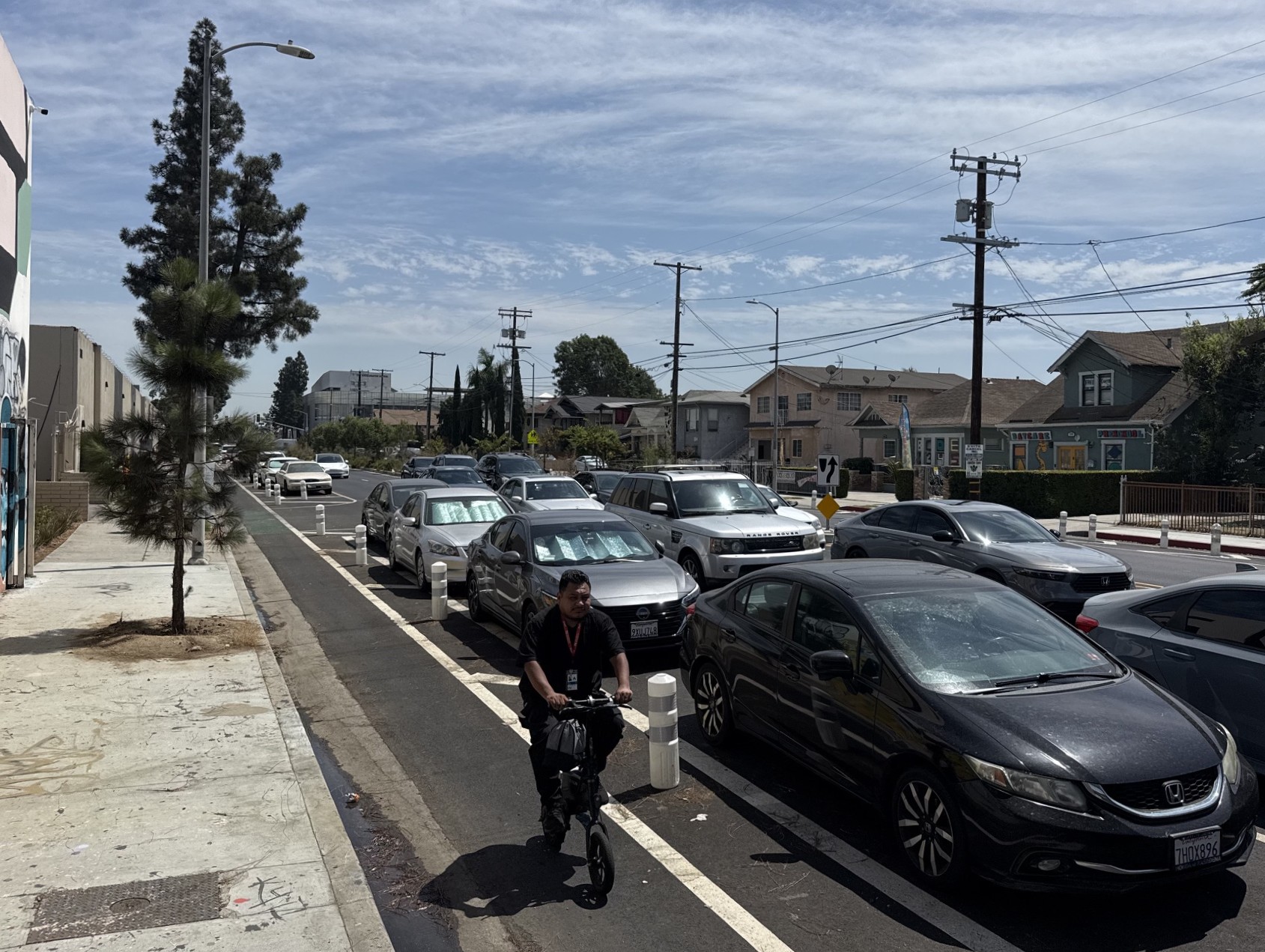
As part of a Metro grant-funded first/last mile project, LADOT and StreetsLA upgraded a couple of miles of Martin Luther King Jr. Boulevard. The MLK project mainly added new parking-protection to existing unprotected bike lanes between Central Avenue and Broadway Place (plus sharrows east of Central) and sidewalk improvements.
The MLK Blvd. improvements are complete, and the project is set to install protected bike lanes on two more streets (39th Street and Broadway Place) this fall.
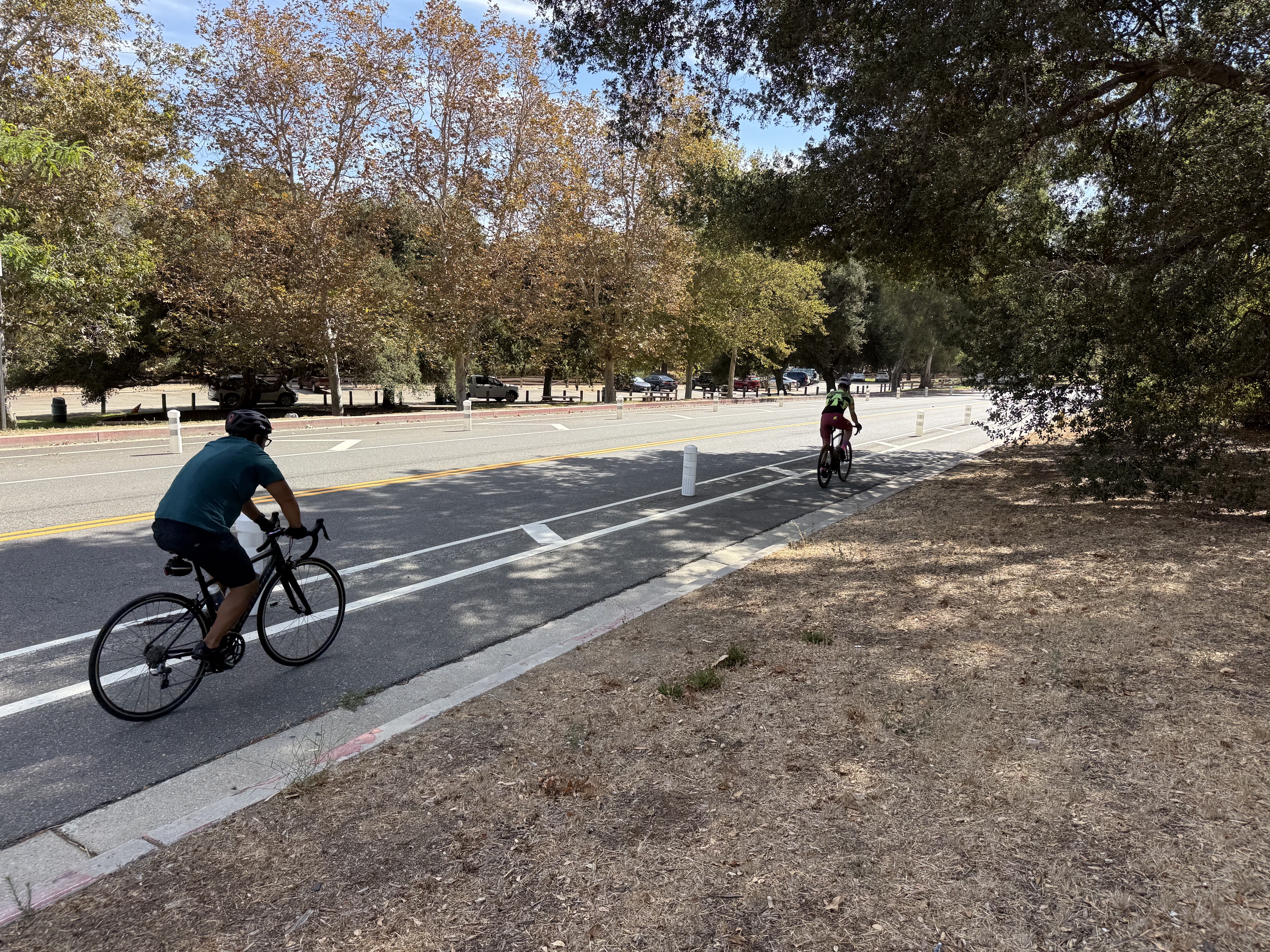
In response to a fatal car vs. cyclist hit-and-run crash in 2022, the city is slowly upgrading some bicycle facilities in Griffith Park. In FY25-26, the city added plastic bollard protection along nearly all of Zoo Drive. Installation also got underway for protection along much of Crystal Springs Drive, too, but was not completed until after July, so it will be included in next year’s totals.
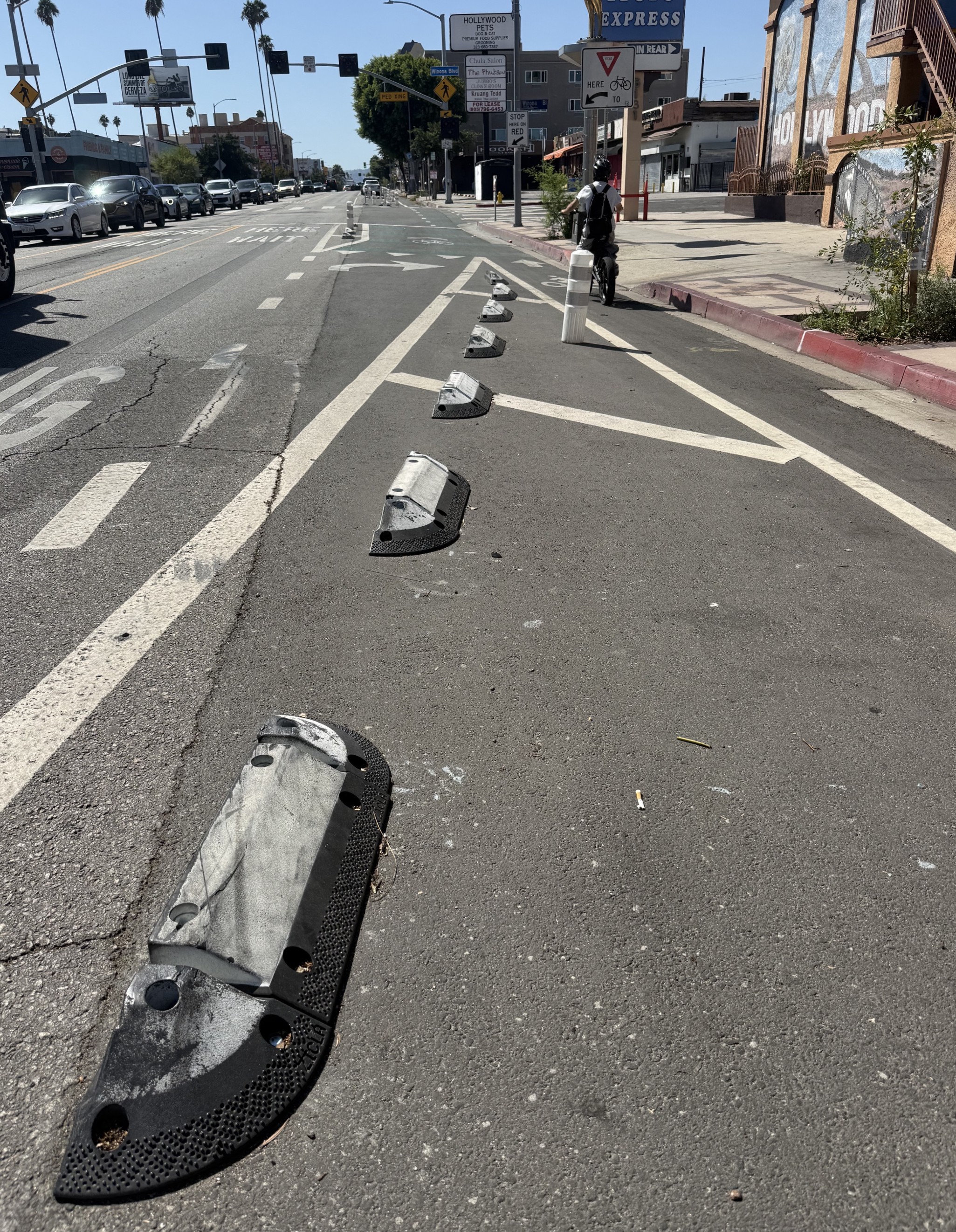
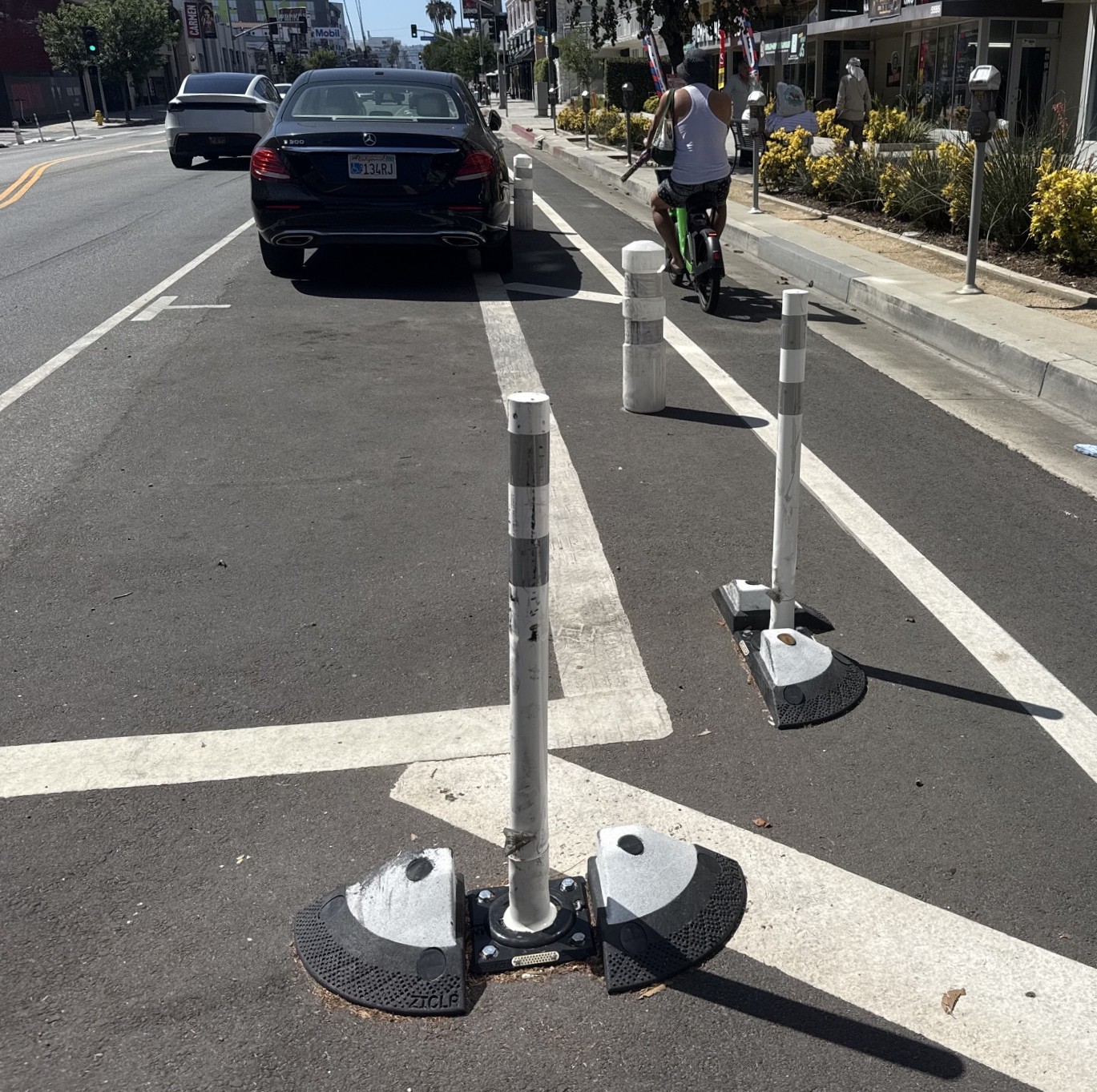
When the city opened new parking-protected bike lanes on Hollywood Boulevard in 2024, they included plastic bollards to keep drivers out of the bikeway. Though many drivers avoid the plastic bollards, some run over them, destroying or damaging them, making the protected bikeway less effective, less safe. The city has been taking steps toward addressing this by adding new hard-plastic barriers (sometimes called “armadillo” protection, though that is a brand name) to existing protected bike lanes, including on Hollywood Boulevard.
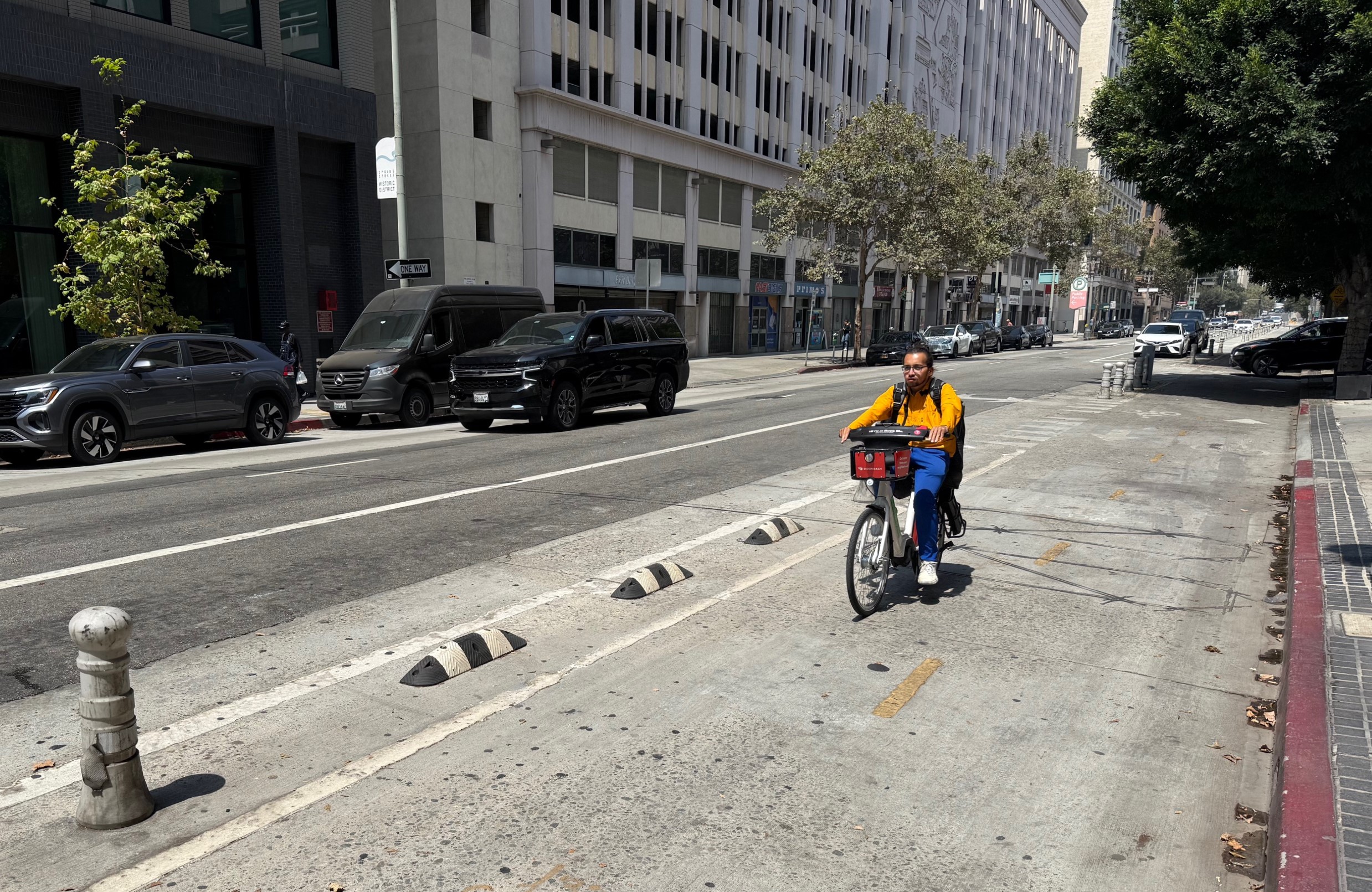
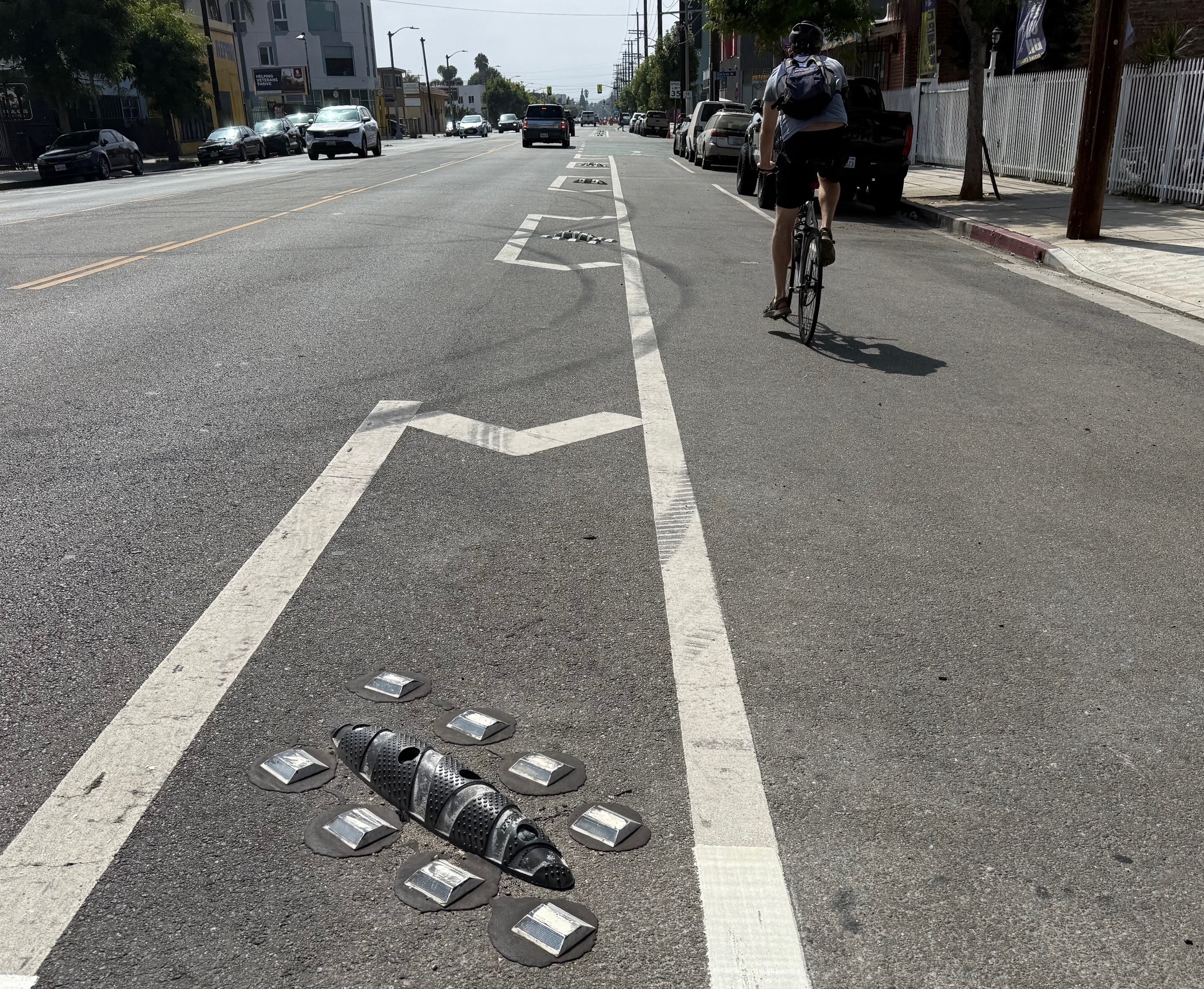
LADOT similarly added hard plastic barriers along Spring Street downtown, and along Adams Boulevard in South Los Angeles.
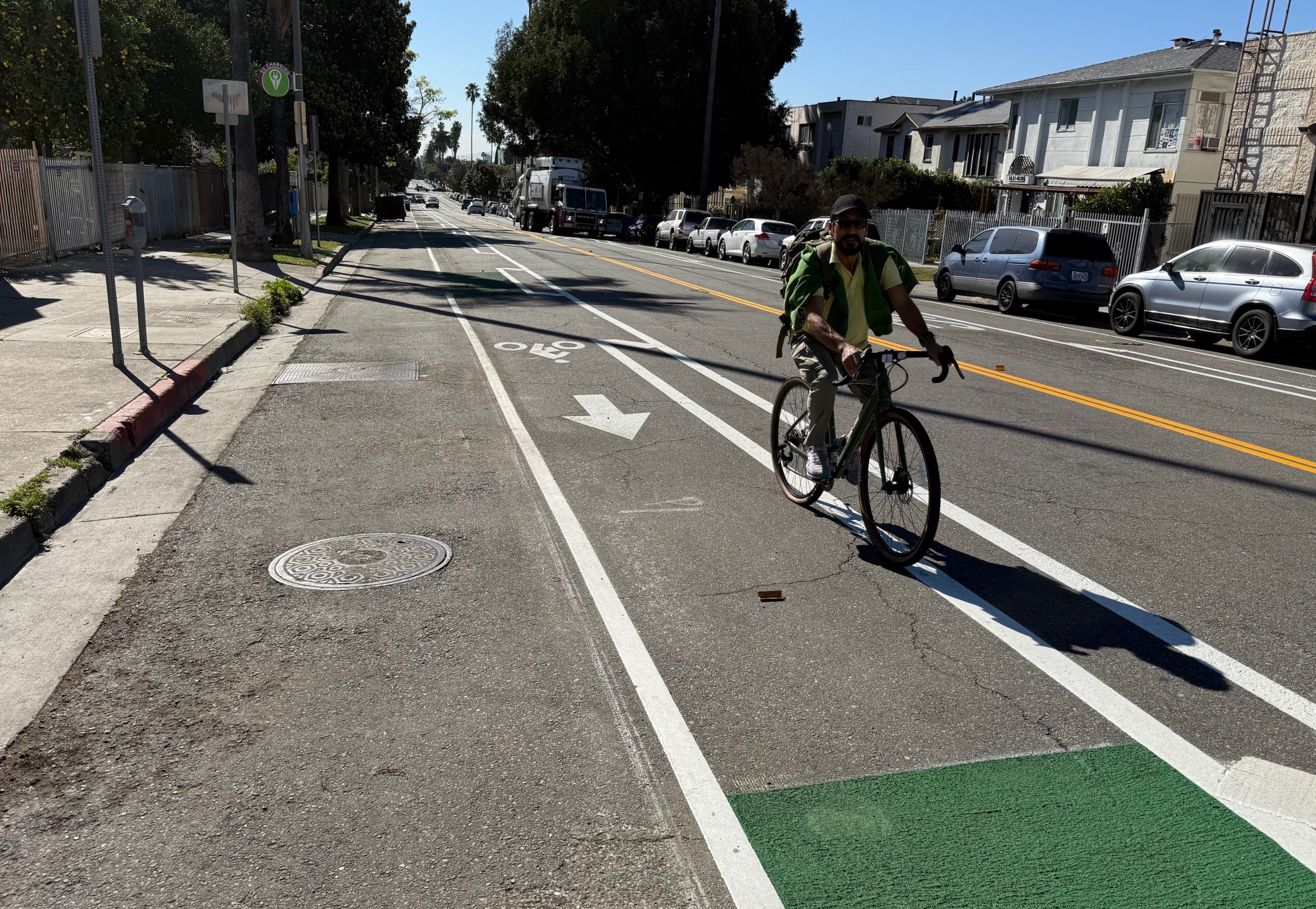
On Hobart Boulevard, the city added about a lane-mile of mostly buffered unprotected bike lanes from Hollywood Boulevard to Fountain Avenue, plus a stretch of sharrowed bike route below Fountain.
The Meh
Some worthwhile new bikeways are just too short for Streetsblog to be excited about.
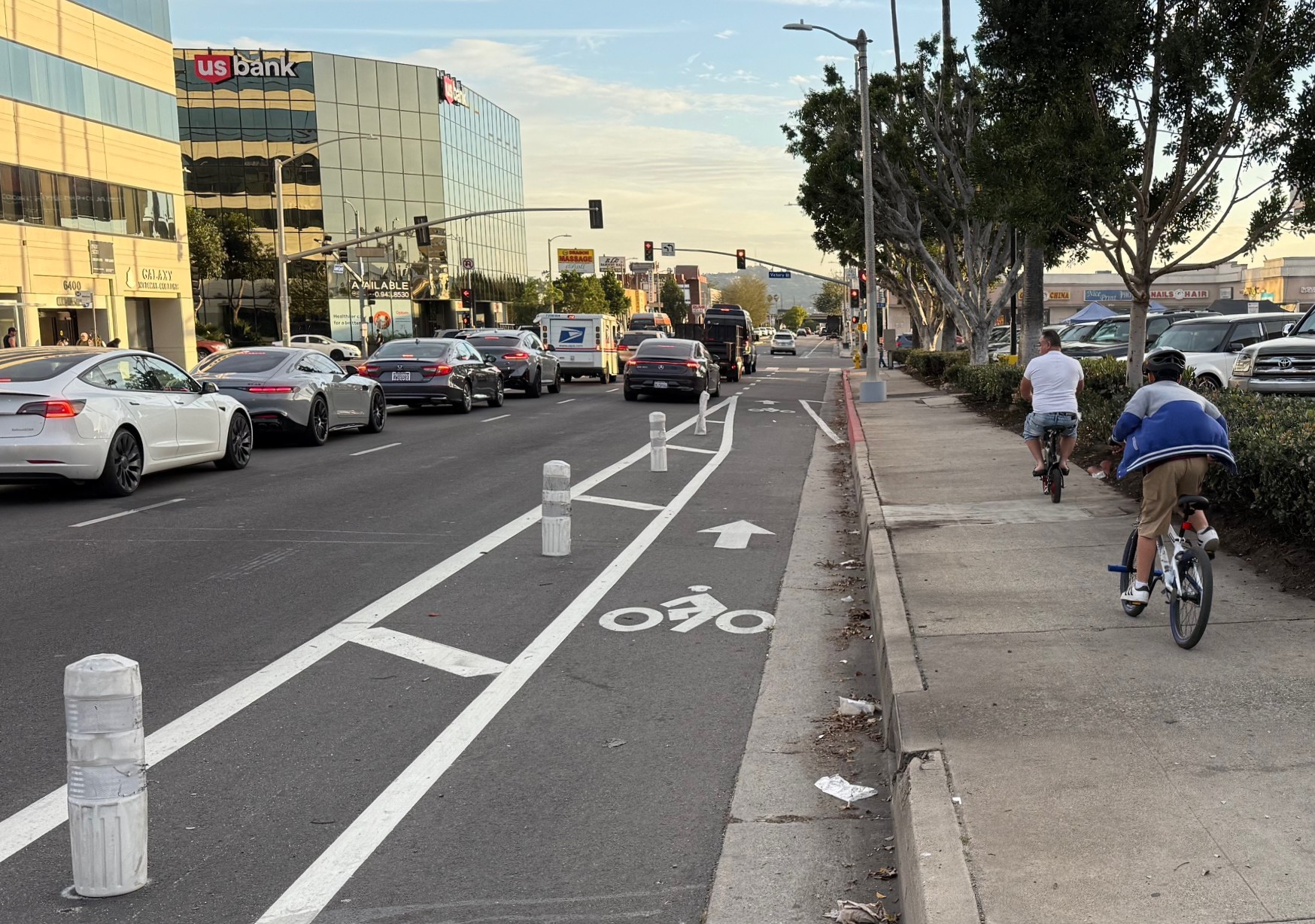
The city added one block (nearly 600 feet) of new southbound protected bike lane on Lauren Canyon Boulevard from Hamlin Street to Victory Boulevard in North Hollywood. The welcome but short facility extends modest bike lane improvements nearby completed in 2023.
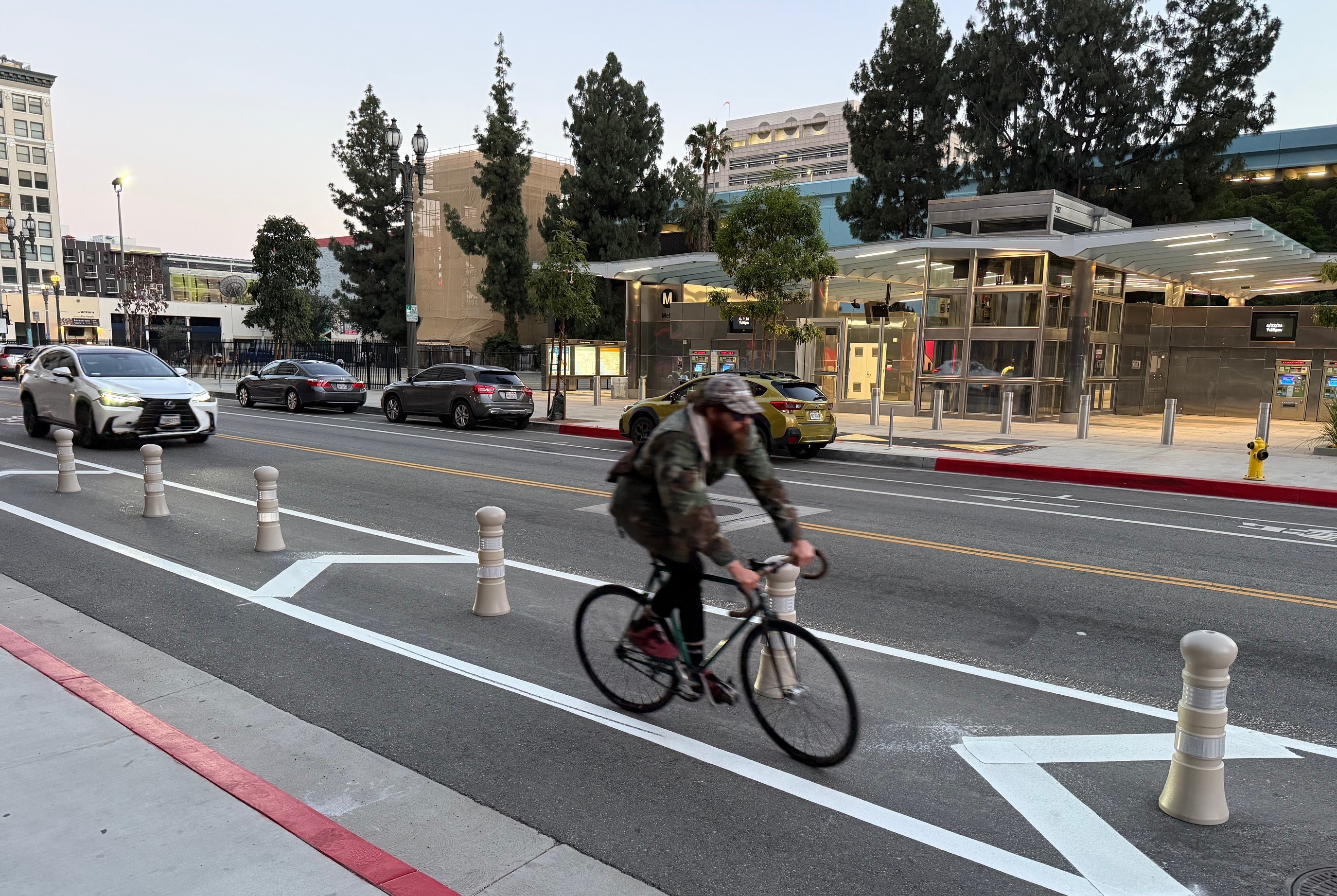
LADOT added about 250 feet of new eastbound bike lane on 2nd Street, across from the Metro Historic Broadway Station. This nearly one block of bike lane should have been installed alongside the new station when the city required Metro construction to widen the street in 2023, but at that time the city and Metro partnered to add an additional car turn lane, instead of a bicycle connection to the station.
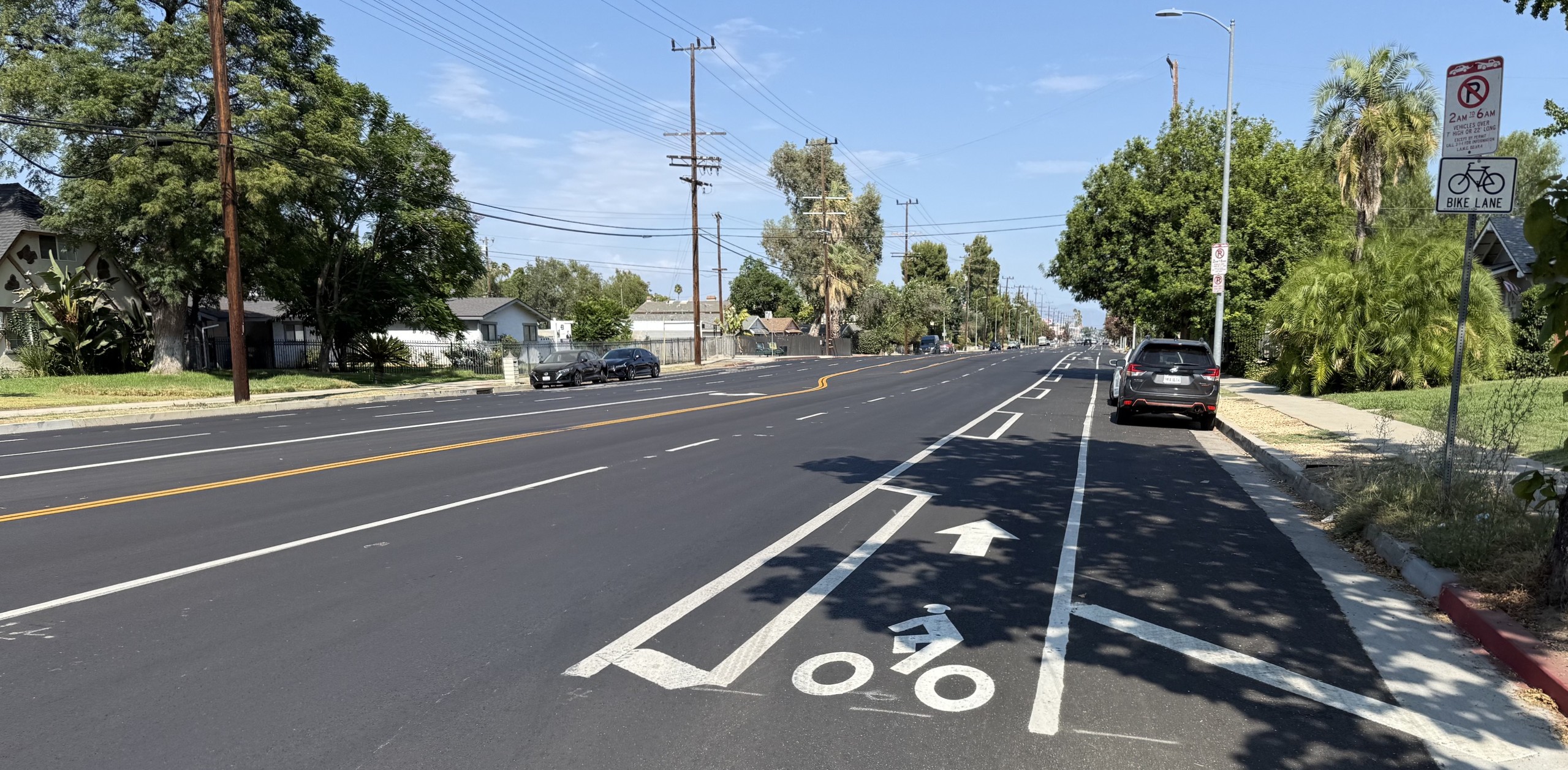
The city took advantage of resurfacing to modestly improve a half-mile of Sherman Way bike lanes, adding a new buffer to existing lanes.
The Bad
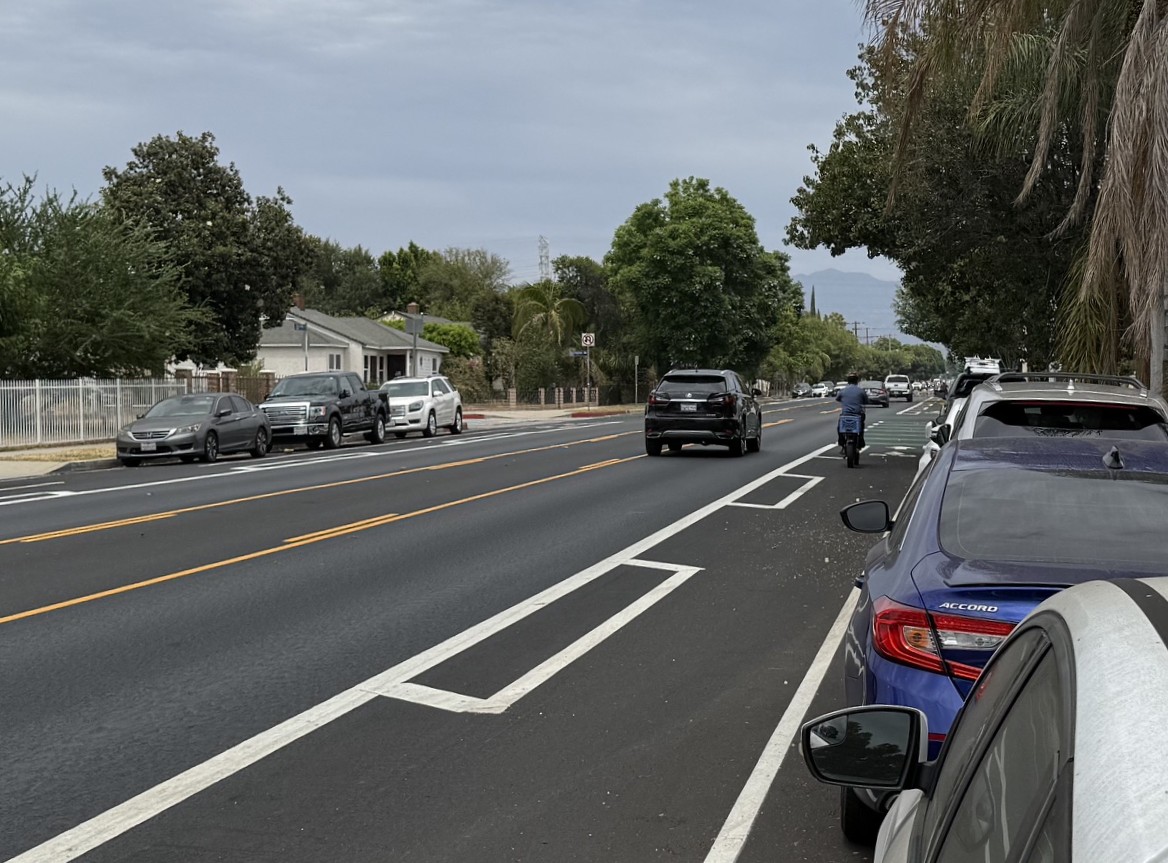
In order to maximize on-street parking along Metro’s under-construction East San Fernando Valley light rail project, the city permanently removed existing bike lanes on Van Nuys Boulevard, “replacing” then with new bike lanes on nearby Terra Bella Street.
Streetsblog covered this project in detail, noting that the replacement bikeway falls short on both quantity and quality. Overall Metro/LADOT are removing ~5.3 lane-miles (0.9 protected) while adding back just ~4.9 lane-miles (all unprotected). The premise of this swap is fundamentally anti-bike. Instead of connecting bicyclists to light rail, the city and Metro shunted cyclists away from destination-rich Van Nuys Boulevard onto somewhat out-of-the-way, largely residential Terra Bella.
Notes on reconciling reported mileage
Each year Streetsblog reconciles LADOT reported bikeway data with on-the-ground conditions. For example, LADOT did not include the new 3rd Street Toronto Barrier in this year’s bikeway list. SBLA’s annual bikeway mileage spreadsheet includes both the unedited LADOT report, and SBLA’s revised version.
For FY25-26 LADOT reported the new Terra Bella lanes, but not the Van Nuys bike lane removal. In August the DOT newsletter acknowledged the removal, noting that Terra Bella “replace[d] bike lanes on Van Nuys that were removed.”
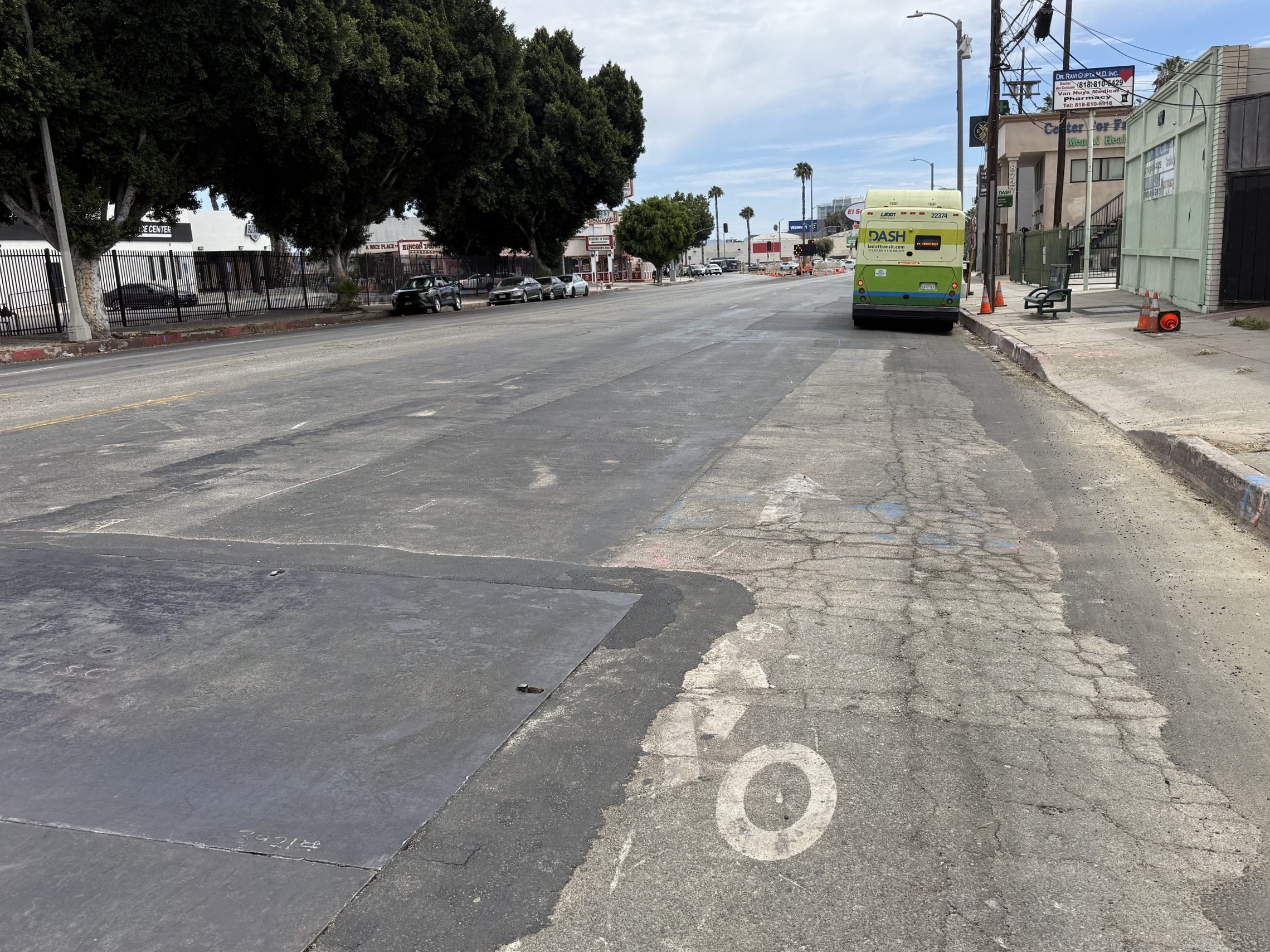
Light rail construction is well underway on Van Nuys Boulevard, and though some parts of the bike lanes are still there, the facility is partially dismantled. Because the removal and install are both part of the same project, SBLA included both in this year’s totals.
Streetsblog generally uses the city’s reported mileage where it is very close to Google Maps measurements, which it typically is. For what it’s worth, using the city figures led to slightly different mileage reported above, compared to SBLA’s earlier Terra Bella Street coverage.
Find previous annual bikeway mileage posts from 2025, 2024, 2023, 2022, 2021, 2020 and 2019.
Read More:
Streetsblog has migrated to a new comment system. New commenters can register directly in the comments section of any article. Returning commenters: your previous comments and display name have been preserved, but you'll need to reclaim your account by clicking "Forgot your password?" on the sign-in form, entering your email, and following the verification link to set a new password — this is required because passwords could not be carried over during the migration. For questions, contact tips@streetsblog.org.