Measure HLA at Two Years: a Timeline of How L.A. City has Resisted Safer Multimodal Streets

(Disclaimer note: I, Streetsblog Editor Joe Linton, do not claim to be a neutral observer here. Outside of my Streetsblog reporting, I have repeatedly challenged the city’s Measure HLA inaction. I am fighting for HLA in court and at the Board of Public Works. I don’t have an financial stake in this, but I am an interested party in Measure HLA matters.)
Exactly two years ago, L.A. City voters approved the Healthy Streets Initiative – Measure HLA. HLA now generally requires L.A. City to install planned access/walk/bike/bus facilities when making street improvements – mostly street resurfacing – at least an eighth of a mile long. The multimodal facilities HLA requires were approved in the city’s 2015 Mobility Plan.
To date, the city has implemented just 300 feet of HLA-triggered improvements – on Reseda Boulevard (see below).
In testimony at the Board of Public Works last month [video, minute 40:45], the city Transportation Department (LADOT) Streets Policy Manager Kevin Liu described the city’s “progress thus far on HLA” as “a very large sweeping effort that requires coordination across our departments.”
But the city’s main sweeping effort has been to actively block HLA progress. The city changed the way it paves streets, exploited loopholes, and appears to have failed to obey the new law.
Measure HLA Timeline
February 2022 – Healthy Streets L.A. proponents, led by the nonprofit Streets for All, began gathering signatures.
June 2022 – Supporters turned in the necessary signatures to qualify for the ballot.
August 24, 2022 – The L.A. City Council declined to adopt HLA outright, putting the measure on the March 2024 ballot. The Council instead approved a motion attempting to head off the measure by developing a city version of HLA that would “implement this mobility plan in an equitable way.” (The city’s draft emerged that November, but never got council approval.)
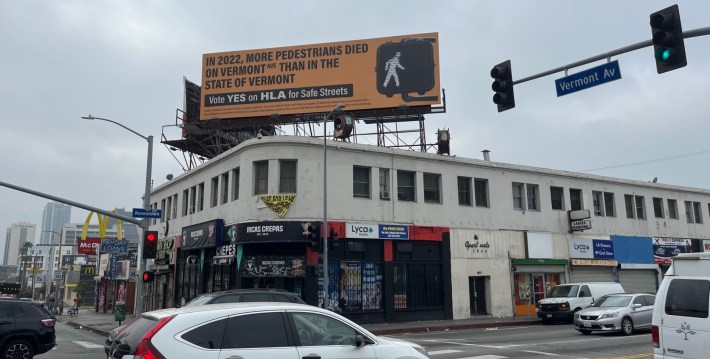
February 2024 – Six Councilmembers endorsed and campaigned for HLA. With voting underway, the Fire Department’s union pledged to spend $100,000 to oppose HLA; one firefighter leader stated, “Los Angeles… is a car community.” City department leaders, City Administrative Officer (CAO) Matt Szabo and Bureau of Street Services (StreetsLA) General Manager Keith Mozee criticized HLA, claiming that if it passes the city will be required to spend $3.1 billion on bus/bike/walk facilities over the next five years; most of that is $2 billion on sidewalks. If HLA passes, Szabo stressed, “[City Council] will be asked to make funding decisions immediately.” Two years later the city has yet to approve any funding specifically for HLA implementation.
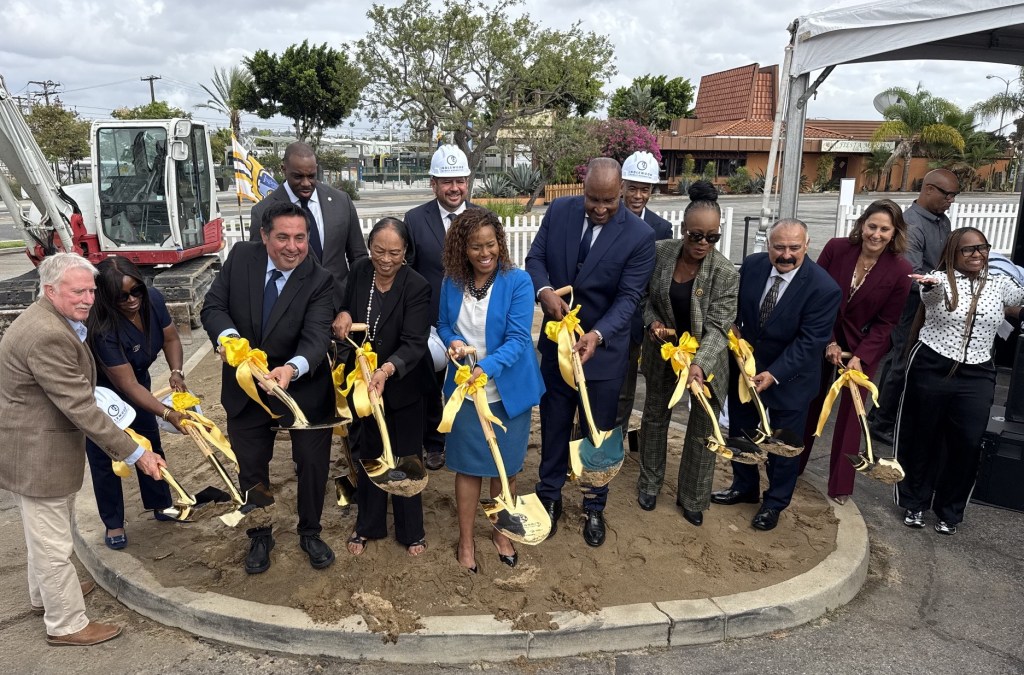
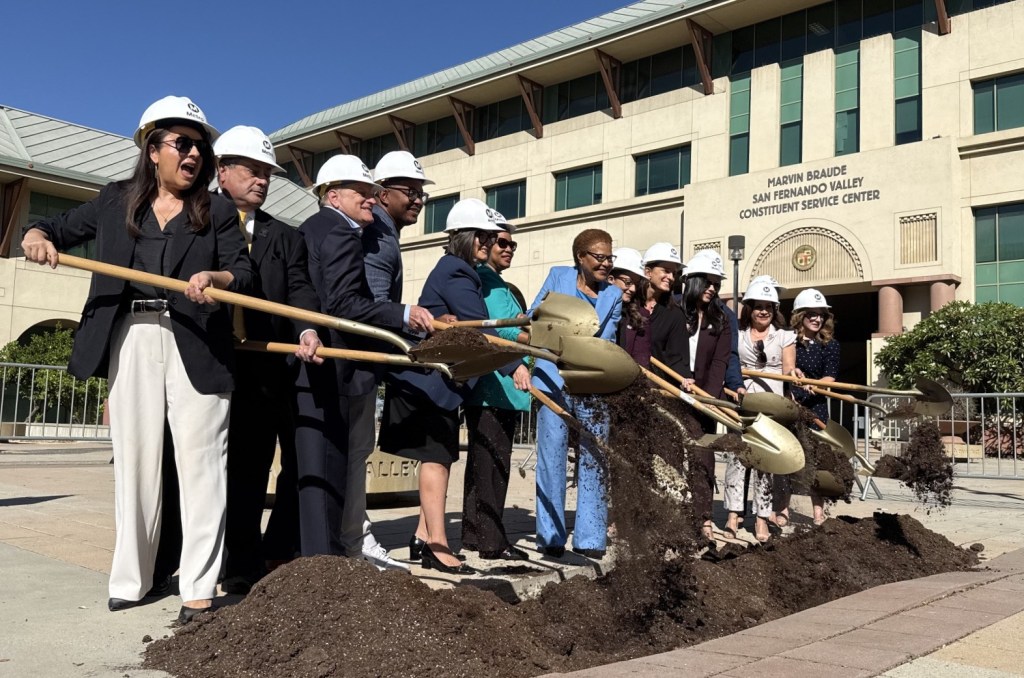
March 2024 – Voters approved Measure HLA by 65 percent. By late March, the City Council began to shape the city’s HLA implementation ordinance. That initial HLA policy motion was approved in June; it directed the City Attorney to draft a new HLA ordinance. A November draft was discussed/amended in early 2025, before being approved in July 2025.
April 9, 2024 – Five weeks after the election, Measure HLA became law.
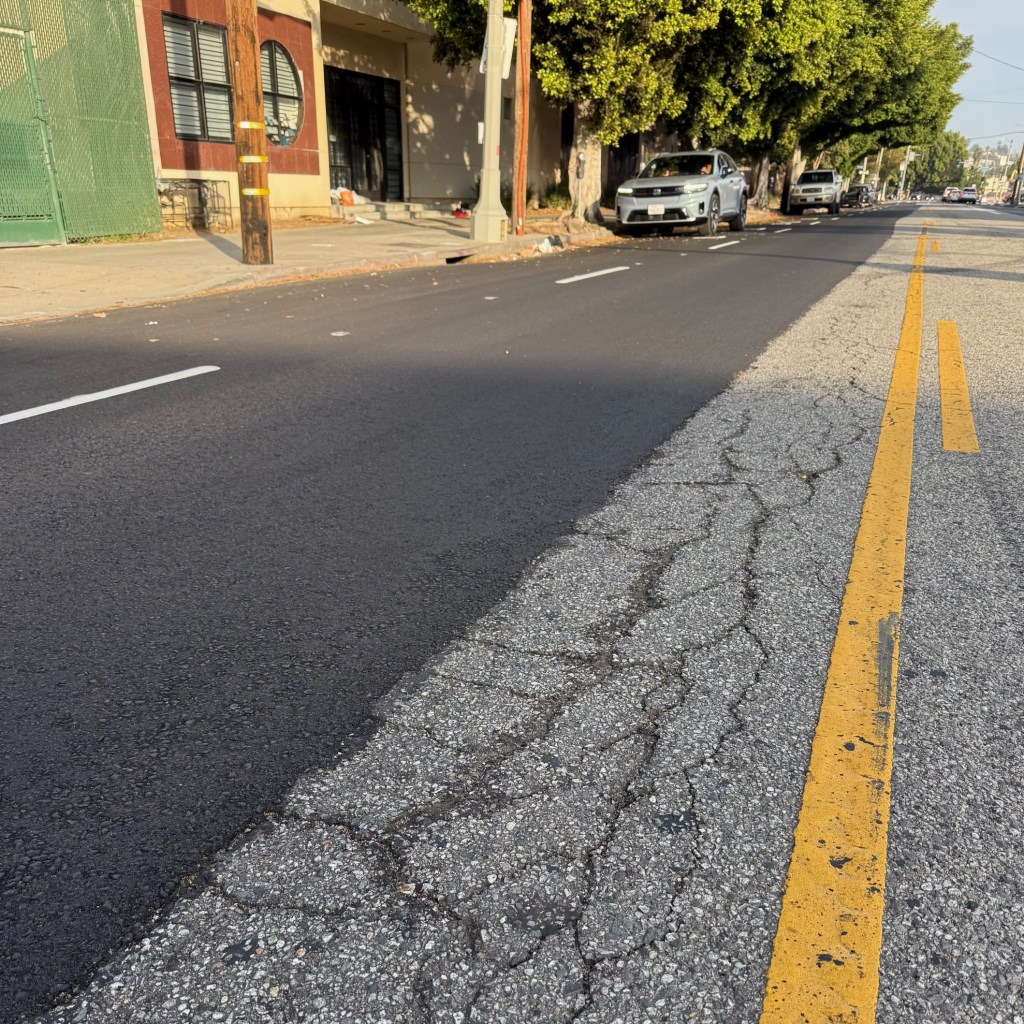
April 2024 – StreetsLA quietly paused repaving projects that would trigger HLA. HLA only triggers upgrades on Mobility Plan network streets designated for bus, walk and bike facilities; these are located primarily on larger streets. StreetsLA’s pause meant that, for about 15 months, the city continued to repave streets, but avoided many arterials, instead favoring smaller streets. Over time, pavement conditions on many arterials degraded, though StreetsLA found that on average, “Measure HLA has not affected overall citywide pavement condition” as of early 2025.
June 2024 – City departments began announcing that they had an HLA plan. LADOT and StreetsLA stated that they were working together on “a joint work plan” for the coming fiscal year starting July 2024. As of June 4, DOT and StreetsLA claimed that their HLA work plan “is currently being finalized and will be made publicly available in coming weeks.” In late June LADOT General Manager Laura Rubio-Cornejo stated that DOT had submitted its list of project-ready Mobility Plan corridors to StreetsLA.
For several months Streetsblog requested that the city share the HLA work plan. In September, StreetsLA claimed that the “StreetsLA/LADOT work plan for FY 24-25 is in the final stages of assessment, and we expect it to be finalized this month. This work plan will serve as this fiscal year’s blueprint for bicycle facilities that require resurfacing or other paving treatments in order to be implemented.”
No plan, draft or final, was ever released.
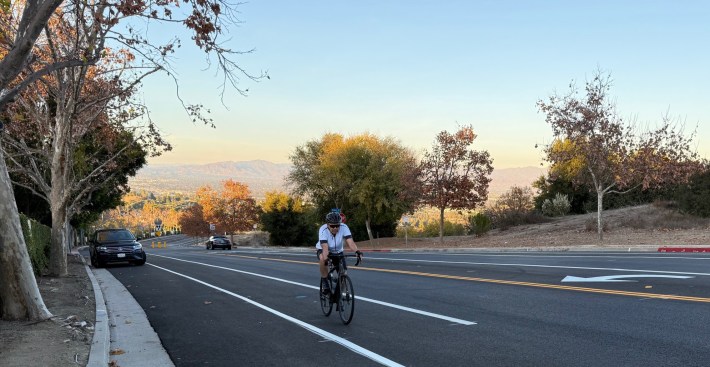
August-November 2024 – L.A. City installed its only HLA-triggered improvement: new bike lanes on Reseda Boulevard in Tarzana. Advocates noticed that a StreetsLA-announced mile-long Reseda Boulevard resurfacing project should trigger about 430 feet of new bike lanes. The city agreed and pledged new bike lanes. StreetsLA completed the resurfacing on September 11; LADOT added about 300 feet of new Reseda Boulevard bike lanes in late November.
In November LADOT claimed that HLA had triggered three facilities: Hollywood Boulevard (a project already finalized prior to HLA), Manchester Boulevard, and Reseda. But in 2025, via the city HLA website (see below), the city asserted that the Hollywood project was exempt from HLA, and that only Reseda was HLA triggered. [Hollywood got slightly more complicated. Responding to my appeals, the Board of Public Works determined that most of two-mile Hollywood project was HLA-exempt, but HLA applied to about 2,000 feet of it.]
March 19, 2025 – In shaping the HLA ordinance, the City Council approved instructions to city departments to report “on recommendations and steps needed to require Metro and any other third parties to comply with Measure HLA.” Within hours Metro lawyers responded that HLA never applies to Metro projects. The situation may not be quite that clear cut. In April I filed a lawsuit where (among several claims) I assert that one Metro/L.A. City project, the Vermont Transit Corridor, should trigger HLA upgrades. A judge could weigh in preliminarily on this part of the case next month.
April 2025 – As specified in HLA ballot language, the city launched its required HLA website, intended to be a dashboard for the public to monitor HLA progress. The opaque website initially listed just seven projects, all of which the city claimed were exempt from HLA. Today the Mobility Plan 2035 Implementation site lists 78 city projects, 77 of which the city claims are exempt from HLA. The other is Reseda. Since HLA took effect, StreetsLA completed more than 700 resurfacing projects; only five appear on the dashboard.
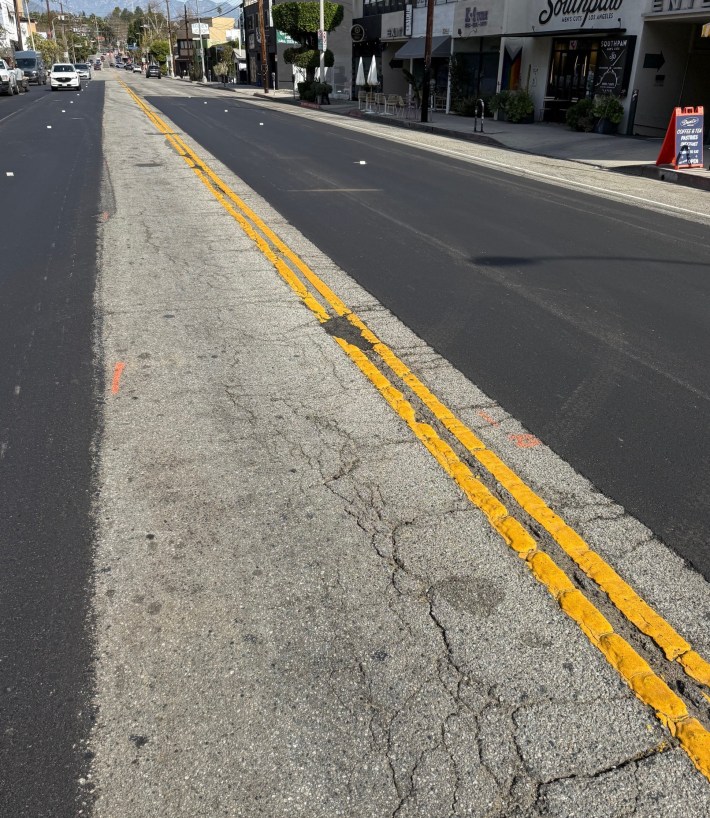
July 1, 2025 – StreetsLA quietly stopped fully resurfacing streets, instead doing costly ineffective partial resurfacing, which StreetsLA terms “large asphalt repair” (LAR). Most city LAR projects have been under 660 feet, conveniently limbo-ing in under the HLA threshold. Last month, advocates filed appeals urging the city to install HLA upgrades on three LAR projects that exceeded 660 feet.
July 2025 – The Council and Mayor approved the city’s HLA ordinance [text]. The new law mandates that before someone files an HLA lawsuit, they must first appeal the project to the city Board of Public Works (BPW).
August 2025 – The city HLA ordinance took effect in mid-August. Since then, more than a dozen Angelenos have filed more than 60 HLA appeals; I personally submitted over 40. LADOT GM Rubio-Cornejo rejected the majority of these appeals stating that they don’t even count as an appeal. In November, December, and February, BPW ruled on 23 appeals (all from me), fully denying 21 appeals. For the other two, BPW admitted that the city had triggered HLA, but denied Mobility Plan bike/walk/accessibility upgrades (mostly crosswalks and bike lane protection) that I assert are required.
January 2026 – At the City Council Public Works Committee, when questioned about StreetsLA’s current HLA projects, General Manager Mozee responded citing just one project (Martin Luther King Jr. Boulevard) which was funded in 2021 and therefore exempt from HLA. Then Mozee pledged that “next year” StreetsLA will “coordinate with LADOT to work with them on their priorities… and reconfiguring our five-year resurfacing program.”
Streetsblog has migrated to a new comment system. New commenters can register directly in the comments section of any article. Returning commenters: your previous comments and display name have been preserved, but you'll need to reclaim your account by clicking "Forgot your password?" on the sign-in form, entering your email, and following the verification link to set a new password — this is required because passwords could not be carried over during the migration. For questions, contact tips@streetsblog.org.