Mayor Karen Bass Outlines Her Metro Agenda including Fare Free Transit, Bus Lanes
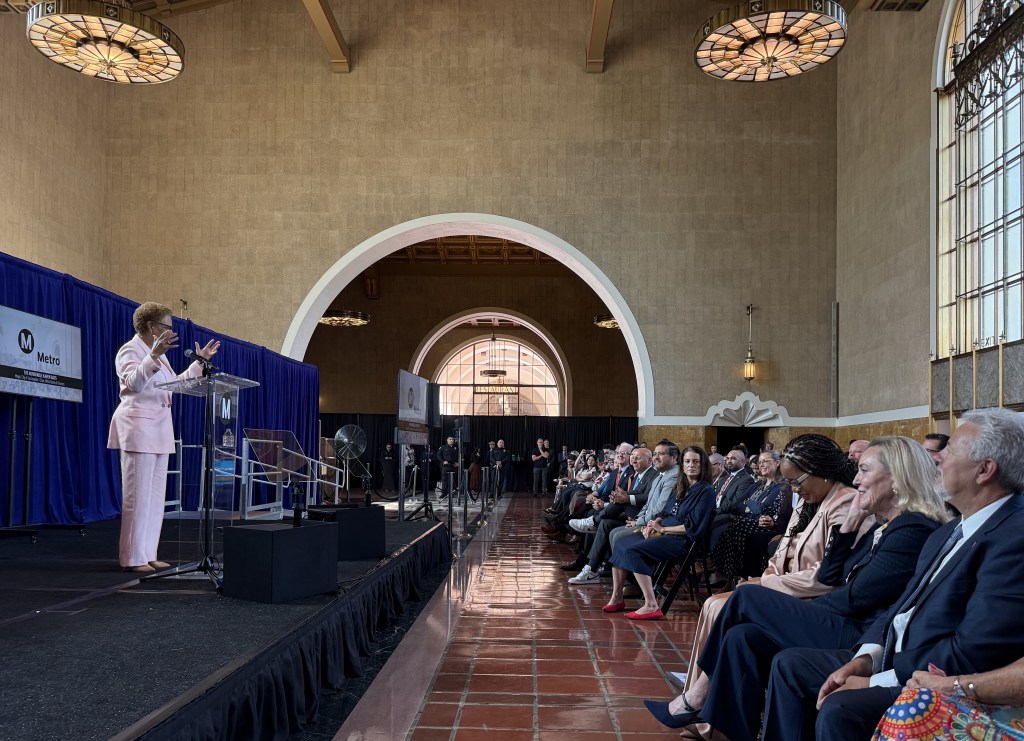
At yesterday’s Metro State of the Agency event, outgoing Metro Board Chair Fernando Dutra handed the ceremonial gavel to incoming Board Chair L.A. Mayor Karen Bass. Various Metro leadership spoke of the agency’s recent accomplishments, including two new rail extensions opened, and extensive support for the just concluded World Cup. Most newsworthy at the event was Bass’ speech which previewed her priorities for Metro.
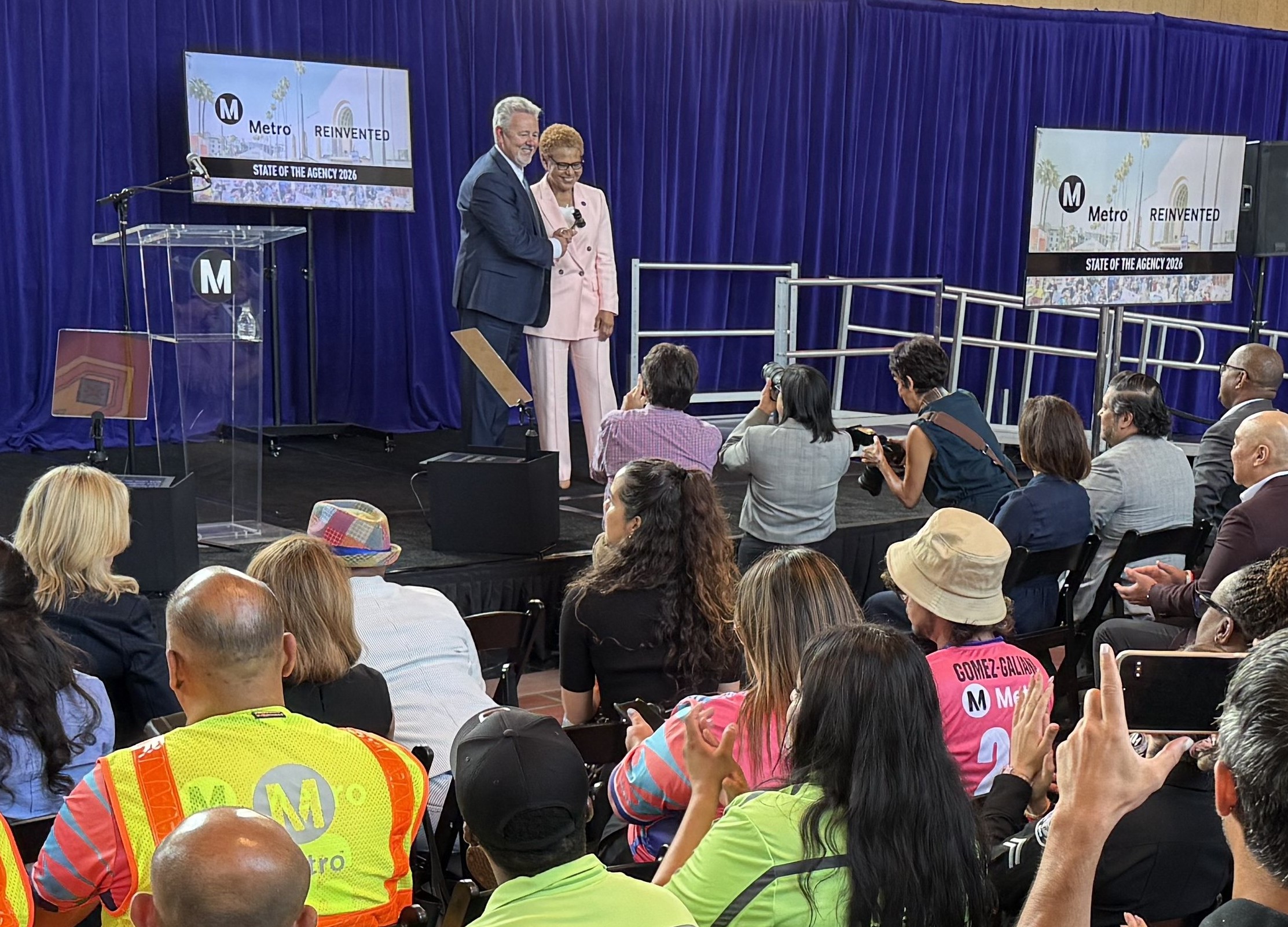
The Metro board chair generally rotates between L.A. City, L.A. County, and other cities. Every third year, the L.A. Mayor serves as chair. Mayor Bass was previously Metro chair in 2023-24.
In earlier election coverage, Streetsblog noted Bass has been disappointing at Metro, where she wields a lot of power, but has been frequently been absent from meetings. Bass too often sided with transit opponents – actively against the K Line north, but also passively on the C Line and Sepulveda rail.
In New York City and Seattle, support for transit has helped elect left-of-center mayoral candidates. Most famously, NYC Mayor Zohran Mamdani campaigned on an oft-repeated pledge to make buses fast and free.
Bass generally hasn’t made transit or transportation a high profile issue in her campaigns or her mayoralty. This year, however, she’s facing a November run-off election against Nithya Raman, who is running to Bass’ left. Perhaps feinting to her left, Bass appears to be focusing on a Metro agenda that at least somewhat echoes Mamdani’s. After nearly four years of Metro inaction peppered with occasional anti-transit actions, however, her sudden boosterism sounds tepid and unconvincing, even when the improvements she has pledged are worthwhile.
Bass divided her Metro priorities into four slogans: Metro Safe, Metro Affordable, Metro Reliable, and Metro Ready. She also separately pledged bike improvements.
Metro Safe
Metro is setting up its own police department, which Bass says is a priority. In yesterday’s speech (and in Metro’s existing plans), Bass touted Metro transit safety including both law enforcement officers and care-based programs, which includes ambassadors and homeless services. Bass spoke in support of Metro police, tempered with providing “services and support [and] even housing” – all to create “a new vision of public safety and a new model that will serve as a model for the nation.”
Metro Affordable
In 2022, Bass campaigned in support of “making our transit system safe, reliable, and free,” even declaring, “I support the move towards fareless transit” at one point. She later backed off universal fareless, instead supporting the strengthening of existing Metro programs for students and low-income riders.
Yesterday, she touted her continued support for those worthwhile (but limited) student and low-income programs. Then Bass more-or-less pledged free buses, saying, “I want to… develop a long-term financial strategy and plan for Metro to finally be fare-free.”
“Develop a long-term strategy and plan” is more aspirational than Mamdani’s declarative “make buses fast and free.” It’s also much harder to hold her accountable for it.
Metro Reliable
For “Metro Reliable,” Bass pledged that “buses and trains will show up when they’re supposed to, and this system will work.”
How? Bass went on to tout “this past June, Metro adjusted timetables on over a hundred bus routes” as an example. Metro actually makes these very minor adjustments to service twice a year – generally small service cuts and small route changes to improve reliability. The routine Metro June/December “shakeups” have taken place for decades, making them an odd non-accomplishment to take credit for. Perhaps it’s a sound-bite that non-Metro users will think means something. But the message it sends to actual Metro ridership seems to be that they can expect business as usual repackaged as progress.
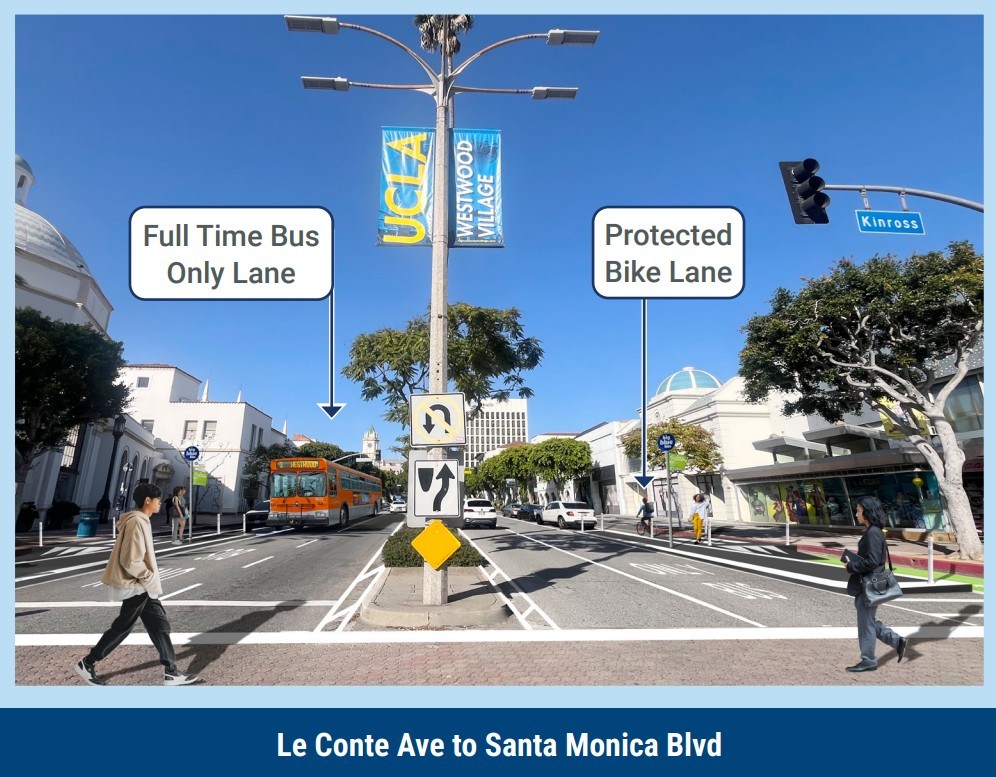
Faintly echoing Mamdani’s “fast buses” mantra, Bass also pledged to add more bus-only lanes. “Today, there are 80 miles of peak-hour bus lanes improving speed and reliability for hundreds of thousands of riders,” she said. “By 2028, I want to grow that to more than 100 miles.”
That number is less impressive in practice. With departments fighting Measure HLA, installation of new L.A. City bus lanes has declined under Bass. Metro’s under construction NoHo-Pasadena Bus Rapid Transit project already includes 20 new bus lane lane-miles. Assuming those get built (Burbank is contesting), Bass’ tepid new bus lane miles pledge will be fulfilled.
Metro Ready
Bass’ fourth priority item was essentially getting Metro ready for upcoming mega-events: running “a world-class system under pressure” like Metro did for the World Cup.
Bicycling in Brief
Before detailing her four priorities, the Mayor included a few sentences to bicycling priorities, a bit less committal than the above priorities:
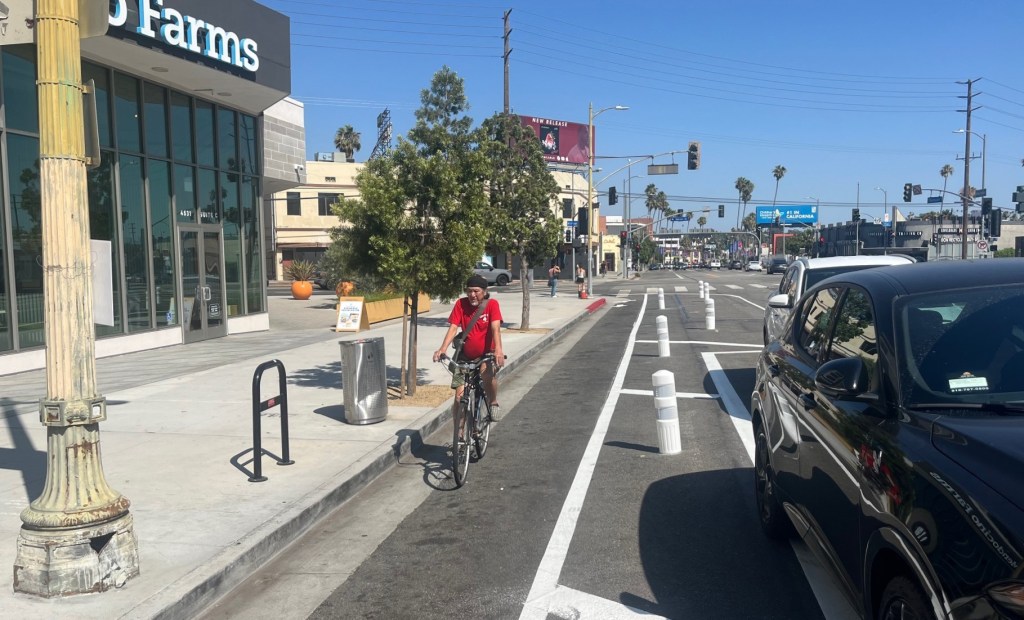
Now, as a lifelong bike rider, biking we know is just as much a part of L.A. as anything else, and we are pushing to expand bike infrastructure across the region – including new stretches along the L.A. River bike path and biking Metro Bike Share. That is a whole other component. Every Angeleno should have the option of experiencing L.A. on two wheels.
Mayor Bass authored and shepherded approval of a worthwhile motion that gets Metro to further study how to untangle the long-delayed River path through central Los Angeles. Metro has grant funding to expand bike-share, but the system has been hamstrung by Metro botching two procurements, leaving the current operator in limbo.
Getting a tune out of these profoundly neglected Metro bike programs will take sustained L.A. leadership. Time will tell if Bass changes and steps up to actually support bicycle transportation.
Streetsblog has migrated to a new comment system. New commenters can register directly in the comments section of any article. Returning commenters: your previous comments and display name have been preserved, but you'll need to reclaim your account by clicking "Forgot your password?" on the sign-in form, entering your email, and following the verification link to set a new password — this is required because passwords could not be carried over during the migration. For questions, contact tips@streetsblog.org.