2026 Primary Election Results Round-Up: Strong Voter Support for Most Livable Streets Candidates
L.A. County is still counting ballots, so this round-up remains based on preliminary results.
For Southern California, there were no referendums directly on livable transportation issues, but there were plenty of candidates with records on these issues. As a majority blue county in a majority blue state, a lot of races often boil down to democrat vs. democrat, often pitting status quo democrats vs. more progressive democrats or, increasingly, democratic socialists. There are exceptions, but generally the latter – the more progressive group – tend to be more supportive of livable streets issues.
L.A. Mayor’s Race
Incumbent Mayor Karen Bass has secured first place in mayoral primary. As of now, last-minute progressive challenger and current City Councilmember Nithya Raman is set to battle her in the general election this November. Raman had initially trailed behind reality star villain and registered Republican Spencer Pratt, but she moved past him a few days ago as the Blue Shift kicked in, spawning a thousand right-wing conspiracy theories in the process.
At press time, Bass leads with 34.3 percent of votes. Raman is second with 28.9 percent and Pratt in third with 25.5 percent.
The mayor’s race, of course, impacts many livable streets issues.
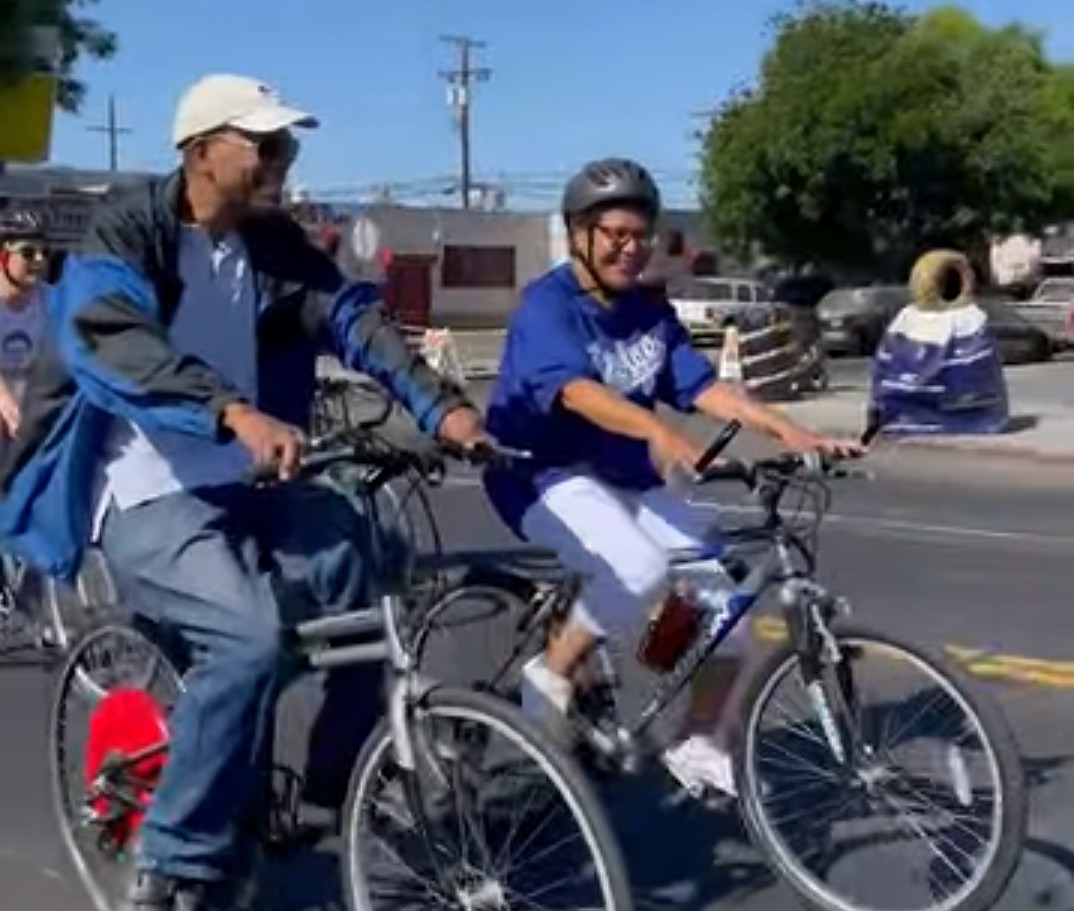
Livable streets could do worse than Mayor Bass. The incumbent mayor has pushed back against federal ICE terror, worked to respond to homelessness humanely including facilitating some affordable housing production, and created an Office of Community Safety to uplift Safe Passage work, interventionists, public safety, and the socio-economic well-being of gang-impacted communities. Bass also deserves credit for preserving city operations in the face of federal attacks and lean state/local budgets.
On the other hand, Bass has been a bit too quick to heed pressure from the right, as seen in her choice of conservative and reform-averse Jim McDonnell as LAPD Chief, the prioritization of police budgets, and the preservation of single-family housing.
Specific to the streets this blog typically focuses on, Bass has presided over the city’s status quo resistance to safer multimodal streets – meaning widespread multi-department resistance to Measure HLA improvements, leading to declining new bike lane and bus lane mileage. Bass had a hand in blocking Forest Lawn protected bike lanes, which Raman supported.
Bass has been especially disappointing at Metro, where the mayor is the single most powerful individual, controlling four seats on the 13-member board. The mayor has frequently been absent from board committee meetings. When Bass does show up, she generally tepidly supports transit, sometimes peppering her remarks with car-centric biases. On some key rail projects Bass sided with transit opposition – heavily against the K Line north, but also passively on the C Line and Sepulveda rail.
In 2022, Bass campaigned in support of “making our transit system safe, reliable and free” including specifically stating “I support the move towards fareless transit.” Bass later backed off of universal fareless, instead supporting strengthening existing Metro programs for students and low-income riders.
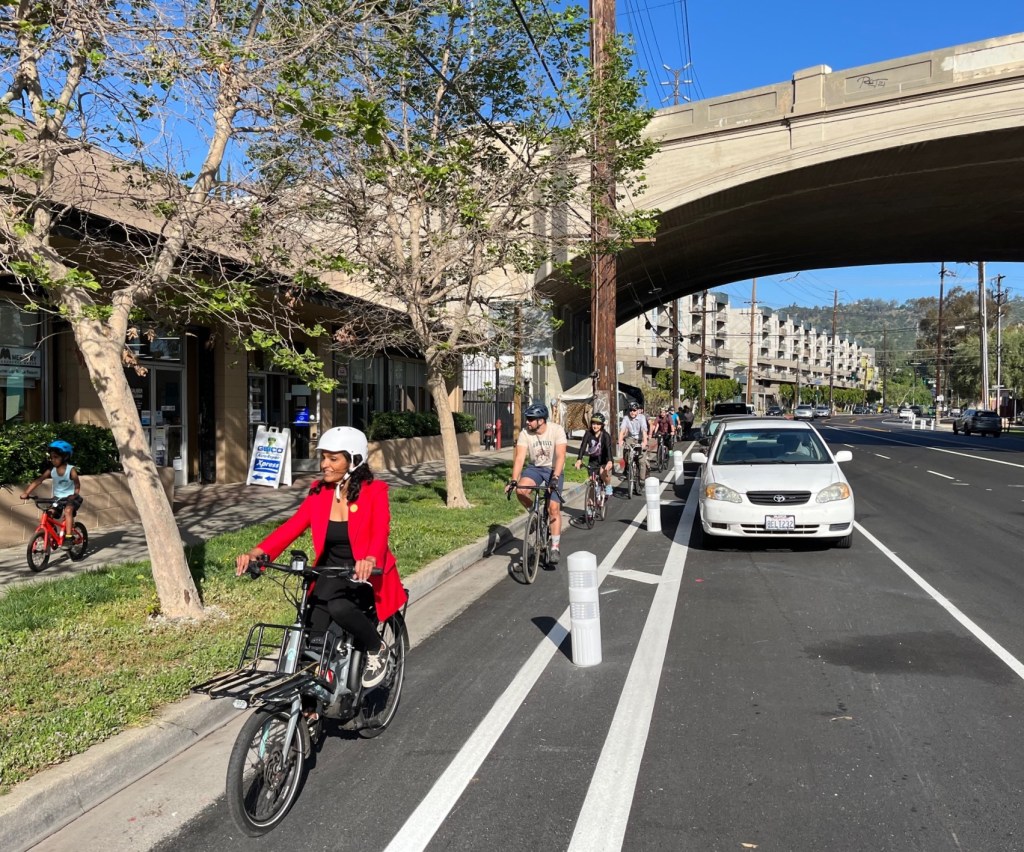
In contrast, Raman has taken a more progressive stance on housing, homelessness, and streets – including broad support for transit and bike facilities. Raman has been the key council voice on housing and homelessness.
Raman has championed Sepulveda rail, Measure HLA, parking/housing/planning reforms, spot widening reform, and bikeway projects from Hollywood to Riverside Drive to Griffith Park.
Raman has been criticized by some on the left for shifting somewhat toward a centrist approach on some issues, including reforming Measure ULA (called the mansion tax) and softening some criticism of LAPD.
L.A. City Council Races
Unsurprisingly, incumbents did well. The overall make-up of the 15-member council remains largely intact.
Progressive pro-livability incumbent City Councilmembers Eunisses Hernandez and Hugo Soto-Martinez outpaced challengers and dark money attacks. Both won outright majorities, preventing run-offs.
Transit/bike/walk/environment leader incumbent Katy Yaroslavsky was reelected to her Westside seat. Arguably Mayor Bass’ greatest contribution at Metro has been to appoint Councilmember Yaroslavsky to that board.
Council centrist Democrats Tim McOsker and Monica Rodriguez won reelection. Westside councilmember Traci Park – a bicyclist who opposed Measure HLA and blocked affordable housing – prevailed over progressive challenger Faizah Malik.
Where the council may see significant change are the seats being vacated by term-limited Bob Blumenfield and Curren Price, in the West Valley Council District 3 and Central L.A. Council District 9 respectively.
Blumenfield has supported multimodal transportation, perhaps more than one should expect from relatively suburban CD3. The district will see a November runoff between Tim Gaspar, a pro-police Valley businessman, and Barri Worth Girvan, community affairs director for county Supervisor Lindsey Horvath. In a three-candidate primary Gaspar received 46% and Girvan 42%.
In CD 9, City Hall insider and Curren Price staffer Jose Ugarte (39.4 percent) will face off against progressive pro-bike/transit challenger Estuardo Mazariegos (26.3 percent). In his early days as an organizer with TRUST South L.A., Mazariegos could often be found battling Price’s office and staff in an (ultimately failed) effort to get the councilmember to heed community members’ call for a bike lane on Central Avenue – one of the most heavily bike-trafficked commuter corridors in the city.
L.A. Citywide Races
Incumbent City Attorney Hydee Feldstein Soto, whose office took retaliatory swings at journalists, protestors, and, as chronicled here at SBLA, a man suing the city after LAPD punched him in the face, lost her seat, placing third with 18 percent of votes. This fall’s run-off will feature progressive Marissa Roy (43.1 percent) against tough-on-crime John McKinney (28.6 percent). Read more about the City Attorney election dynamics at L.A. Times.
Incumbent progressive pro-bike/walk/transit City Controller Kenneth Mejia (63 percent) handily beat well-funded establishment Democrat Zach Sokoloff (37 percent).
Additional Results Outside of L.A. City
Transit champion (and freeway expansion critic) incumbent Democrat County Supervisor Lindsey Horvath cruised to reelection with two-thirds of her district’s vote.
Termed-out Democrat County Supervisor Hilda Solis is leading in her race (55.2 percent) for California’s 38th Congressional District. She faces Republican Pedro Casas (27.4 percent) this fall. Labor champion State Senator María Elena Durazo won with 60.6 percent of the vote in a five-candidate race for Solis’ Supervisor District 1 seat.
West Hollywood Democrat City Councilmember John Erickson, who championed the Metro K Line and Fountain Avenue bike lanes, is leading his race for State Senate. Erickson (20.5 percent) faces off in November against Democrat Brian Goldsmith (18.3 percent).
Longtime Glendale safe streets advocate bicyclist Alek Bartrosouf was elected to the five-member Glendale City Council, where he joins reelected incumbent environment/mobility champion City Councilmember Dan Brotman.
Transit rider/advocate planner Rebecca Pynoos was elected to the Beverly Hills City Council.
Monterey Park voters overwhelming (88.3 percent) passed Measure MDC to ban data centers.
Streetsblog’s non-profit status means we do not endorse candidates. Nothing in this post should be considered an endorsement.
Find the latest L.A. County vote totals at the county registrar website. Find additional post-election analysis at Streetsblog California, Streetsblog SF, L.A. Podcast, L.A. Material, The L.A. Reporter, LAist, L.A. Times, and other media sources.
Read More:
Streetsblog has migrated to a new comment system. New commenters can register directly in the comments section of any article. Returning commenters: your previous comments and display name have been preserved, but you'll need to reclaim your account by clicking "Forgot your password?" on the sign-in form, entering your email, and following the verification link to set a new password — this is required because passwords could not be carried over during the migration. For questions, contact tips@streetsblog.org.