New Barriers in Union Station as Metro Expands “Station Experience” Interventions
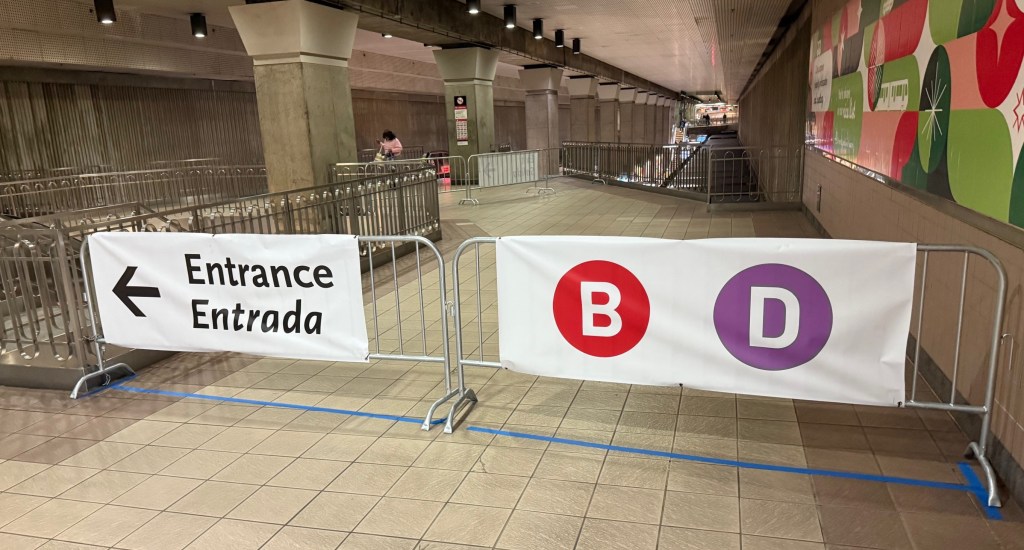
I know this one is hardly news in and of itself. Metro recently installed temporary metal-fence barriers on the mezzanine level above Union Station’s B/D Line subway platforms. They are similar to barriers Metro installed at MacArthur Park Station in 2023.
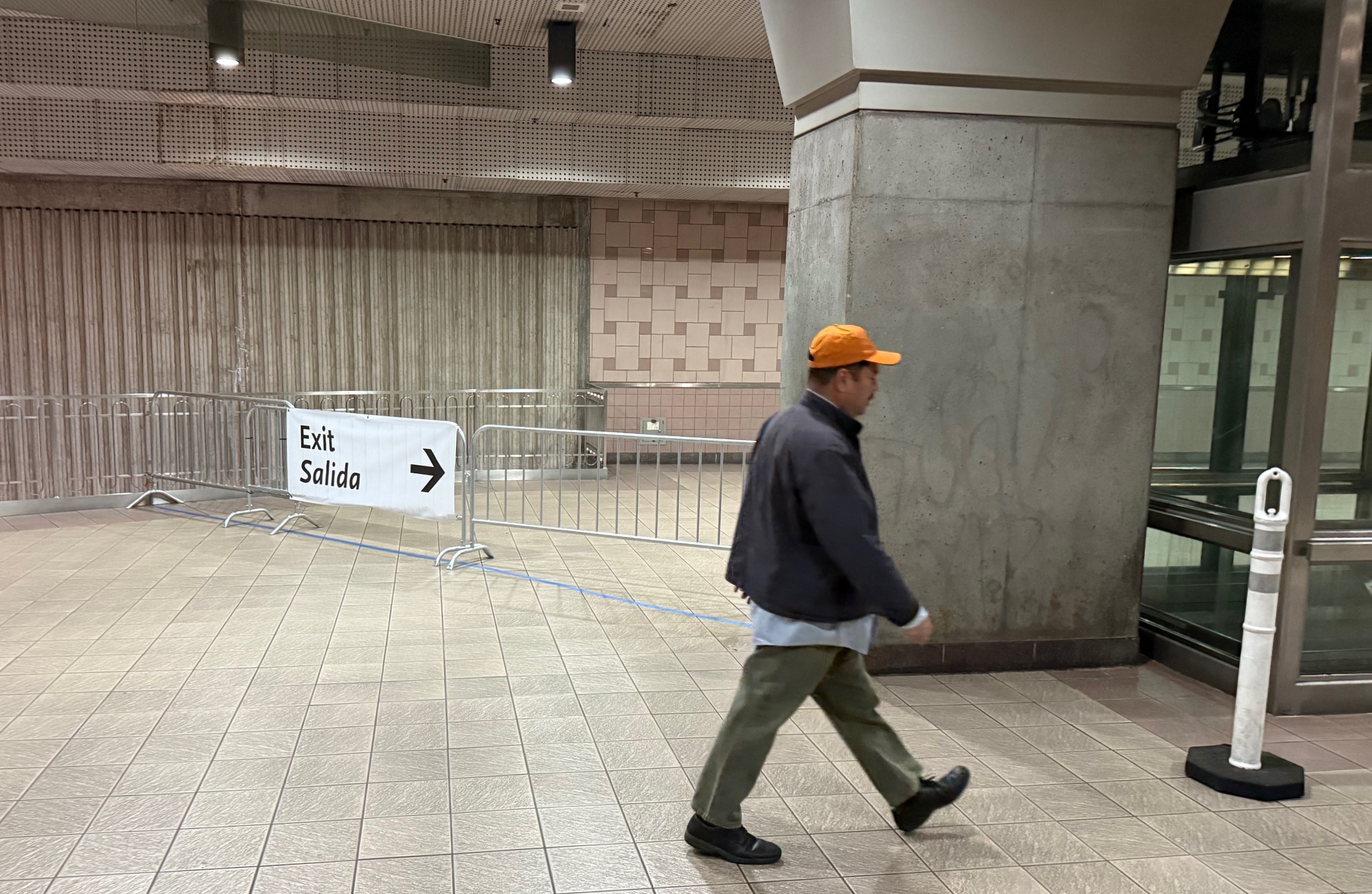
To get from the train to upper levels, riders go out of their way now. The new barriers cost riders a second or two to walk a slightly less direct route through the station.
The new barriers are part of Metro’s “Station Experience” interventions intended to make stations safer, prevent crime, and push away unhoused folks.
Station experience interventions include hazardously loud classical music, debuted at MacArthur Park Station. Headache-inducing music has now expanded to El Monte, Lake, Reseda, Rosa Parks, Pershing Square, and Slauson stations. TAP-to-exit started at North Hollywood Station, then spread to other end-of-line stations.
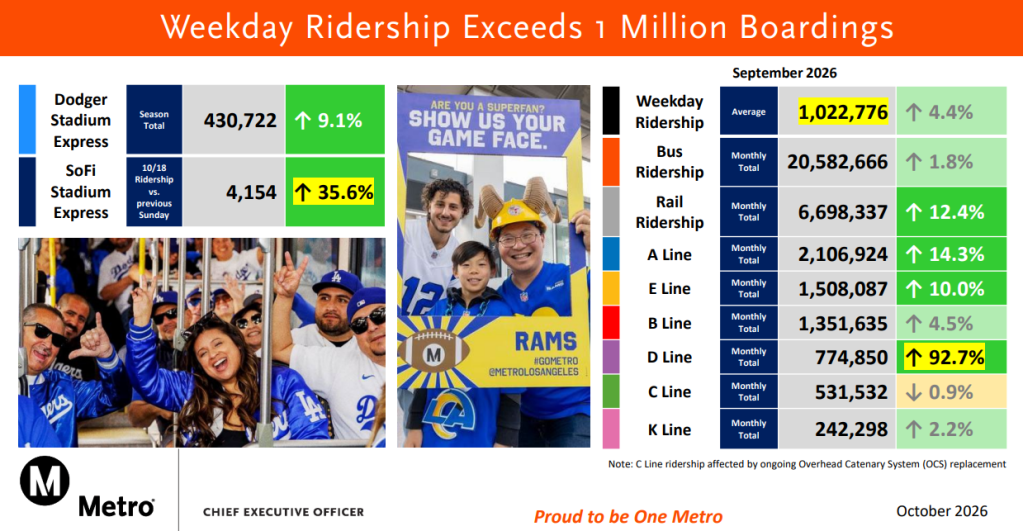
Metro staff now report on Station Experience efforts as part of a monthly policing report at the board Operations Committee meetings. Below are some recent slides listing Station Experience interventions:
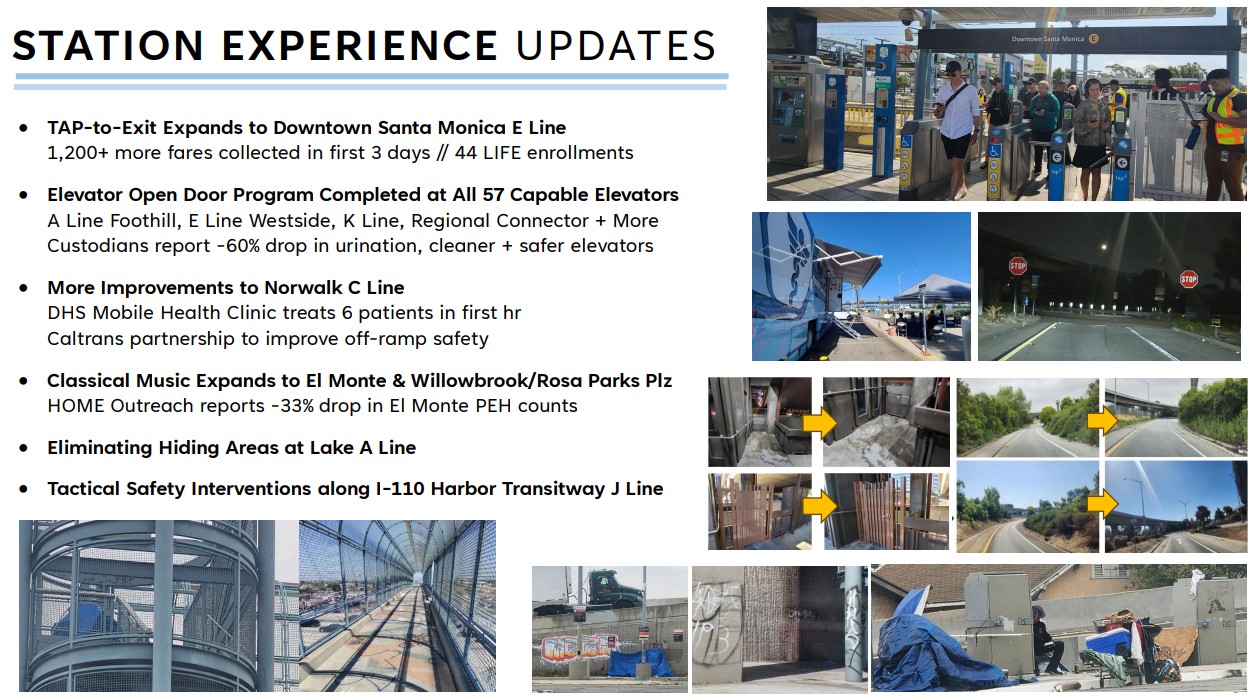
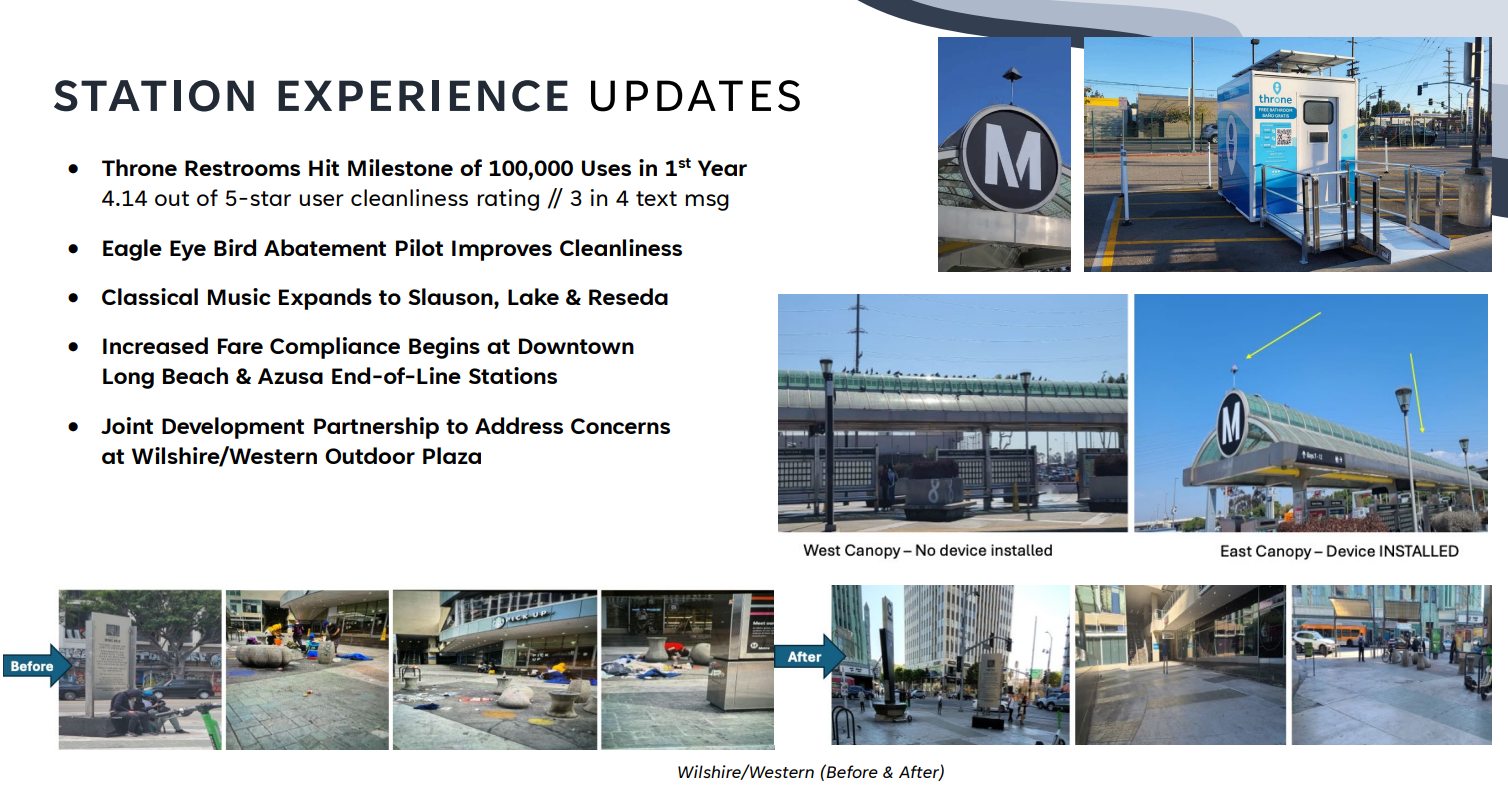
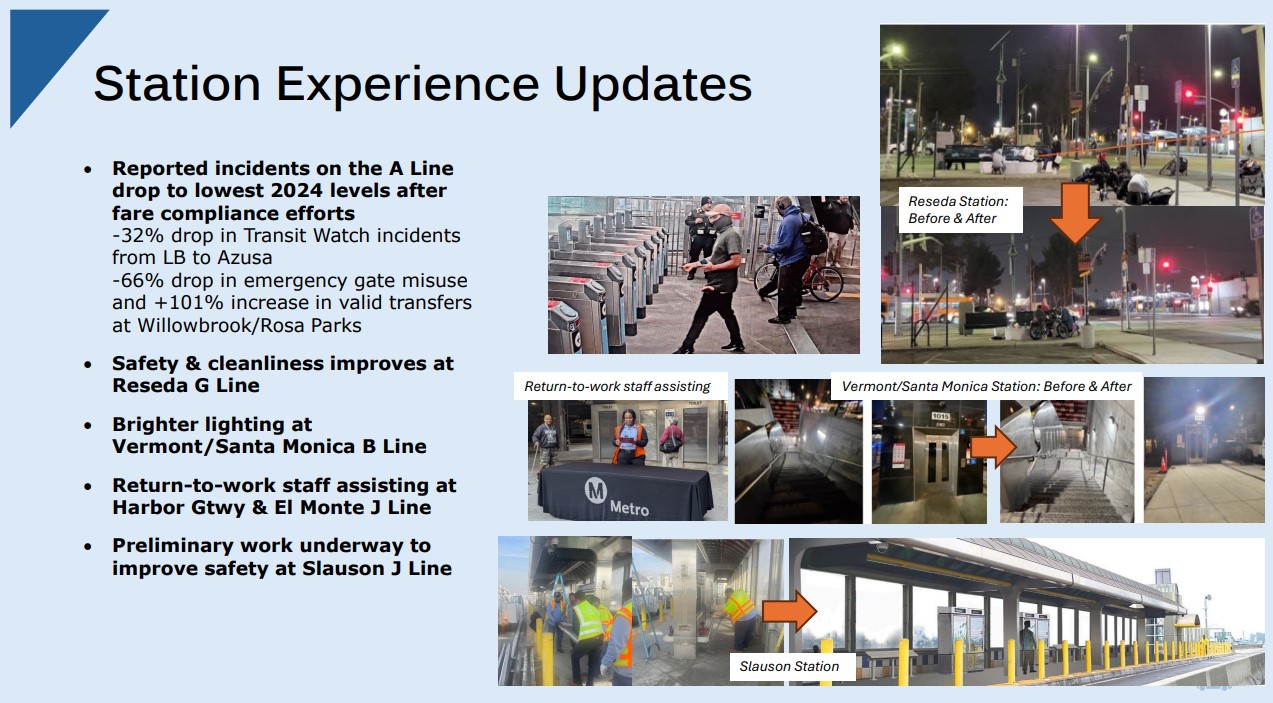
I noted before that Metro is balancing some positive interventions with punitive ones. I am glad to see ambassadors, stepped up cleaning, restrooms, and several other positives. I’d like to see more of this, including the kinds of activation called for by the Alliance for Community Transit (see Metro as a Sanctuary: Reimagining Safety on Public Transit).
When I see new barriers, and when I wait for my train or bus under impossible-to-ignore loud music, I feel like Metro is telling me that they don’t want me in their stations. Metro spends hundreds of millions of dollars every year working to expand freeways to remove bottlenecks for drivers, meanwhile Metro is creating bottlenecks for riders walking through stations.
I know that the system, while largely very safe, has issues – including drug use and homelessness – and that Metro is under a lot of pressure to address these. Over the past couple of years Metro has worked hard to address these issues, and, for me and my family, subway stations feel safer today than they did a couple years ago. Along with other factors, improved safety has contributed to Metro’s steadily increasing ridership.
But I still would like to see Metro investing more in positive measures and less in punitive ones. Fewer barriers and more, as City Councilmember Eunisses Hernandez has called for, “saturating this area with services.”
Streetsblog has migrated to a new comment system. New commenters can register directly in the comments section of any article. Returning commenters: your previous comments and display name have been preserved, but you'll need to reclaim your account by clicking "Forgot your password?" on the sign-in form, entering your email, and following the verification link to set a new password — this is required because passwords could not be carried over during the migration. For questions, contact tips@streetsblog.org.