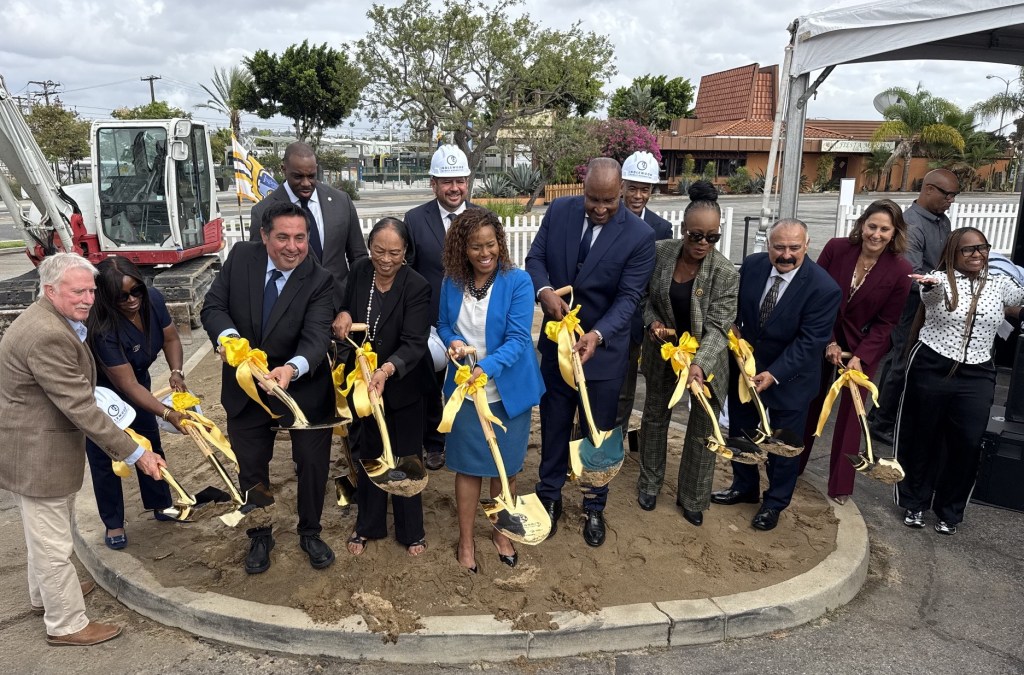
Monterey Park to Draft Ballot Measure Banning Data Centers
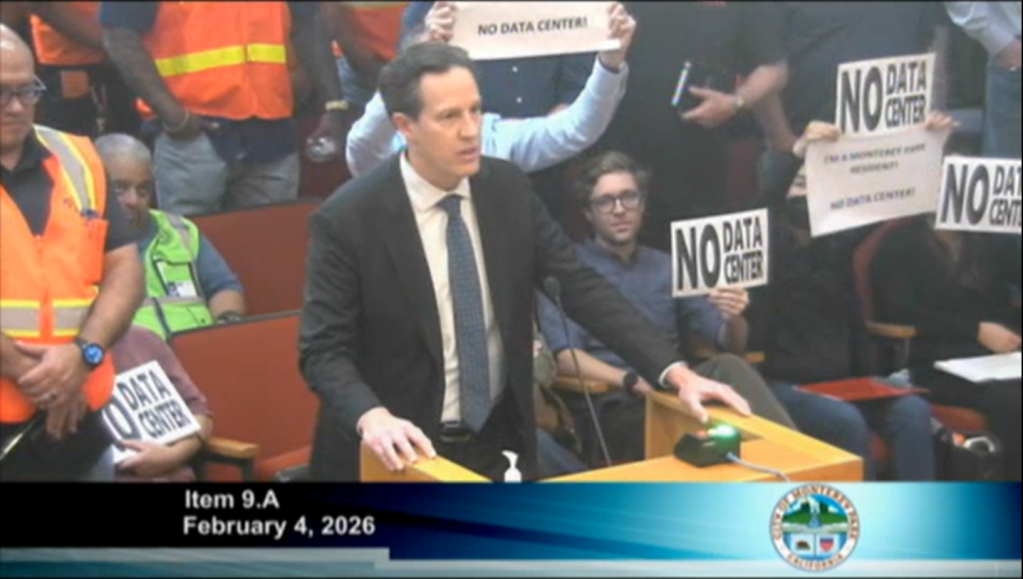
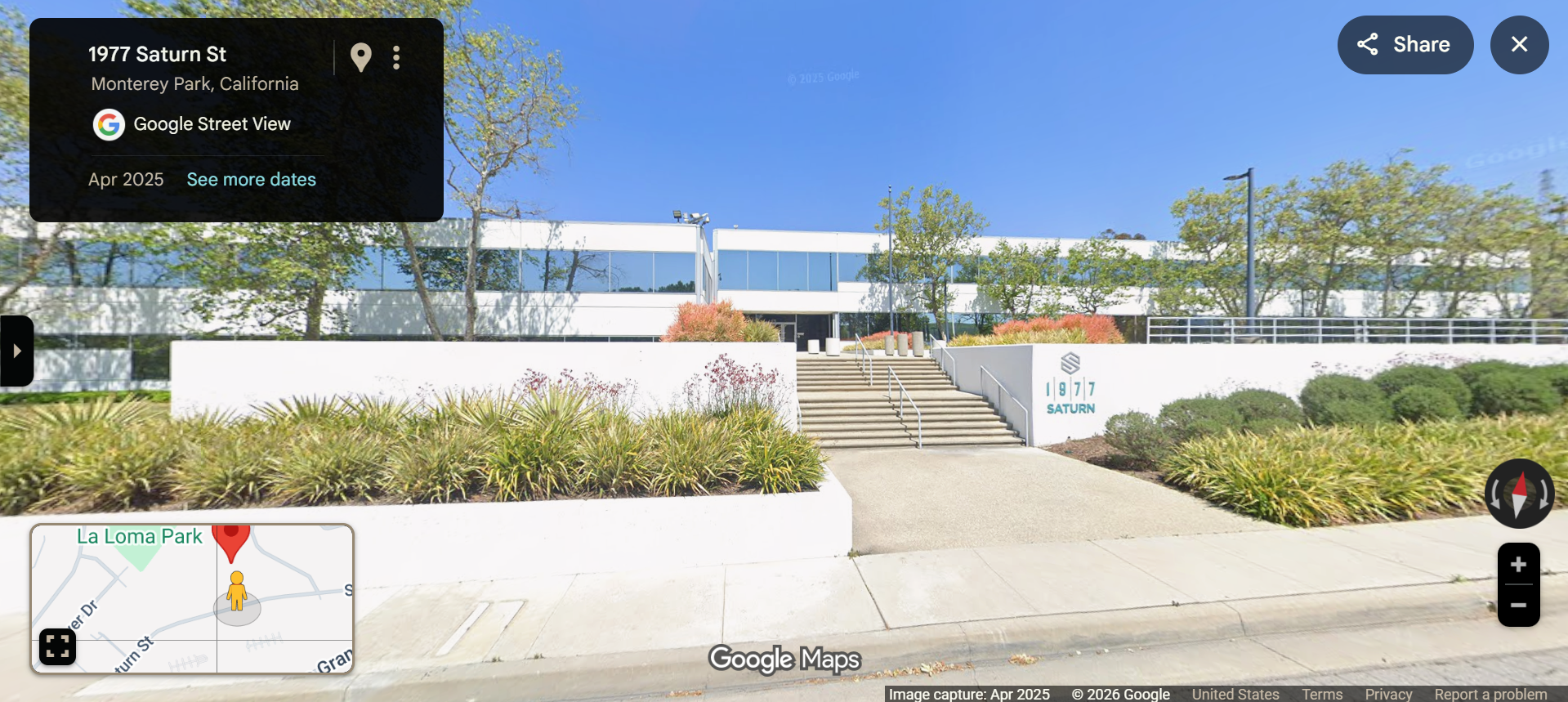
On Wednesday night, after several more hours of heated public comment for the proposed data center at Monterey Park’s vacant business complex, Saturn Park, the city council unanimously approved a motion to draft ballot measure language banning data center development in the city.
Dozens of speakers took to the podium, this time including many labor union representatives who supported the Saturn Park project, as well as the residents who continue to oppose it.
The attorneys for the developer, HMC Capital, also spoke. Earlier in the day, the city received a letter threatening a lawsuit should a ballot measure be developed, citing the city’s “ill will and bias against the Project and/or Applicant.” The city attorney responded the same afternoon that the right to land use policy change does not hinge on any current development applications.
The Background
Since early December, MPK residents have been pushing back on the proposed data center. They worry about harmful emissions, high water use, and raised electricity rates. On top of that, many are upset by what they see as a lack of transparency from the city in not providing enough advance notice of the project.
Data centers are warehouse facilities that provide the physical infrastructure for online computing. They’re known for using lots of power and water, which has become a major concern in places where the centers are plentiful. Many more are expected to be constructed worldwide as AI technologies advance, which appears to be the purpose HMC is building for through it’s subsidiary, StratCap.
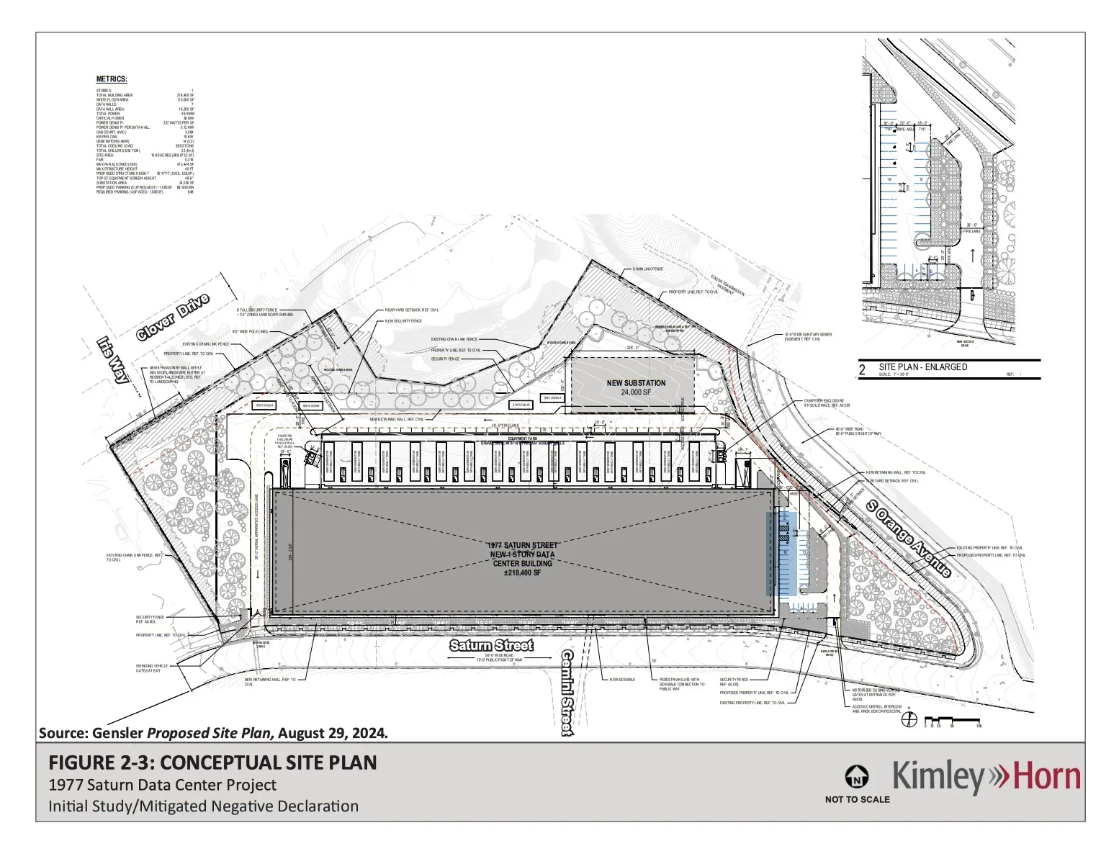
This facility at 1977 Saturn Street would be a total 247,000 square feet, with its own power substation paid for by the developer. It’s expected to use nearly 50 megawatts of electricity a day at peak usage. UC Riverside professor Shaolei Ren told L.A. Public Press that’s enough to power 40,000 homes.
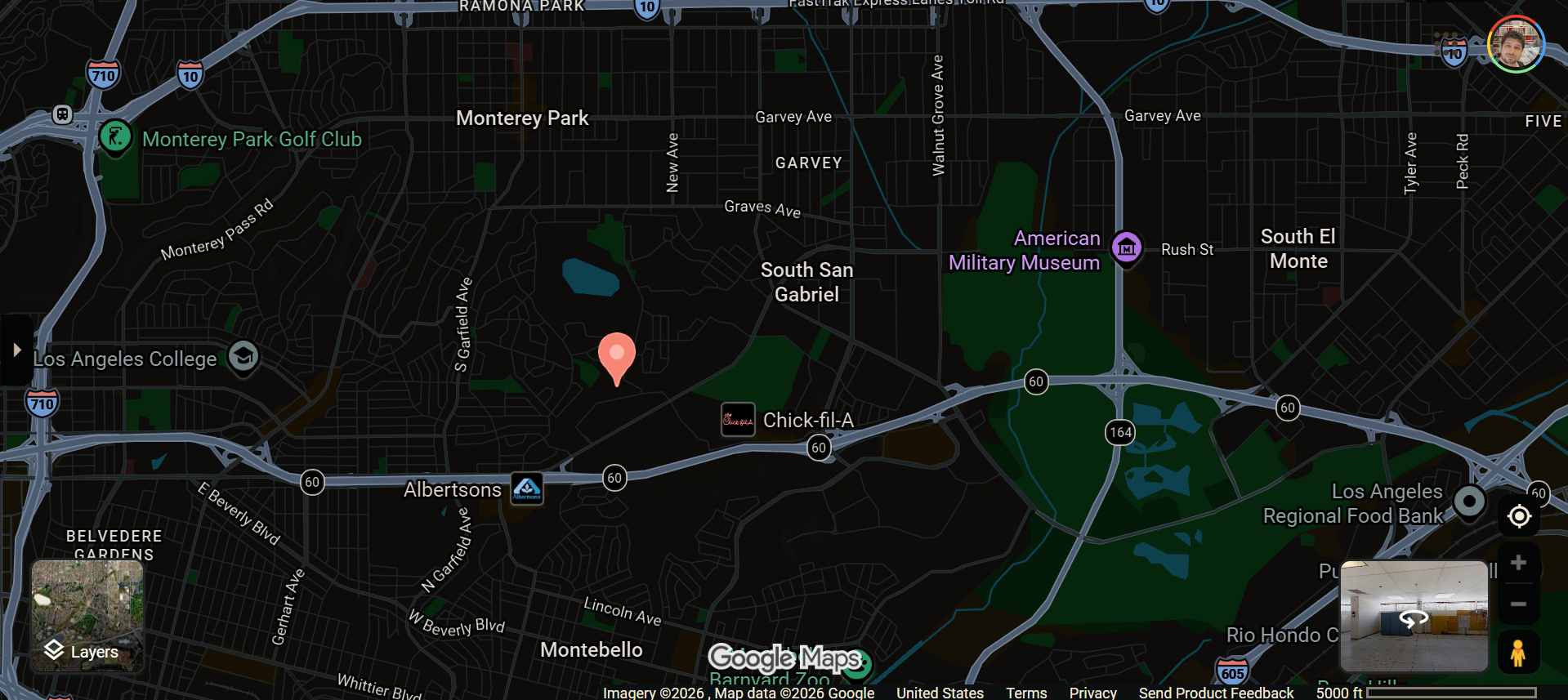
There would also be 24 diesel back-up generators on site. The center would be expected to bring the city several million dollars a year in tax revenue.
HMC Capital told ABC 7 News in a statement that there would be “no pass-through costs” to Monterey Parkers. The firm also agreed to an Environmental Impact Report or EIR (after the project previously was given a Mitigated Negative Declaration by the city), and pledged to build a public park.
Furthermore, the San Gabriel Valley Tribune reported that Public Works Director Shawn Igoe said that residential water bills would not be increased because of the data center.
Despite these assurances, residents have continued to oppose the project and are pushing for “sustainable developments” that will improve quality of life for residents.
Most recently before last night’s meeting, on January 21st, the city placed a temporary 45-day moratorium on data center development in the city (see LAist).
The Meeting
Right out of the gate, residents were again taking the council to task for lack of public information about this project and others, but the dynamic in the room shifted quickly when a woman apparently named ‘Amy Smith’ seemed to mock residents opposing the project.
“The world is moving forward, and the wheels of progress are continuing to chug along. Closing our eyes, and covering our ears, and shaking our heads is not going to write the narrative for the future that should be written,” Smith said. “We have an opportunity here to set high standards and powerful rules that could become the models and the basis for future development. Stomping our feet, and saying, ‘No! Not here! Not me! No thanks!’ creates a precedent of future conflict.”
From there, the brunt of residents’ ire turned increasingly toward HMC Capital.
District Three resident Paul Lang was chagrined by Smith “accusing everyone who is against their air being polluted of being childish and against progress.”
“I came in today knowing my goal was to prevent this data center from being built, because I believe it will do irreparable harm to this community,” Lang said.
Numerous tradespeople spoke with assurances that the project would be built to the highest standards of safety, encouraging the city to abandon a ballot measure and go ahead with a full EIR instead.
David Hanson, a rep for the United Association (representing plumbing trades), made his case to the crowd, though at times it was hard for him to get a word in over jeers.
“Nobody wants our city turned into a science experiment, and nobody wants decisions to be made behind closed doors,” Hanson began. “Environmental concerns are not being ignored or brushed aside. The CEQA [California Environmental Quality Act] process has already been initiated, and that process exists for exactly this reason, to analyze, mitigate and resolve concerns around noise, air quality and environmental impact before anything is approved or built.”
Hanson also said that the cooling system for the center wouldn’t be as water reliant as others, using chilled hydronic loops filled with refrigerant.
Resident Mark Rudholm commented that since working in data centers himself, he doesn’t believe that public fears about them are founded.
“From my experience, I can tell you they are quiet, secure, low impact neighbors. They are not dangerous factories,” Rudholm said.
In contrast, retired iron worker Robert Castro commented that living within a mile of the site, he wouldn’t be comfortable with even occasional diesel generator tests.
“The people I know that work at data centers, those generators run with jet engines. So it’d be like having an airport blocks away from me,” Castro said.
Overall, the back and forth of residents and union reps was frustrating for both, with tradespeople feeling disrespected by residents shouting and booing, and residents feeling the union members had packed the chamber in support of the developer.
However, one thing that many attendees on both sides of the issue could agree on was that they did not want the data center’s fate to be determined by a ballot measure. Like Carrie, who lives in district 5.
“I feel a ballot measure is very risky because it’s a political campaign and subject to being deeply influenced by the deep pockets of the applicant,” Carrie said.
Some residents said they’re ready to door knock when the time comes if a measure gets on the ballot. But as previously mentioned, HMC is ready too.
Attorney James Pugh outlined the basis of a potential lawsuit against the city.
“The city has discretion. We recognize that, but there are rules that you cannot abuse that discretion, and similarly, the Council must remain neutral and unbiased. It is clear from the city’s actions that certain council members have actual bias,” he said, referring to councilmember Jose Sanchez and Mayor Elizabeth Yang, both of whom made previous statements against data centers.
Drafting a ballot measure banning data centers, Pugh added, would cross “a legal line into advocacy against the project.” He continued, “The applicant prefers not to litigate this matter, but the city’s actions are forcing the issue.”
Monterey Park City Attorney Karl Berger immediately addressed the room. “Mr. Pugh has made these advances previously. I’ve informed him that they are misinformed and misleading, and I will restate that for the record,” Berger said.
The Decision
Although the agenda item to draft ballot measure language included a housing element at Saturn Park (rezoning for higher density, it was later clarified), it remains to be seen what the final language will actually look like.
Councilmember Jose Sanchez suggested it ought to come from the community, though he is “in favor of exploring all options to ban data centers in the city,” but he also remarked that there is a need for the city to develop more housing, even if it’s through a separate ballot measure.
Councilmember Henry Lo said that despite California’s stringent environmental laws, Monterey Park and other cities need more guidance on how to regulate data centers.
“And so therefore we need the state to step in and provide that framework,” Lo said. “For example, our own state senator [Sasha Renée Pérez] has a bill, SB 978, which should be adopted by the legislature, claiming the governor would ban the use of backup diesel generators and mid-air pollution, prevent data centers from placing electricity costs onto ratepayers, and direct state regulators to assess the impact of data centers on California’s ability to meet climate goals, and that’s the type of legislation that we all should be supporting.”
Mayor Yang directed staff to gather community input for the draft language, and the item passed unanimously, just after midnight.
Streetsblog’s San Gabriel Valley coverage is supported by Foothill Transit, offering car-free travel throughout the San Gabriel Valley with connections to the A Line Stations across the Foothills and Commuter Express lines traveling into the heart of downtown L.A. To plan your trip, visit Foothill Transit. “Foothill Transit. Going Good Places.”Sign-up for our SGV Connect Newsletter, coming to your inbox on Fridays!

Read More:
Streetsblog has migrated to a new comment system. New commenters can register directly in the comments section of any article. Returning commenters: your previous comments and display name have been preserved, but you'll need to reclaim your account by clicking "Forgot your password?" on the sign-in form, entering your email, and following the verification link to set a new password — this is required because passwords could not be carried over during the migration. For questions, contact tips@streetsblog.org.