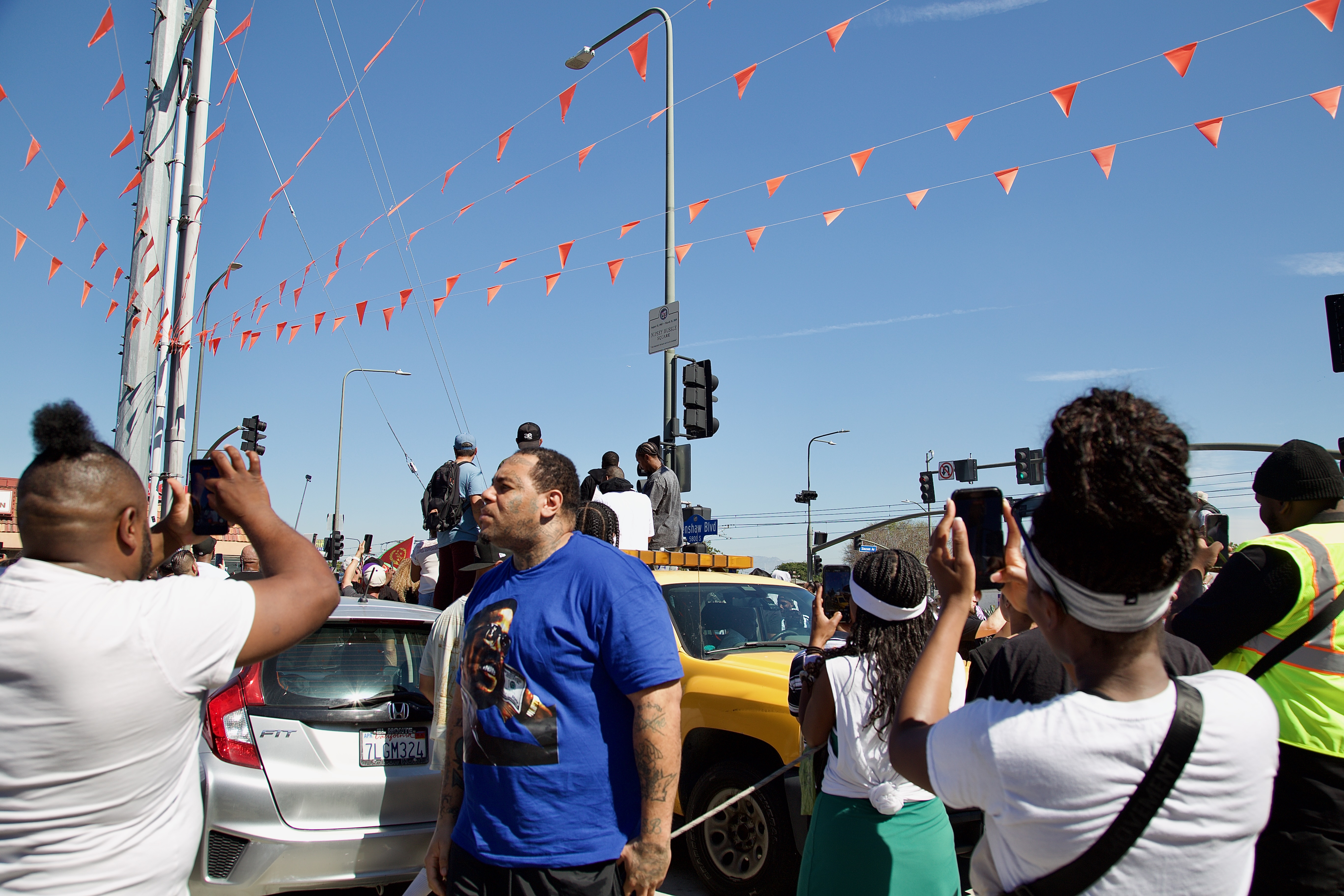
Dedication: Crenshaw and Slauson to Forever be Known as “Nipsey Hussle Square”
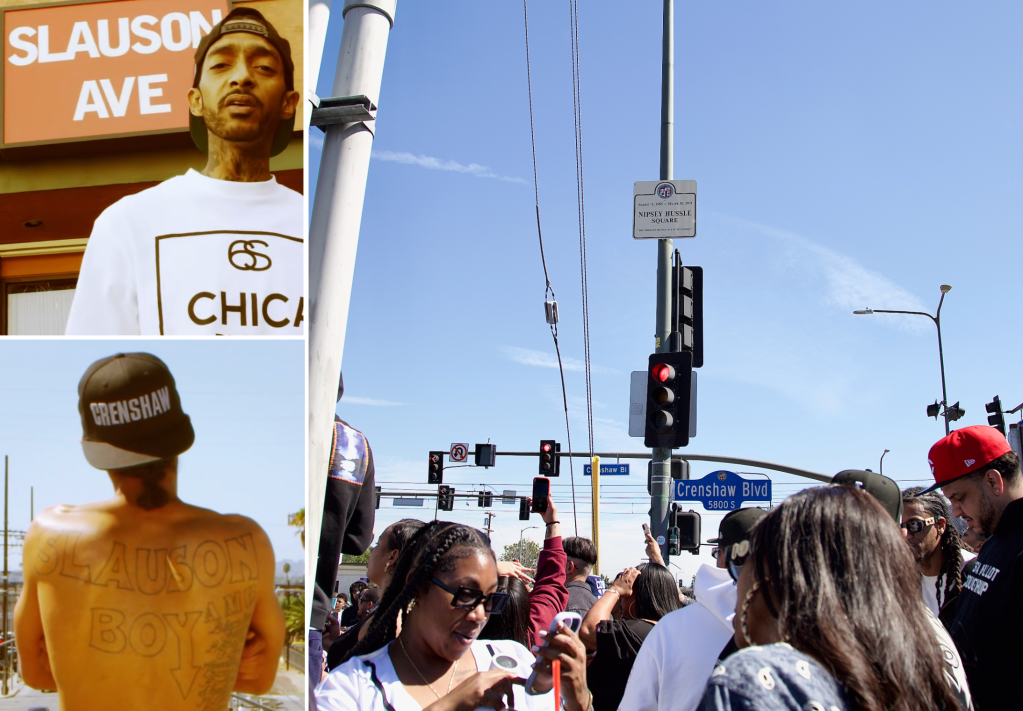
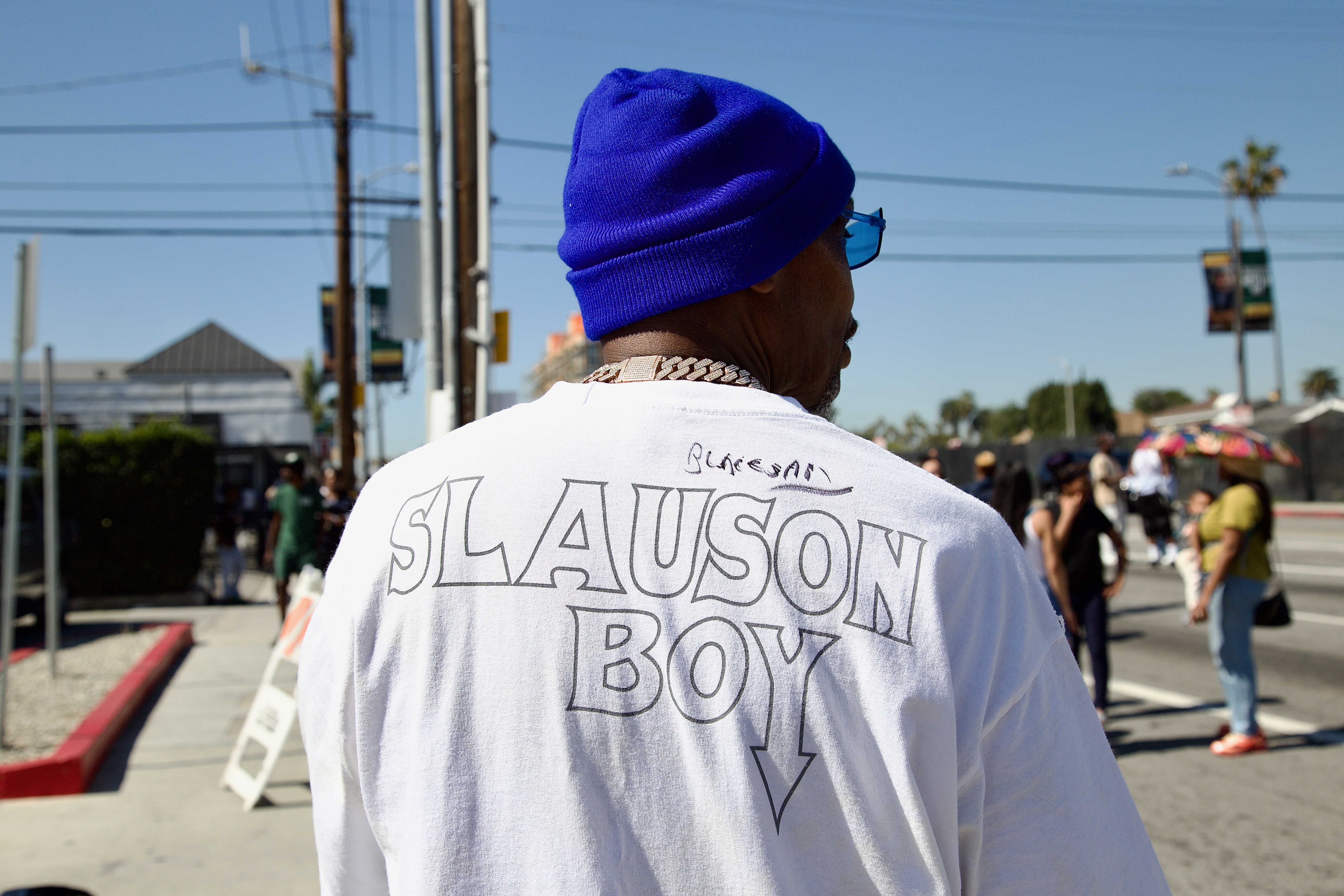
“I think everybody that know Hussle know that Hussle loved the area and that Crenshaw and Slauson meant everything to bro,” Samiel “Blacc Sam” Asghedom, the soft-spoken brother of the late Ermias “Nipsey Hussle” Asghedom began, his voice crackling with emotion.
“He met his child’s mother here. Sold his first mixtapes here. We used to walk from 60th Street to Crenshaw and Slauson as kids to catch the bus right here…”
The crowd leaned in to listen.
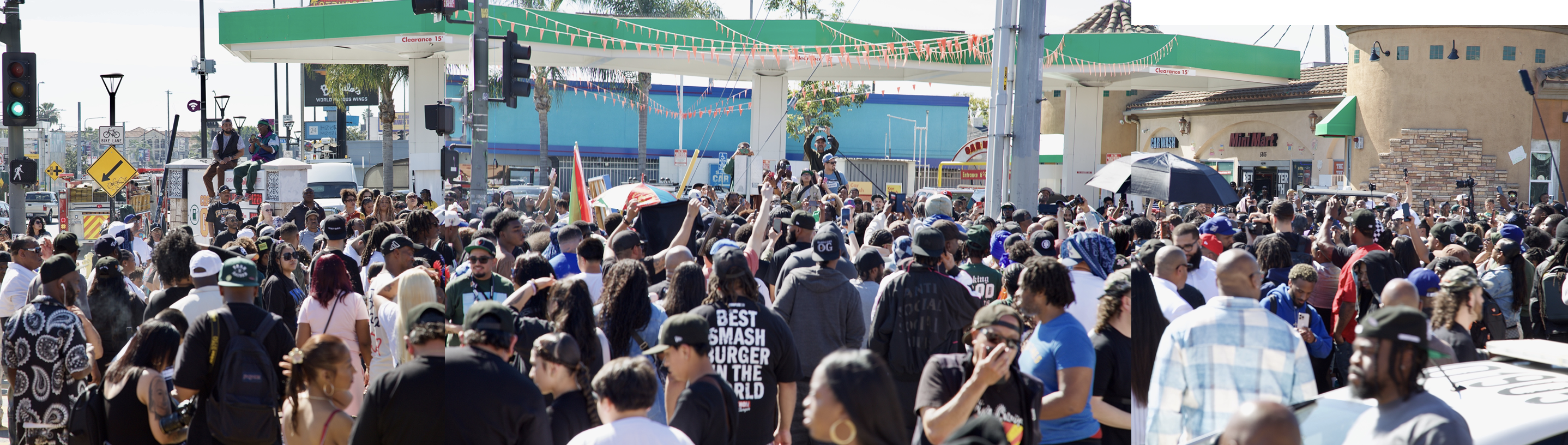
The stories were well-known to the hundreds that had gathered to celebrate the city’s official dedication of the corner as “Nipsey Hussle Square” this past Saturday. But no one tired of hearing them.
The fight to claim place and space at Crenshaw and Slauson was one of the defining struggles of Hussle’s life. It was also one of the defining struggles in his community, thanks to how segregationist policies and practices, disinvestment, and oppressive policing had long conspired to deny South Central residents, the Black community, and young Black men, in particular, access to and ownership over their own streets.
The brothers’ grind on that corner was thus the stuff of legends – whether it was them buying up the gas station’s snacks to resell at school, Blacc Sam setting up tables to peddle t-shirts, Hussle hawking mixtapes in the parking lot, or them opening multiple businesses in the strip mall, getting raided and shut down multiple times by police, and ultimately buying the building from the owner, who preferred to hand them the keys rather than cave to pressure from LAPD to kick them out.
And on March 31, 2019, when Hussle was gunned down in front of his own store at the age of 33, Crenshaw and Slauson became sacred ground.
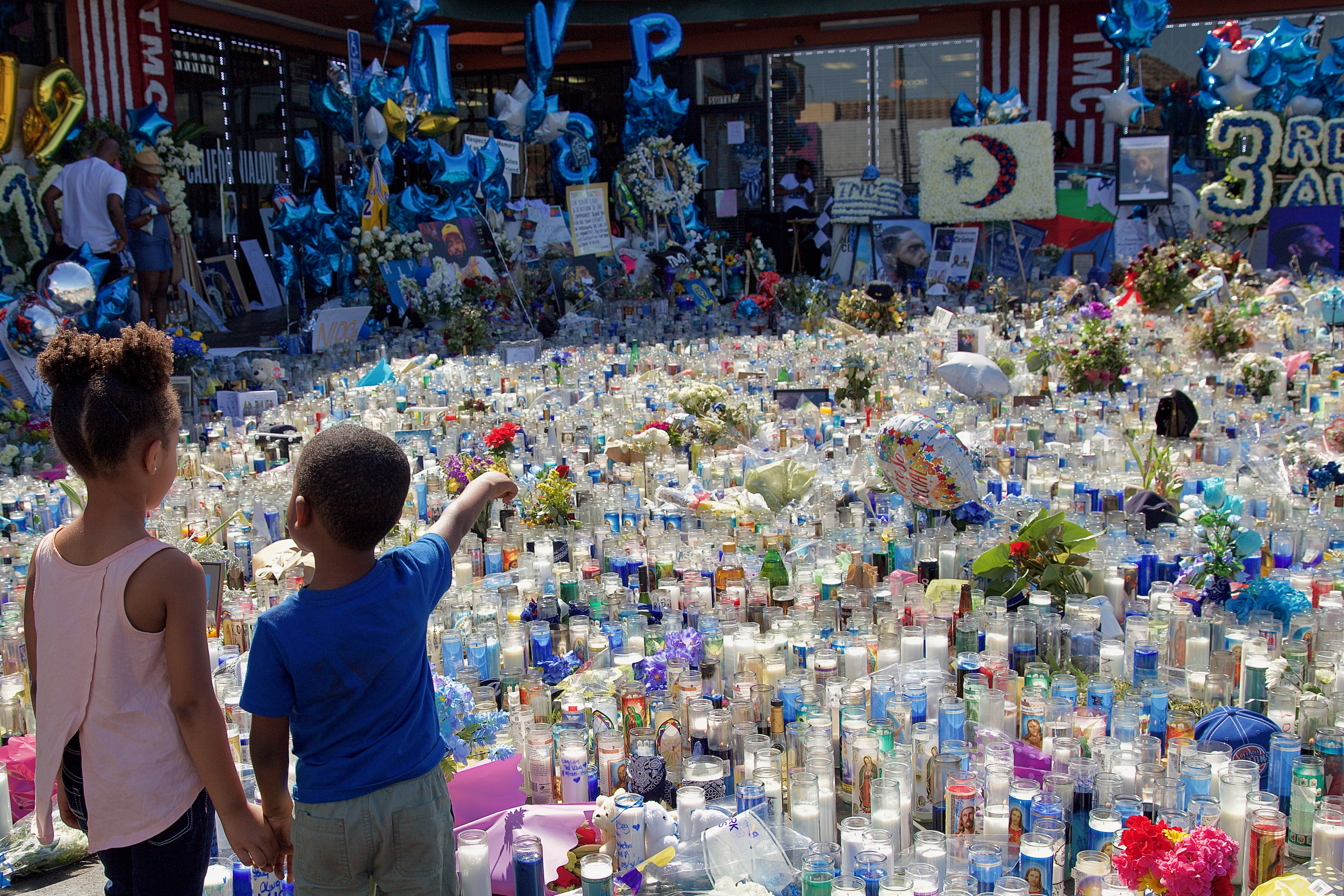
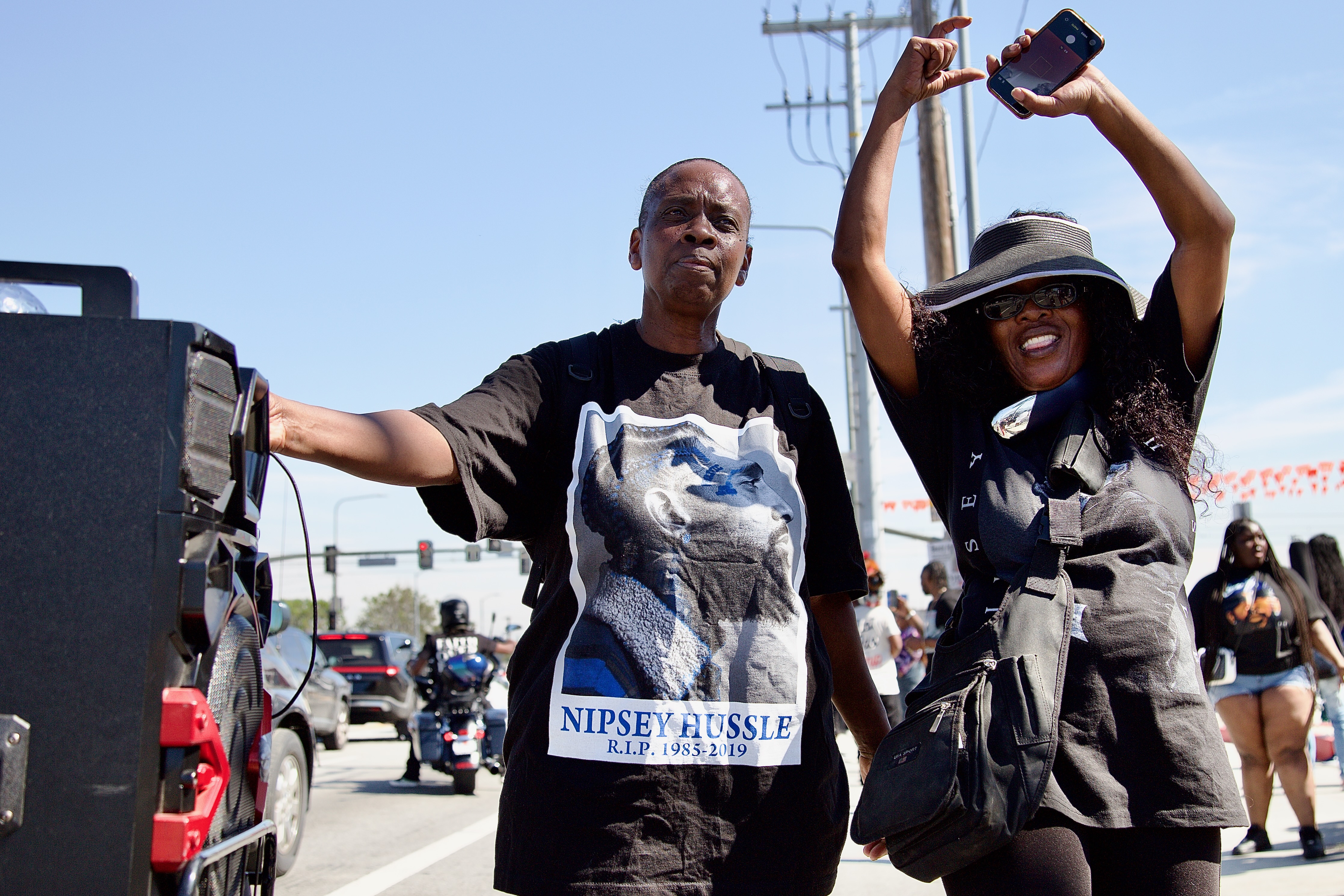
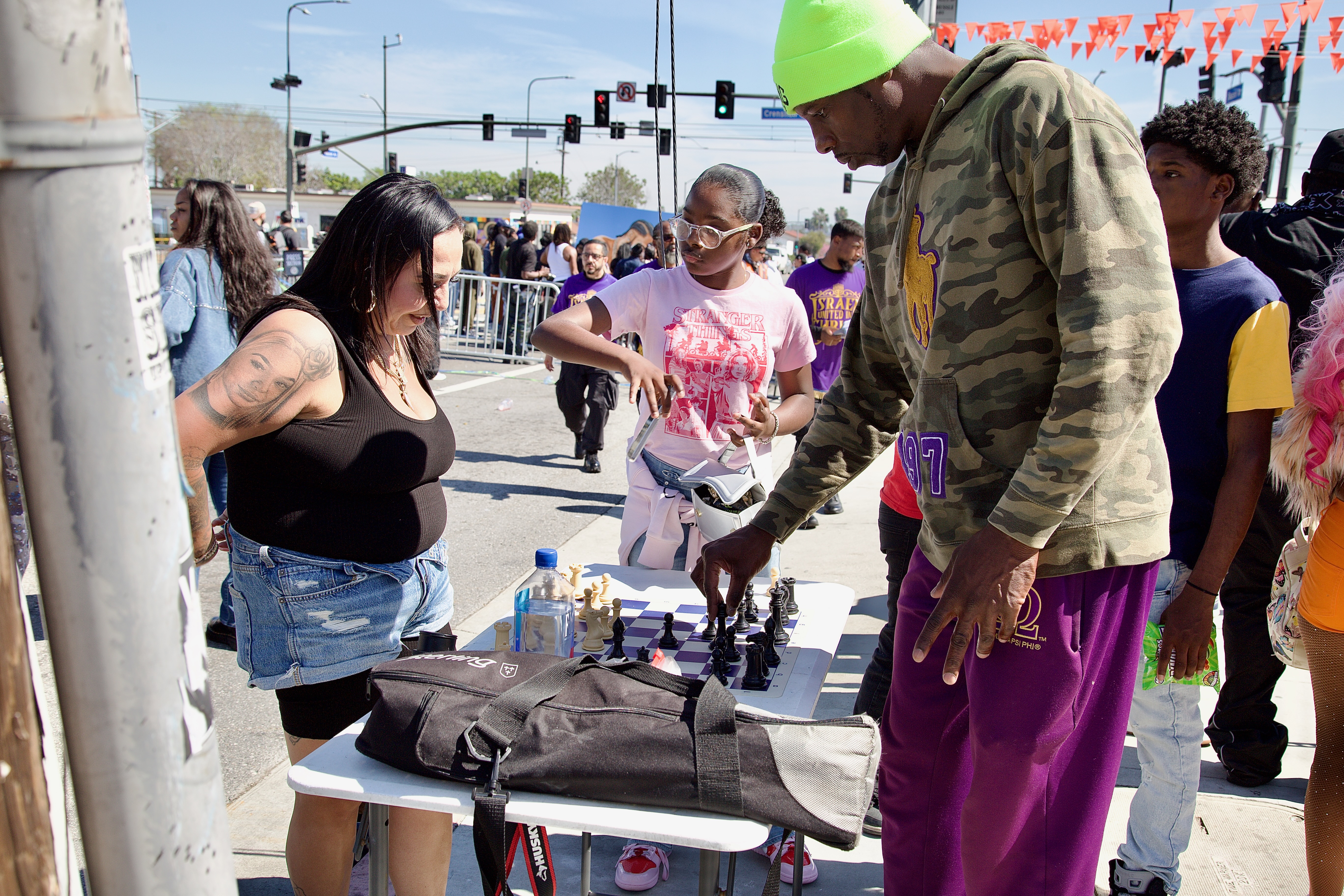
Many of those present for Saturday’s dedication ceremony had been there to witness it all firsthand.
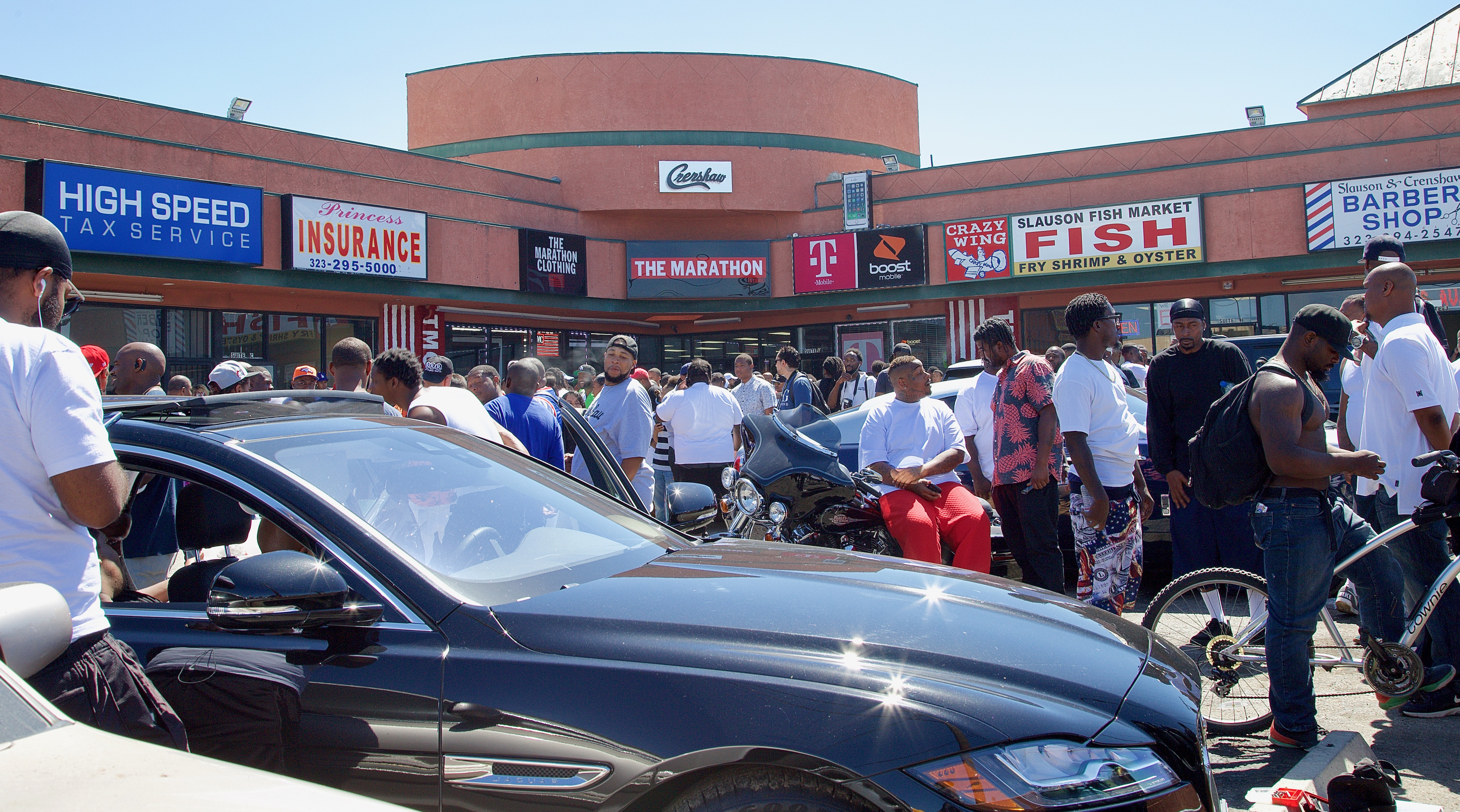
They had come up with Hussle, lived through similar struggles, seen him around the neighborhood, bought a mixtape from him back in the day, and/or been there in 2017 when he opened his flagship Marathon clothing store at the site where it all began (below).
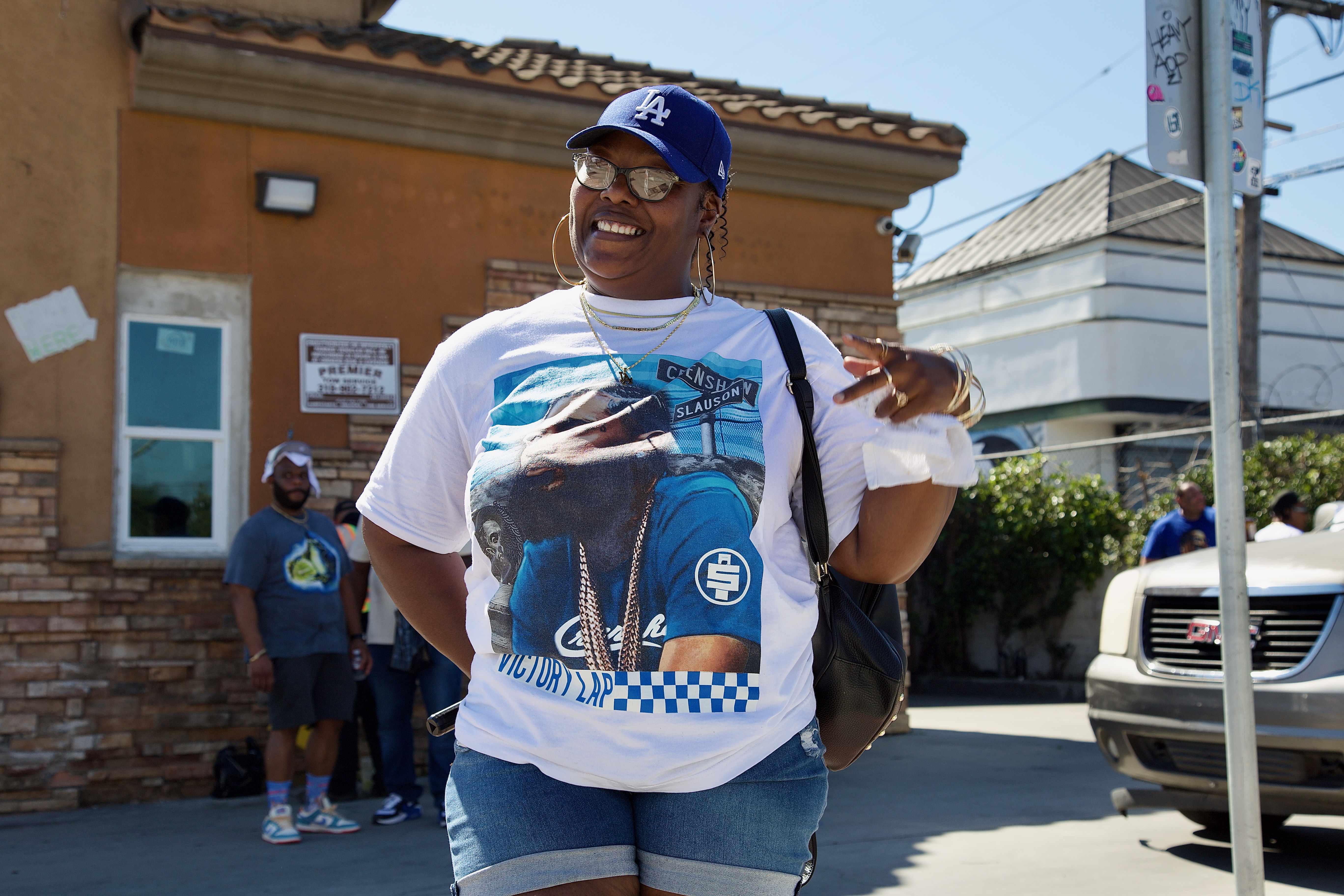
Others, like Rachel Doyle (below), had used the blueprints he laid out in his music to marry their entrepreneurship with investment in their own communities. She’d made the trek from Lancaster to honor how formative he’d been in her thinking about how to stay rooted and uplift those around her. “He was a part of his community, not a product of it,” she said.
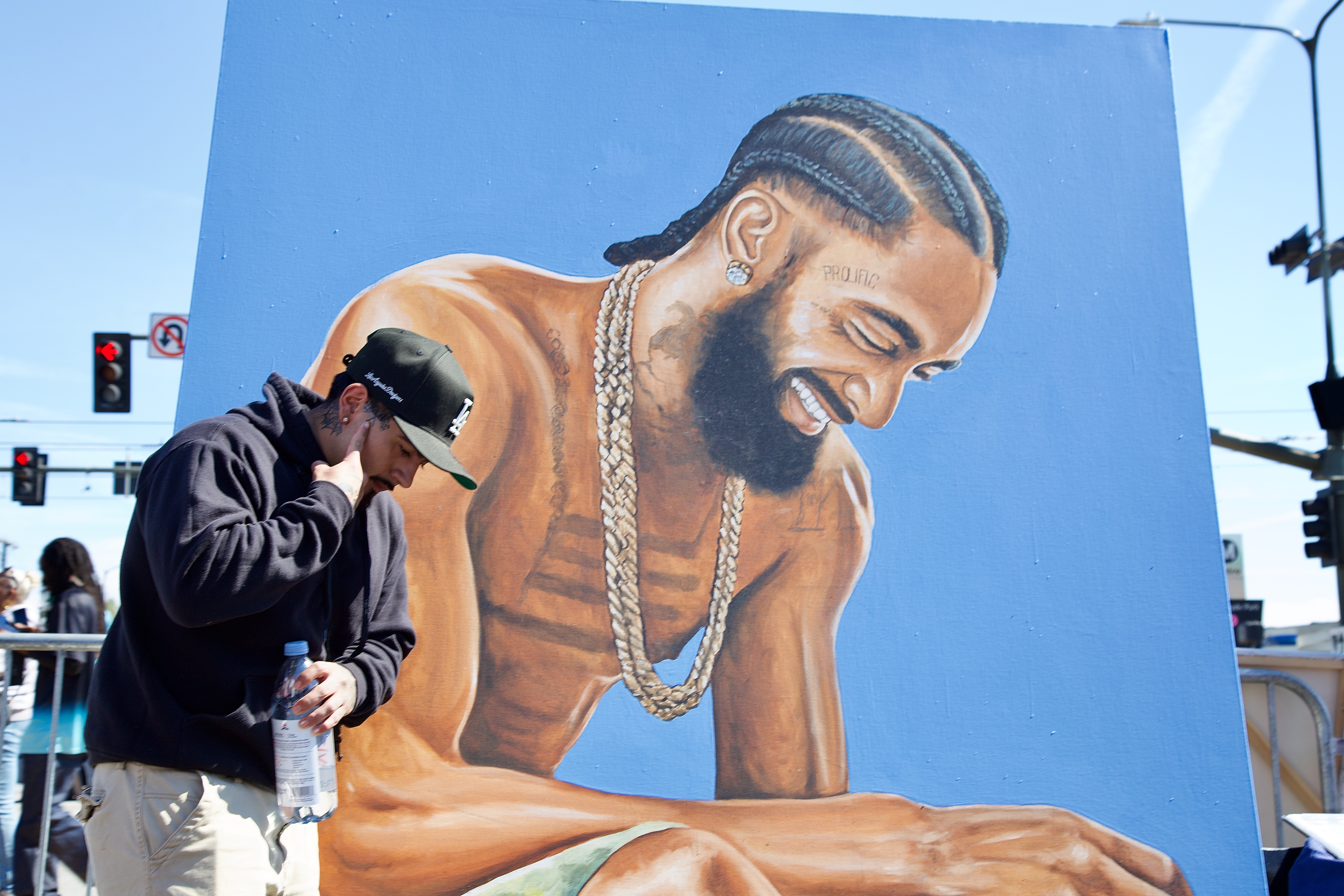
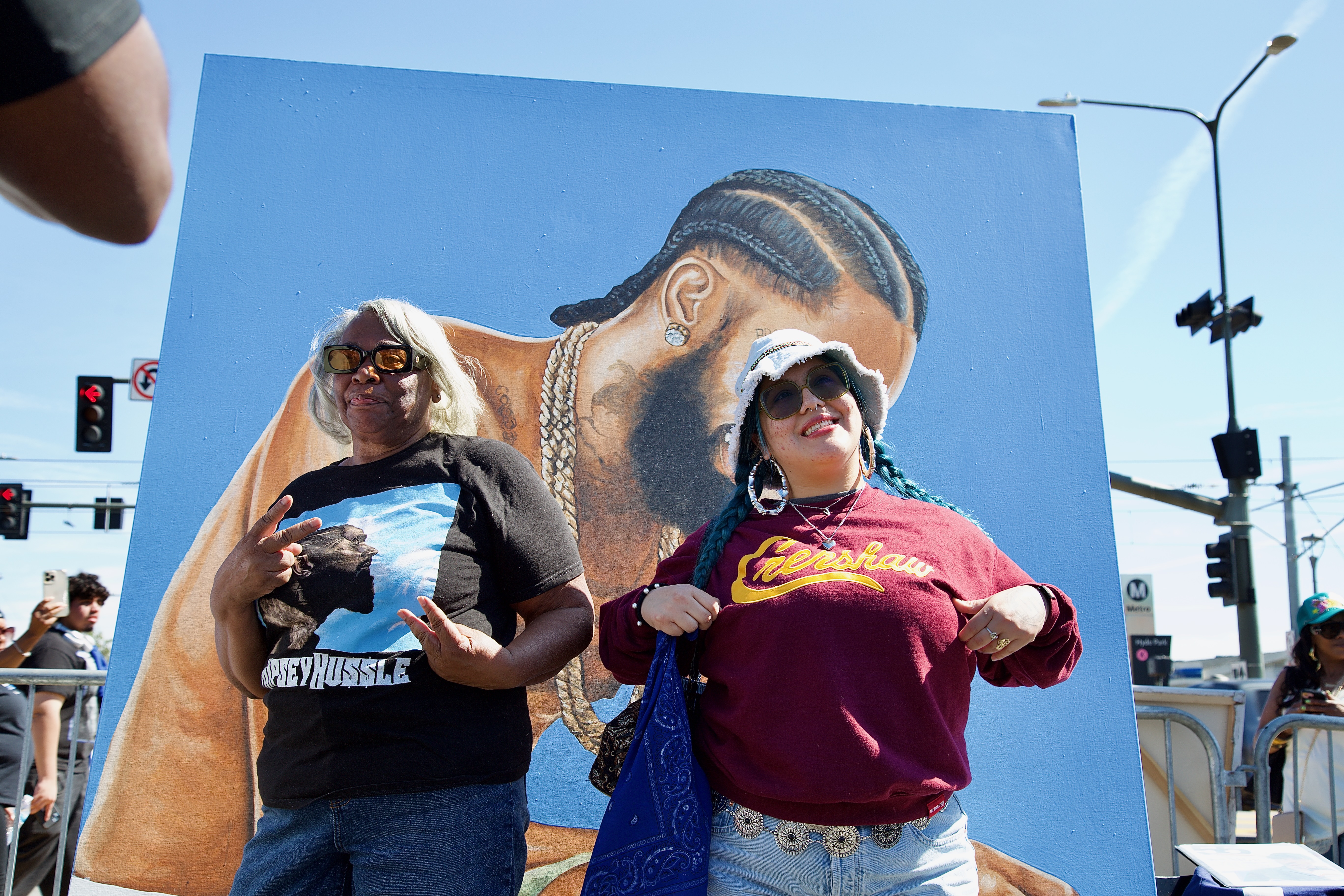
Whatever their connection to him, just about everyone I spoke with on Saturday said they felt they had to be present for the ceremony. Not only did they want to see history made in person, they wanted to participate in carrying Hussle’s legacy forward.
_________
Keys 2 the City
For his part, Hussle had always known this day would come.
Actress Lauren London, Hussle’s partner, told the crowd that when they had first started dating, “We would drive by over here and he would be like, ‘You know Boogie, one day they gonna name this whole section after me.'”
From just about anyone else, that kind of claim would have sounded self-aggrandizing. But for Hussle, it had always been about creating a movement that was bigger than himself.
Blacc Sam has often said he hadn’t always understood that vision as clearly as Hussle did. Like back around 2009, when Nip wanted to pivot from his successful mixtape series “Bullets Ain’t Got No Name” and forge a new path built around the concept of “The Marathon.”
During a recent interview with P-Nice, Blacc Sam said he’d feared the shift would undercut Hussle’s momentum just as his star was rising. But Nip had no such qualms. He was frustrated with the energy at his shows. People were pulling up to test him, he was getting into fights, there were shoot-outs in the parking lot. It wasn’t how he wanted to define success. “My sh*t got to inspire,” Hussle told him.
Once “The Marathon” dropped, that vision suddenly crystallized. “I started seeing people pull up with resumes. People coming and talking to bro like, ‘Bro, you changed my life.’ ‘Bro, I’m from the other side, and n***** f*ck with what you saying,’ and ‘I got through this situation and I started my own business’ … and I’m just listening from the sideline getting goosebumps,” Blacc Sam told P-Nice. “It was crazy.”
The blueprints found within the mixtape would become the cornerstone of a lifestyle brand, a mantra, and a legacy.
Hussle’s subsequent records built on that foundation while never losing sight of the people he cared most about reaching: youth in disinvested, overpoliced communities like his own. He explicitly referenced them in his music, like in “Dedication,” a track off his grammy-nominated album “Victory Lap,” proclaiming, “This ain’t entertainment, it’s for n***** in the slave ship / These songs is the spirituals I swam against them waves with….” And, as Blacc Sam noted on Saturday, Hussle prioritized them in his private conversations about why, despite all the hood politics, issues with law enforcement, and other potential dangers involved in staying put, the flagship Marathon store had to be at Crenshaw and Slauson.
“‘First and foremost, it has to inspire the people that grow up here. That grow up where I grew up. That was with me and seen me… they have to understand that you can do it,'” Blacc Sam recalled Hussle saying.
“I thought I understood it then,” he continued, growing more emotional. “But I really understand it now. And that’s what gives me peace, knowing that bro inspired millions and millions. And it started inspiring the people here in this community, from this neighborhood, and … inspired the youth, inspired the people from the hood, inspired the uninspirable, as people would say. [Hussle] put another light on it and it made it shine.”
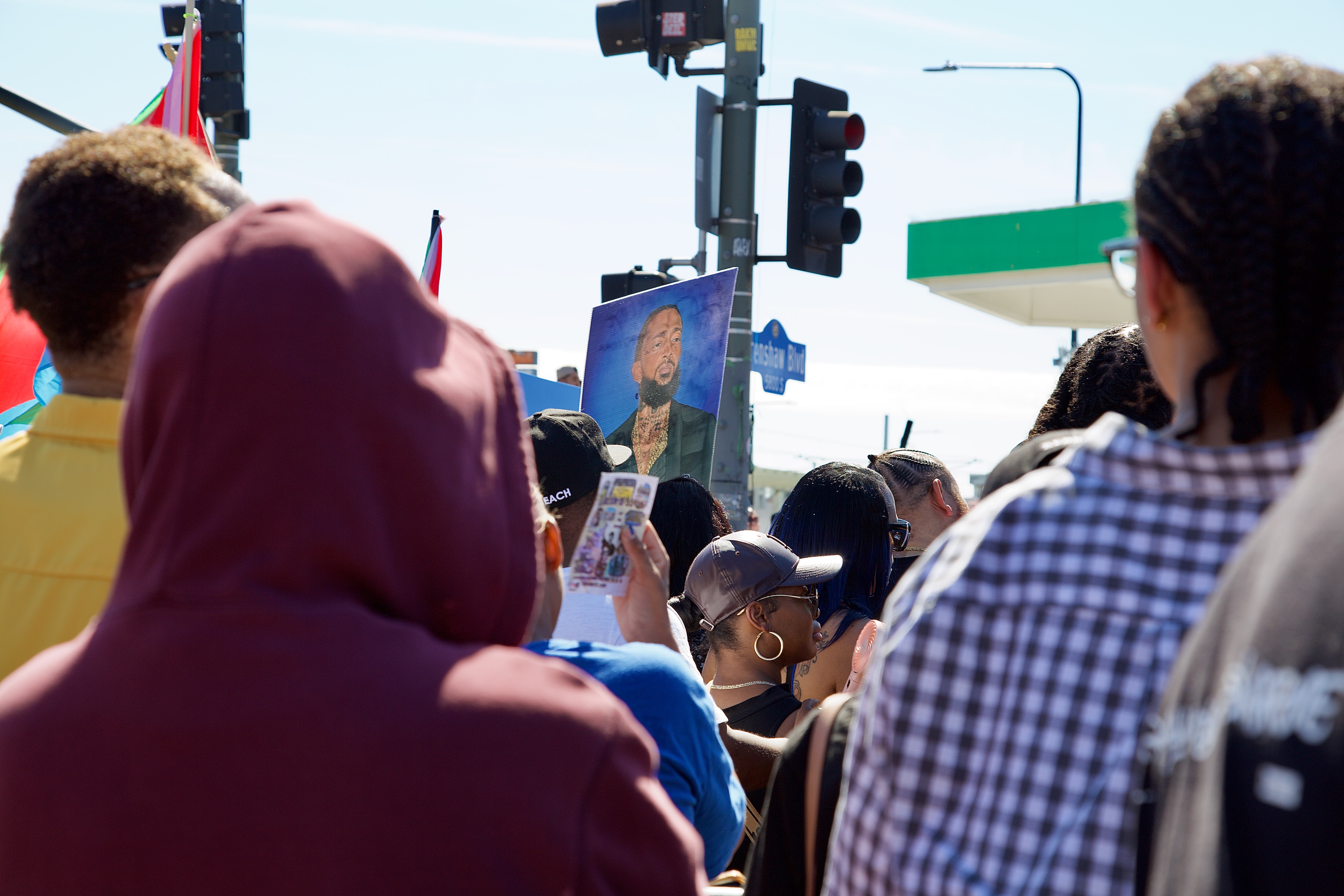
Local officials present on scene touched on what Hussle meant to Los Angeles.
55th District Assemblymember Isaac Bryan recalled that, last Thanksgiving, when the Marathon’s lot reopened for the first time since Hussle’s passing, it was so the Neighborhood Nip Foundation could feed the community. “Carrying [Hussle’s] legacy comes with responsibility,” he said. “… Invest in your community! Inspire! Learn! F*ck Donald Trump! And protect Blacc Sam at all costs!”
Echoing Bryan’s sentiments, 10th District City Councilmember Heather Hutt underscored the importance of memorializing Hussle’s story at a moment that the Trump administration was actively erasing Black people’s contributions to this country.
And Marqueece Harris-Dawson, the current City Council President, 8th District Councilmember, and man behind the 2019 motion to rename the intersection, spoke to the process of getting full council approval for the move. Some of his colleagues had needed to be educated about Hussle’s larger impact before they would sign on. But eventually they were all won over.
The naming of the square would effectively ensure that people were educated about Hussle in perpetuity, Harris-Dawson said. “Businesses can come and go, ideas can come and go … all of us will come and go. But forever, generations from now, when people get off there at that train stop, they’re going to know the story of Nipsey Hussle.”
__________
Hussle and Motivate
At one point in his remarks, Blacc Sam said he believed Hussle’s soul and his spirit was still present in the section.
Those in attendance seemed to feel the same way.
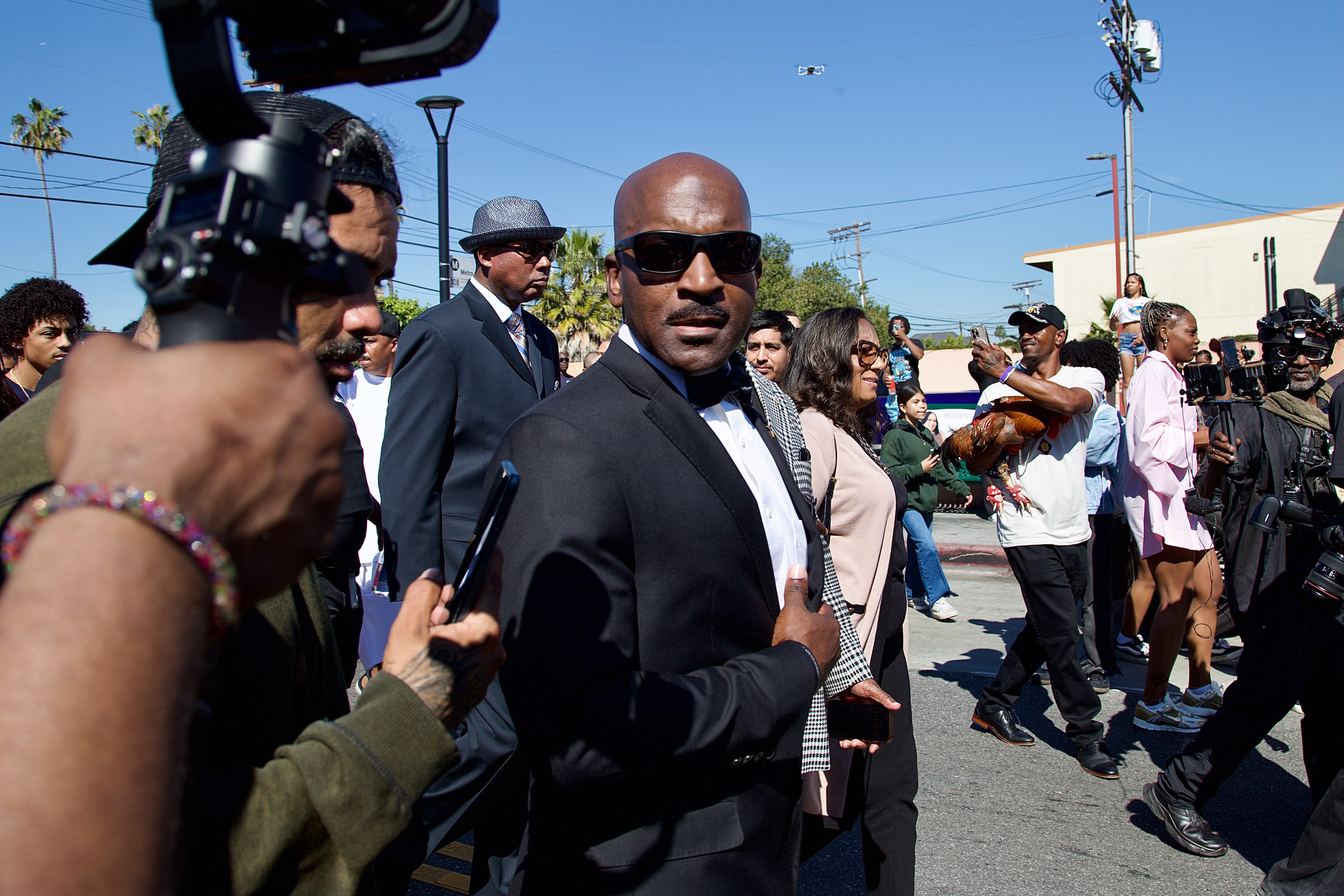
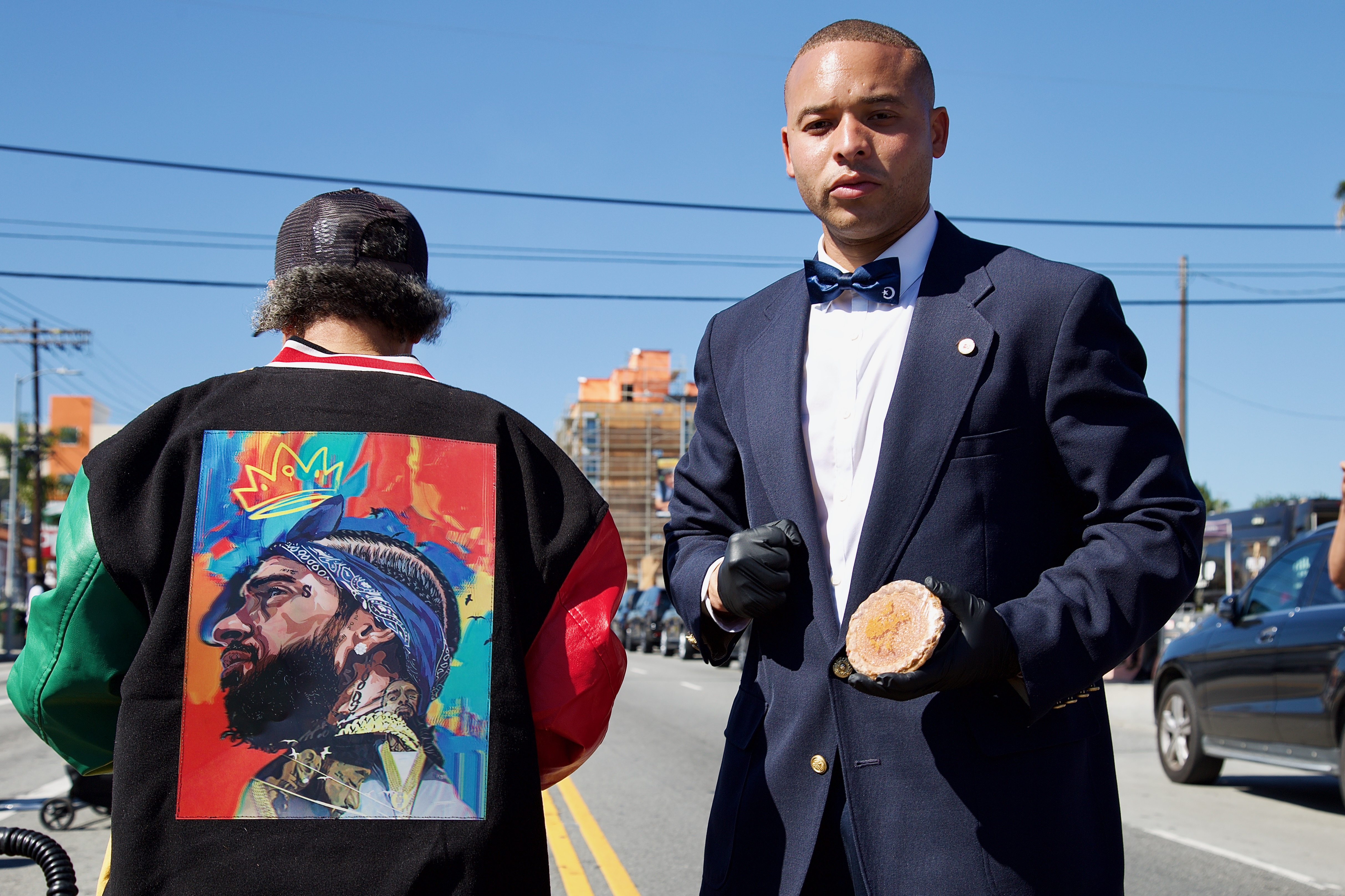
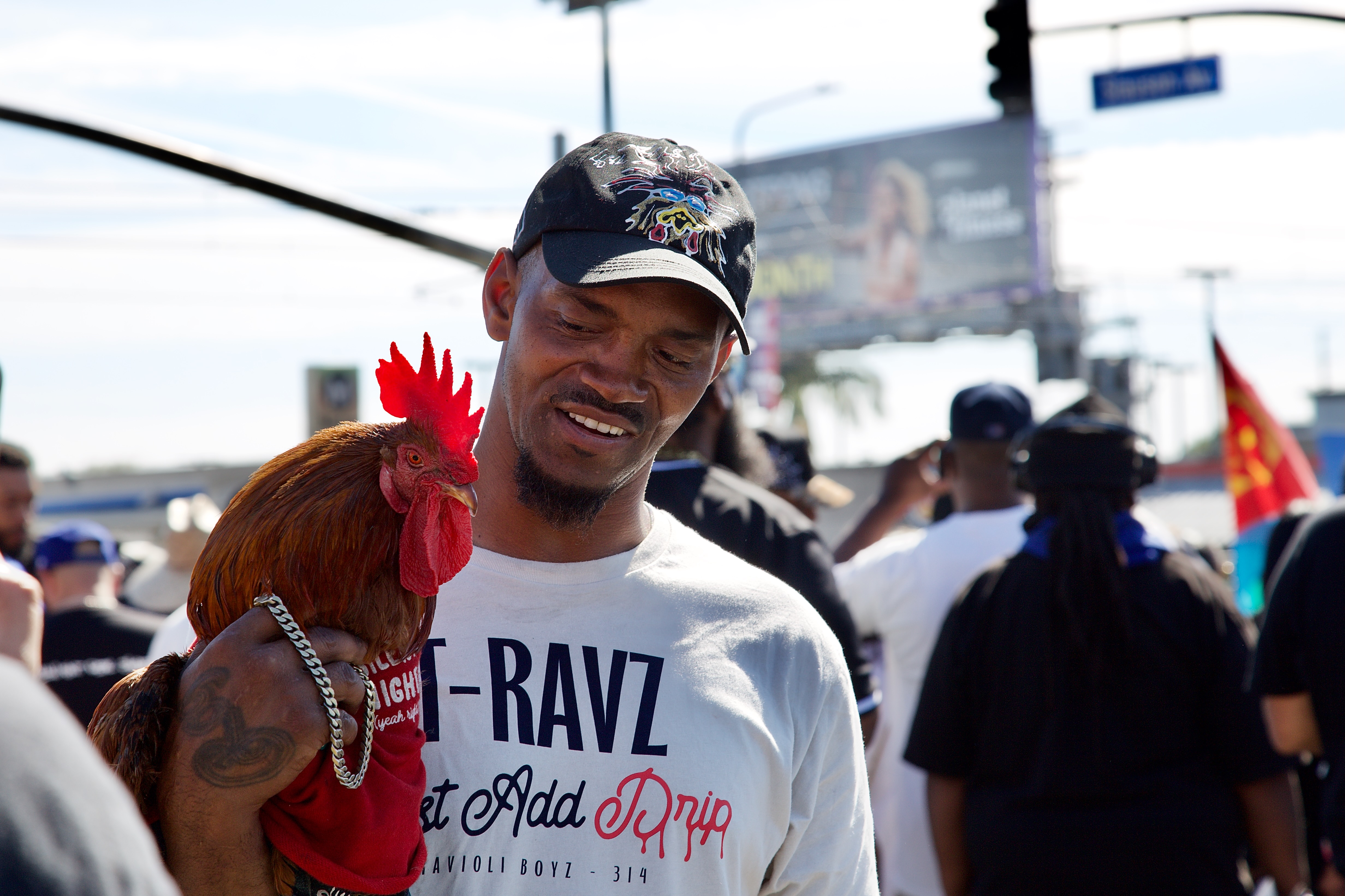
A man named Kyle said he was there because Hussle represented “Inspiration and motivation.” Brother Quenton, who had a cart full of bean pies for sale, praised Hussle’s drive for justice and equality for the community and said “the Marathon continues through all of us.” Through tears, Ray spoke to how Hussle’s music, which often referenced persevering through trauma and loss, had helped him get through a devastating year, which included the murder of his brothers and the loss of his mother and aunt. Nate Gibbs, who was proudly broadcasting his own running commentary on the day on facebook live, lauded Hussle’s efforts to bring peace to the corner. And Brian Love (and his extremely popular rooster, 46 Sanders), originally from Milwaukee, wanted people to know that Nip was loved well beyond L.A.’s borders.
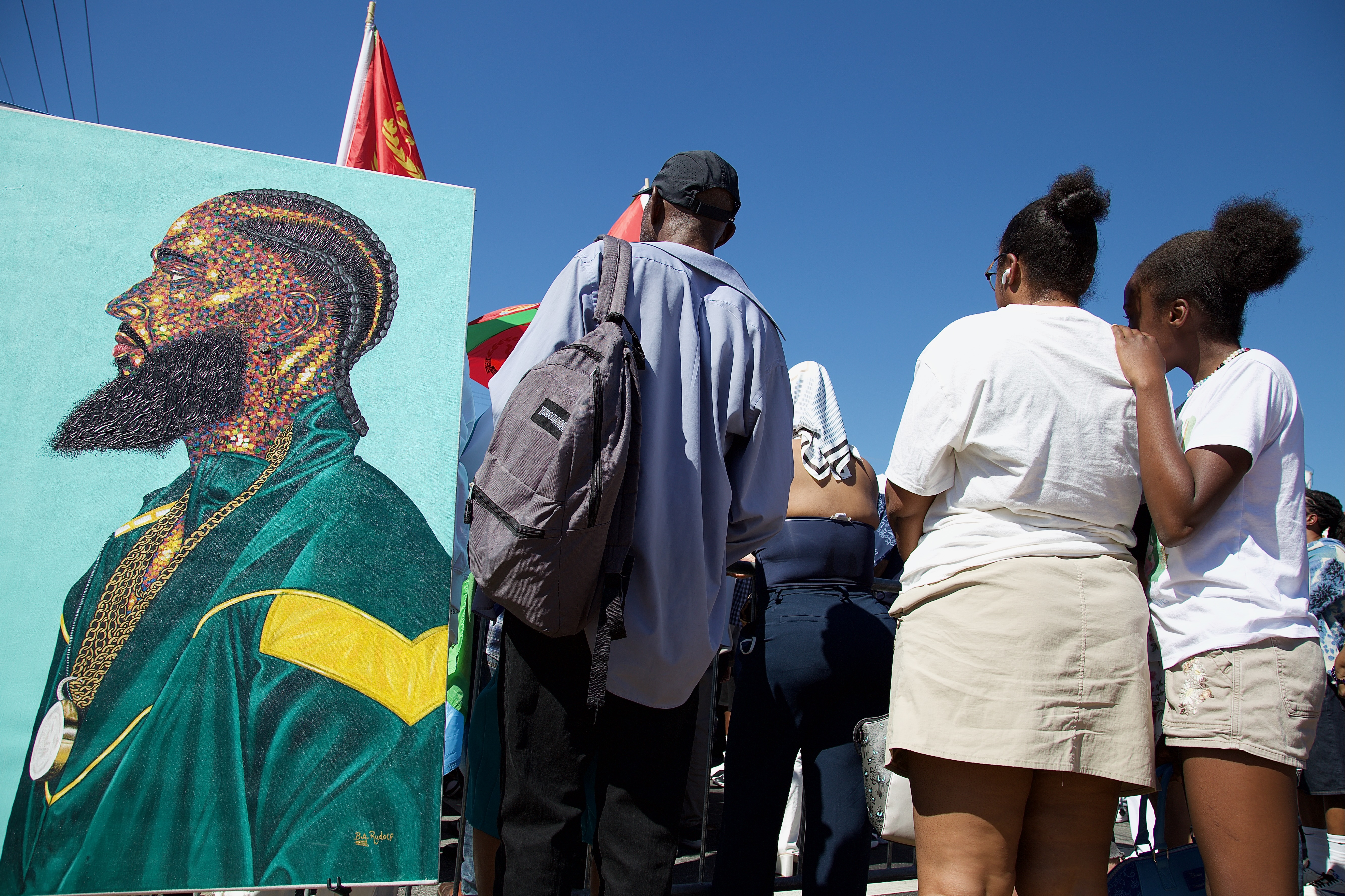
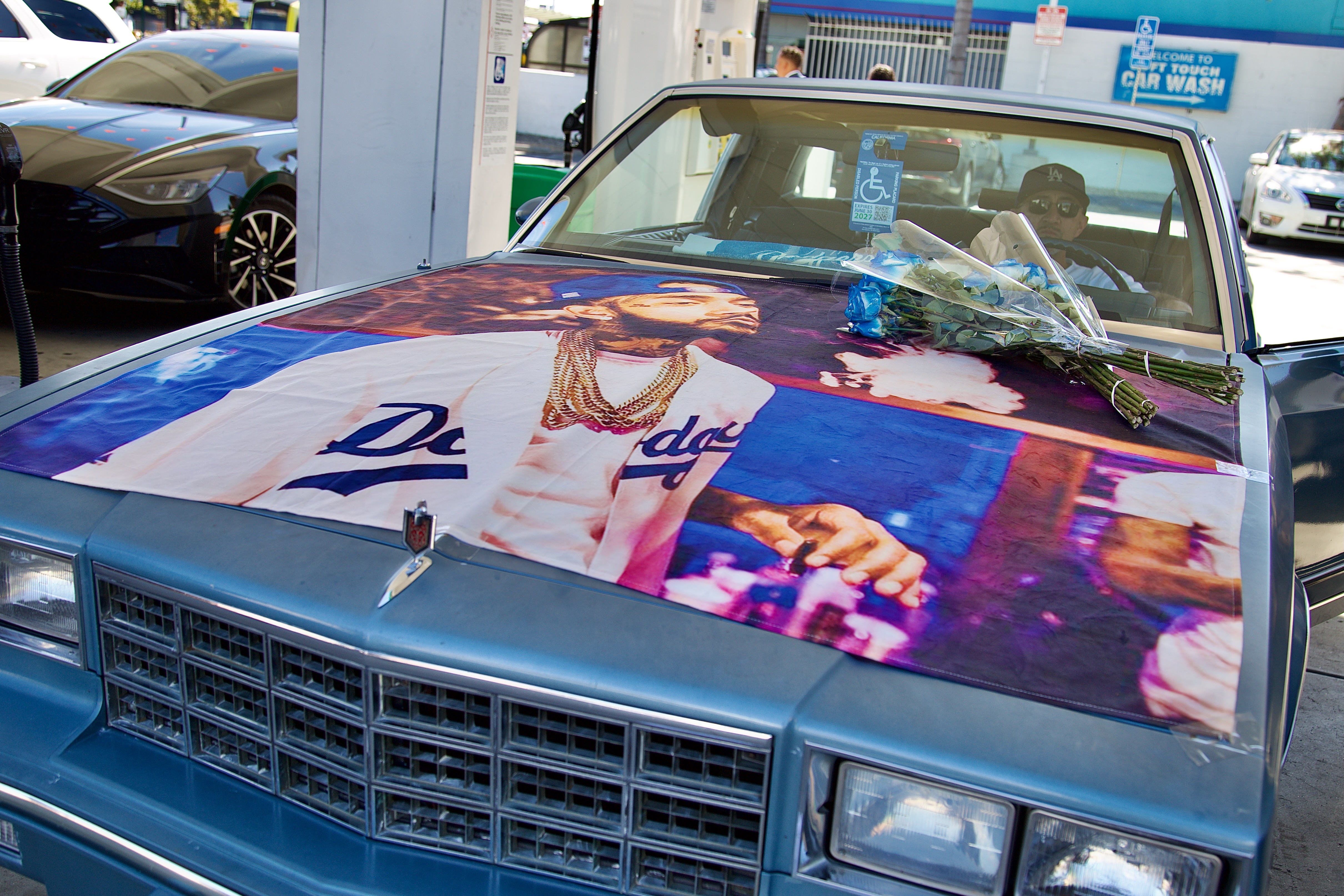
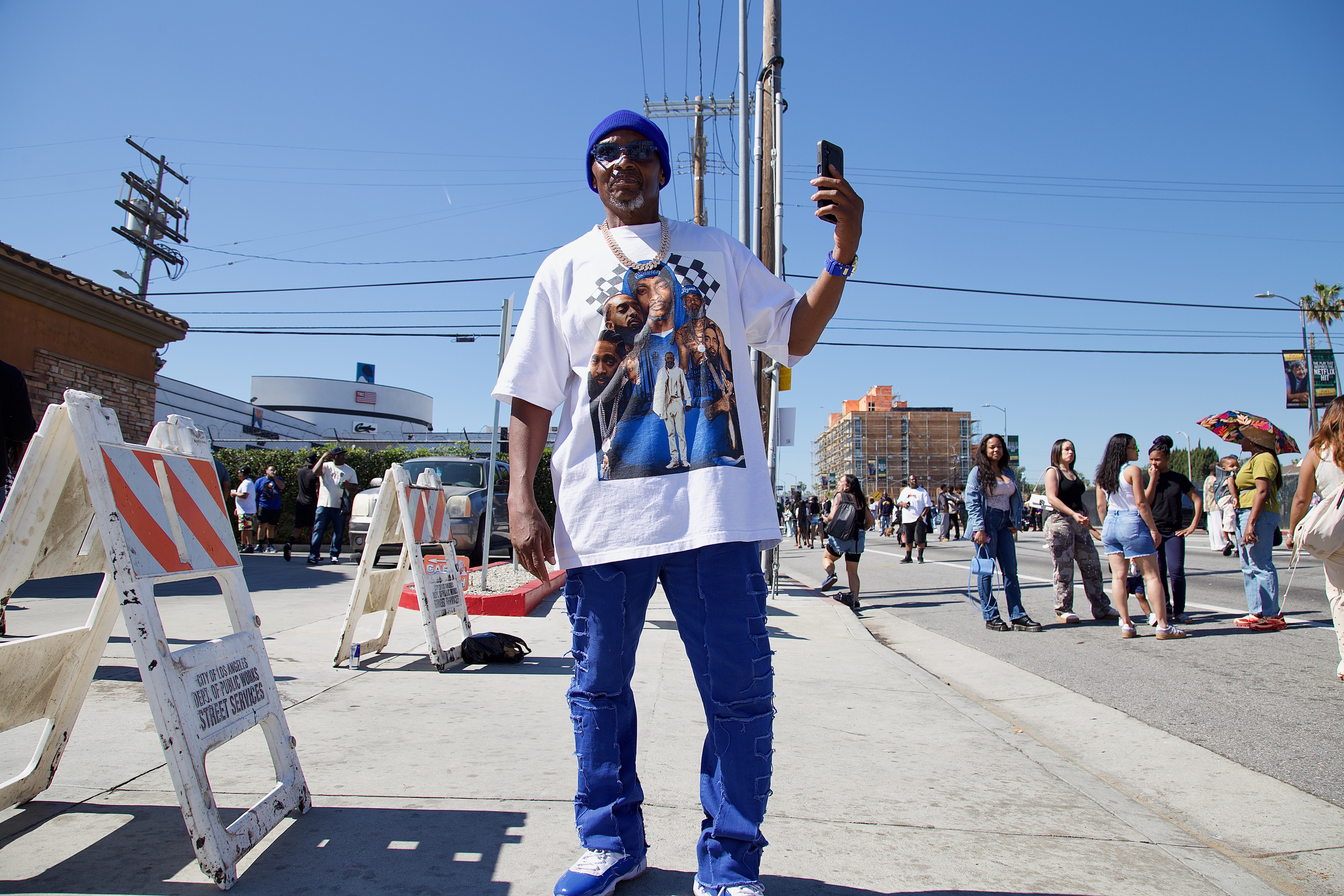
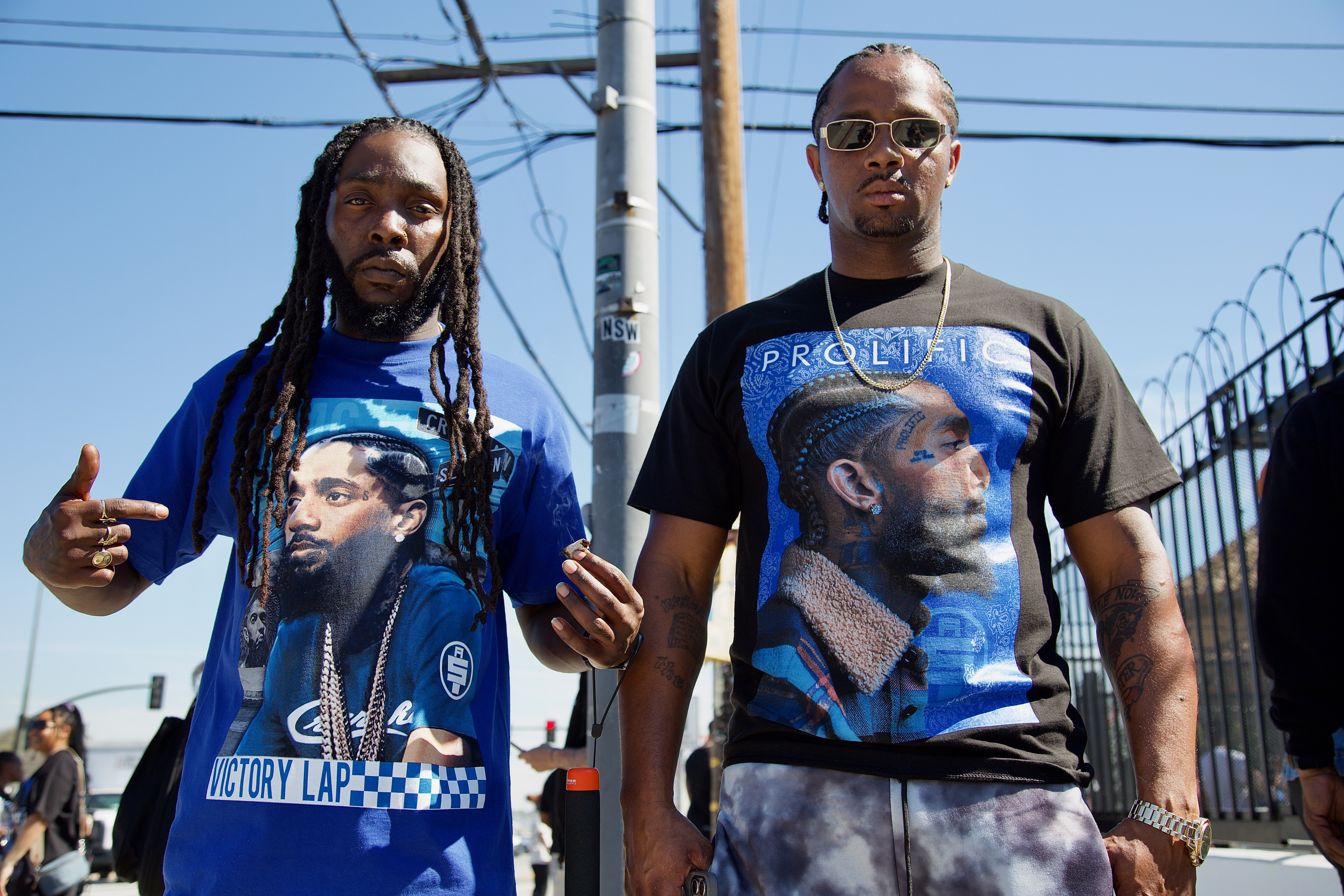
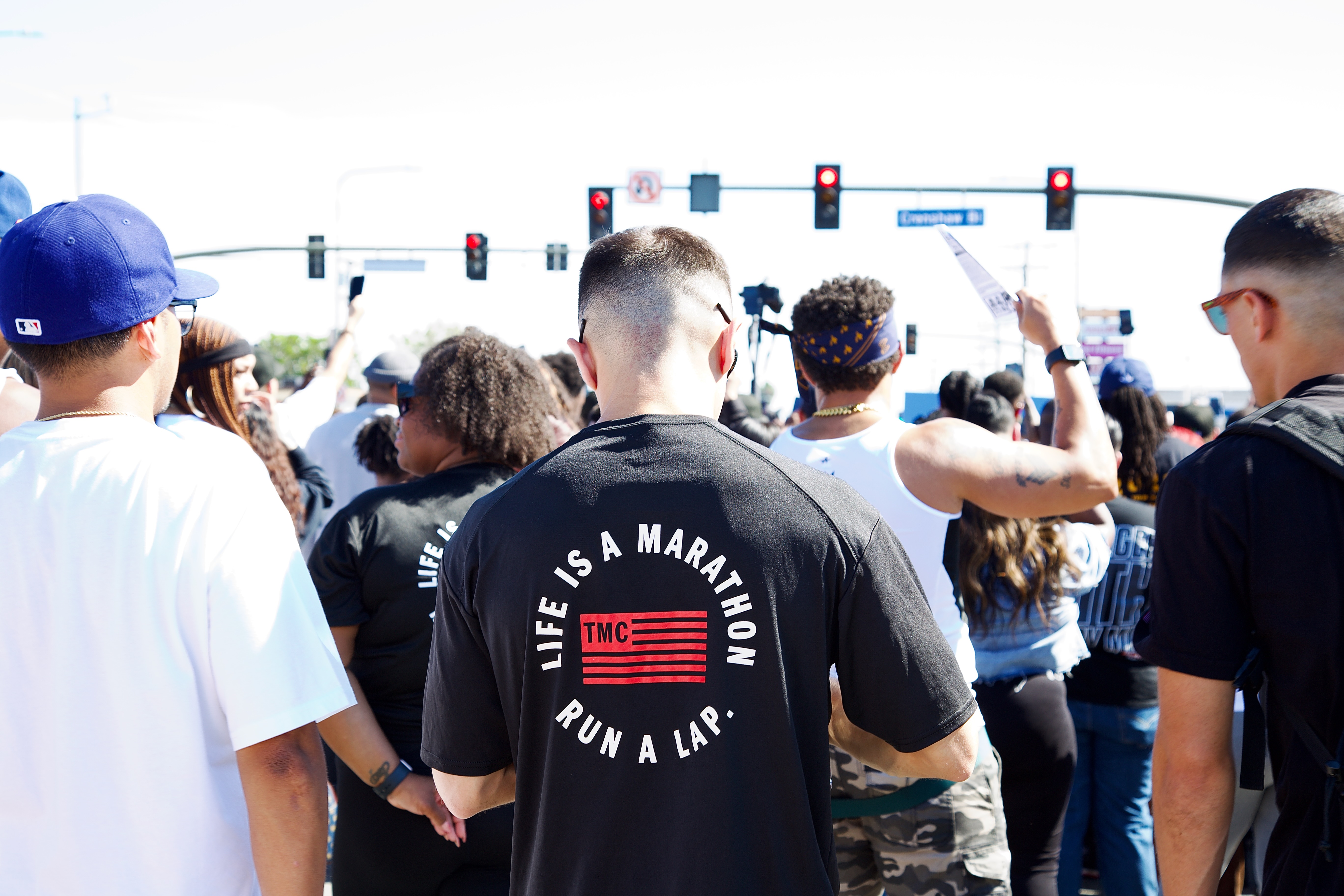
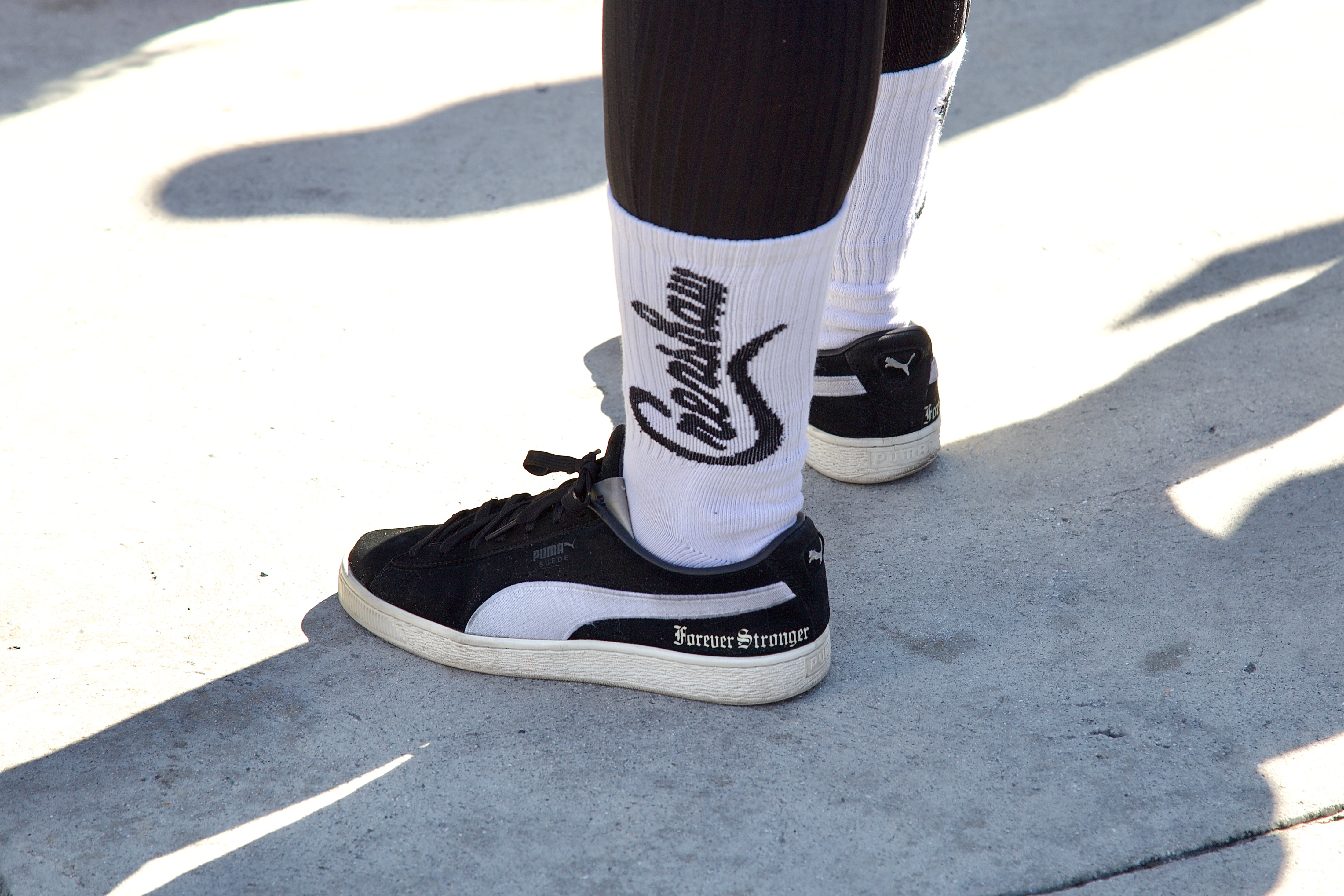
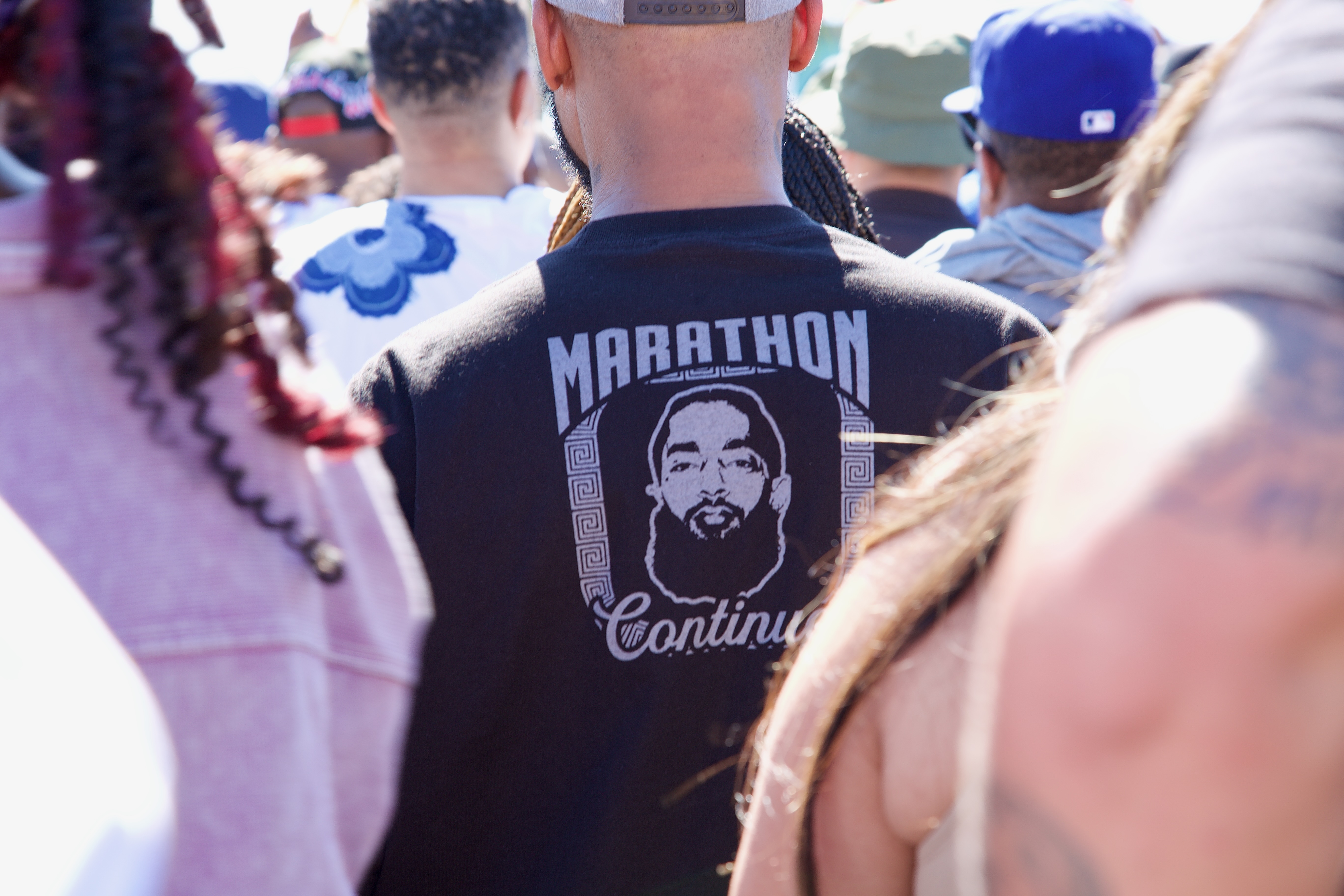
Many thanks to those who shared their thoughts and stories. Some of their photos can be found below. For a look at the history of South Central through the prism of Hussle’s lyrics and interviews, see our 2019 deep dive, here. Our photo essay and coverage of the marathon home-going procession – a day unlike any L.A. had ever seen before or will ever see again – can be found here. #TMC

Read More:
Streetsblog has migrated to a new comment system. New commenters can register directly in the comments section of any article. Returning commenters: your previous comments and display name have been preserved, but you'll need to reclaim your account by clicking "Forgot your password?" on the sign-in form, entering your email, and following the verification link to set a new password — this is required because passwords could not be carried over during the migration. For questions, contact tips@streetsblog.org.