Metro to Fully Restore Transit Service December 11

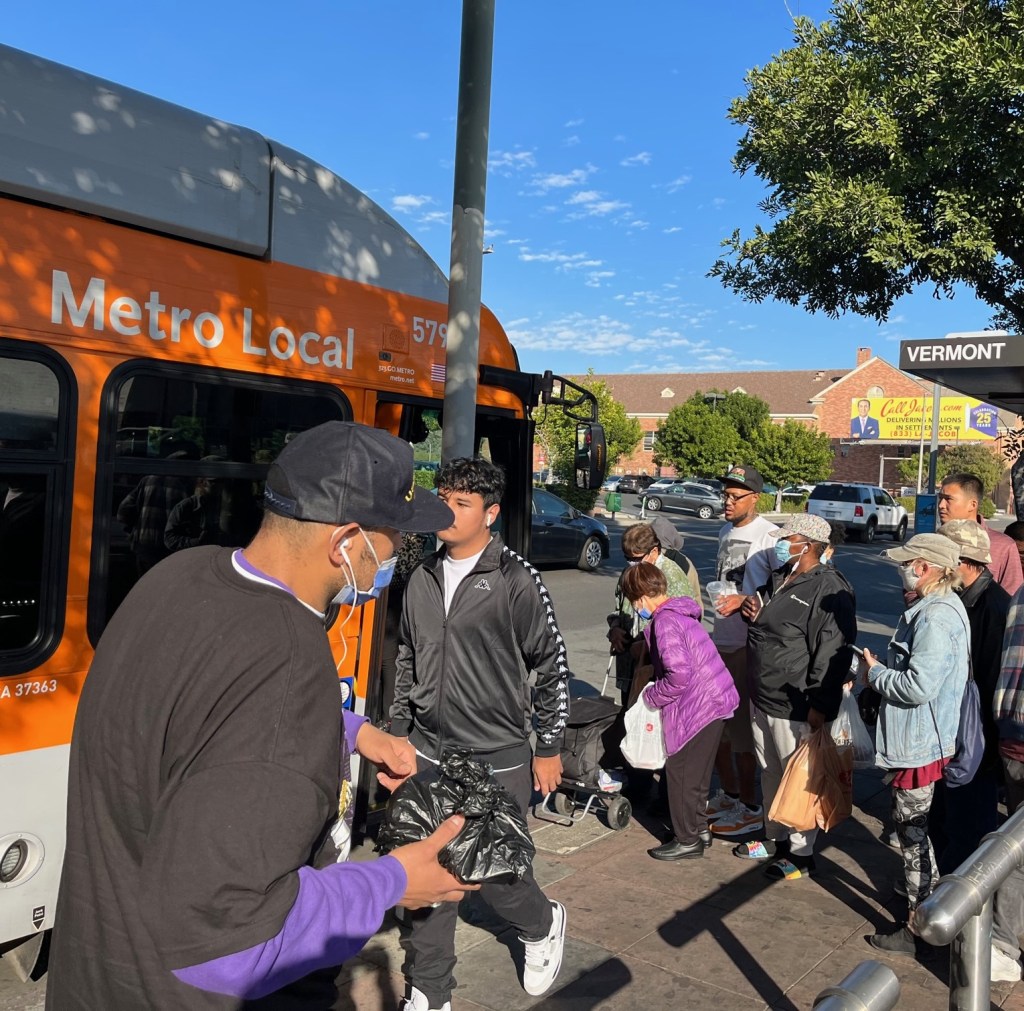
At the Metro board Operations Committee meeting last week, staff outlined the agency’s plan [staff report] to fully restore transit service to pre-pandemic levels. The service restoration will take place Sunday December 11.
In wonky statistics, Metro is currently operating 6.7 million annualized “revenue service hours,” down from 7 million RSH annually prior to COVID.
Early on in the pandemic, Metro slashed transit service by 20 percent. The board mandated (and approved funding for) fully restoring transit service as of July 2021. Then a partially self-inflicted bus operator shortage pushed that service restoration back from July to October. That month, Metro scheduled service matching pre-pandemic levels, but then failed to deliver the scheduled service. The agency was canceling upwards of ten percent of bus runs, resulting in inadequate and unpredictable service for riders, and excessive overtime (“ordered call backs”) for bus operators. In February, Metro again cut service by 10-12 percent – pegging it back to a level the agency could mostly deliver. Excessive bus cancellation numbers were reduced, but still hovered around three to five percent – well above the one percent that the agency experienced pre-pandemic. In June and October, Metro gradually restored some bus service, which currently operates at about 96 percent of the pre-COVID levels.
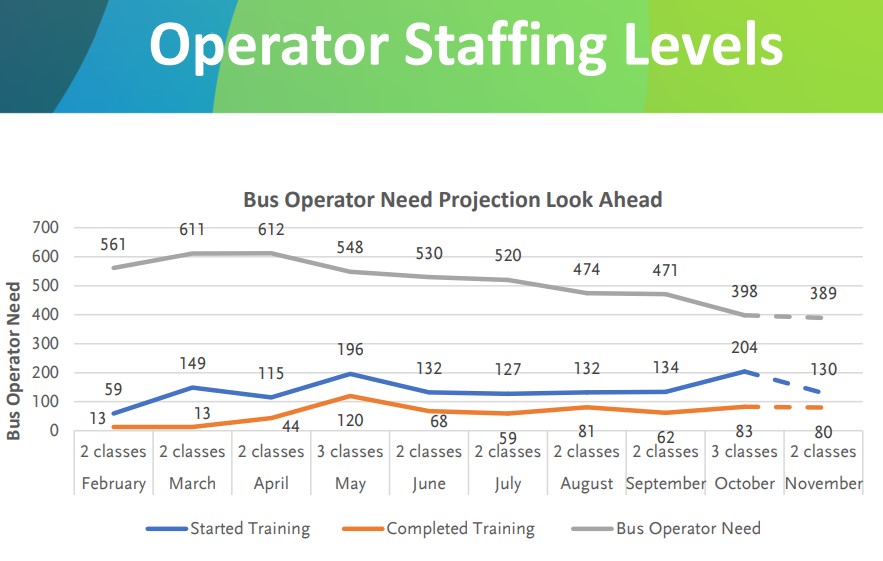
The biggest factor in service restoration appears to have been Metro raising bus operator salaries, approved in August. The operator shortage isn’t over, but recruiting efforts have been increasingly successful.
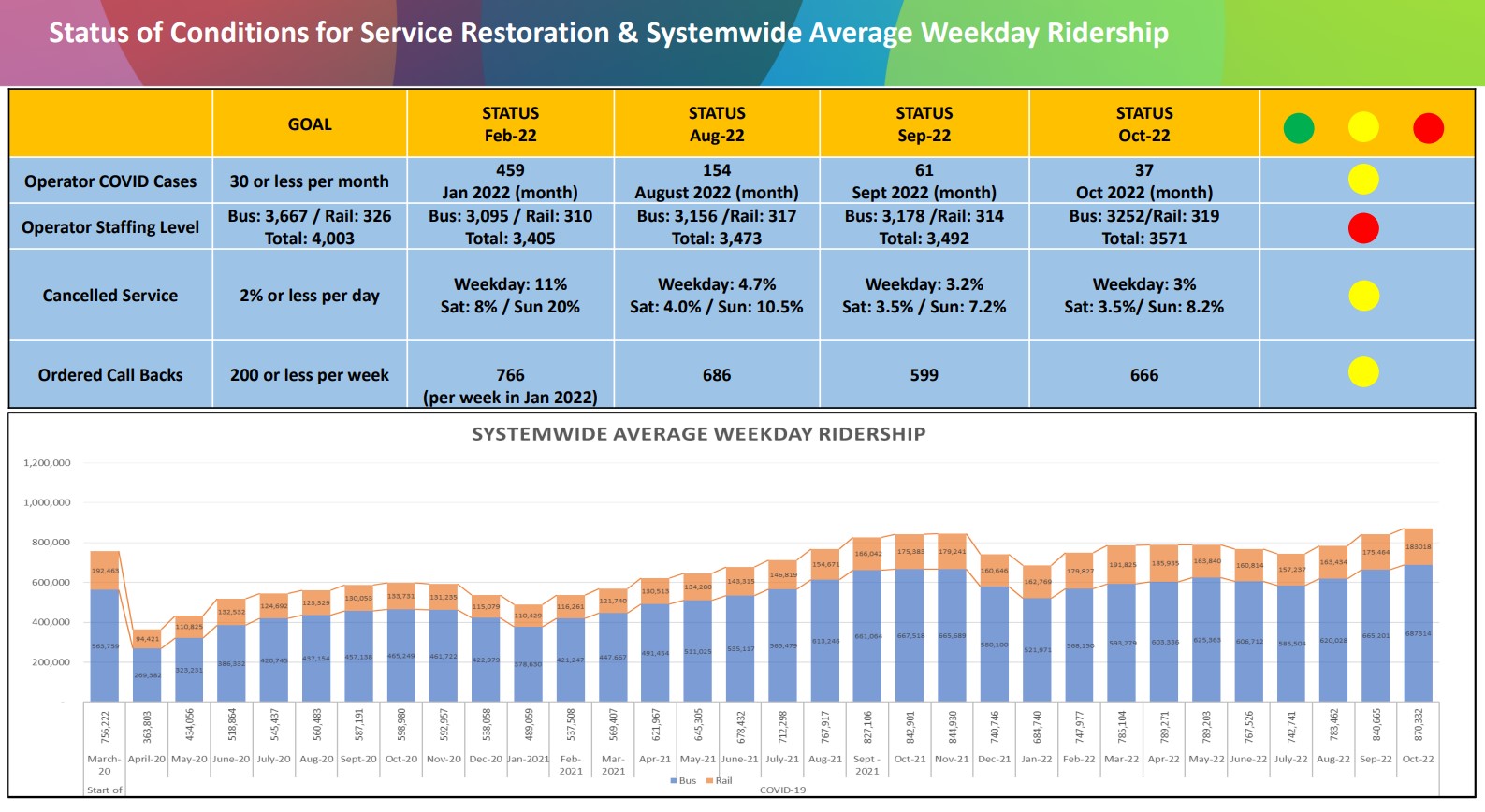
Trends – ridership, overtime, cancellations – have been heading in the right direction for the past few months. In October, overall Metro weekday ridership rose to just above 870,000. This is the highest month since the pandemic began, though it represents about 73 percent of pre-pandemic ridership.
Hopefully rising L.A. County COVID cases won’t put a dent in the recovery trends.
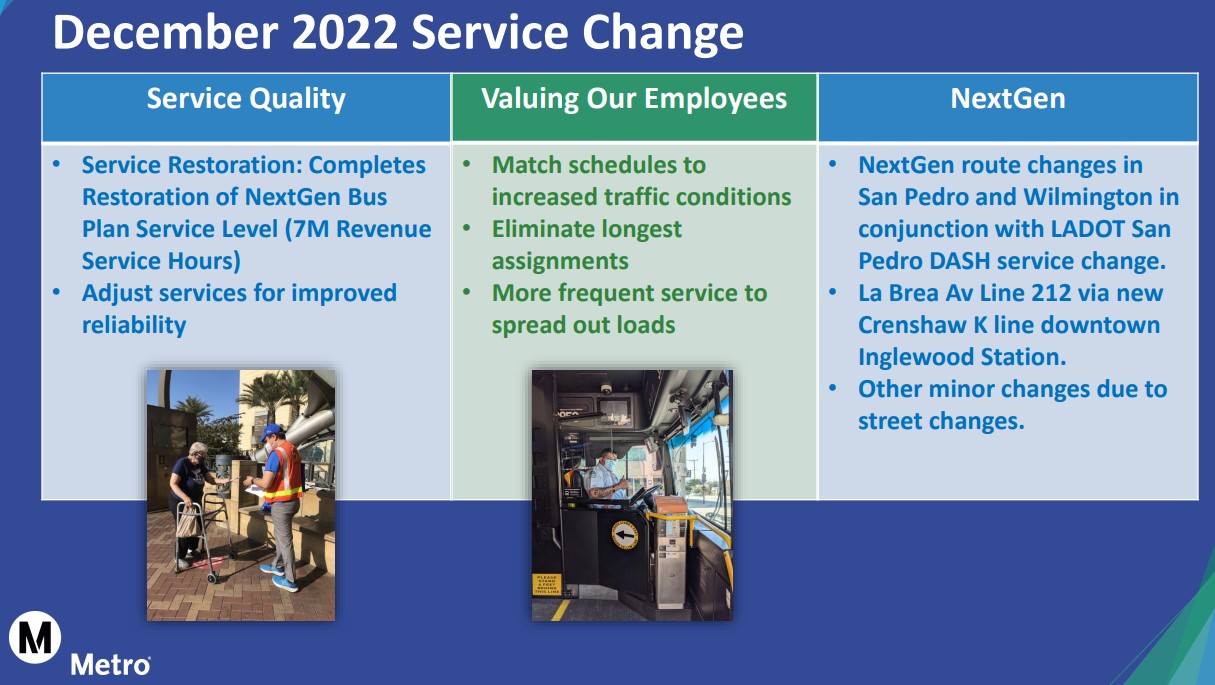
On December 12, Metro will restore the remaining service deficit, including some additional routing changes – in the harbor area and to connect with the newly opened K Line. Riders will see increased weekday service on 55 Metro bus lines. Two dozen lines will see weekend service increased. See Metro’s listing for line by line changes.
Streetsblog has migrated to a new comment system. New commenters can register directly in the comments section of any article. Returning commenters: your previous comments and display name have been preserved, but you'll need to reclaim your account by clicking "Forgot your password?" on the sign-in form, entering your email, and following the verification link to set a new password — this is required because passwords could not be carried over during the migration. For questions, contact tips@streetsblog.org.