Victory for Community Resistance: L.A. Cancels Long-Planned $6 Billion Lower 710 Freeway Widening

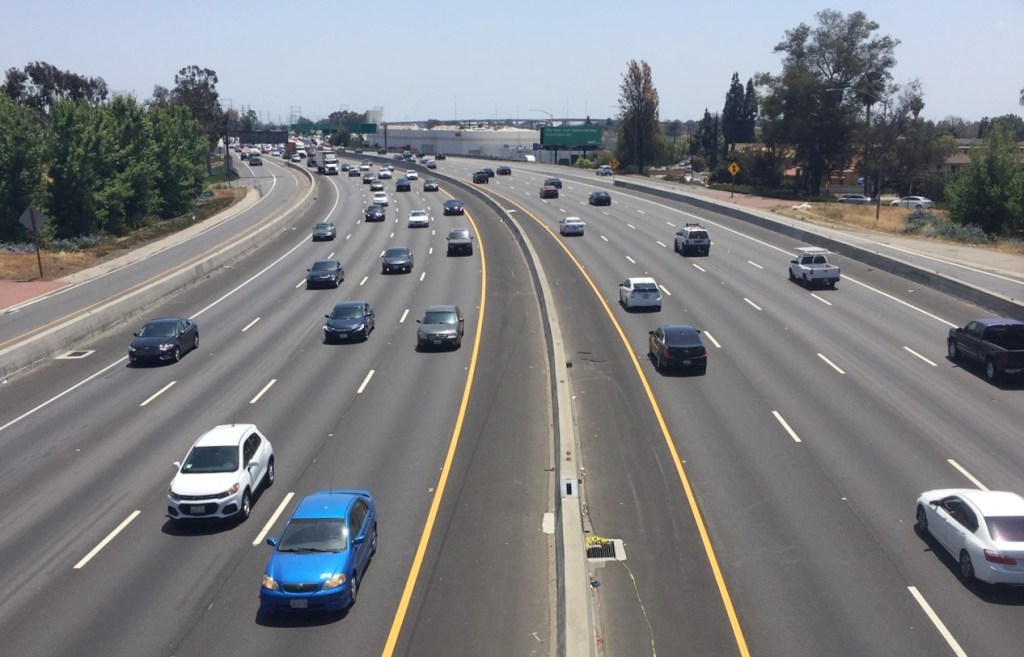
Today, L.A. Metro officially killed its planned widening of the 710 Freeway. The action, approving the ‘No Build’ alternative for a planned freeway widening through predominantly Black and brown communities, is unprecedented for Southern California. Today’s approval could be an important precedent for many other freeway widening projects that Metro, and its state transportation agency project partner Caltrans, continue to push.
Metro and Caltrans did not cancel the 710 widening out of the goodness of their hearts. These agencies have pushed for the ill-advised freeway widening since 1999, and reluctantly relented only when the community caught them trying to get around federal environmental law.
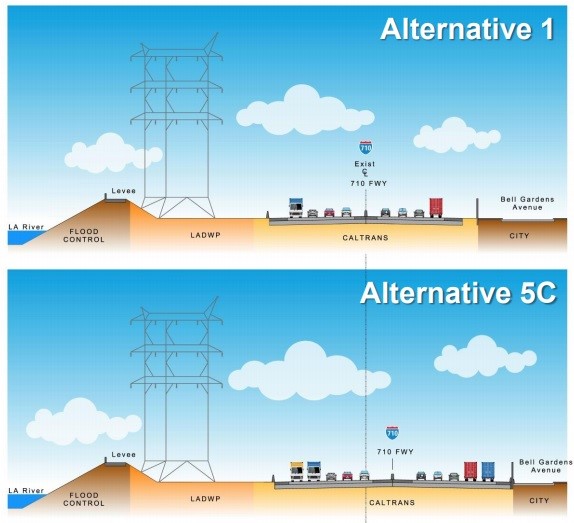
In 2018, the Metro board approved a $6+ billion dollar plan to demolish hundreds of homes and businesses in order to add two more general purpose car lanes to about 19 miles of the 710 between Long Beach and East Los Angeles. Due to freeway, trucking, ports, and other industrial activity, the 710 corridor already has some of the worst air quality in the L.A. basin, and is among the worst in the nation. Southeast L.A. County communities, organized as the Coalition for Environmental Health and Justice (CEHAJ), term the 710 corridor a “diesel death zone,” noting high rates of asthma and other respiratory disease.
CEHAJ formed in 2001 to oppose Caltrans’ early plans to widen the freeway from eight to sixteen lanes. The coalition has long demanded that any 710 project must be truly zero-emission technology, not demolish homes, and include local hire.
In late 2020, the federal Environmental Protection Agency ruled that the Metro/Caltrans 710 widening plan violated the federal Clean Air Act. For months, the agencies did not share the EPA’s ruling publicly, but Streetsblog Los Angeles obtained it and published it in May 2021. Within a month, Caltrans paused the project and Metro suspended work on it, after already having spent $60+ million dollars on project plans/designs/studies.
The agencies convened a new 710 Freeway task force (unfortunately reminiscent of earlier task forces that Metro and Caltrans had largely ignored), that is now working to formulate a multimodal “investment strategy” for the 710 corridor.
Though the widening plans were effectively dead after the 2020 EPA ruling, the 2018 approval remained until today. Caltrans and Metro found that they needed to bring proper closure to their infeasible widening plans by approving the “No Build” alternative. Last week, Metro’s planning committee approved the No Build alternative and today, the full Metro board made that approval final.
In addition to canceling the project, the board approved a motion by L.A. County Supervisor Janice Hahn that officially takes 710 Freeway widening off the table. Hahn has been supportive of shifting remaining 710 corridor funding to clean air projects, potentially including a zero-emissions truck program, transit expansion, and/or active transportation.
Via social media, one of the primary CEHAJ groups, East Yard Communities for Environmental Justice, commented that “it’s beautiful to finally see Metro officially ending the previous 710 process. A process that was violent and disrespectful to community. Twenty years ago communities along the 710 were labeled ‘unreasonable’ disregarded for demanding health for our hoods. The fight for 710 community health and well-being continues, and we only hope that ‘investments’ in our hoods are LED by community, NOT by motions, electeds, or agencies.”
Read More:
Streetsblog has migrated to a new comment system. New commenters can register directly in the comments section of any article. Returning commenters: your previous comments and display name have been preserved, but you'll need to reclaim your account by clicking "Forgot your password?" on the sign-in form, entering your email, and following the verification link to set a new password — this is required because passwords could not be carried over during the migration. For questions, contact tips@streetsblog.org.