Metro Plans to Spend Nearly $900M Expanding Freeways Next Year, a 40 Percent Increase

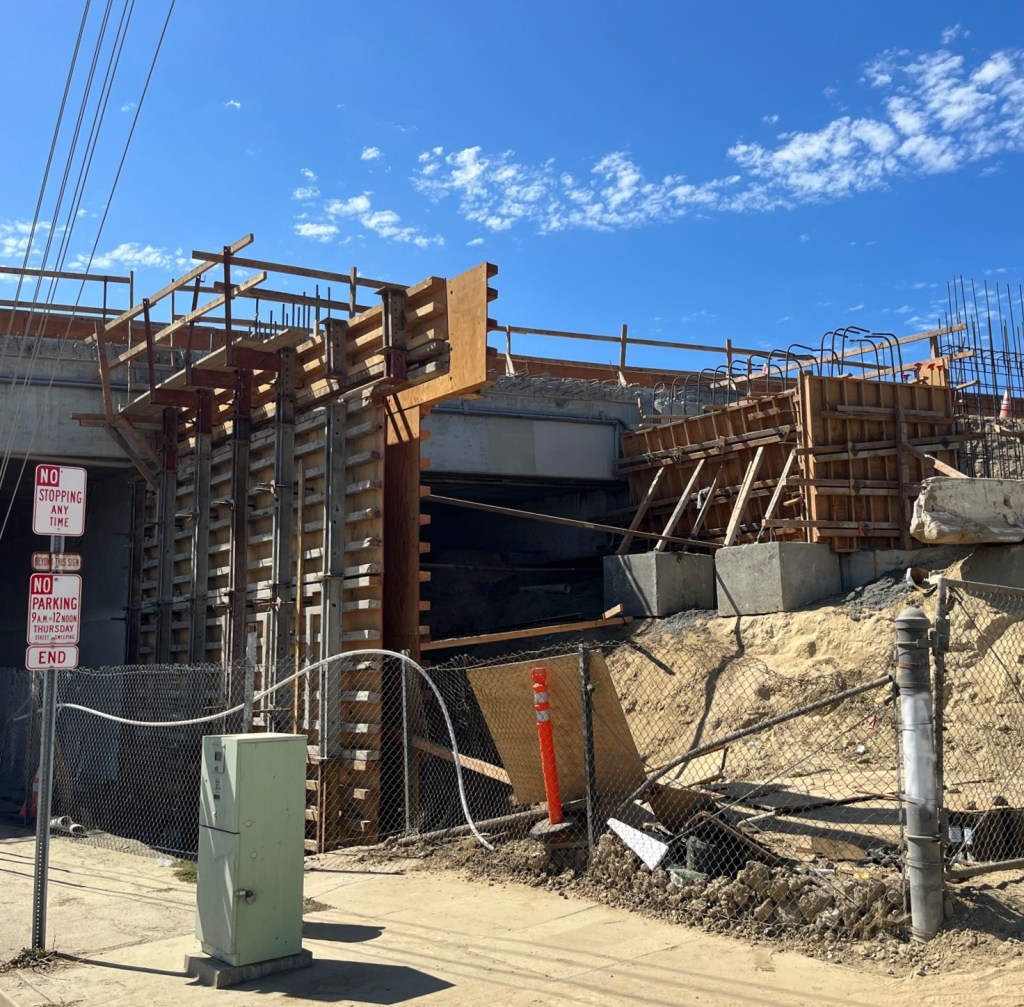
At this week’s meeting of the Metro board Finance Committee, staff previewed the agency’s budget for next year. Metro expects to spend $887.1 million on Metro freeway expansion projects [presentation], including widening the 5, 57/60, 91, 105, and 405 Freeways, and further planning for additional Metro widening of the 5, 14, 71, 605, and other freeways.
Metro’s preliminary FY26-27 freeway expansion budget represents a 40 percent increase over the current fiscal year.
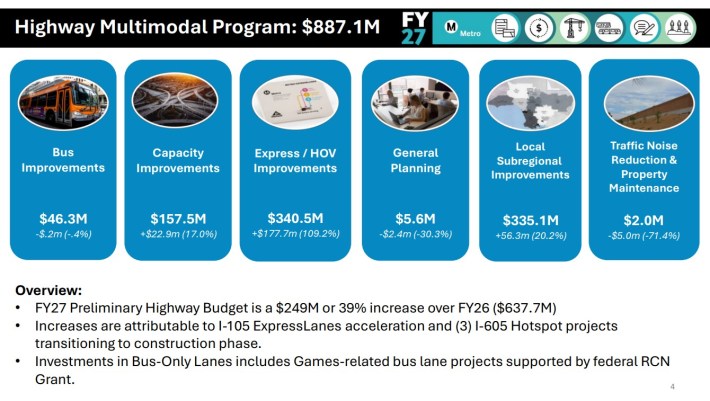
Metro changed the name of what used to be its “Highway Program” to “Highway Multimodal Program” but the freeway expansion funds remain car-centric, with nonexistent or de minimis multimodal components. This section of the budget does include $46 million for bus improvements, but that’s an unrepresentative fig leaf Metro likes to lead with for this program.
Metro anticipates the following highway expansion project spending in 2026-27: [staff report, full highway program list]
- $334 million to widen the 105 from the 405 to the 605
- $128 million for 605 Freeway “hot spot” widening: widening ramps and interchanges to tee up $6+ billion dollars worth of 605 Freeway expansion
- $121 million for 5 Freeway widening in North L.A. County
- $70 million for widening the 57/60 Freeways confluence
At the same time as Metro is ramping up billions of dollars worth of climate-disrupting freeway expansion, Metro took to social media to promote taking transit for “fewer greenhouse gas emissions than driving” to lead to less dire weather.
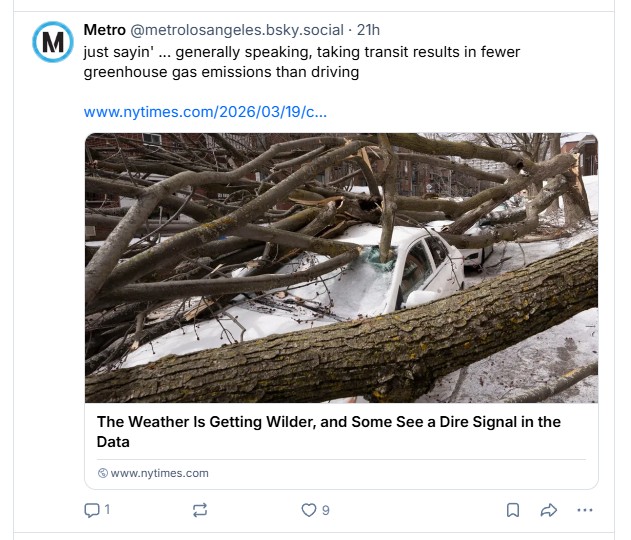
Metro should take its own advice. According to Metro’s own report, Metro freeway projects worsen global warming much more than Metro transit helps. Metro freeway widening induces more driving, increasing tailpipe emissions that are already responsible for around half of L.A. greenhouse gas pollution.
Here and in the past, Metro seems to buy into a myth that transit usage (and perhaps broader climate stability) is merely an individual personal choice. This is false. People take transit where societal/governmental investments make transit viable and effective. Metro needs to understand and acknowledge its ongoing investments – billions of dollars – toward making driving more viable and more effective.
“Just sayin’ … generally speaking” if Metro wants to take climate, equity, and mobility seriously, it needs to align its budget with these values. Metro needs to step back from its current massive freeway expansion budget, which shows that Metro favors wilder weather, record-breaking heat waves, widespread displacement, and massive climate disruption.
Streetsblog has migrated to a new comment system. New commenters can register directly in the comments section of any article. Returning commenters: your previous comments and display name have been preserved, but you'll need to reclaim your account by clicking "Forgot your password?" on the sign-in form, entering your email, and following the verification link to set a new password — this is required because passwords could not be carried over during the migration. For questions, contact tips@streetsblog.org.