New UCLA Report Looks into the High Cost to Build Parking

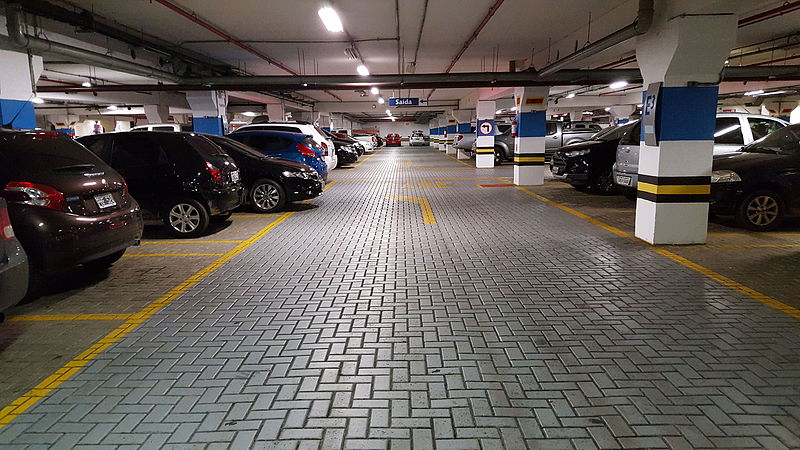
What’s more expensive: a new car or a new parking space?
As of 2025 a new car costs, on average, about $50,000.
A new UCLA study finds that a new parking space, on average, costs even more.
Not counting the cost of the land, an aboveground parking space costs on average $52,000 to build. Underground parking is even more expensive at $73,000 per space.
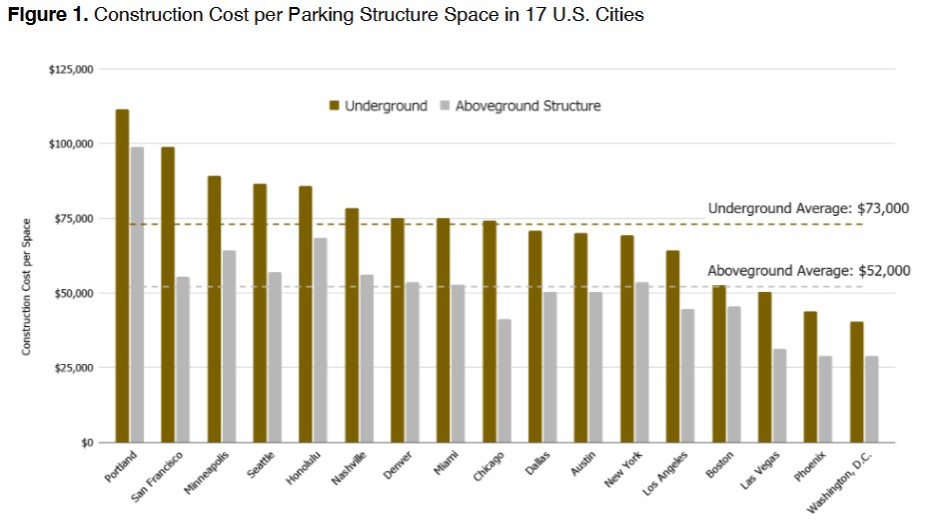
In No Such Thing as Free Parking: Construction Costs in 17 U.S. Cities [key findings] UCLA Center for Parking Policy Manager Ellen Schwartz aggregated 2025 construction costs across various cities to show just how much parking impacts overall construction.
The report updates and expands a similar analysis done by the late UCLA Professor Donald Shoup just over a decade ago. At that time, parking spaces averaged $24,000 above ground, and $34,000 underground (2012 dollars). The new report found that since 2012 parking construction costs have risen about 50% faster than general inflation.
The report incorporates city parking requirements (for example, for an office building, L.A. City generally requires two parking spaces per 1,000 square feet of building floor space) to track the percentage of overall construction costs attributable to building required parking. For Los Angeles, the cost to construct city-required parking accounts for a quarter to a third of the overall cost of building a new office space.
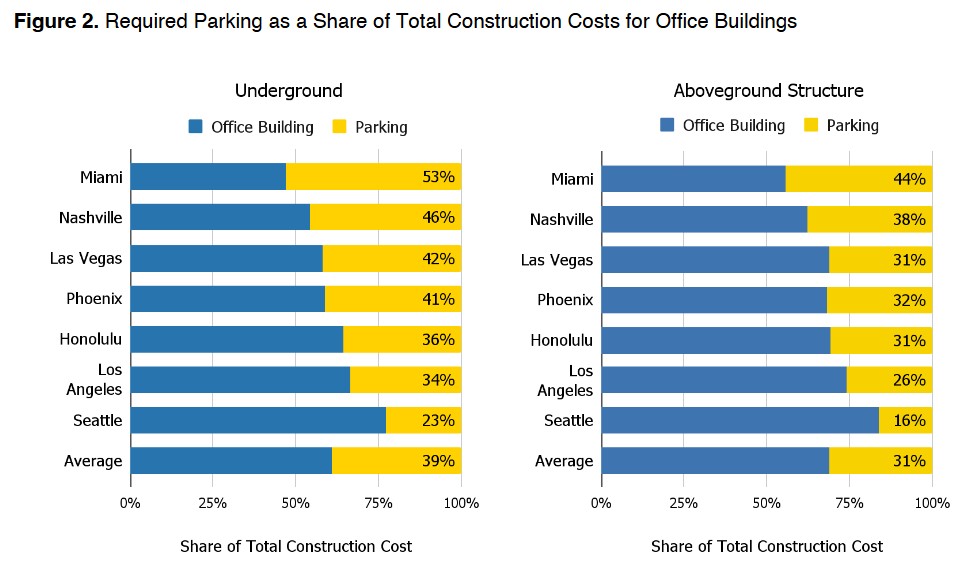
The report shares similar calculations for the impacts of required parking on retail and housing construction.
For apartments, the report found that building required parking adds roughly $50,000 to $100,000 per unit, and that, for most cities, parking requirements disproportionately increase the cost to build smaller apartments.
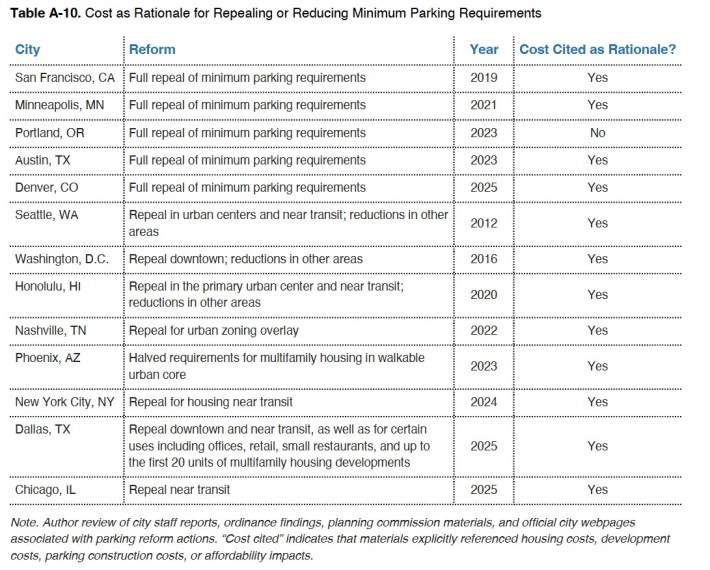
Then there is somewhat good news. In large part due to parking costing so much, many cities are reforming their outdated pseudoscientific parking requirements. For the 17 cities in the report, the majority have already either fully or partially removed minimum parking requirements. Even L.A. is studying eliminating its one-size-fits-all citywide parking requirements, instead allowing new development to determine project-specific parking needs.
The UCLA report concludes that:
Off-street parking requirements can increase building costs by forcing business owners and homebuilders to provide more parking than they otherwise would, which often means more parking than the market demands. Higher construction costs mean fewer projects make financial sense, since only buildings that can charge high rents or generate substantial returns from commercial activity are likely to be built. By discouraging new construction, parking requirements also drive up the cost of existing buildings, as more people compete for a limited supply of homes and commercial spaces. Minimum parking requirements especially discourage the construction of affordable apartments, because per-unit requirements disproportionately increase the cost of smaller units.
See additional details at the 35-page No Such Thing as Free Parking report or UCLA’s summary of key findings.
Read More:
Streetsblog has migrated to a new comment system. New commenters can register directly in the comments section of any article. Returning commenters: your previous comments and display name have been preserved, but you'll need to reclaim your account by clicking "Forgot your password?" on the sign-in form, entering your email, and following the verification link to set a new password — this is required because passwords could not be carried over during the migration. For questions, contact tips@streetsblog.org.