UCLA Study Finds Metro Transit Ambassador Program Is Benefitting Metro Riders

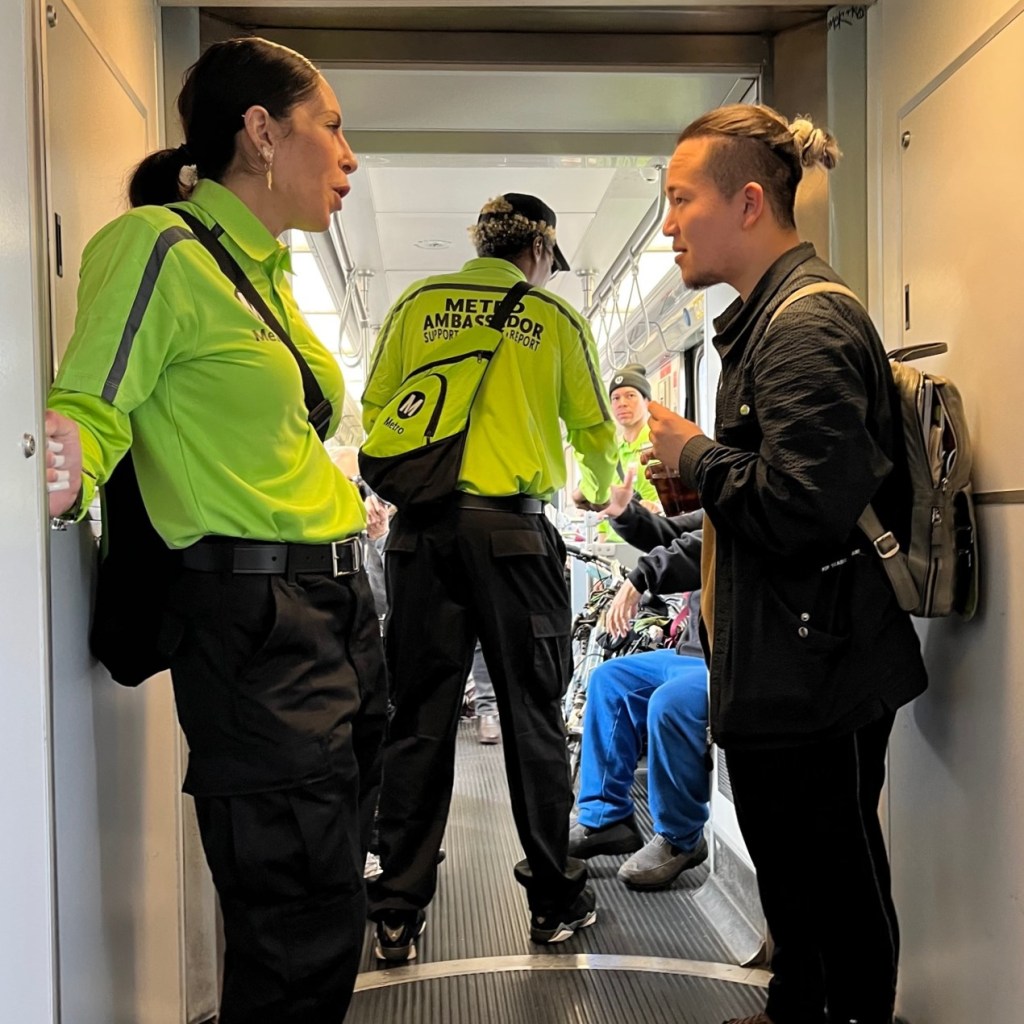
The UCLA Institute of Transportation Studies recently published a study evaluating the results of Metro’s Transit Ambassador program. A Path Forward for Transit Rider Experience and Safety: Lessons from the L.A. Metro Ambassador Pilot Program [full ~80-page report, 3-page policy brief] found that Ambassadors “advance a community safety approach towards meeting riders’ needs” and “mak[e] a positive contribution to the system.” Per the report, “Overall, ambassadors contribute to improved passenger experiences and play a needed role not well-served by other existing staff or system design features.”
Though the study recommends some improvements, mainly to ambassador pay and working conditions, these changes are already well underway with Metro shifting Ambassadors from contracted workers to in-house staff.
The report analyzes the Ambassador program’s first two years: October 2022 through November 2024.
The study found that “ambassadors play a key customer service role, promoting safety for riders, and providing job opportunities for people likely reflective of the diversity of riders themselves.” Further ambassadors “support riders and operator safety and connecting vulnerable riders to resources.”
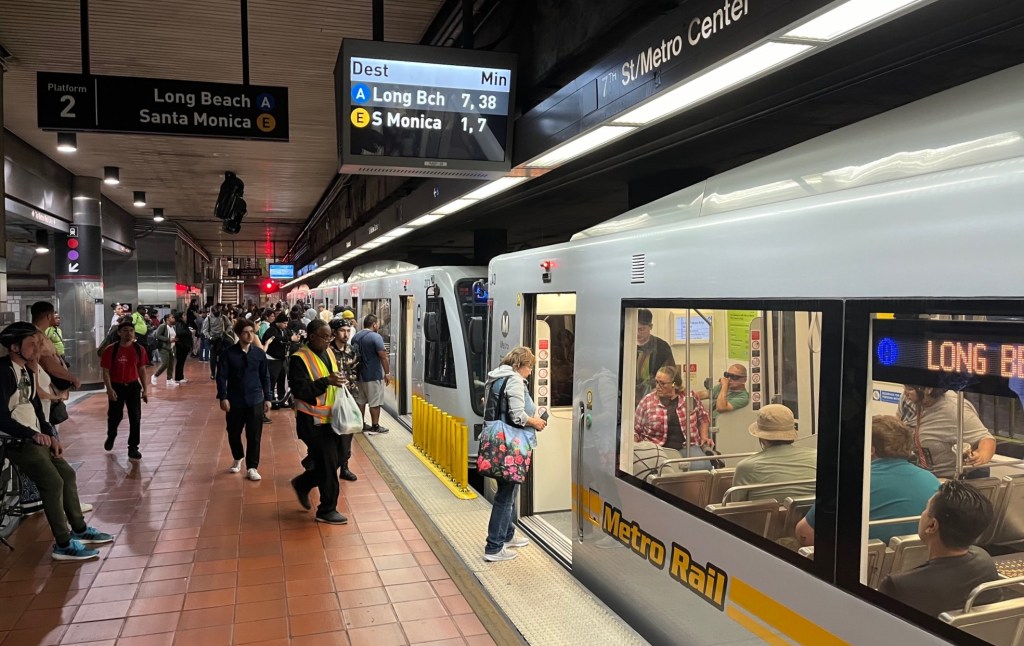
…the [Ambassador] program leans heavily into customer service, not crisis management, at the training stage. As a result, ambassadors serve a customer service role a majority of the time, but crisis management, ranging in severity, is still an element of the job on the ground. Ambassadors spend most of their time with vital, basic tasks of orienting and aiding riders: greeting patrons, providing directions, helping with fares, etc. They also assist with the first level of homelessness response, with crisis de-escalation, and by administering Narcan to prevent overdoses. Broadly, they provide more eyes on the system and offer a highly visible presence to riders.
The researchers credit Metro ambassadors themselves for improvements “that have made the program work more effectively” including carrying Narcan and system maps.
The study notes some disparities between bus and rail deployment. Metro buses carry three-quarters of Metro riders; ambassador deployment “primarily serves the system’s rail network, as only ten percent of ambassadors are deployed on bus-riding teams.” This is now increasing to 20 percent.
The report interviewed several ambassadors; they reported that “customer service and support, especially system navigation, made up the vast majority of their daily interactions.
One ambassador broke down his work as follows: 30-40 percent, helping with tickets and TAP fare cards; 20-30 percent, giving directions and other “situational help”; and 20-30 percent, addressing medical and criminal incidents, which we elaborate upon later in this section.
Beyond the basics of helping riders travel on L.A. Metro itself, we witnessed other activities ambassadors undertook, such as accompanying people purchasing tickets at non-L.A. Metro ticket machines for services like Amtrak and Metrolink at Union Station and helping individuals or groups take photos of themselves.
Ambassadors take pride in this work. One remembered walking with a lost and scared Spanish-speaking family from the station to a store’s lobby where they were heading. The ambassador continued:
“There’s a lot of really, really sweet moments that are like that. And there’s also some heartbreaking ones. When you have somebody that is been thrown out of their house, and they’re in a crisis, and they just began their journey being homeless, and they’re terrified, and they’re just basically stranded, trying to…seek refuge and shelter inside a station because that’s the place they feel the safest, if you were to compare it to being on the street under a bridge.”
Interviewees recalled trying to prevent people from attempting suicide on the tracks or witnessing it, needing to intervene in large fights that broke out, responding to people being intoxicated or having psychiatric episodes, diffusing domestic violence, witnessing gang activity, and encountering people with large knives and guns.
The UCLA team recommended that these working conditions pointed to “a need for higher pay and benefits to increase retention and compensate fairly for what the job entails.”
To speed up initial deployment, Metro decided to contract for its ambassadors, rather than making them Metro employees. This contracting “led to issues such as lack of access to break rooms (and breaks themselves), seemingly arbitrary location assignments, and lack of access to communication channels and devices.” This and other factors led to lower worker retention (higher turnover), compared to Metro staff.
Since July 2025, ambassadors are Metro employees. The transition to in-house staff included unionization, meaning a pay raise and improved benefits – as well as basic workplace necessities; examples include access to Metro employee lockers, break rooms, and meeting spaces.
When bringing ambassadors in-house, Metro “pledged to add 44 new ambassadors on the rail system and 40 new bus-riding ambassadors, resulting in a total of 322 ambassadors deployed daily.”
The UCLA team concludes:
…Metro was wise to consider, pilot, and now make permanent their ambassador program.
Other transportation agencies now have the opportunity to learn from L.A. Metro’s efforts and take similar steps to invest in alternatives to law enforcement responses that can provide a staff presence for riders. While improvements are still likely needed and in progress at L.A. Metro and at other agencies, ambassador programs demonstrate real promise as a new approach to re-envisioning transit safety.
Read More:
Streetsblog has migrated to a new comment system. New commenters can register directly in the comments section of any article. Returning commenters: your previous comments and display name have been preserved, but you'll need to reclaim your account by clicking "Forgot your password?" on the sign-in form, entering your email, and following the verification link to set a new password — this is required because passwords could not be carried over during the migration. For questions, contact tips@streetsblog.org.