SGV Connect 144: Annual AMA with Foothill Transit

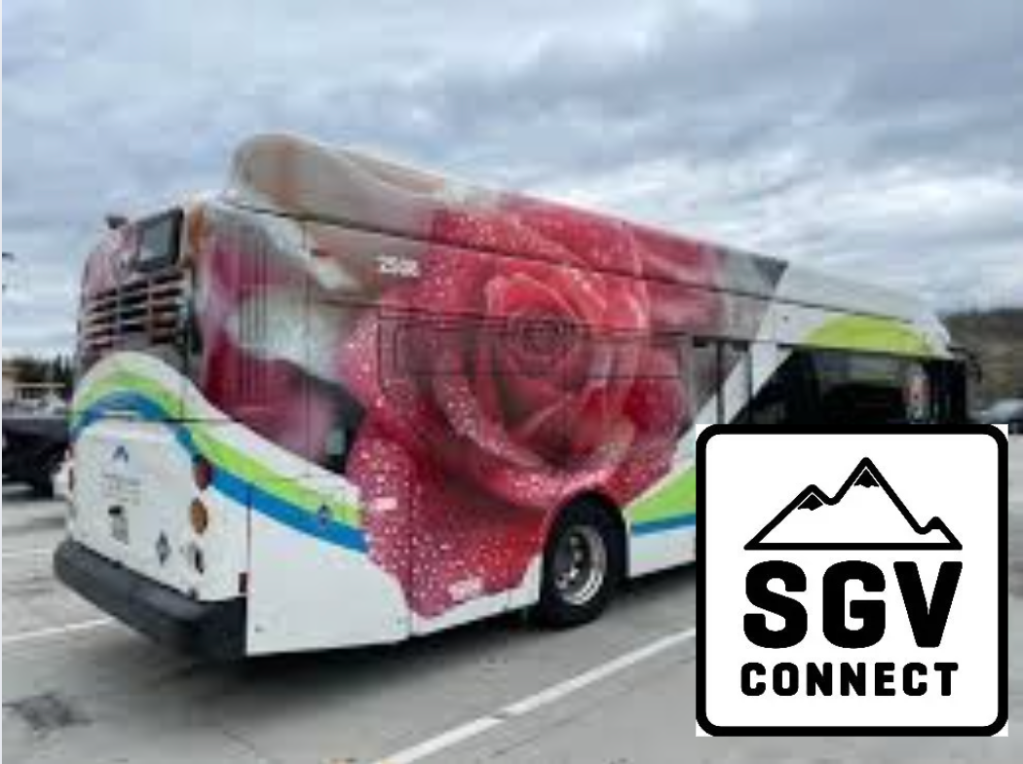
In the SGV Connect’s end-of-year podcast, Damien Newton and Felicia Friesema of Foothill Transit discuss transit updates in response to questions submitted by readers.
The discussion addresses:
- The delayed implementation of Line 289/197 combination/extension due to ongoing student needs at Ganesha High School.
- Foothill Transit’s hydrogen bus program is paused due to funding cuts, with a focus on low-emission CNG buses.
- The 295 college connector line…and more!
A lovingly edited transcript of the podcast can be found below.
SGV Connect is supported by Foothill Transit, offering car-free travel throughout the San Gabriel Valley with connections to the new A Line Stations across the Foothills and Commuter Express lines traveling into the heart of downtown L.A. To plan your trip, visit Foothill Transit. “Foothill Transit. Going Good Places.”Sign-up for our SGV Connect Newsletter, coming to your inbox on Fridays!
Damien Newton:
Welcome to SGV Connect. This is our end-of-the-year podcast with Felicia Friesema of Foothill Transit. I think this is the third year we’ve done this, but only the second year in a row. According to Chris, that means I can now call it an annual tradition.
As always, we asked readers for questions, they sent them in, and we’re posing them to Felicia. As a disclaimer, none of the questions were especially controversial. Since we wanted this to be informational, we did provide the questions to Felicia on Friday so she could review them and give us the best possible answers.
Also, I’ll say upfront, we don’t have any really fun questions this time, so we may try to come up with something fun toward the end, depending on how long we spend on the wonky stuff.
Before we dive in, a reminder that SGV Connect is sponsored by Foothill Transit, offering car-free transit throughout the San Gabriel Valley, with connections to A Line stations along the Foothill Extension and service into Downtown Los Angeles. To plan your trip, visit foothilltransit.org. Foothill Transit — going good places.
That ad copy has been the same since before this podcast was even called SGV Connect. If you ever want to change it, let me know.
Felicia Friesema:
I’m just ecstatic that this has become an annual thing. I really love these AMAs. They’re fantastic.
Damien Newton:
They’re fun and easy on my end, so I’m a big fan too. It looks like we have five questions this year.
The first two came with mini-essays attached — written in the first person, but not by me.
The first question is about the implementation of the Foothill Forward Line 197 and a proposed combination with Line 289. The reader writes:
“I’m excited for the proposed Line 289/197 extension from La Verne to Cal Poly Pomona. It would allow for a weekend connection from the A Line to Cal Poly Pomona — the 295 is weekday only. When will it be implemented? Other Foothill Forward improvements have moved forward, but this one has been pending for years.”
Felicia Friesema:
The proposed combination of Lines 289 and 197 would be a great idea. However, that routing would remove a segment of the current Line 197 that serves Ganesha High School, and we’re not quite ready to do that yet.
We’ve been working with Pomona Unified School District and monitoring ridership trends at Ganesha to understand ongoing student needs. Right now, our focus is on continuing to provide that service.
The connection from Line 197 to the A Line remains in our plans. We’re working with the City of La Verne, the Gold Line Authority, and LA Metro to make enhancements at the station so buses can serve it effectively.
As for timing, it’s still up in the air. There are no firm plans for 2026. We need to do more due diligence on student demand before moving forward.
Damien Newton:
I’ll just note that the quality of the questions was excellent. The writer even included links — presumably for me — but honestly, they were more useful for you. I’ve saved their info in case Chris Greenspan ever moves on.
Felicia Friesema:
Bus riders and bus fans often know the system better than we do, and that’s fantastic.
Damien Newton:
The next question builds off that theme and focuses on Foothill Transit’s hydrogen bus program. The reader asks about the future of hydrogen fuel, especially given recent shifts toward battery-electric fleets statewide.
Felicia Friesema:
That’s a great question, and it’s one we get a lot. Foothill Transit has been an early adopter of hydrogen fuel-cell buses, and we’ve learned a tremendous amount from that experience. Hydrogen has worked well for us operationally, especially for longer routes where range and refueling time really matter.
That said, the landscape is changing. Battery-electric technology continues to improve, and funding priorities at the state and federal level are evolving. We’re keeping a close eye on that and making decisions based on reliability, cost, and what best serves our riders.
We’re also part of a larger hydrogen hub conversation in California, so this isn’t something we’re abandoning lightly. But like everything else, it has to pencil out long term.
Damien Newton:
That makes sense. And I think people sometimes forget that Foothill Transit has always been willing to pilot new technology, even when it’s risky.
The next question is about ridership, specifically college routes. A reader asks whether Foothill has seen changes in demand now that many campuses are fully back in person, but with hybrid schedules still common.
Felicia Friesema:
We’re definitely seeing a rebound, but it’s uneven. Some college routes are close to pre-pandemic levels, while others are still lagging. Hybrid schedules have changed travel patterns, and students aren’t necessarily commuting five days a week anymore.
We’re responding by being more flexible — adjusting schedules, monitoring demand closely, and working directly with campuses. Programs like student transit passes remain a huge part of our strategy, and they’ve been very successful where implemented.
Damien Newton:
That leads nicely into the next question, which is about major events — specifically the 2028 Olympics. Someone asks whether Foothill Transit expects to play a role, especially given the geographic spread of venues.
Felicia Friesema:
We’ve had preliminary conversations, but it’s still early. Large events like the Olympics require coordination at every level — Metro, municipal operators, law enforcement, and local governments.
For Foothill Transit, the challenge is balancing special-event service with our core mission: serving daily riders who rely on us to get to work, school, and appointments. We don’t want to overextend ourselves in a way that hurts regular service.
Damien Newton:
That’s a good segue to the Rose Bowl, which always generates questions whenever there’s a big event. Someone asks whether Foothill plans to expand service there.
Felicia Friesema:
The Rose Bowl is always tricky. It’s not just about buses — it’s about traffic control, street closures, and coordination with Pasadena and other agencies. We do provide service for certain events, but expanding that requires partners at the table and funding to match.
Damien Newton:
Before we wrap up, I want to ask a lighter question — something we’ve done in past years. Do you have a book or podcast recommendation for listeners?
Felicia Friesema:
I was hoping you’d ask that. I’ve been reading a lot more nonfiction lately, especially books about leadership and organizational change. One I’d recommend is Turn the Ship Around! It’s about empowering teams and decision-making, and I think it applies really well to public agencies.
Damien Newton:
That’s a great recommendation. I’ll add it to my list.
Before we close, is there anything coming up in 2026 that riders should be paying attention to?
Felicia Friesema:
We’ll continue rolling out Foothill Forward improvements where funding allows, and we’re staying focused on service reliability. Electrification will remain a big theme for us, whether that’s hydrogen, battery-electric, or a mix of both.
We’re also continuing conversations with cities and Metro about bus-priority projects. Those don’t always get a lot of attention, but they make a huge difference for riders.
Damien Newton:
I want to thank everyone who submitted questions. They were thoughtful and detailed, which makes these AMAs much easier to do.
Felicia, thanks again for joining us and for being willing to do this year after year.
Felicia Friesema:
Thank you for having me. I really appreciate the opportunity to talk directly to riders and advocates. These conversations matter.
Damien Newton:
And thanks to Foothill Transit for sponsoring SGV Connect and making this podcast possible.
As always, you can find more San Gabriel Valley transportation coverage at Streetsblog Los Angeles. We’ll be back in the new year with more episodes.
Felicia Friesema:
Looking forward to it.
Damien Newton:
All right. Thanks, Felicia. Talk to you again soon.
Felicia Friesema:
Thanks, Damien. Bye.
End of recording.

Read More:
Streetsblog has migrated to a new comment system. New commenters can register directly in the comments section of any article. Returning commenters: your previous comments and display name have been preserved, but you'll need to reclaim your account by clicking "Forgot your password?" on the sign-in form, entering your email, and following the verification link to set a new password — this is required because passwords could not be carried over during the migration. For questions, contact tips@streetsblog.org.