Rosemead Creates Subcommittee on Bus Rapid Transit with Neighboring Cities
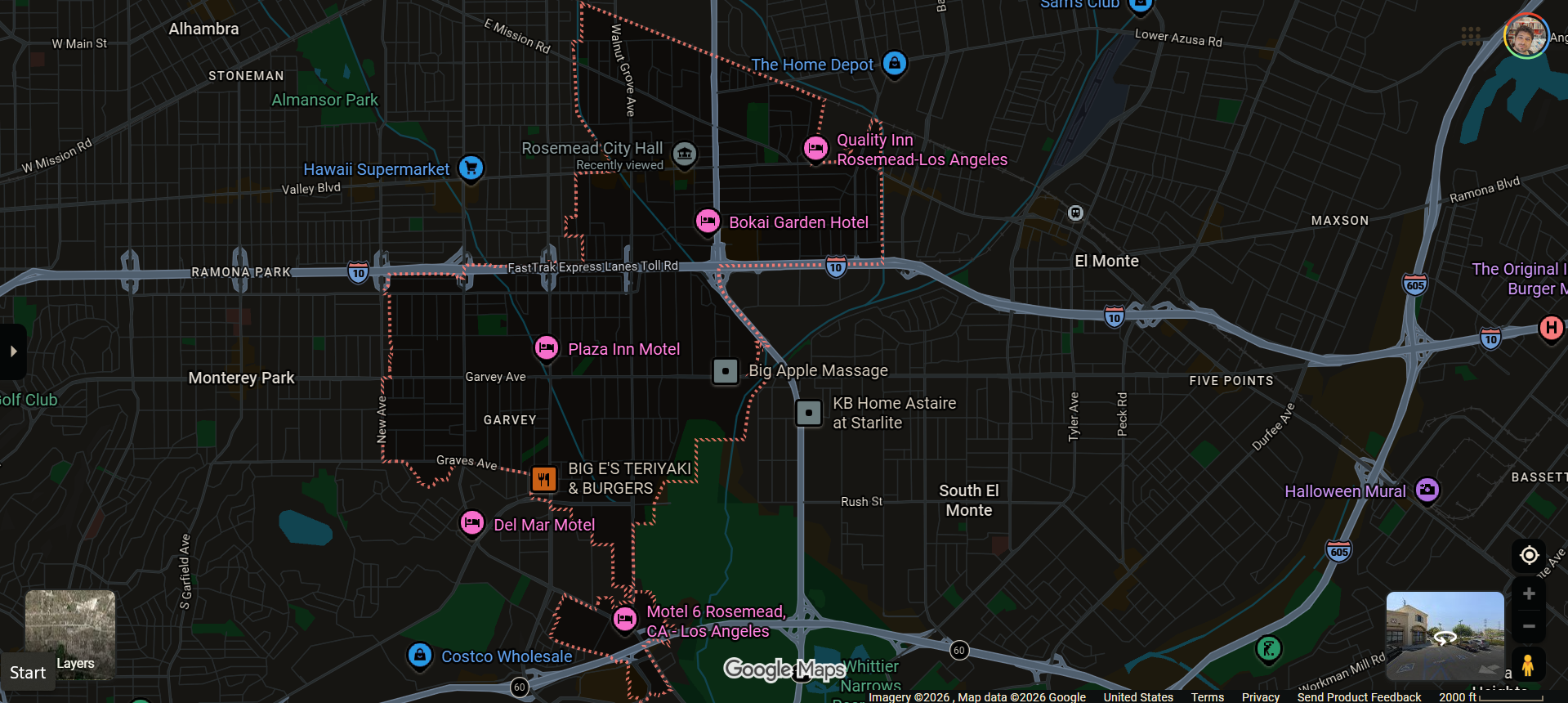
The Rosemead City Council passed a motion to form a four-city subcommittee with Monterey Park, South El Monte and El Monte for the possible implementation of quick build bus rapid transit lanes on Garvey Avenue as part of the the regional SGV Forward project. While the motion succeeded, it was not without controversy and misunderstanding.
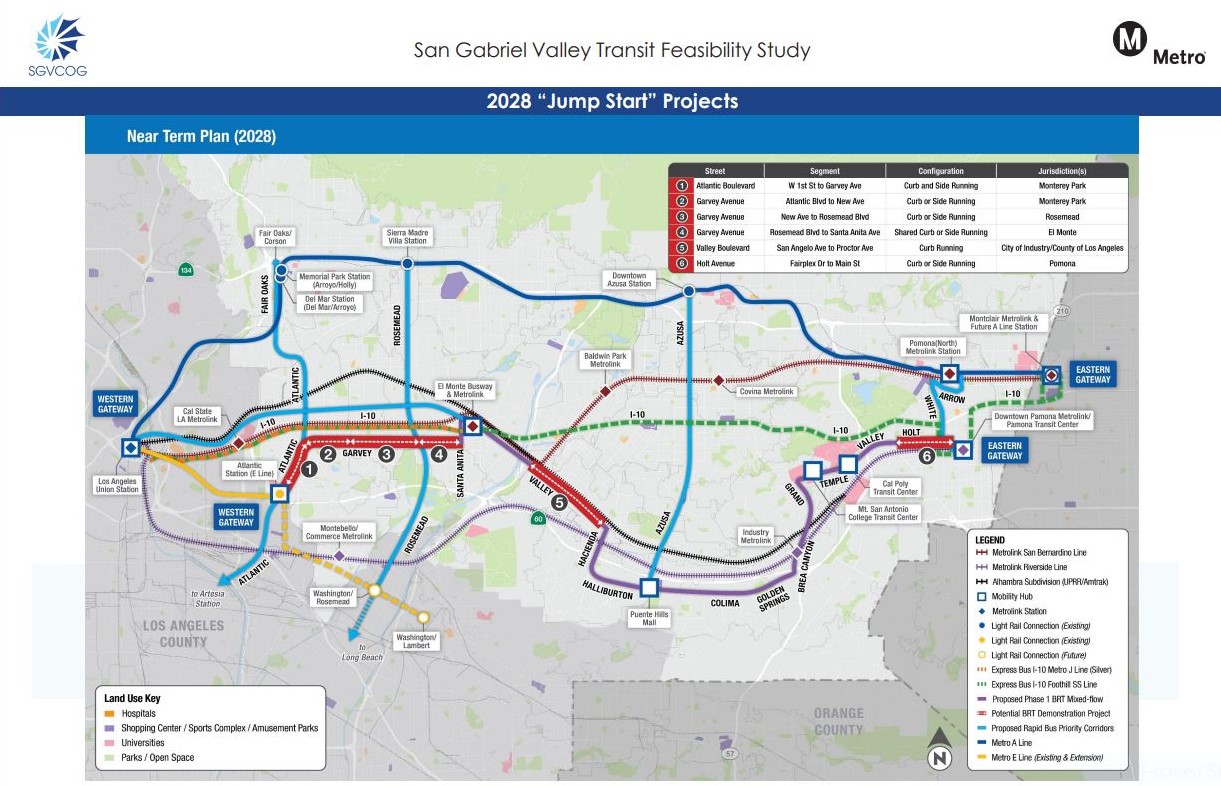
Bus Rapid Transit (BRT) is a faster transit service with dedicated bus lanes, limited stops (called stations), signal priority, and more frequent service. Roughly five miles of Garvey (and two miles of Atlantic Blvd.) are proposed as “Jump Start” bus lanes. To date, Metro has awarded roughly $8 million to the San Gabriel Valley Council of Governments (SGVCOG, or just the COG) to study and design the lanes, in advance of the so-called “car free” 2028 Olympics.
The Council Hearing
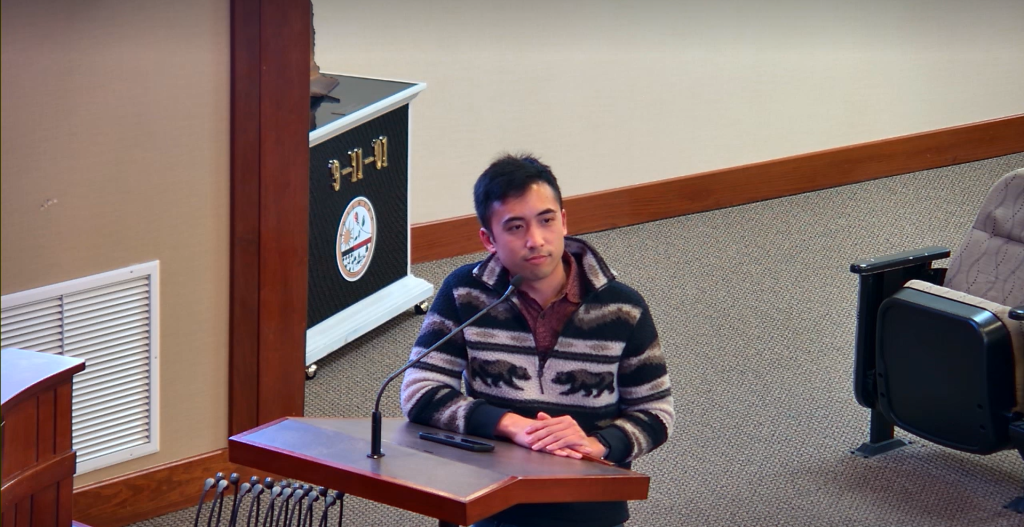
A handful of public commenters showed up to city council on Tuesday March 10 – mostly business owners opposed to losing parking spaces. Brian Horn owns Divine’s, an antique furniture showroom just outside of Rosemead on Garvey in Monterey Park, with no rear or shared parking lot.
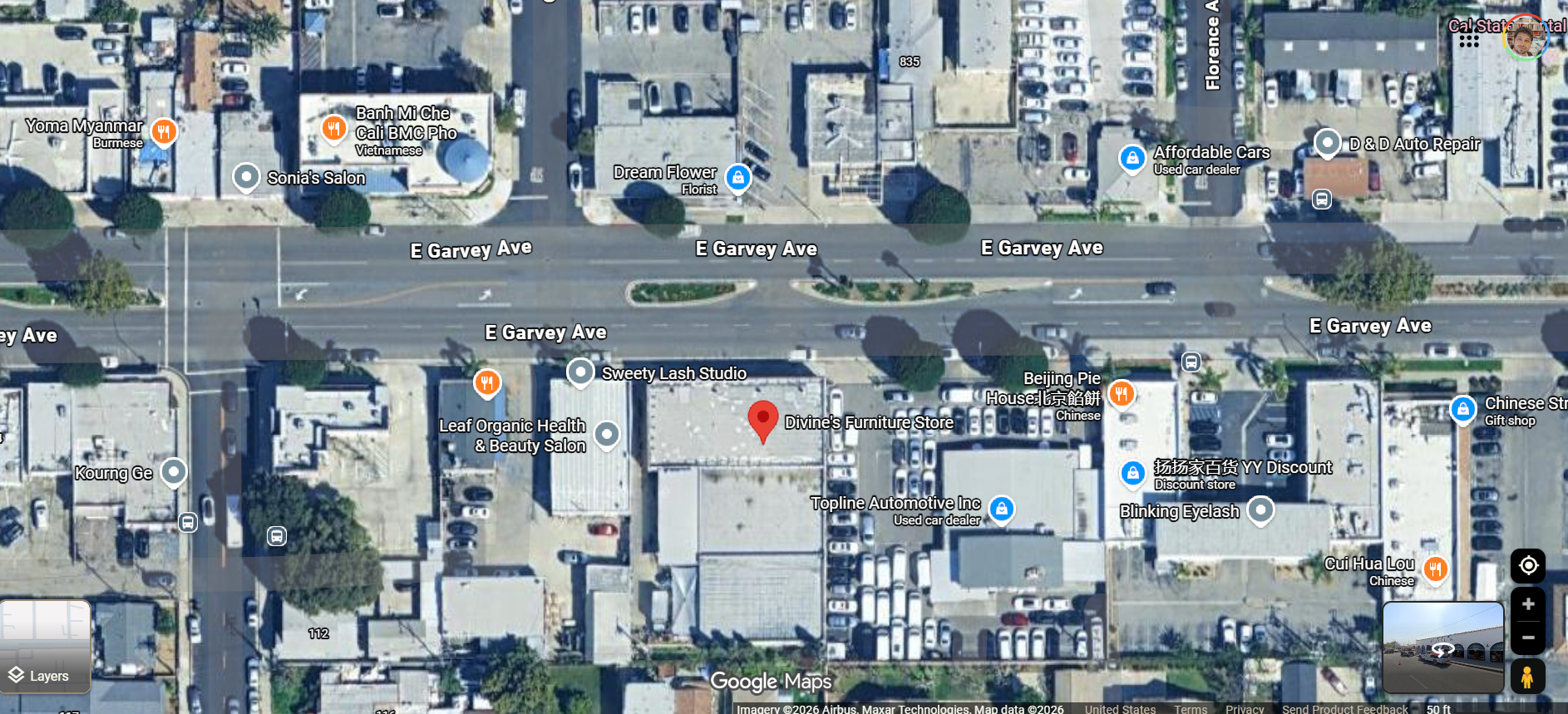
“If I lose street parking, I will most likely close to the public and go to an online-only format, and the community loses something that they’ve been able to go to for a century,” said Horn. He also stated that he and neighboring business owners did not feel like outreach had been sufficient.
However, no lane design has been finalized yet. In the SGVCOG’s Transit Feasibility Study, both side running and curb running bus lanes have been mocked up as possible options, with a side running concept leaving parking intact.
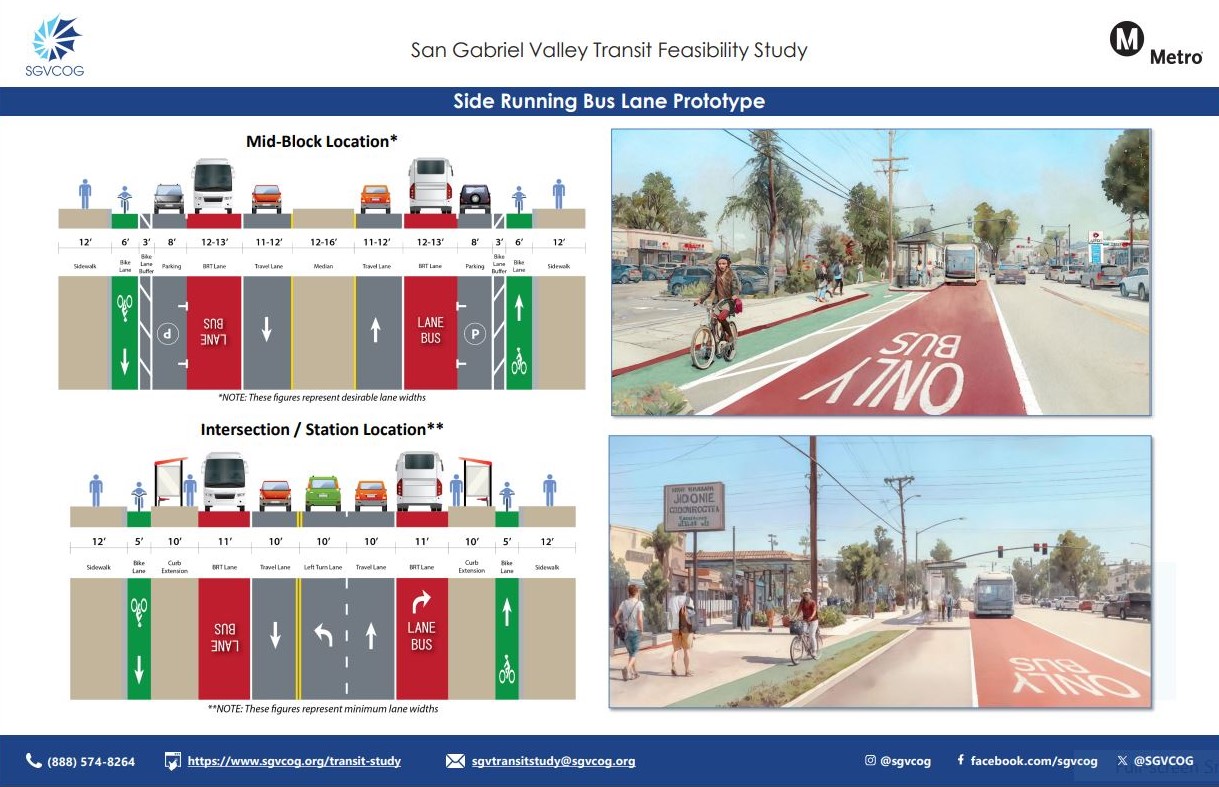
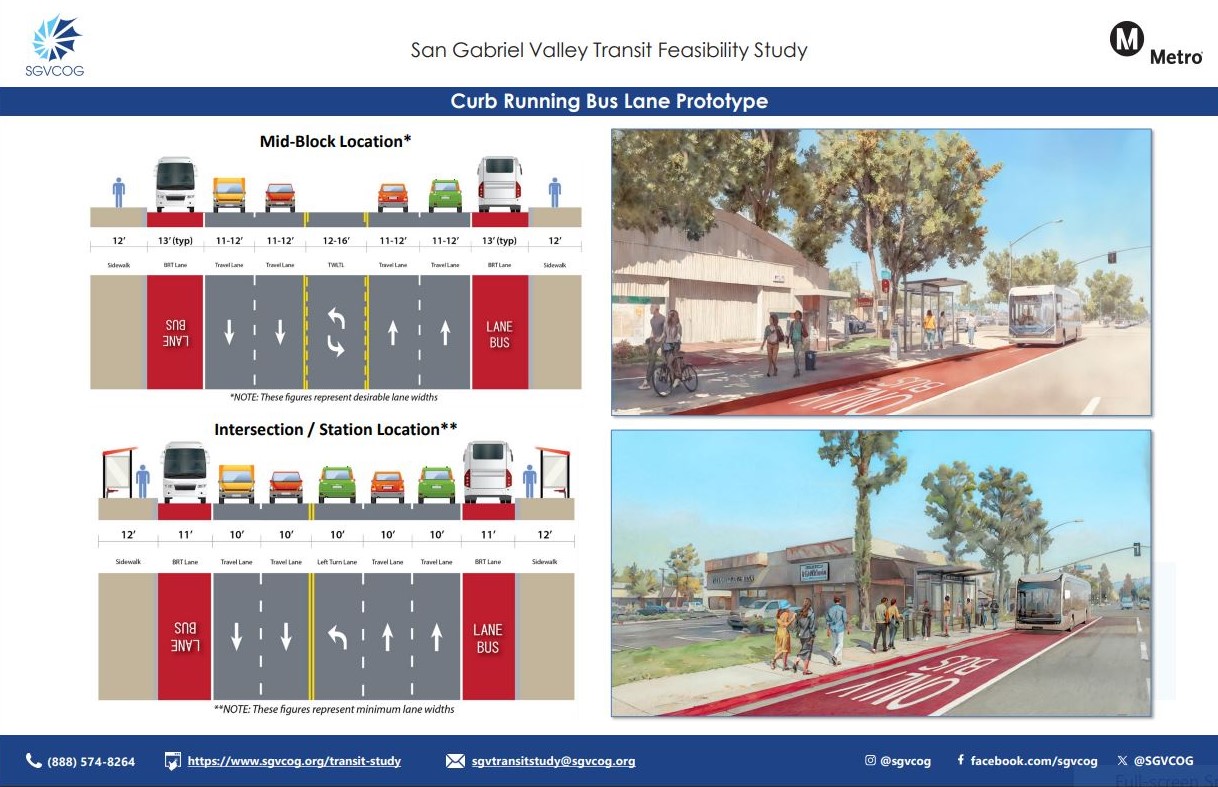
Rosemead resident (and the city’s former Traffic Commissioner and Beautification Commissioner) Brian Lewin was skeptical that the San Gabriel Valley needs BRT at all.
“I don’t see that its necessity has really been proven,” Lewin said, “and I think that we need to let Metro conduct real, extensive outreach, surveys and research showing that the traffic [and parking] impacts would be offset by ridership gains.”
Ridership Projections
Metro and the COG have studied ridership, and the results are promising.
Though the 2022 Feasibility Study Report for SGV Forward did not have a ridership forecast for the East-West route now being suggested by the COG (this may be coming, see paragraph 2 above), one can infer a general indication of daily boardings from the forecast for the previously suggested route on parallel Valley Boulevard.
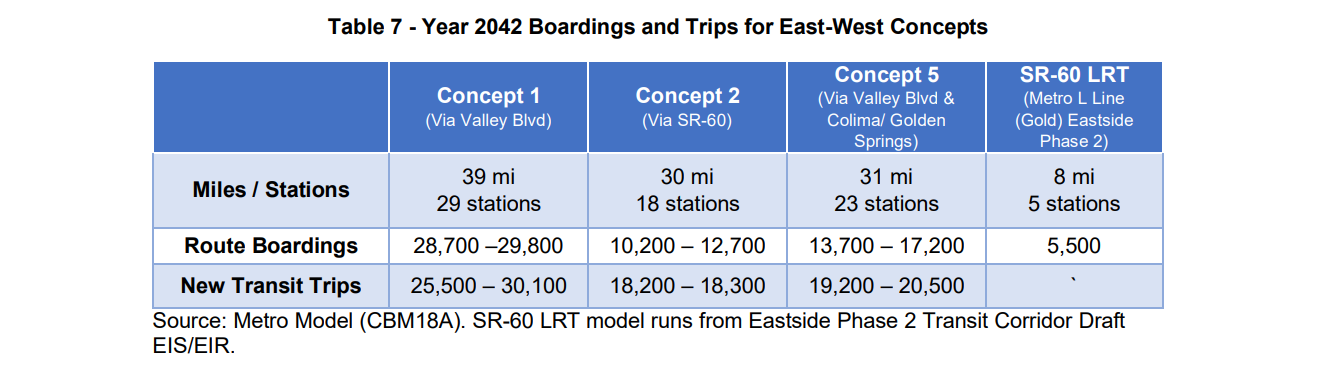
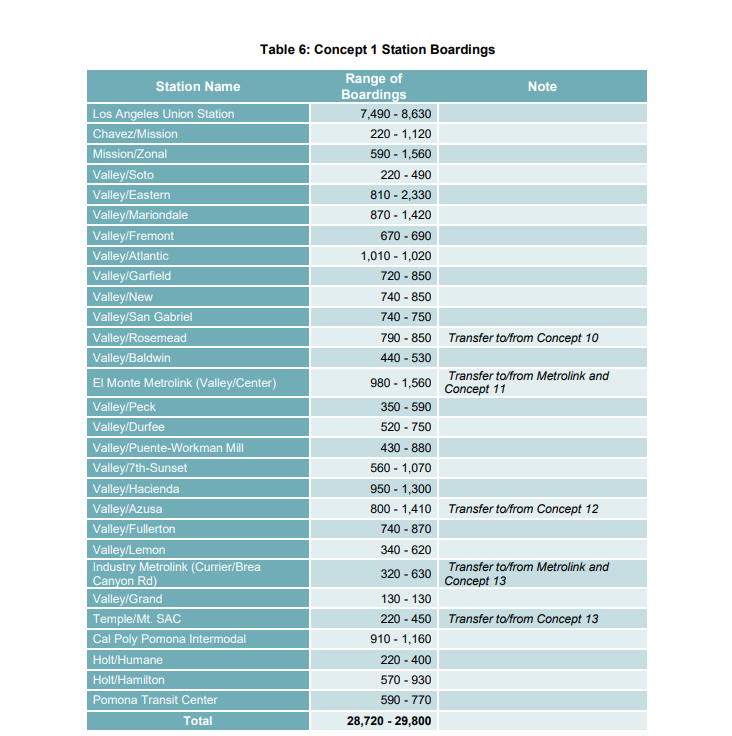
The Valley route, known as Concept 1, was projected to have roughly 29,000 daily boardings by 2042. Of course, a large amount of those would have come from Union Station and the intermediary Eastside stations approaching Monterey Park. So to be conservative, let’s say the currently proposed East-West route may attract somewhere between 18,000 – 20,000 daily boardings by 2042.
Keep in mind that Union Station still connects to the project’s western terminus, Atlantic Station, via E Line light rail, and the project’s center, El Monte Station is a major regional hub for Metro (including J Line BRT), Foothill Transit (including Silver Streak), Greyhound buses, and more.
Lewin also had misgivings about how a BRT line would change zoning in the city.
“The ADU [Accessory Dwelling Unit] provisions, the development provisions, and the apartment provisions, they would get kicked in at some of the locations along this corridor,” Lewin said. “You could have a half mile radius around there, where you could have high density development going into Rosemead communities that are previously single family homes, and that has not been talked about at all.”
More from the Hearing
Only one speaker, resident Jonathan Loc, spoke in favor of the project.
“I personally say this as someone who relied on the 770 and the 70 bus when I was a student at East L.A. College,” Loc began. “So I know firsthand how much a reliable bus line can mean for working families. I also believe that a good bus project can increase ridership and bring more people onto the sidewalks, which actually creates a more small town walkable vibe that the General Plan and the Garvey Specific Plan envision. The latter plan calls for more housing and more businesses along Garvey and those businesses would benefit when more people are walking, riding and spending time on the corridor.”
Some speakers, as well as longstanding Councilmember Margaret Clark, feared that the formation of an intercity subcommittee implied support for the project.
Councilmember Sean Dang disagreed with that assertion.
“I think having that discussion and having a conclusion, if you will, from that joint committee, I think it will send a louder, clearer voice back to the COG,” Dang said. “I don’t think it will weaken it. I don’t think that once the COG sees that we form this subcommittee, they automatically feel that they have a green light to start moving in that agenda and that path.”
Clark – a past SGVCOG president – shared several concerns about the project:
- slower vehicle traffic on Garvey (currently two lanes each way)
- the COG wresting local control from the city
- potential pass-on costs to the city
- the possibility of parking drivers getting their doors blown off by buses
- lack of space to install bike lanes on Garvey if bus lanes are painted in
- limited participation on a subcommittee (only two members per city)
Overall, the political cost of redrawing the street seemed to deter the council from saying anything which could be construed as overt support for the regional BRT project. Only Councilmember Steven Ly spoke of bus service in relatively positive terms.
“We as a city have an obligation to protect everybody that uses that street, whether you’re driving, whether you’re walking, whether you’re taking the bus, whether you’re riding a bike,” Ly said. “I’m pretty sure everyone in this room can agree to that. If not, a little bit of shame on you, because we should be about protecting all our residents, right?”
Though Ly seemed to have warm feelings toward the project – mentioning family members who have relied on transit as “captive” riders – he too shared worries about local control.
“The COG does have eminent domain capabilities that they could force us to do this project that is well within their purview and well within their rights as part of the joint powers authority they have,” Ly said, “which is why I do believe it’s important that we do begin this process of starting a subcommittee talking to our neighboring cities and having a cohesive and coherent position on this.”
Ultimately, Ly’s motion to create the subcommittee passed, 5-0, after Clark requested that language be added to it expressing concerns about the project to all municipalities involved.
Streetsblog’s San Gabriel Valley coverage is supported by Foothill Transit, offering car-free travel throughout the San Gabriel Valley with connections to the A Line Stations across the Foothills and Commuter Express lines traveling into the heart of downtown L.A. To plan your trip, visit Foothill Transit. “Foothill Transit. Going Good Places.”Sign-up for our SGV Connect Newsletter, coming to your inbox on Fridays!

Read More:
Streetsblog has migrated to a new comment system. New commenters can register directly in the comments section of any article. Returning commenters: your previous comments and display name have been preserved, but you'll need to reclaim your account by clicking "Forgot your password?" on the sign-in form, entering your email, and following the verification link to set a new password — this is required because passwords could not be carried over during the migration. For questions, contact tips@streetsblog.org.