Is This Our Future? Solo Driving Drops in DC as Transit and Biking Soar.


We’ve been writing a lot this week about the national shift away from car travel and toward transit, biking, and walking. Yesterday, Washington area officials released new data that indicates the DC region is at the forefront of that trend.
The region added half a million new workers between 2000 and 2011, according to a report by the National Capital Region Transportation Planning Board [PDF]. During that period, transit was the fastest-growing mode of travel for commuters, soaring from an 11.8 percent mode share to 15.4 percent, nearly a one-third increase. That’s an additional 162,000 regular transit commuters across the greater DC area.
More than half of that increase has occurred since 2007, probably spurred in part by the recession, though undoubtedly helped along by many other factors.
Puzzlingly, the major exception to that rule was among federal government workers: All of their increased transit ridership happened between 2000 and 2007, when mode share jumped from 19 percent to 28 percent, where it remained in 2011. That means transit ridership among federal employees wasn’t affected by the transition from a Republican to a Democratic administration or by the recession.
Region-wide, 65.8 percent of commuters drive alone, a slight drop from 67.2 percent in 2000. Driving alone decreased or stayed the same in every jurisdiction but Prince William County, where admittedly unreliable data shows it rose from 74 percent to 77 percent.
The changes in the region are happening even more intensely in the city of Washington alone. In DC, 40.2 percent of workers commute via transit, compared to 32.3 percent in 2000. Meanwhile, the share of DC workers driving alone shrank from 39 percent to 33.6 percent.

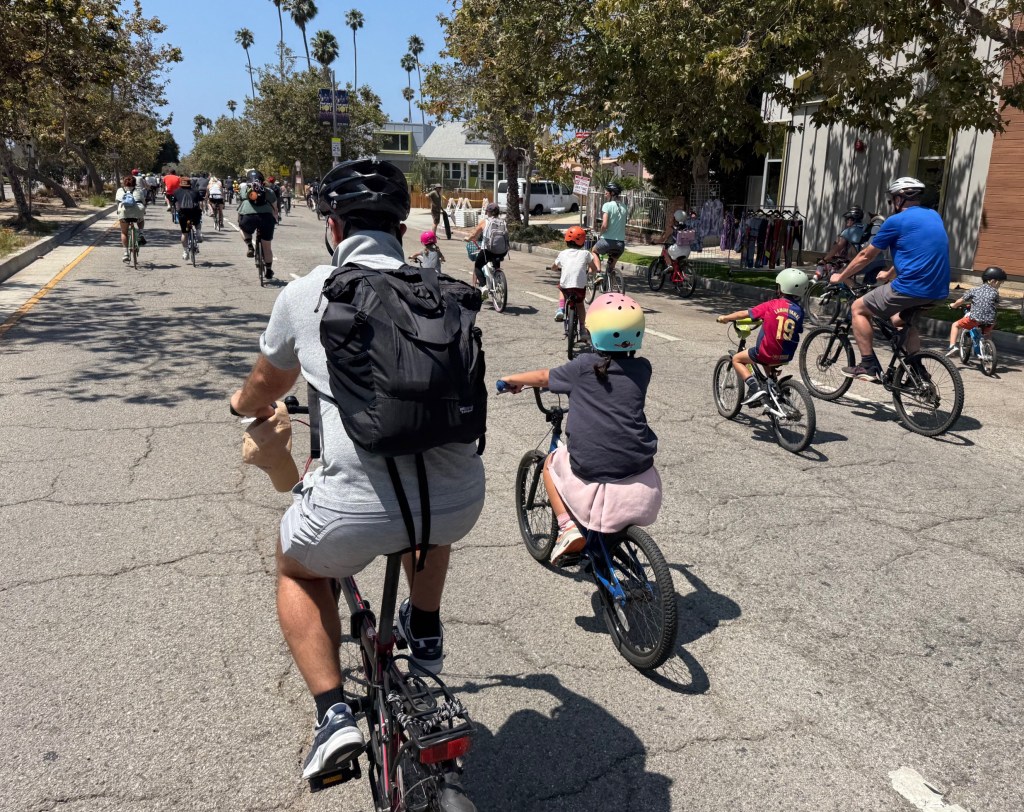
And the city’s investments in bike infrastructure seem to be paying off. In DC, cyclists now make up 3.5 percent of commuters, a big jump since the 1.2 percent mode share of 2000. The next-highest bike mode share is in Arlington, with 1.2 percent, frozen since 2007. Across the region, biking has a 0.7 percent mode share — an increase from 0.3 percent in 2000, but with such a low percentage, it’s hard to read much into the numbers.
Walking to work hasn’t grown the way biking has, but it enjoys a relatively stable 3.2 percent mode share regionally, with 11.5 percent within the city limits. Again, Arlington is the closest runner-up with 5.5 percent mode share.
Carpooling in the region continued its decades-long slump, declining precipitously from 13 percent in 2000 to just 9.7 percent in 2011. The report author confirmed that slugging in the HOV lanes does count as carpooling, making that decline even more shocking.
And then, there’s that wonderful commuting option: not commuting. The work-from-home crowd has grown from 3.7 percent to 4.7 percent of all workers, with growth in every jurisdiction. In some areas, however, there was a steep rise between 2000 and 2007 and then a decline between 2007 and 2011, suggesting that working from home may have become less prevalent during the recession.
All of these statistics suffer from the problematic phrasing of the Census and American Community Survey questionnaires, which ask how the person “usually” got to work the week before. If more than one mode of transportation was used, the person is directed to only report the one used for the greatest distance. Biking to transit, for example, only counts as transit in most cases. The same principle applies if someone bikes two out of five days per week.
The report also examined residential and commuting patterns. About 90 percent of the workers added to the District’s labor force between 2000 and 2011 both lived and worked in DC, the report states. That’s a major change from the suburb-happy past and a huge vindication of the city’s revitalization and livability efforts.

Read More:
Streetsblog has migrated to a new comment system. New commenters can register directly in the comments section of any article. Returning commenters: your previous comments and display name have been preserved, but you'll need to reclaim your account by clicking "Forgot your password?" on the sign-in form, entering your email, and following the verification link to set a new password — this is required because passwords could not be carried over during the migration. For questions, contact tips@streetsblog.org.