Pasadena Passes Restorative Justice Elements for 710 Stub Plan
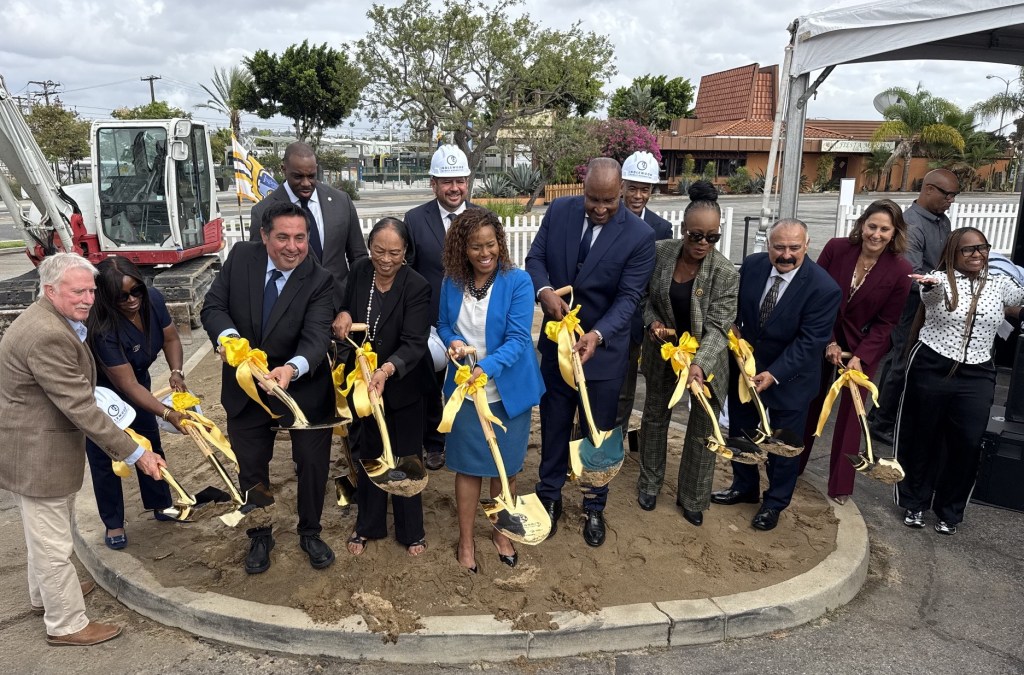
Pasadena’s city council unanimously approved the Restorative Justice Elements for Reconnecting Pasadena – the 710 Stub’s Vision Plan – on Monday.
This framework is meant to guide the city in righting wrongs committed against people of color who were removed from their homes in the early 1970’s to make way for construction of the 710 Freeway, which ultimately never came to fruition.
In the intervening decades, the now empty plot of land came to be known as the “Stub.” Eventually, after repeated attempts by Caltrans to finish connecting the 710 from El Sereno to Pasadena, the Stub’s land parcel was relinquished to Pasadena in 2022.
Read more about this history here, and about ongoing freeway displacement here, here, and here.
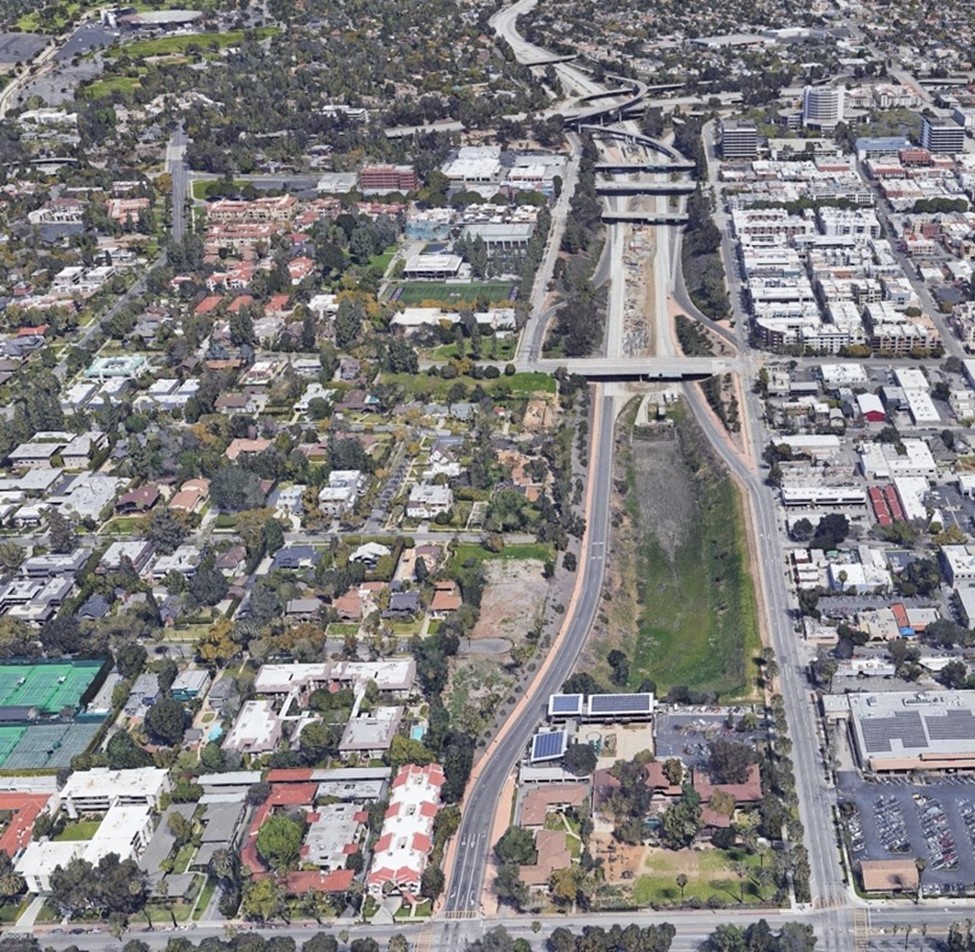
Over the last two years, the city has been working on the Vision Plan for redeveloping the Stub’s 50 acres. Discussions on street redesign and housing went smoothly, and that portion of the plan was approved in April. What the council wanted to take more time mulling were the Restorative Justice Elements.
Consequently, the 710 Advisory Group came back this week with a refined list of ten Restorative Justice principles for the plan.
- Highway Construction – the city recognizes the harm caused by the 710 and works to address it.
- Policy Adoption – the city prioritizes measures to prevent future harm to vulnerable communities through infrastructure development or policies.
- Historical Acknowledgement – the city will give a formal public apology, create a public history installation, and push for the inclusion of this history in local school curriculum.
- Hard Infrastructure – redevelopment should prioritize infrastructure which reconnects the historically redlined Northwest sector of Pasadena with the rest of the city.
- Restorative Justice Community Oversight Committee – a body of stakeholders will be created to ensure the implementation of the Restorative Justice Elements.
- Community Benefits Planning Framework – the city council should consider legal agreements including, but not limited to, Disposition and Development Agreements, Ground Leases, and Community Benefit Agreements (CBAs).
- Wealth Generation Through Home & Business Ownership – $25 million (1 percent of the Stub’s estimated real estate value) will be set aside for remuneration payments of $150k to displaced residents and business owners, among other benefits.
- Affordable Housing and Registry – 25-30 percent of the proposed 1800 housing units in the Stub area must be made affordable, and a registry of residents displaced by Freeway construction must be maintained for first right of rent or purchase in the Stub.
- Business Development Support – the city should provide or increase the existing 5 percent bid preference for certified small businesses in procurement and contracting for development in the 710 Stub area.
- Workforce Development – the city should include those displaced by the Stub’s construction in any training or workforce development programs created as a result of the Restorative Justice Standing Committee‘s work.
While no one on the council argued with the lion’s share of these items, there was some concern about who may qualify for payments or programs.
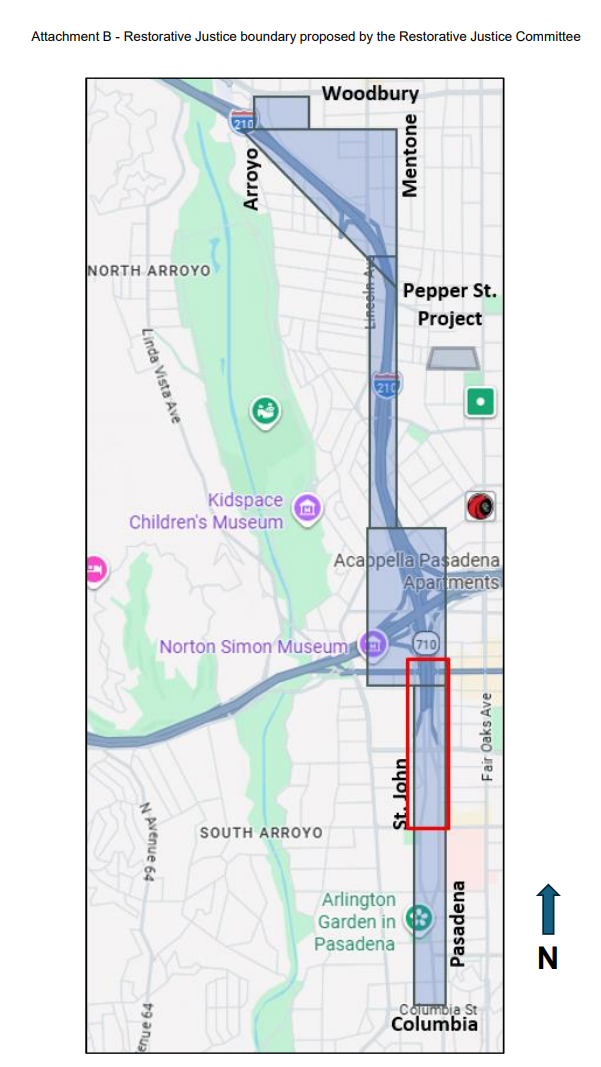
The Committee opened its presentation suggesting that the project area for the Restorative Justice Elements be expanded a ways north and south of the Stub’s actual footprint (outlined in red below) to include more freeway-impacted neighborhoods.
Tina Williams, who co-chairs the Committee, explained the logic behind this.
“The studies of UCLA and Allegra Consulting, as well as ARG, indicated that this area of the 710 Stub couldn’t exist without the 210 Freeway,” Williams said. “The 210 Freeway impacted disproportionately people of color, removing up to 2600 to 3600 people from that area.”
City Councilmember Steve Madison was dubious whether payments could or should be made to anyone who wasn’t displaced specifically by the Stub’s construction.
“I struggle with that only because it feels a little bit like we’re widening the aperture so much that we’re diluting the focus of the matter at hand, which is the 710,” Madison said. “There needs to be a proportionality to the responsibility of the harm that one is addressing, and I’m not sure that anybody’s presented the case that that should extend beyond the displaced community in the 710 to share in those efforts.”
City staff reported that a total of 218 known buildings were razed for the Stub. Though Madison and other council members acknowledged this wasn’t the only instance of racist city planning, the development of the Stub is (for now) the sole source of funding for the Restorative Justice Elements. The 710 Advisory Group projects that developing it will net the city $250 million in 2025 dollars; 1 percent of that will allow for a max of 166 remuneration payments of $150,000, but only after the Stub is developed.
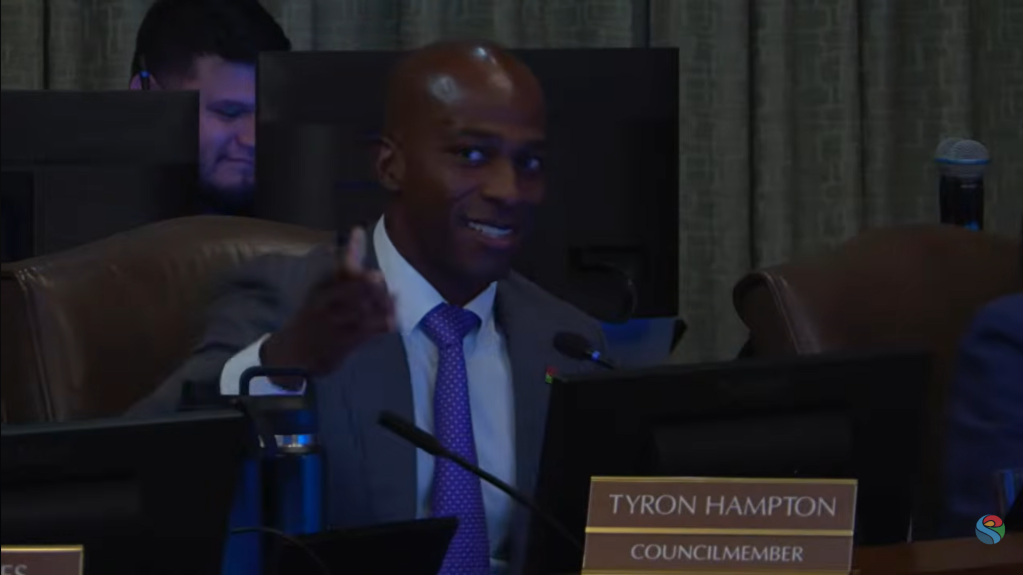
Despite this question, the entirety of the council voted to adopt the ten Restorative Justice Elements, following a motion by Tyron Hampton to do that rather than study them any further.
“Tonight we have an opportunity to attempt to right a historic wrong that has happened here in our community,” Hampton said. “This is going to cost us nothing, but if we don’t get this right, it will cost us everything.”
Streetsblog’s San Gabriel Valley coverage is supported by Foothill Transit, offering car-free travel throughout the San Gabriel Valley with connections to the A Line Stations across the Foothills and Commuter Express lines traveling into the heart of downtown L.A. To plan your trip, visit Foothill Transit. “Foothill Transit. Going Good Places.” Sign-up for our SGV Connect Newsletter, coming to your inbox on Fridays!

Read More:
Streetsblog has migrated to a new comment system. New commenters can register directly in the comments section of any article. Returning commenters: your previous comments and display name have been preserved, but you'll need to reclaim your account by clicking "Forgot your password?" on the sign-in form, entering your email, and following the verification link to set a new password — this is required because passwords could not be carried over during the migration. For questions, contact tips@streetsblog.org.