Six Ways the Media is Still Blaming the Victim

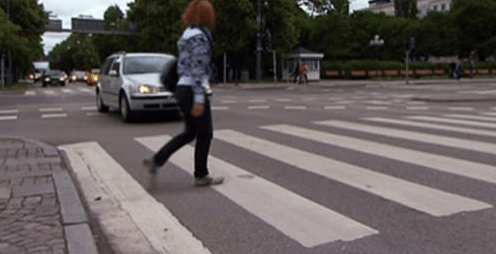
When a driver hits a pedestrian or cyclist, a handful of media tropes shift blame to the victims and leave readers with the impression that nothing can be done about it.
A new analysis of 200 articles covering bike and pedestrian deaths in a two-month period last year [PDF] reveals that the media “consistently” faults the dead rather than the survivor, who is often the only witness with whom cops speak.
“Through grammatical choices and by selectively including some bits of information but not others, local news coverage subtly, but consistently, blames vulnerable road users for crashes,” lead author Kelcie Ralph, an assistant professor at Rutgers, wrote in the summary paper, which was presented at the Transportation Research Board annual conference this week in Washington, D.C.
Here are a few of the problems she and her research team identified:
#1. Lack of agency for drivers
The language used by journalists verbally absolved the drivers. Of the sentences analyzed, only 65 percent named an “agent” responsible for hitting the pedestrian or cyclist. In 35 percent of the cases, the wording implied the crash “just happened.”
Even when an agent was described as inflicting a blow, it was the car — not the driver — that was singled out in 81 percent of those cases.
#2. Focusing on the victim’s actions
The behavior of the victim, not the driver, was typically the reporter’s focus. Of the sentences analyzed, 73 percent focused on the pedestrian or cyclist’s behavior, while just 11 percent focused on the driver’s behavior and another 13 percent on the vehicle.
The typical article would state, “One of the riders was hit by a vehicle that was turning left.” Instead of, “A vehicle that was turning left hit one of the riders.”
#3. Offering “counterfactuals”
The report referred to bits of information we would probably call “victim-blaming” as “counterfactuals.”
“These statements imply that the [vulnerable road user] would not have been hit if they had acted differently, for example stating that the victim was wearing dark clothing or crossing outside a crosswalk,” the authors write.
Just under half of the articles —48 percent — had at least one counterfactual. These statements “shift blame toward the victim,” the research team wrote.
#4. Treating the incident as isolated, rather than systemic
Very few of the articles analyzed connected the incident to relevant wider issues. For example, only 8 percent of the articles mentioned other crashes in the area and only 7 percent mentioned any road design features that might have influenced the crash.
The authors instead recommend journalists use a “public health framing” to cover bike and pedestrian crashes.
“Linking each instance to the epidemic of (vulnerable road user) deaths will help bring about meaningful solutions,” they wrote.
#5. Not consulting experts
None of the 200 articles included comments from planners, engineers, or road safety experts. These are the kind of people who could help connect the crashes to wider concerns, like unsafe road design.
#6. Using the term “accident”
Finally, despite the Associated Press advising journalists to avoid the term “accident,” it was still the favored term in the articles, appearing in 47 percent of cases. “Crash” was the second most-used term; it appeared in 45 percent of the articles.
“Referring to a crash as an ‘accident’ obscures the preventable nature of collisions and is no longer recommended,” the team wrote.
Ralph’s study was just the latest in a rash of academic research pointing out flaws in the way reports cover pedestrian and cycling deaths.

Read More:
Streetsblog has migrated to a new comment system. New commenters can register directly in the comments section of any article. Returning commenters: your previous comments and display name have been preserved, but you'll need to reclaim your account by clicking "Forgot your password?" on the sign-in form, entering your email, and following the verification link to set a new password — this is required because passwords could not be carried over during the migration. For questions, contact tips@streetsblog.org.