New Traffic Signals in London Will Give Pedestrians the Green Light By Default

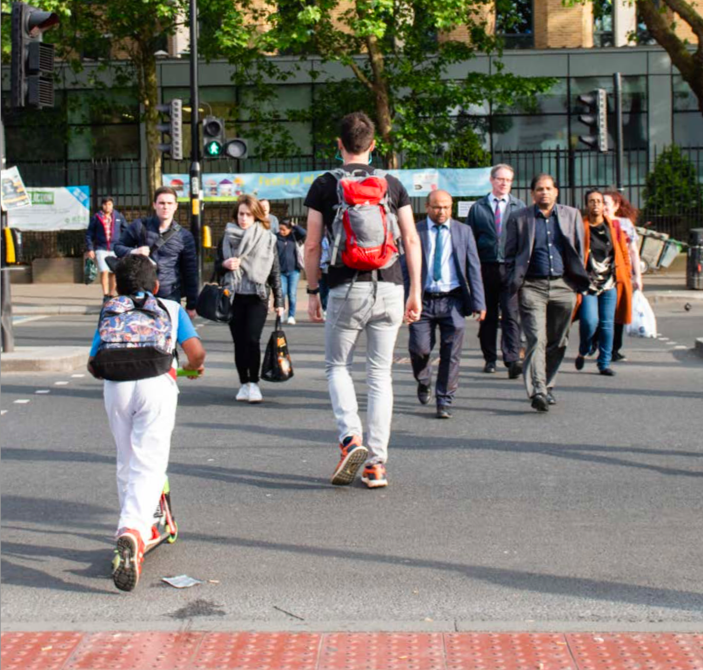
The city of London is on a mission to make walking as convenient as possible, using smarter traffic signals that reduce wait times for pedestrians.
For the past few years, Transport for London has been conducting “annual timing reviews” at 1,200 signalized intersections. Last year, the agency adjusted 200 signals to give people the walk sign sooner.
Now TfL wants to take the concept further as part of Mayor Sadiq Khan’s ambitious plan to get Londoners walking more [PDF].
To help meet its goals for “pedestrian time saved,” the agency will begin using smart traffic signals that employ what’s known as “Split Cycle Offset Optimisation Technique” (SCOOT, get it?). These signals, which will be installed at a small number of locations, can detect the number of pedestrians waiting at an intersection and automatically adjust timing to minimize their wait and ensure they have enough time to cross.
At 10 other intersections, TfL wants to use traffic signals to give pedestrians the right-of-way by default. They call it the “green man.” TfL writes:
‘Green man’ authority is a radical technique where the traffic signals show a green signal for pedestrians continuously, until vehicular traffic is detected, at which time the pedestrians are stopped on a red signal, and vehicles are given a green light to proceed. This technique has previously only been used at two locations in London, on bus-only streets in Hounslow and Morden. TfL has identified the next 10 new locations where this approach will be set up, where it would significantly benefit pedestrians, with very little detriment to traffic.
The pedestrian signal improvements are part of the “walking action plan” TfL released earlier this month, which fits into Khan’s goal of increasing daily walking trips from 6 million today to 7 million by 2041.
Hat tip: Systemic Failure

Read More:
Streetsblog has migrated to a new comment system. New commenters can register directly in the comments section of any article. Returning commenters: your previous comments and display name have been preserved, but you'll need to reclaim your account by clicking "Forgot your password?" on the sign-in form, entering your email, and following the verification link to set a new password — this is required because passwords could not be carried over during the migration. For questions, contact tips@streetsblog.org.