Stories About Marathon Walking Commuters Receiving Benevolent Donations of Cars Are Actually Terrible

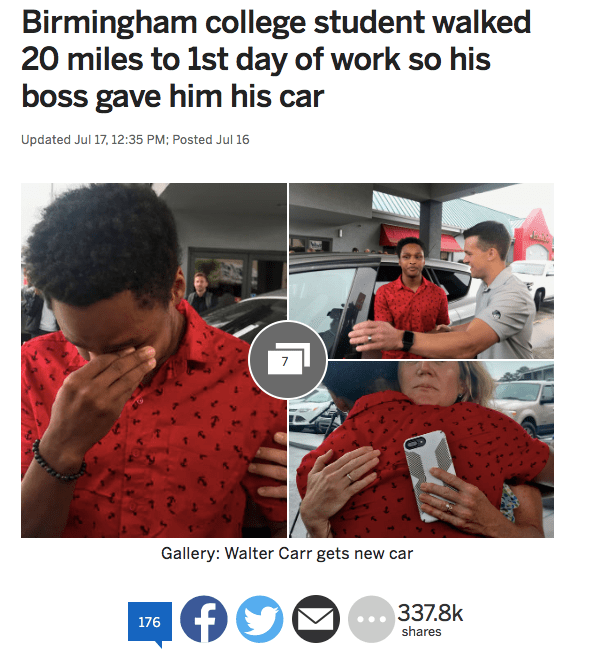
Maybe you’ve noticed the new genre of feel-good viral story going around: Someone — usually a black man — is forced to walk an insane distance, at least a dozen miles, to get to work. But then someone else — his boss, GoFundMe — saves the day by buying him a car.
First there was James Robertson, Detroit’s “Walking Man,” whose 21-mile roundtrip walking commute to his factory job in suburban Detroit caught fire in 2016. This week, the man whose story people can’t stop sharing is Walter Carr of Birmingham. When his vehicle broke down and he had to walk 20 miles to his new job at a moving company, Carr’s boss gave him a Ford Escape.
Heartwarming, right? No. It’s really not.
The work ethic and determination of these men is stunning, but don’t paint their stories as triumphs of the American spirit. When we hear about desperate, exhausting commutes to jobs far away from home, we’re being confronted by the reality that in places like Birmingham and Detroit, employment is out of reach unless you have the means to own a car.
Birmingham ranks last — dead last — in transit access to jobs among the 50 largest regions in the country, according to a 2014 analysis by researchers at the University of Minnesota. For the average resident, only 3 percent of the region’s jobs are within reach of a one-way transit trip in under 60 minutes. If you don’t have a car in Birmingham, your options for gainful employment are vanishingly small.
Dig into the story a little bit and there are other red flags. For example, Carr was picked up by police because he was walking (while black), and the officers took him out for breakfast when “his story checked out,” reports Carol Robinson at the Birmingham News. What appears as a friendly interaction in the article began as an instance of racial profiling, where Carr had to prove his worth as a human being.
Most people probably wouldn’t have shown as much grit as Carr. Why should they? In a more humane world, people wouldn’t have to make impossible choices between risking your life on a marathon commute and holding down the job you need to survive.

Read More:
Streetsblog has migrated to a new comment system. New commenters can register directly in the comments section of any article. Returning commenters: your previous comments and display name have been preserved, but you'll need to reclaim your account by clicking "Forgot your password?" on the sign-in form, entering your email, and following the verification link to set a new password — this is required because passwords could not be carried over during the migration. For questions, contact tips@streetsblog.org.