The Stress of Navigating Unwalkable Bus Stops With a Wheelchair

Pedestrian access to transit is important. A recent study by TransitCenter found that people who use transit most often tend to walk to the bus or train. But as our “Sorriest Bus Stop in America” contest highlighted, there are some very serious challenges on this front in American cities.
The problem of lousy walking access to transit is compounded for riders with disabilities. In a recent post, Steve Patterson at Network blog Urban Review STL offers a personal account of the obstacles he faces navigating the bus system in St. Louis using a power wheelchair:
Part of the implied contract when taking a bus to a destination is when you’re dropped off at your stop, you’ll be able to get to the corresponding stop in the opposite direction for the return trip. Seems simple enough, right? But in many parts of the St. Louis region being able to reach a bus stop in the opposite direction is impossible if you’re disabled. I don’t go looking for them, I run across them just going about my life.
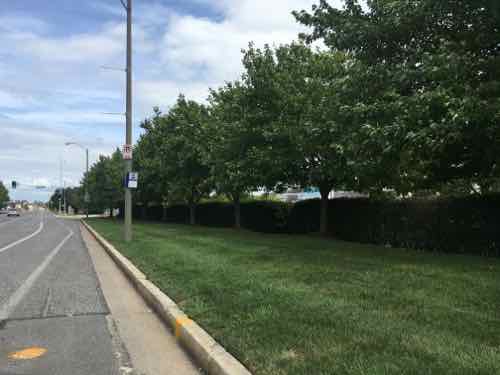
Patterson recently took the bus down Manchester Avenue to a shopping center, only to find himself nearly stranded, trying to reach the stop shown in the above photo. Two and a half decades after the Americans with Disabilities Act was enacted, these are the conditions for transit riders using wheelchairs in St. Louis:
Thankfully my chair had enough power to roll over the grass. If it had been wet or muddy I couldn’t have reached this bus stop. A user of a manual chair probably couldn’t have. And finally, why should able-bodied pedestrians have to walk through grass?
When I boarded the bus from this stop the driver asked me how I managed to get to the stop! On the bus I noticed a stop further East that I’ve blogged about before.
I paid attention to all the stops as we passed each one. I decided I needed to look at the entire stretch, not just one stop here or there. Again, the distance between Kingshighway and McCausland is 2.5 miles. There are 12 MetroBus stops in each direction. All 12 in the Westbound direction are accessible — not ideal but adequate. However, in the Eastbound direction only half are accessible/adequate.
Patterson notes that it’s the transportation department and property owners responsible for the areas surrounding bus stops, not the transit agency. Read his full post for a catalogue of all the sorry bus stops he saw along the route.
Elsewhere on the Network today: The Dirt explains how Baton Rouge can rebuild in a way that makes it more resistant to major flooding events. Reno Rambler takes on locals who say the city has nothing to learn from other cities. And Seattle Transit Blog reports that tolls from managed lanes on a local highway are now paying for highway expansions.

Read More:
Streetsblog has migrated to a new comment system. New commenters can register directly in the comments section of any article. Returning commenters: your previous comments and display name have been preserved, but you'll need to reclaim your account by clicking "Forgot your password?" on the sign-in form, entering your email, and following the verification link to set a new password — this is required because passwords could not be carried over during the migration. For questions, contact tips@streetsblog.org.