The Urban Land Institute Takes Its Look at L.A.’s T.O.D.

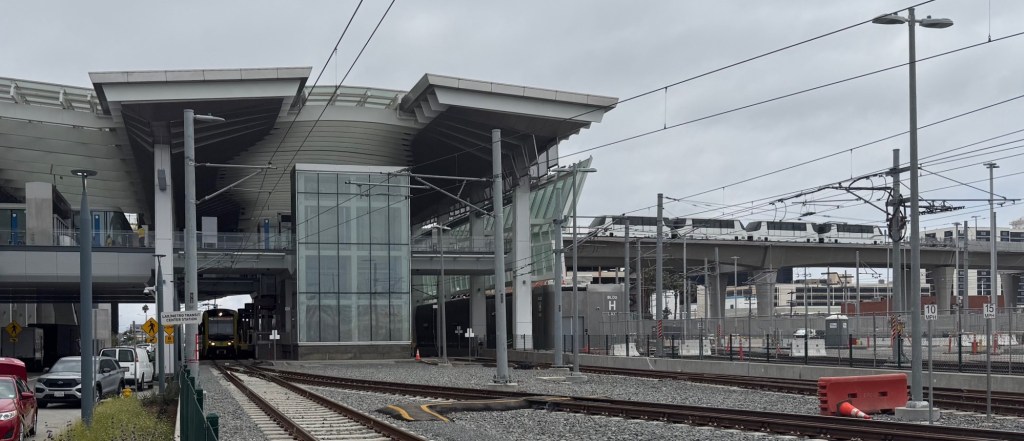
 Slauson Station. T.O.D. Heck. Photo: The Architect Newspaper Blog
One thing that the National non-profit the Urban Land Institute and Streetsblog have in common is we both have strong views about Transit Oriented Development. Another thing we have in common? We both think the state of transit oriented planning in Los Angeles could really use improvement.
To that end, ULI has held a series of Technical Assistance Panels (TAPs) to evaluate underperforming development areas around transit stops. These panels will release their findings piecemeal leading up to the T.O.D. Conference the ULI is planning in June. You can read more about the conference, here.
The first of their TAP findings is the Slauson Blue Line Station in Los Angeles where they see a lot of problems inhibiting strong Transit Oriented Development from coming to the area. In particular the station suffers from:
- poor security;
- poor pedestrian connectivity to the surrounding neighborhood
including an; above-grade platform that’s separated from street life; - poor insulation from noxious industrial uses; and
- multiple jurisdictions that inhibit good planning.
Unfortunately, these conditions exist at a lot of Metro stations. Thus, the suggestions given by ULI could have a more universal application than just one station. So what does the ULI suggest?:
The ULI panel focused on getting people to the station and adding
retail. This included adding a security kiosk, improved lighting, more
visible crosswalks and sidewalks. But a key proposal may rankle those
who support TODs purely to get people out of cars: The ULI TAP urges
not less but more parking…particularly, a new parking structure
connecting to the boarding platform. “Adding parking is not ‘good’ from
a typical green perspective, but it will increase ridership,” said
Watts.
More parking? Consider me rankled. I guess the good news is that they are recommending parking for the station and not the development. While the impact on parking and development is clear, the impact on transit is murkier. Some argue that station parking is needed to support transit, and others that it defeats the point to encourage people to drive to the train. Currently, Slauson station has no connected automobile parking, six bike racks and two bike lockers.
If you keep reading “The Ground Floor” article, it seems as though the value of parking to a TOD is over rated. The article goes on to quote the director of the San Francisco ULI damning the policies that led to more parking around BART stations. As more and more T.A.P. findings come out for Los Angeles it will be interesting to see whether the parking suggestions for Slauson station are the exception, or if even T.O.D. planners in Los Angeles see the need for car parking.

Streetsblog has migrated to a new comment system. New commenters can register directly in the comments section of any article. Returning commenters: your previous comments and display name have been preserved, but you'll need to reclaim your account by clicking "Forgot your password?" on the sign-in form, entering your email, and following the verification link to set a new password — this is required because passwords could not be carried over during the migration. For questions, contact tips@streetsblog.org.