Planetizen Talks to UCLA Professor About Women’s Safety on Buses

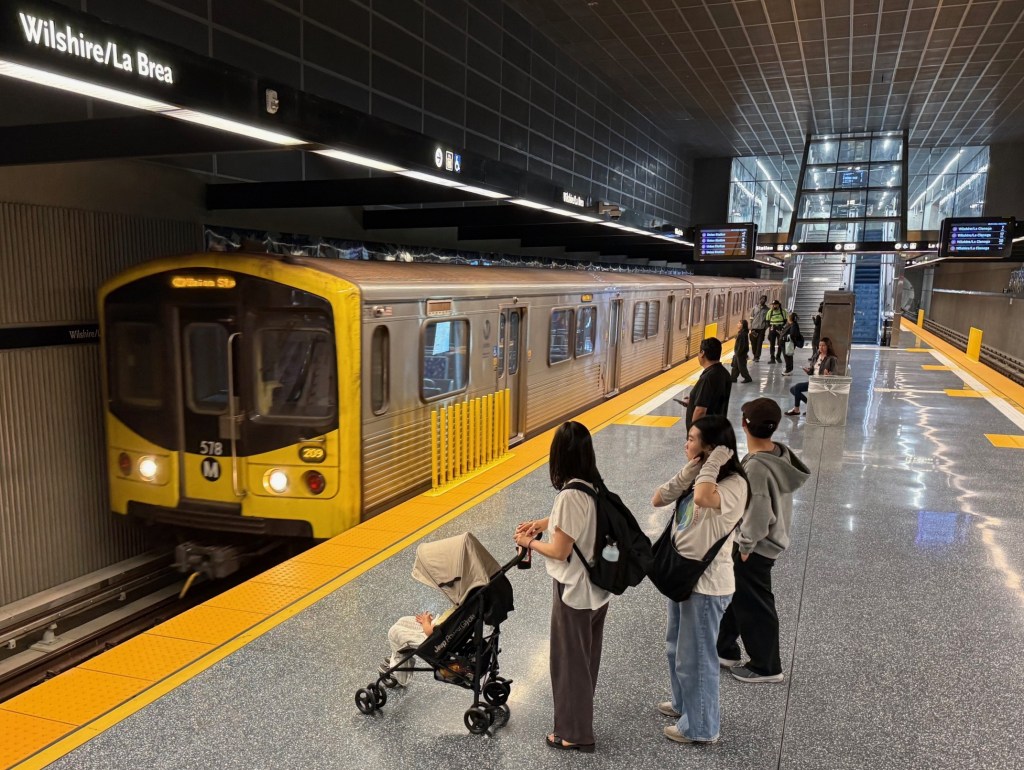
 Photo: Lucy RK in LA/Flickr
Thanks to an excellent submission by Enci Box last year, we’ve had a couple of great discussions on women’s safety on the streets, both for cyclists and pedestrians. However, we haven’t spent nearly as much energy discussing safety for bus riders, especially women bus riders. Fortunately, Planetizen Editor Tim Halbur sat down to have an in-depth discussion of this issue with UCLA Professor Anastasia Loukaitou-Sideris. You can read the full interview at Planetizen, and I strongly recommend it for anyone interested in this issue as both Halbur and Loukaitou-Sideris do a great job. For those without the time to read the full interview, here’s an except.
PLANETIZEN: So imagine I’m a transportation planner, and I’m
reading your interview right now on Planetizen. What would you urge me
to do?LOUKAITOU-SIDERIS: To incorporate women’s voices into the planning
process. I was asked to speak at a conference recently specifically on
women’s issues and transportation, and there were some women
transportation planners there who were saying, “Well, we have to look
only to universal needs.” I respectfully disagree, because there are
specific needs. Transportation planners really need to look at women’s
fears in transportation settings and know that there are things that
they can do to if not completely eliminate but reduce these fears.
These solutions involve policy, design, policing, and outreach and
education.Of course, this costs money. But my work and the work of others has
shown that crime comes at hotspots: not every area is equally unsafe.
Transit agencies do audits every year, and they know where these
hotspots are. So when we talk about limited resources, they could
concentrate their resources on these areas.