New Lawsuit and Denied Appeals Highlight Ongoing Fight Over Measure HLA Implementation

(Disclaimer: In his personal time, Joe Linton, the editor of Streetsblog Los Angeles, has taken it upon himself to challenge the city’s implementation of Measure HLA by appealing to the Board of Public Works and in court. When Streetsblog reports on matters where Linton is directly involved, the pieces will be written by either Damien Newton or Sahra Sulaiman.)
Two years after Los Angeles voters overwhelmingly approved Healthy Streets Los Angeles aka Measure HLA, the fight over how …or whether… the city is implementing the law is increasingly shifting to courtrooms and appeals hearings.
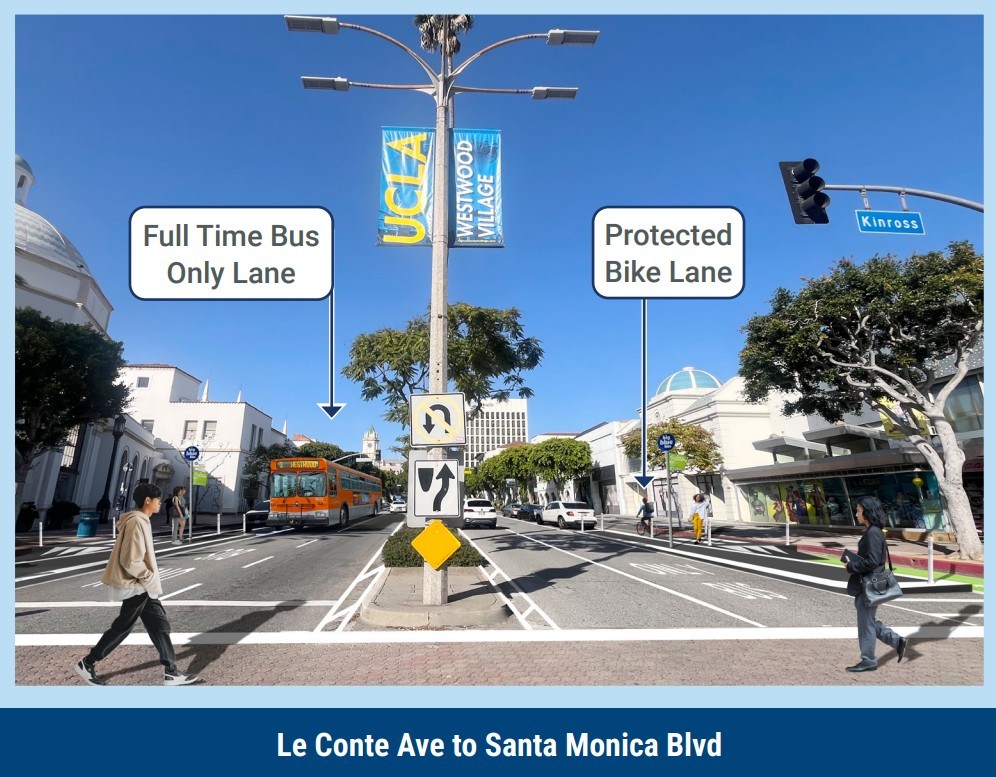
Measure HLA is a Los Angeles law that requires the city to implement its Mobility Plan whenever it undertakes significant street work, such as resurfacing. Approved by voters in 2024, the measure was intended to ensure that city projects automatically include improvements like bike lanes, bus lanes, crosswalks, and other safety features, rather than relying on separate funding or political approval. However, since the law passed, the city has done little to actually implement it.
In the past week, safe streets advocate Joe Linton filed a new lawsuit challenging what he describes as city-created loopholes undermining the measure. At the same time, the Los Angeles Board of Public Works rejected yet another round of appeals seeking to force the city to comply with HLA during street projects.
New Lawsuit Targets “Loopholes” Like Large Asphalt Repair
The latest lawsuit takes aim at the city’s interpretation of what kinds of street work trigger Measure HLA requirements. This is the second lawsuit filed by Linton against the city over Measure HLA. Some preliminary rulings from the first suit may be announced later this month or in May.
“In the two years since Measure HLA became law, the city has only installed 300 feet of Mobility Plan improvements,” Linton wrote. “I grew frustrated with the city’s use of various loopholes – especially large asphalt repair, and terming street reconfiguration ‘restriping without other improvements’ – so I filed another lawsuit.”
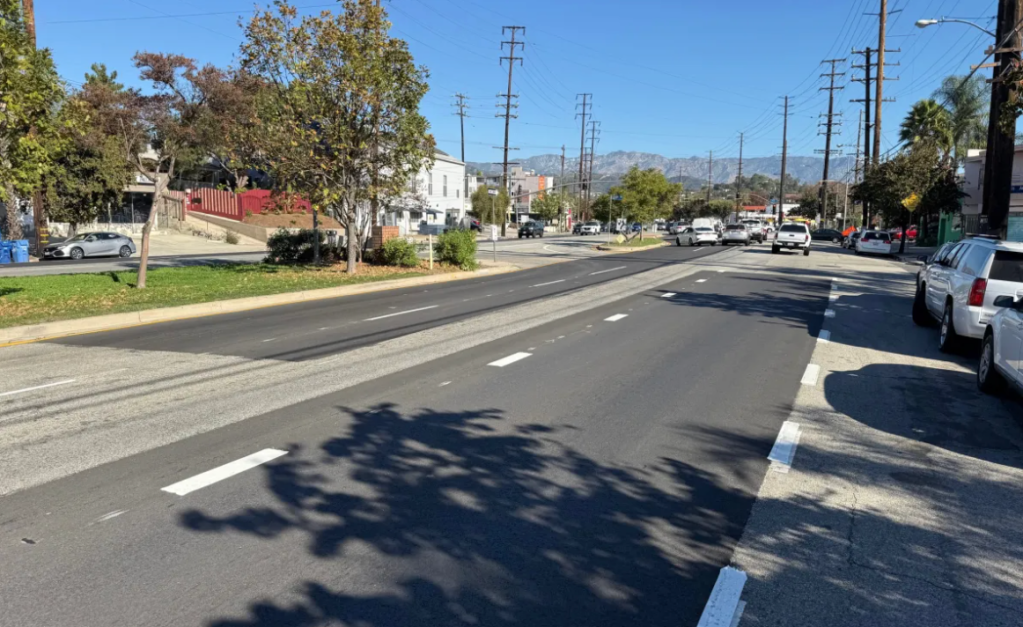
At the center of the dispute is the city’s shift away from traditional street resurfacing toward something it calls “large asphalt repair,” or LAR. Instead of fully repaving streets, the city often repairs portions of roadways — a change advocates argue is designed specifically to avoid triggering both accessibility and HLA requirements. In a short video created for Streetsblog, Linton explains some of the frustration he and others have felt over “large asphalt repair.”
For Streetsblog, Linton narrated this video explaining the frustration and confusion over what is, and isn’t, Large Asphalt Repair.
The lawsuit also challenges the city’s interpretation of other exemptions, including claims that certain projects amount to minor restriping rather than meaningful street redesigns.
Appeals Rejected, Again
While the courts may ultimately decide the broader legal questions, advocates are also attempting to enforce HLA through the city’s administrative appeals process — with little success.
Last week, the Board of Public Works considered three new appeals related to street projects that advocates argue should have included Mobility Plan upgrades. All three were denied.
The appeals focused on street reconfiguration projects that exceeded the threshold length that typically triggers HLA requirements. Advocates argue that these trigger HLA, therefore require bike/bus/pedestrian improvements.
Here’s a summary of the three appeals that were outright rejected last week:
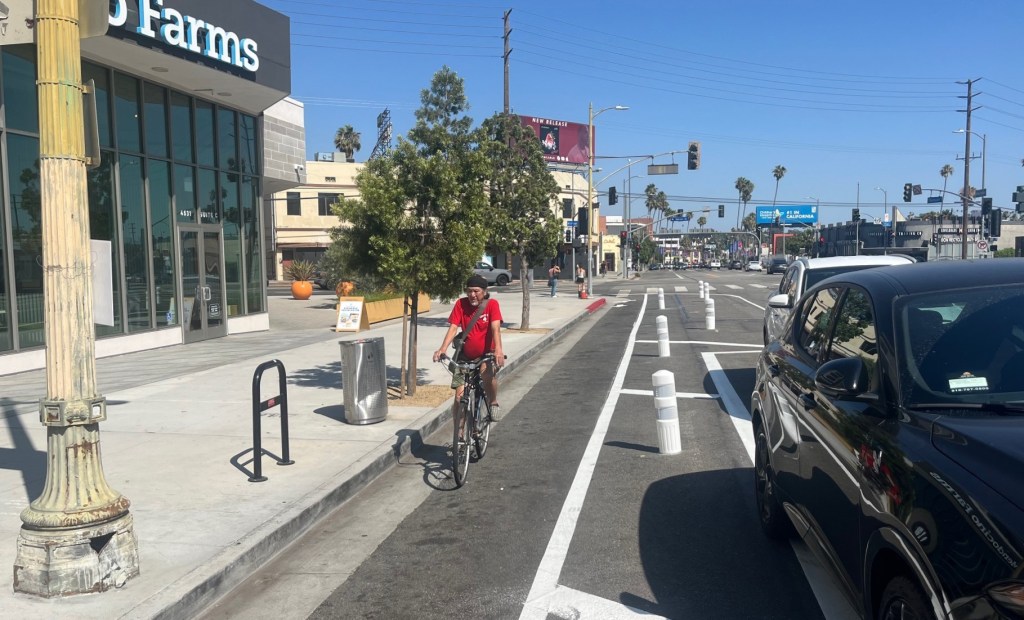
Hyperion Avenue: Linton argued that striping changes made during speed table installation shifted vehicle lanes closer to cyclists, effectively reconfiguring the street and triggering Measure HLA requirements for bike lanes and accessibility improvements. The city rejected the appeal, classifying the work as “restriping without other improvements,” which is exempt from HLA.
Vernon Avenue: Following a peak-hour lane removal project that added over a mile of new parking, Linton contended the changes required bus, pedestrian, and accessibility upgrades under HLA. The city again denied the appeal, maintaining the project was mere restriping and therefore exempt.
Terra Bella Street: Linton challenged a Metro-related project replacing Van Nuys Boulevard bike lanes with partial lanes on Terra Bella, arguing HLA requires completing the full planned bikeway, including near a future rail station. The city rejected the appeal, stating the project does not trigger HLA mainly because the city plans to slurry seal (not repave) the street prior to new striping.
Under the city’s HLA law, residents must file these appeals before pursuing litigation. But critics say the appeal process has functioned more as a barrier than a pathway to enforcement.
Since the appeals system was created in 2025, the city has rejected the vast majority of filings. In earlier rounds, dozens of appeals were denied, with officials often arguing that projects did not meet the legal threshold or qualified for exemptions.
Even in rare cases where the city acknowledged that HLA may have been triggered, it has still declined to require the full set of improvements outlined in the Mobility Plan.

Streetsblog has migrated to a new comment system. New commenters can register directly in the comments section of any article. Returning commenters: your previous comments and display name have been preserved, but you'll need to reclaim your account by clicking "Forgot your password?" on the sign-in form, entering your email, and following the verification link to set a new password — this is required because passwords could not be carried over during the migration. For questions, contact tips@streetsblog.org.