Federal Reconnecting Communities Program Announces First Grants, Four In California

Note: GJEL Accident Attorneys regularly sponsors coverage on Streetsblog San Francisco and Streetsblog California. Unless noted in the story, GJEL Accident Attorneys is not consulted for the content or editorial direction of the sponsored content.
The US DOT announced its first round of grants under the Reconnecting Communities Pilot Program, funded by the Bipartisan Infrastructure Law. California communities were awarded one of the six capital grants and four of the 39 planning grants.
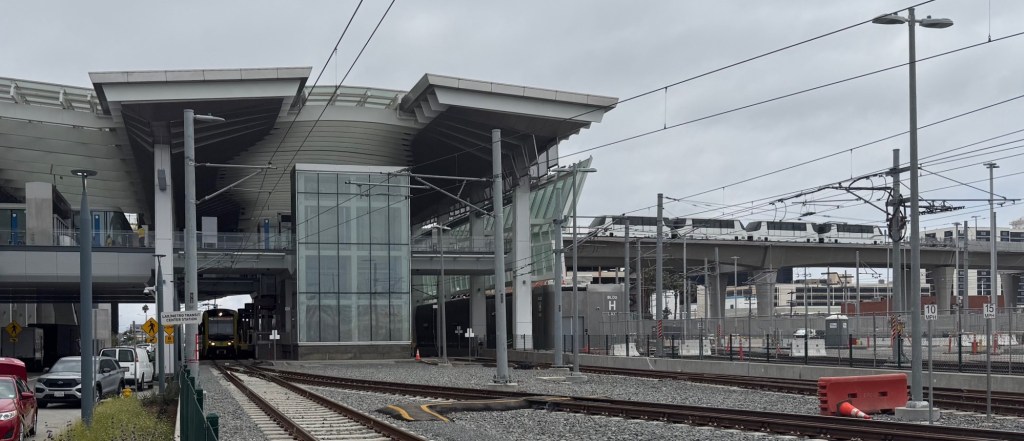
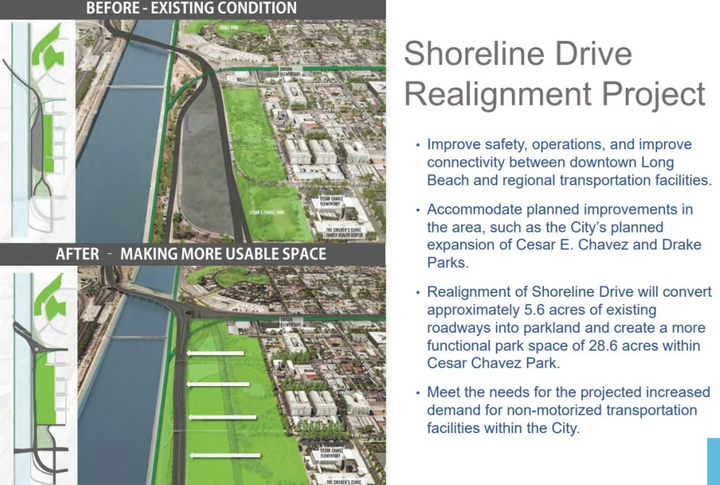
The city of Long Beach will receive $30 million to help it redesign West Shoreline Drive, much of which is basically an extended 710 Freeway off-ramp and currently a major barrier and a safety hazard for local residents.
That project will reconfigure West Shoreline Drive, converting it to a landscaped local roadway. Lanes will be consolidated, local Cesar Chavez Park will be doubled in size, and traffic will be moved further away from two nearby elementary schools. The changes will help create better, safer access between nearby neighborhoods and community park space, Downtown Long Beach, and other destinations.
California communities also received four planning grants in this round. Those are for:
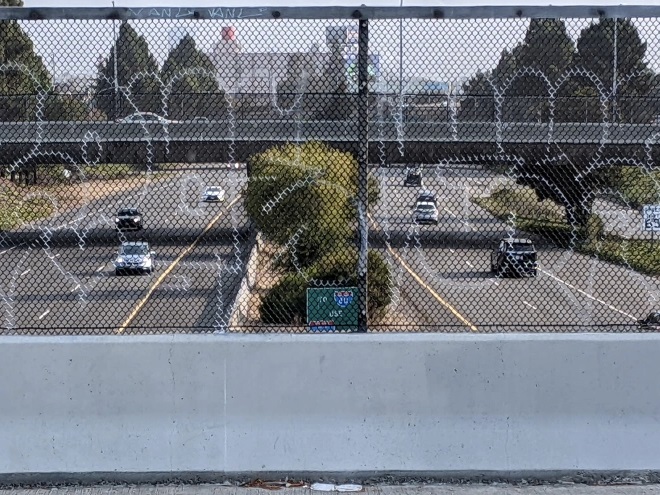
- $680,00 for the Vision 980 Feasibility Study, which will look at reconfiguring the I-980 corridor in Oakland. It will study improving access for bikes, pedestrians, and transit, and “explore options for lessening the barrier, ranging from freeway removal to improvements to the crossings of the existing facility,” according to the project fact sheet.
- $2 million for the North 710 Freeway Stub Re-envisioning Project in the city of Pasadena, to study transportation and land use needs near this recently relinquished highway stub. This short piece of freeway was built in anticipation of future highway connection, caused massive residential displacement gutting a Black neighborhood, and severed access to a central business district. The freeway connection was later canceled. “The goal is to develop a collaborative plan for the sixty-acre site that considers redressing historic inequities, while coordinating land use, housing, and transportation needs that are reflective of the city’s existing and future population.”
- $600,000 for a pedestrian bridge at Parkway Drive on State Route 99 in the city of Fresno. “The construction of California State Route 99 ushered in a period of sharp decline for the Jane Addams Neighborhood, a disadvantaged community that found itself isolated from greenspace, community services, and economic investment following the project’s completion,” says the fact sheet. “The isolation played a role in soon establishing Parkway Drive as the epicenter of human trafficking and crime in the Fresno community, further leading to disinvestment and community problems. Historically, the neighborhood has largely lacked curbs, sidewalks, street trees, and green space in general. Pedestrian and vehicular crossings for SR 99 are minimal … and hamper vehicular, bicycle, and pedestrian connections to other parts of the city.”
- $2 million for the Monterey Road Highway to Grand Boulevard Design Study in the city of San Jose, which will explore converting Monterey Road from a motor highway to a grand boulevard. The project proposes to redesign Monterey Road – currently a six-lane facility with 50 mph traffic – as “a complete street that will prioritize safety and improve accessibility for individuals who walk, bike, or use transit… Community engagement activities will bring residents, community organizations, and transportation agencies together to identify the most important transportation challenges and develop strategies to overcome them. Potential project improvements to be considered include dedicated transit lanes, protected bike lanes, urban greening, and reconstructed intersections.”
The DOT’s pilot program also includes the establishment of a Reconnecting Communities Institute, which will provide technical assistance to grant recipients as well as others interested in applying for grants. That assistance will be prioritized for grantees serving economically disadvantaged communities.
State, local, and tribal governments, MPOs, and nonprofit organizations are all eligible to apply for planning grants.
More information is available at the DOT’s website.

Read More:
Streetsblog has migrated to a new comment system. New commenters can register directly in the comments section of any article. Returning commenters: your previous comments and display name have been preserved, but you'll need to reclaim your account by clicking "Forgot your password?" on the sign-in form, entering your email, and following the verification link to set a new password — this is required because passwords could not be carried over during the migration. For questions, contact tips@streetsblog.org.