Everybody Wants an Electric School Bus

Note: GJEL Accident Attorneys regularly sponsors coverage on Streetsblog San Francisco and Streetsblog California. Unless noted in the story, GJEL Accident Attorneys is not consulted for the content or editorial direction of the sponsored content.
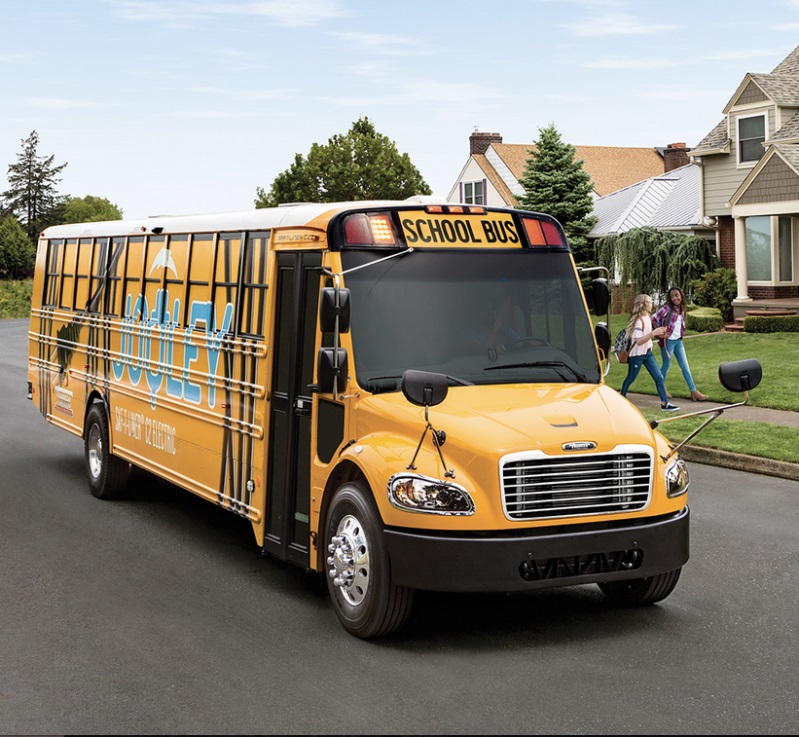
The Clean School Bus Program, created as part of the Federal Infrastructure Investment Act (IIJA), plans to invest at least $2.5 billion in zero-emission school buses throughout the country over the next five years. Only $500 million was initially made available for the first round of funding, but the federal EPA received more than 2,000 applications, requesting a total of nearly $4 billion. Ultimately, the EPA added more money to the first round, awarding almost $1 billion to 400 school districts, 23 of them in California. Some districts requested a single bus; some requested as many as 25 buses (Compton School District, for example).
There is also a 71-page wait list for future funding.
These are payments to school districts to replace diesel buses with zero-emission buses, and to build charging infrastructure for them. Most of the applications received by the EPA were for electric buses.
A group of lawmakers, including California Senator Alex Padilla and California Representative Tony Cardenas (as well as Senator Raphael Warnock from Georgia and Representative Jahana Hayes from Connecticut), sent a letter to the Biden Administration requesting that it add another $300 million to the program in 2024.
While replacing diesel buses with electric ones doesn’t happen overnight, quicker action can bring profound financial and health benefits to communities that get them. Once the infrastructure is set up, maintenance and fuel costs are much less than those of polluting vehicles. And they are a lot quieter.
These are just extra benefits on top of not adding diesel fumes to neighborhoods every morning. The lawmakers’ press release says that “school buses make up roughly ninety percent of the nation’s bus fleet, and are the nation’s largest form of mass transit.”
“Each day, more and more schools are learning about the health, fiscal, and resiliency benefits of investing in zero-emission school buses, and they are ready to make the transition away from diesel,” they wrote. “It is our duty to ensure reliable resources and technical expertise are consistently available to help the schools make this transition, especially in our most overburdened communities.”
The full letter from the lawmakers to the administration can be found here [PDF]. The list of school districts that have been approved for rebates is here, and the long wait list can be found here [PDF].

Read More:
Streetsblog has migrated to a new comment system. New commenters can register directly in the comments section of any article. Returning commenters: your previous comments and display name have been preserved, but you'll need to reclaim your account by clicking "Forgot your password?" on the sign-in form, entering your email, and following the verification link to set a new password — this is required because passwords could not be carried over during the migration. For questions, contact tips@streetsblog.org.