Trump Turns Obama-Era Transportation Program into a Road Fund

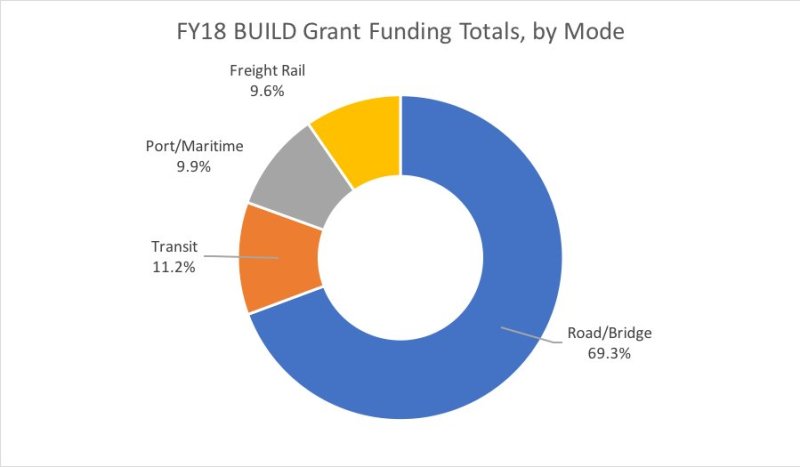
The Trump administration has cemented its dismantling of a progressive, Obama-era transportation grant program by turning it into just another highway program.
The change is more than the program’s name, which shifts from Transportation Investment Generating Economic Recovery (TIGER) to Better Utilizing Investments to Leverage Development (BUILD). Beneath the name change is a round of grants that reveal that the new focus of the federal program is road projects instead of a mix of driving, walking, biking and transit projects.

Mostly, BUILD is allocating money to small highway projects in rural locations. Indeed, about 70 percent of the money went to roads and bridges. Transit only got 11 percent, as shown in the chart at the top of this page created by Jeff Davis at Eno Transportation Weekly
Eleven percent is even less than the federal government allocates to transit from gas tax revenues. Back in 2013, Obama’s TIGER program supported transit and road projects at an almost equal level. And biking got $142 million.
The BUILD list did include a couple of bright spots: Youngstown, Ohio will get $11 million to overhaul downtown streets for walkability and green infrastructure. And Oklahoma City will get $14 million for a bus rapid transit project connecting downtown to the northeast side of the city.

But the devolution of this grant program toward rural highway funding is extra painful because rural areas and highways are supported by numerous federal programs, including the bulk for formula funding sent to states. TIGER was unique in that it provided something lacking: funding for projects that offered alternatives to driving, projects like the Indianapolis Trail and complete streets in notoriously dangerous Lee County, Fla.
But now it’s just another tool of the Trump Administration’s war on transit.

Read More:
Streetsblog has migrated to a new comment system. New commenters can register directly in the comments section of any article. Returning commenters: your previous comments and display name have been preserved, but you'll need to reclaim your account by clicking "Forgot your password?" on the sign-in form, entering your email, and following the verification link to set a new password — this is required because passwords could not be carried over during the migration. For questions, contact tips@streetsblog.org.