Wide Residential Streets Are Dangerous. Why Are They So Common?

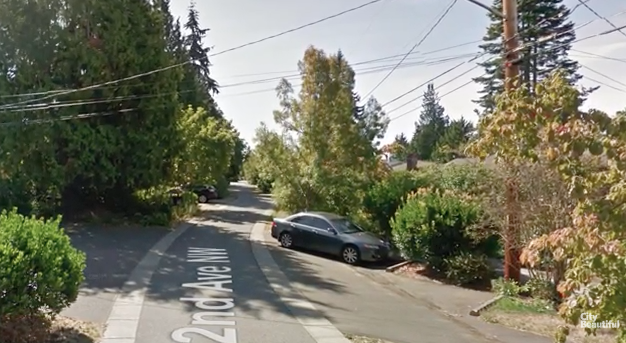
Ever wonder why so many residential streets are so wide even though they only see a trickle of car traffic?
Dave Amos, a doctoral student at the U.C. Berkeley College of Environmental Design, has been looking into it. The reason, as with so many things, goes back to car-centric engineering standards. Residential streets have highway-like dimensions because engineers thought wide, straight streets were safer. But in a neighborhood context, streets like that just encourage speeding and increase the risk of serious traffic injuries.
Narrower streets lead to safer, more cautious driving behavior. The trouble is that in many cities, the excess street width is now used for parking. So Amos went out and counted the number of cars parked on residential streets in Eugene, Oregon. He found that even in the more compact neighborhoods, the cars parked on the street could be accommodated in garages and driveways.
Those results won’t apply in every neighborhood, but in many places it could be a useful exercise to help make the case for narrower, safer residential streets, like Amos does in this video:
More recommended reading today: Systemic Failure considers the problems with evacuation plans that rely completely on cars and highways. And Austin on Your Feet looks at why Austin’s West Campus succeeds as an urban neighborhood.

Read More:
Streetsblog has migrated to a new comment system. New commenters can register directly in the comments section of any article. Returning commenters: your previous comments and display name have been preserved, but you'll need to reclaim your account by clicking "Forgot your password?" on the sign-in form, entering your email, and following the verification link to set a new password — this is required because passwords could not be carried over during the migration. For questions, contact tips@streetsblog.org.