Blaming People for Wearing Black Wins the Prize for Anti-Pedestrian Idiocy

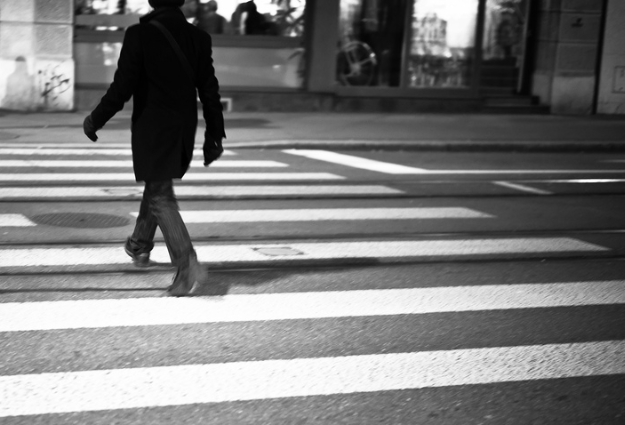
It takes a special kind of callousness to say that pedestrians are making city streets dangerous by wearing black. And yet, that’s exactly what the Seattle Times did this weekend.
Right smack on the front page, above the header, the paper highlighted its pedestrian-blaming feature, which quotes beleaguered drivers complaining about “a very stealthy bike rider [who] appears ‘out of nowhere’ wearing dark clothing” and pedestrians who “blend into dark asphalt streets.” A spokesperson for the Cascade Bicycle Club quoted in the story does nothing to dispute the premise by “advising cyclists to opt for outfits that aren’t dark.”

Adding insult to (literal) injury, the front page teaser is next to a preview for a wire story reviewing three types of cell phone mounts, so drivers can “safely” use handheld electronic devices while piloting a multi-ton piece of steel at high speeds around crowded city streets.
In a post at Seattle Bike Blog, Tom Fucoloro picks apart the problems with absolving drivers of responsibility by blaming vulnerable road users for things like wearing dark clothes:
This is the toxic windshield perspective in a nutshell. People who decided to throw on a black shirt in the morning are asking to be hit by cars, but it is totally safe to use your phone while driving so long an you buy a mount for it.
Together, these stories try to justify a dangerous behavior (the wire story never even mentions that you could *gasp* not use your phone at all while driving) and put the blame for traffic injuries and deaths on the victim.
The warped mentality on display in the Seattle Times stems from an assumption that driving is a routine behavior that must be accommodated by the abnormal people who walk and bike, rather than the other way around.
“We’ve all internalized the idea that driving is how human beings naturally get around, and that everything else in city life — our transportation plans, our development rules, our circadian rhythms — must bend to accommodate it,” writes Dante Ramos in a recent Boston Globe column. By putting driving as the default, Ramos says, we feed “the myth of the beleaguered Boston driver who’s at the mercy of unpredictable bikers and walkers.”
But the reality is that drivers behind the wheel of fast, heavy machines in the middle of busy cities and towns are the ones who need to be most careful, Ramos writes: “If you’re driving in a crowded city, it’s your job not to hit anybody. Not cyclists, not pedestrians, not even pedestrians wearing headphones.”
…and — amazingly, this needs to be said — not even pedestrians wearing black clothes.
More recommended reading today: The Urbanist looks at how Seattle’s street redesigns could better prevent what’s actually injuring and killing people. Mobility Lab makes the case for cities to think about the impact autonomous vehicles could have on increasing car usage, and implement demand management policies to prevent self-driving gridlock. And the Houston Chronicle celebrates a plan to make Westheimer Road, a growing part of the nation’s fourth-largest city, more people-friendly.

Read More:
Streetsblog has migrated to a new comment system. New commenters can register directly in the comments section of any article. Returning commenters: your previous comments and display name have been preserved, but you'll need to reclaim your account by clicking "Forgot your password?" on the sign-in form, entering your email, and following the verification link to set a new password — this is required because passwords could not be carried over during the migration. For questions, contact tips@streetsblog.org.