National Transit Union Proposes a Smart Fuel Subsidy


Tired of hearing about gas tax holidays, bridge toll suspensions, and rebates for drivers? Here’s a policy proposal that will actually improve commutes, not just encourage trips by car: subsidizing fuel for transit systems.
As the Wall Street Journal reported earlier this week, rising diesel prices are hitting transit agencies hard (preview only), leading to fare hikes and service cuts even as ridership balloons. Now, the Amalgamated Transit Union, which represents transit workers in the U.S. and Canada, is calling on Congress to help agencies purchase fuel. The ATU made their case in a statement released this Wednesday:
Americans took 2.6 billion trips on public transportation in the first three months of 2008, nearly 85 million more trips than last year for the same time period.
Yet, ironically, while high gas prices are encouraging more people to ride transit, rising diesel prices are also causing mass transit systems nationwide to raise fares, cut service, lay off staff, and delay capital spending. Like other consumers, the agencies are also paying more for fuel — 44% more this year than last. “So, at a time when demand for buses and trains is at one of its highest points in history, we have transit agencies cutting back. This makes no sense,” said ATU International President Warren S. George. “Transit needs to be part of the solution — not the victim — of high gas prices.”
This is one fuel subsidy that makes sense from an emissions perspective. According to the American Public Transit Association, the average transit user consumes half as much oil as the average car commuter.
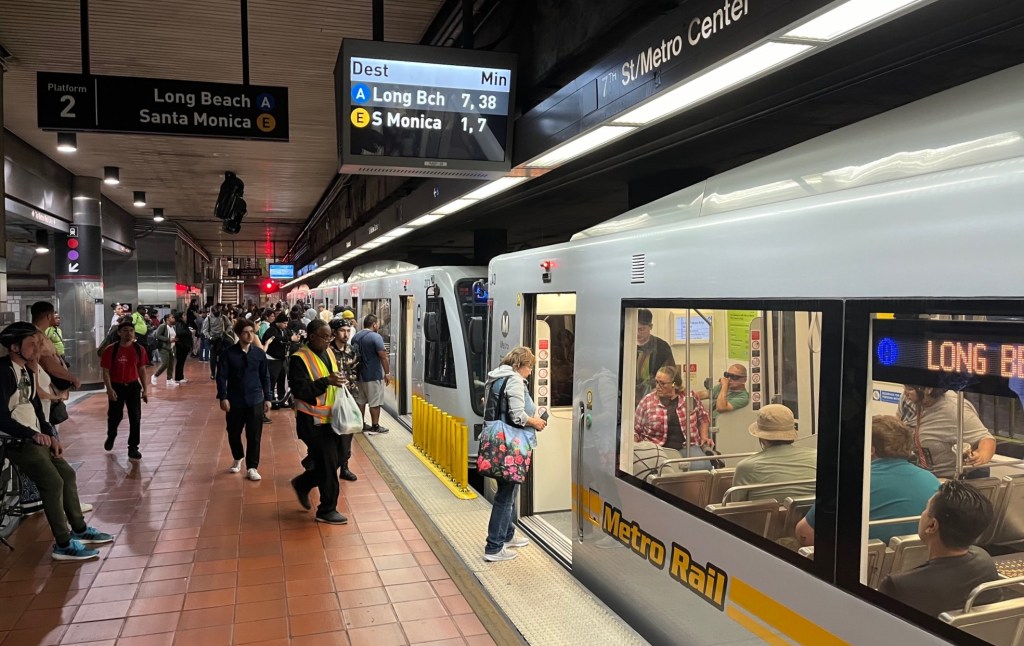
Photo of NJTransit’s Southern New Jersey Light Rail: DMJM Harris

Read More:
Streetsblog has migrated to a new comment system. New commenters can register directly in the comments section of any article. Returning commenters: your previous comments and display name have been preserved, but you'll need to reclaim your account by clicking "Forgot your password?" on the sign-in form, entering your email, and following the verification link to set a new password — this is required because passwords could not be carried over during the migration. For questions, contact tips@streetsblog.org.