Metro, Cities Already Jockeying Over Measure M Local Return Funds


L.A. County voters passed Metro’s Measure M sales tax last November with a 71 percent mandate. The half-cent sales tax does not actually become effective until July 1, but already electeds are jockeying over how Measure M funding will be divided up.
In coming up with the measure’s 50-year expenditure list, Metro’s process was bottom-up, relatively inclusive, and resulted in a balance of projects across all L.A. County regions. In the lead-up to Measure M, the Metro board was relatively united around Measure M, with only boardmembers Don Knabe and Diane DuBois voting against putting Measure M on the ballot. At yesterday’s Metro board meeting, now that the tax has been approved and there is real money to spend, the board was not quite as united as before.
At issue is how Metro will allocate Measure M “local return” monies.
Though most of funding is very clearly specified for designated projects, there is some wiggle room in interpreting the statute language. The measure dedicates 16 percent to local return funding that goes to municipalities for local transportation projects and programs. Local return on the last Metro sales tax, Measure R, was allocated on a strict per-capita basis. The return dollars were in direct proportion to the residential population of each city (and for unincorporated county areas.)
Urbanize used revenue projections to estimate that local return will be about $13.44 per person per year: “In its first year, Metro’s new sales tax is projected to draw $860 million in new revenue. The local return funding, 16 percent of the total, will therefore start at $137.6 million annually. With the county’s population over 10 million, each jurisdiction will get approximately $13.44 per resident this year, with future amounts subject to change based on relative population and overall economic activity.”
In contrast to Measure R, Metro staff are currently proposing a $100,000 “floor” amount for annual local return. Cities with populations below ~7,000 people would receive a flat $100,000 each year, regardless of their population numbers. Larger cities would receive slightly less to make up for the rounding up with the smaller cities. This would be very good news for cities like Vernon (population 96), Industry (population 803), and Irwindale (population 1,717). Again according to Urbanize, the beneficiaries of this policy would be just eight cities in L.A. County: Avalon, Bradbury, Hidden Hills, Industry, Irwindale, La Habra Heights, Rolling Hills, and Vernon. Urbanize correctly characterizes the lot: “They belong to one of two groups: wealthy residential communities and industrial tax havens.”
Metro staff report that a $100,000 floor would reallocate approximately $585,000 annually, with the city of L.A. (population 4 million) losing roughly $230,000 annually.
Several boardmembers expressed concern that smaller cities can find it difficult under Metro’s allocation formulas. County Supervisor Hilda Solis expressed concern for the challenges faced by smaller cities in South L.A. County. Technically, Vernon and Industry are in Southeast L.A. County, but they are relatively rich industrial cities. Poorer small southeast cities, including Maywood (population 30,034) and Cudahy (population 26,029), have too many residents to benefit from the reallocation, and would be hurt slightly by Metro’s proposed $100,000 floor.
Long Beach Mayor Robert Garcia, also in the interest of sticking up for “small cities,” put forth a motion directing Metro to evaluate incorporating employment – or “daytime population” – into local return criteria.
County Supervisor Kathryn Barger urged that local return not penalize “well underfunded” North County areas, including the cities of Palmdale and Lancaster (each with populations ~150,000). Barger proposed that the formula might take into account road mileage or area. Metro staff responded that by statute (what the voters actually voted for), the local return formula must be based on population.
Ultimately, the board passed Garcia’s motion to further study a formula that would take employment into account. Garcia requested a robust discussion on local return to come when staff had evaluated the scenarios requested.
Urbanize has further analysis on the anticipated impacts of a floor higher than $100,000. Suffice it to say that greater and greater amounts going to small residential population cities means less and less money for bigger municipalities including the city of L.A. and unincorporated L.A. County.
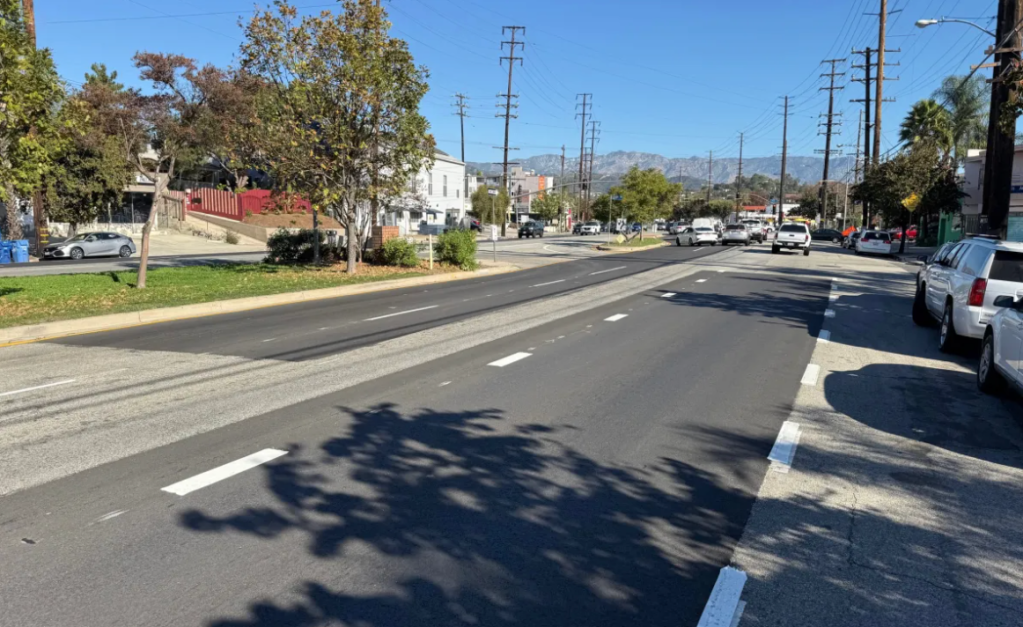
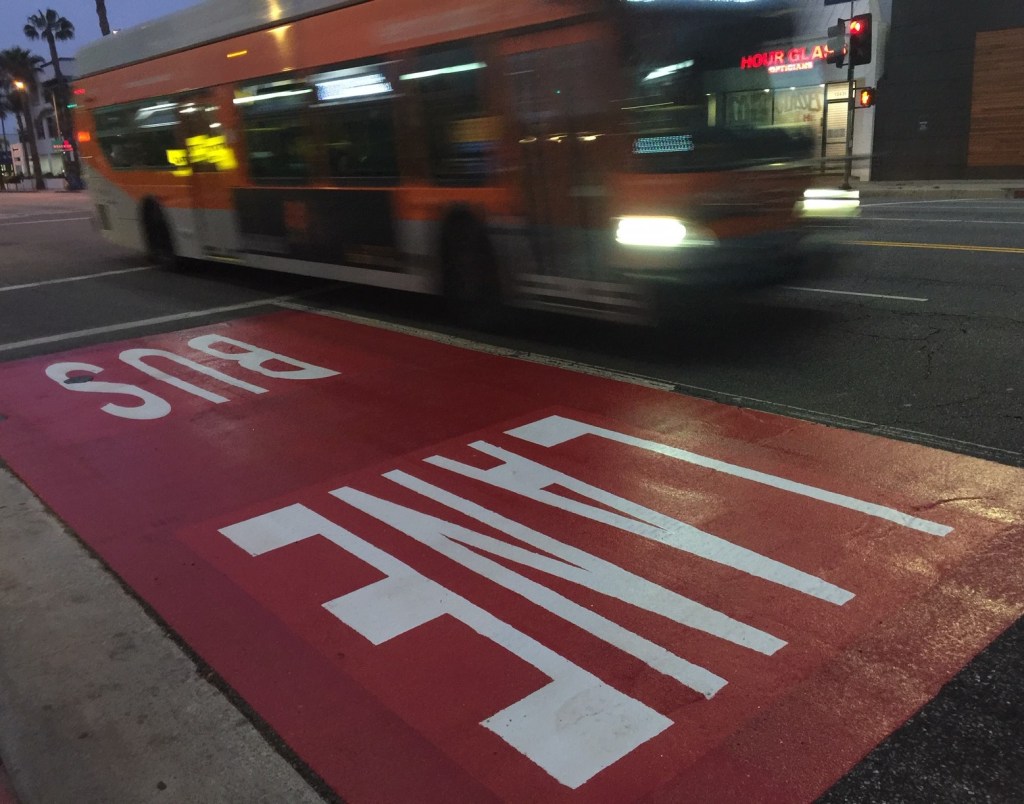
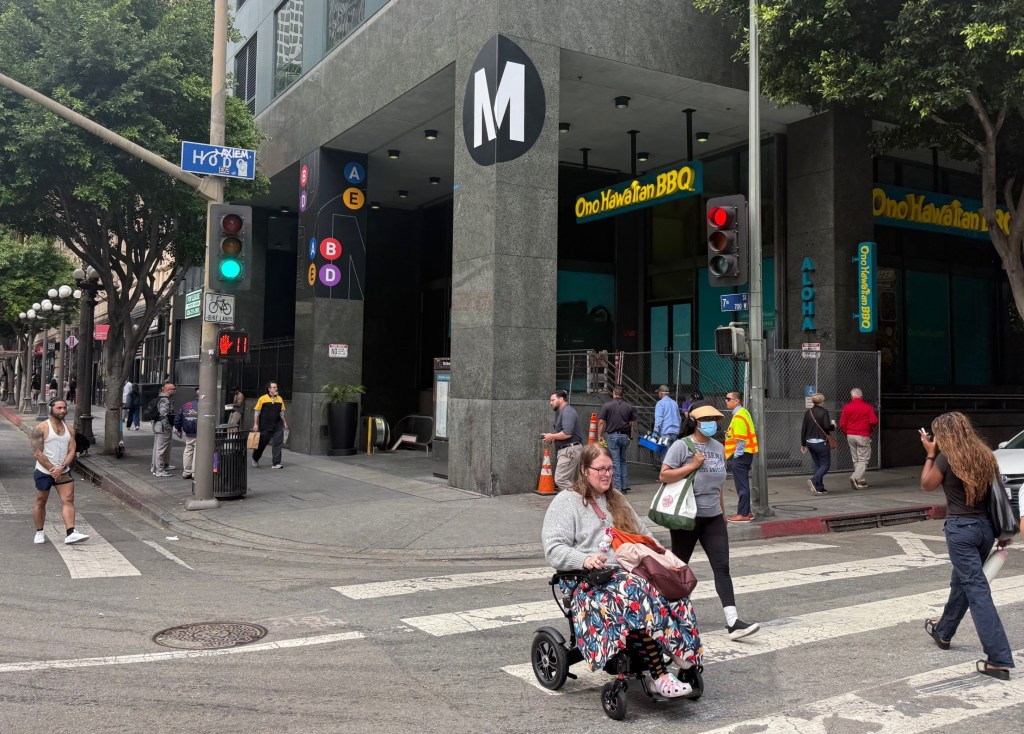
Local return prioritization is also playing out within cities, which can allocate funds for roads (most of local return ends up going to car travel), transit, walking, bicycling, etc.
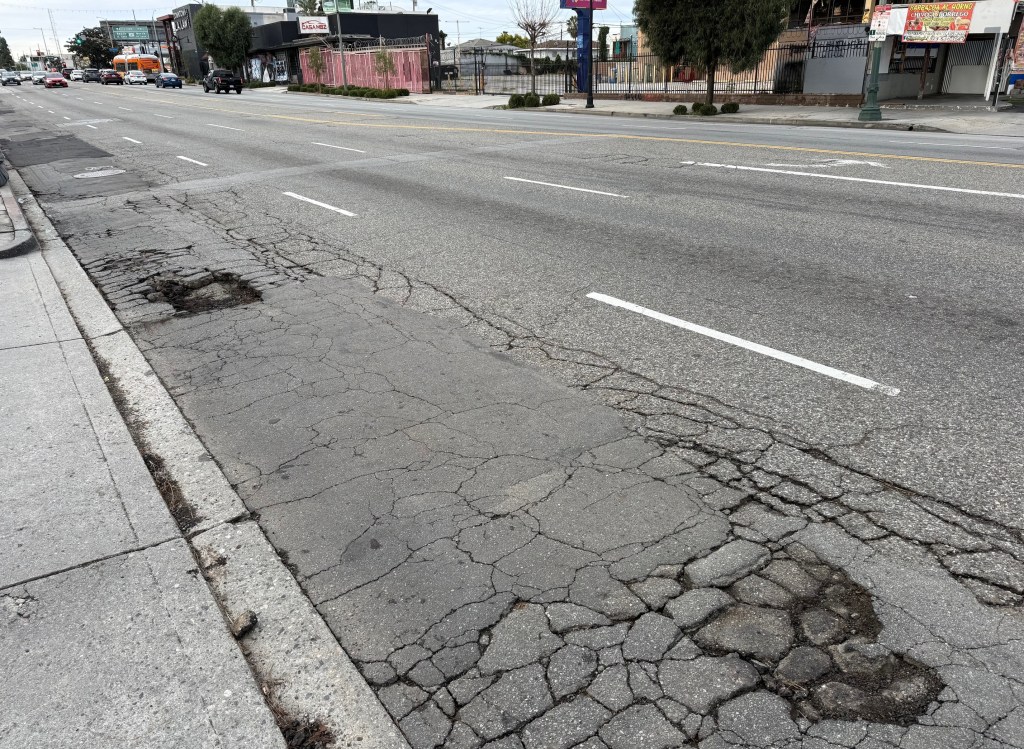
The L.A. City Council Transportation Committee, at its meeting next Wednesday, will discuss how to divide up the city’s Measure M local return. There are two motions directing the city to ensure a fair share for the San Fernando Valley (16-0187) and directing the city to dedicate at least two-thirds to rehabilitating worn-out pot-holed streets (16-0395).
In response to the Transportation Committee discussion, Investing in Place has put out an action alert urging folks to attend Wednesday’s meeting and to testify in favor of local return allocation that favors “accessible, greener, and walkable streets.” Investing in Place is urging the city of Los Angeles to make sure local return is used to advance safety, Vision Zero, and active transportation, and included in this is accelerating L.A.’s large -scale sidewalk repair program from a thirty-year timeline to ten.
To find out more about L.A. City local return struggles, read Investing in Place’s informative alert.
Streetsblog has migrated to a new comment system. New commenters can register directly in the comments section of any article. Returning commenters: your previous comments and display name have been preserved, but you'll need to reclaim your account by clicking "Forgot your password?" on the sign-in form, entering your email, and following the verification link to set a new password — this is required because passwords could not be carried over during the migration. For questions, contact tips@streetsblog.org.