Interivew with Bengy Mitchell, Founder of The Urban Current
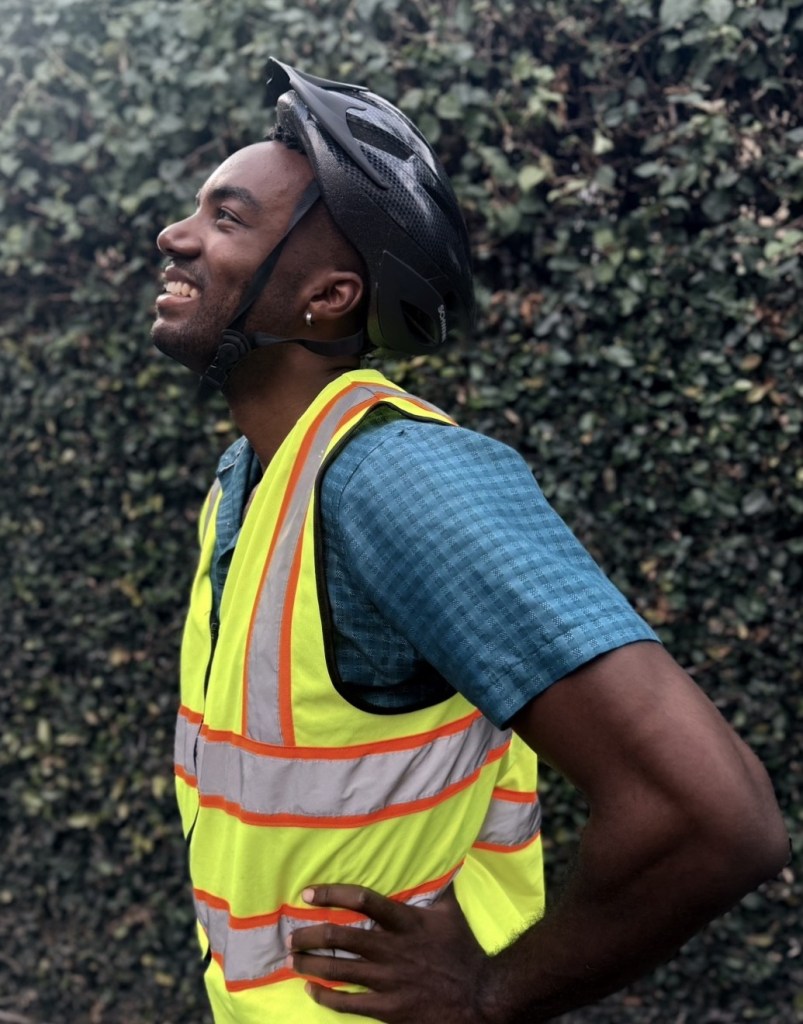
A short video about the disgraceful era of freeway construction came across my social media not long ago. It led me to watching and liking lots of videos by The Urban Current. The videos are created by and star The Urban Current founder Bengy Mitchell.
Mitchell’s site is full of thoughtful informative brief videos on topics ranging from redlining, to how drivers interact with cyclists, to why public transit is “inconvenient,” and much more. Mitchell manages to be both broad and personal, and often injects good natured humor into serious subjects.
I figure that many Streetsblog readers would be interested in The Urban Current, so here’s an interview with Mitchell, conducted over email last week.
SBLA: Tell readers a bit about your background – maybe where you grew up, what you’ve studied, what led you to becoming who you are today.
The Urban Current: Hello Streetsblog L.A. readers! I’m Bengy (my full name) and I grew up in what I consider one of America’s hidden gems — Cincinnati, Ohio. I spent the first 18 years of my life there before receiving an undergraduate scholarship to attend USC in 2019, and I’ve been in the greater L.A. area ever since!
At USC, I bounced around a few major/minor combos before settling on a public policy major, where I first heard about urban planning. Learning that there was an entire field dedicated to methodically planning and designing cities was quite cataclysmic for me, and I knew I had to be a part of the massive effort to solve those types of issues in one of the nation’s most complex regions. All that led me to my first couple of roles in the field, and eventually, to starting The Urban Current earlier this year!
I came across The Urban Current watching your short videos on Instagram, though I saw you’re also on Substack. Where all can people find you online?
I am on TikTok, Instagram, YouTube, and Substack! You’ll see me on some platforms more than others, but for now, that’s where you can find me.
Your tagline is “ramblings and musings about cities, society, etc… by a gen z urban planner.” Could you further describe the sorts of videos, and other content, you put out? What issues interest you the most?
I kept my tagline intentionally broad because everything about cities fascinates me. I have tried to keep as many of my city thoughts internal, so I still have friends who can bear being around me. But at a certain point, I just couldn’t hold those thoughts in, so I had to start posting them, even if they come out a little haphazard or scattered.
That’s my long way of saying my content doesn’t have a “sort” beyond that. I want to show all sides of cities, and all sides of myself on my page. Cities can be funny and I can be funny. Cities can be dark with disgraceful, discriminatory histories, and I can bring that level of seriousness too. Cities can be nuanced, and I’m a smart guy, I’ve got some depth. And cities can reflect the zeitgeist, trends, and pop culture, which helps me achieve one of my main goals: introducing urban planning to younger audiences in ways that resonate with them.
Particular topics I find myself talking about the most are gentrification, redlining, zoning, and planning law. Although I pride myself on consistently trying to push myself beyond those.
City/Urbanism/Planning-wise what gets you riled up? What are you encouraged by?
The lack of racial nuance in a lot of urbanist conversations is concerning to me, which was why I felt even more compelled to start my page. A lot of my family lives in the South, where racism was oftentimes at its worst and where discriminatory housing and transportation initiatives played out in several cities with my ancestors and relatives constantly getting the short end of the stick. These areas often don’t get the love nor context they deserve because they aren’t the golden-child east coast, California, or Pacific Northwest cities urbanists normally gush over.
Black communities at large have also been dealing with housing crises, environmental issues, and eminent domain abuse for so long. Now that these issues are reappearing and affecting a wider range of people, it’s suddenly this new, massive problem. I think urbanists and Americans in general can do better not just in acknowledging that those harms happened, but that those harms continue to impact us today. If you are into planning history, you’ve probably heard of the equity planning framework and the advocacy of Norman Krumholz. I think about that framework a lot when I do what I do.
What also gets me riled up is how so many of the modern pitfalls of our cities, from a built or circulatory sense, were created by people in systems, and sometimes, very despicable people in very despicable systems.
But I guess that’s where the hope comes in, right? Anything created by people can be deconstructed, or remedied, or reimagined by people too. With every video I make, I ask myself what am I doing to push the needle? What am I doing to be a positive force in these urbanist processes that will outlive me? What am I doing to awaken some sort of collective consciousness? I’m more successful at doing those things in some videos/articles than in others.
But, if I can make people think, question, understand, or just simply FEEL something, that’s proof that everything I’m doing, is working; slowly, but still working. That keeps me going.
What are a couple of your favorite videos or posts you did?
One video that I wish got a bit more love was a fun video I did on how not all walkable cities are “runnable.” My favorite videos are ones that start with the seed of a personal observation, and grow into a beautiful oak tree of a video. I’m a runner and I was struggling to run around West Hollywood with all the cross-streets. I thought it was curious that not many people had made the connection between city planning and outdoor running, especially because run clubs really took off post-COVID! I feel like the video ends on a relatively positive note, but I’ll let you all watch the video to decide for yourselves.
A video that did a little better but still makes me so proud is a video I did analyzing how transit stigmatization functions as a form of class division, and how that’s unproductive and makes us worse off in the long run. I sat on the concept for weeks, recorded it once, scrapped the first video, reworked the script, tried again, and produced something I was happy with, which is the video that is on my page.
There’s something pretty evocative and emotionally-charged about that topic. I think I explained a complex issue in relatively understandable terms in the video, which wasn’t easy. But what I love most about the video is that it’s a plea; a plea to a viewer, asking them to question why they might have such strong feelings despising transit and refusing to take it. I feel like I opened a charged conversation sensitively, and I think it is a good model of a type of approach that could win a lot of people over.
How can readers support The Urban Current?
Nothing crazy. Watch, follow and leave comments on whatever’s on your mind. Affirming comments are great, but additive or even critiquing comments go a long way too. The only way we can improve and learn is if we are willing to say “that’s not quite right” to others, and to ourselves. I allow myself to be perceived and ripped to shreds on a pretty public forum regarding topics I don’t even have a graduate degree in! But I welcome it because I want to create a community and I want to kickstart important conversations, even if I make some mistakes along the way.
How do you typically get around?
I love this question and am proud to say, I live very car-lite.
On the weekdays I’m taking Metro buses, walking, biking, and hardly ever driving. The weekend is more of the same with the occasional car trip to the beach or to see friends farther out. Worlds away from Ohio where I took the public bus maybe four times.
My favorite is definitely, definitely biking!
In a video, you mentioned that you live in West Hollywood. Would you comment on that city – what works, what doesn’t? What can planning do to improve WeHo?
Overall, I’m very satisfied with life in Weho.
What works: Walkability, street activity, and overall city services. West Hollywood rarely feels like it has dead zones. Are there quieter areas of the city? Absolutely. But not too many dead zones, if you know what I mean. The city is also very clean, and the roads and sidewalks are well-maintained. I’m also seeing a lot of mid-rise construction pop up on my street, which is wonderful. I’m happy living here.
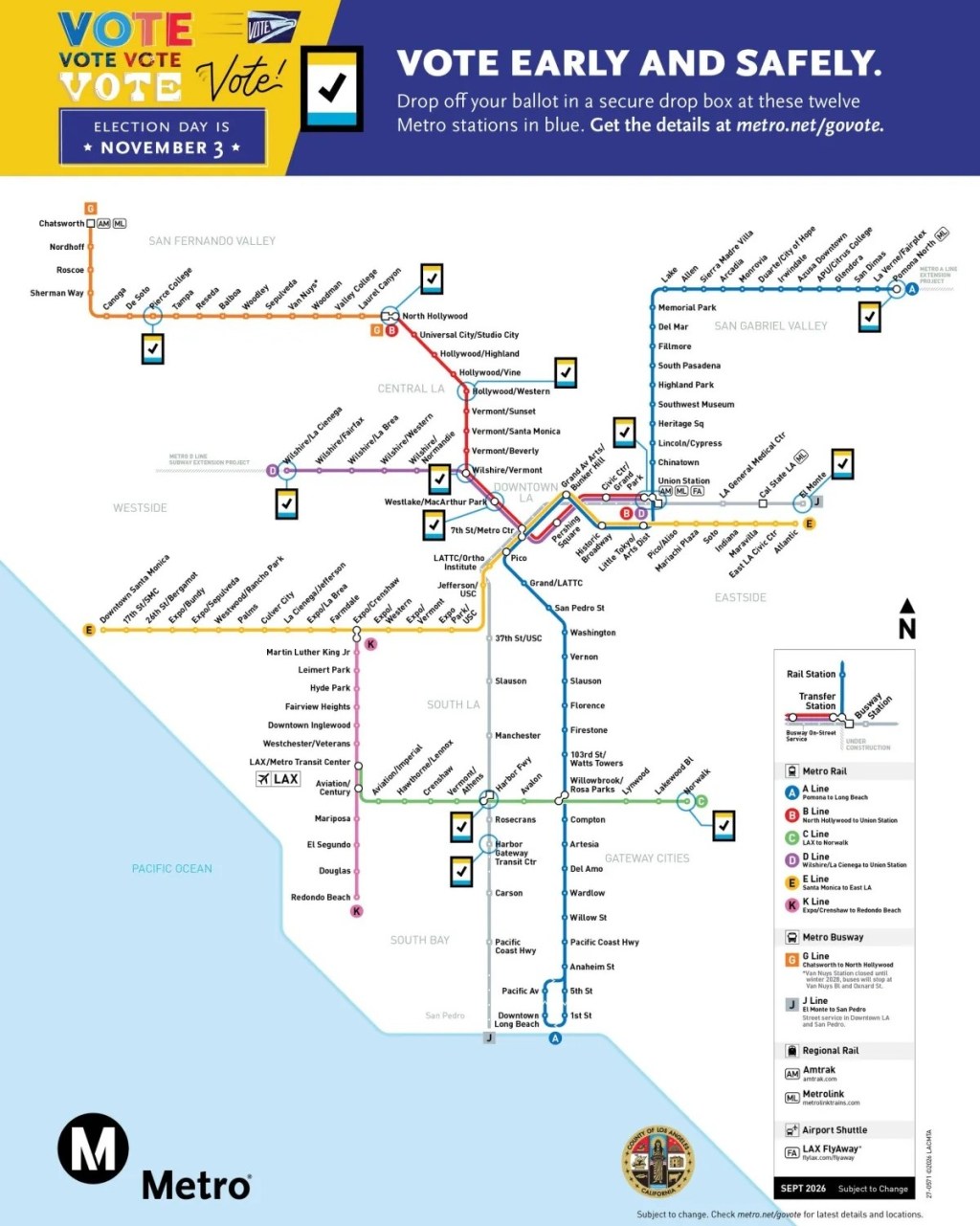
What Weho desperately needs is high capacity transit out of the city, and that’s absolutely no secret to anyone who lives here or anyone familiar with the K Line northern extension. I’ll be excited to ride the K Line in Weho for my 50th birthday celebration!
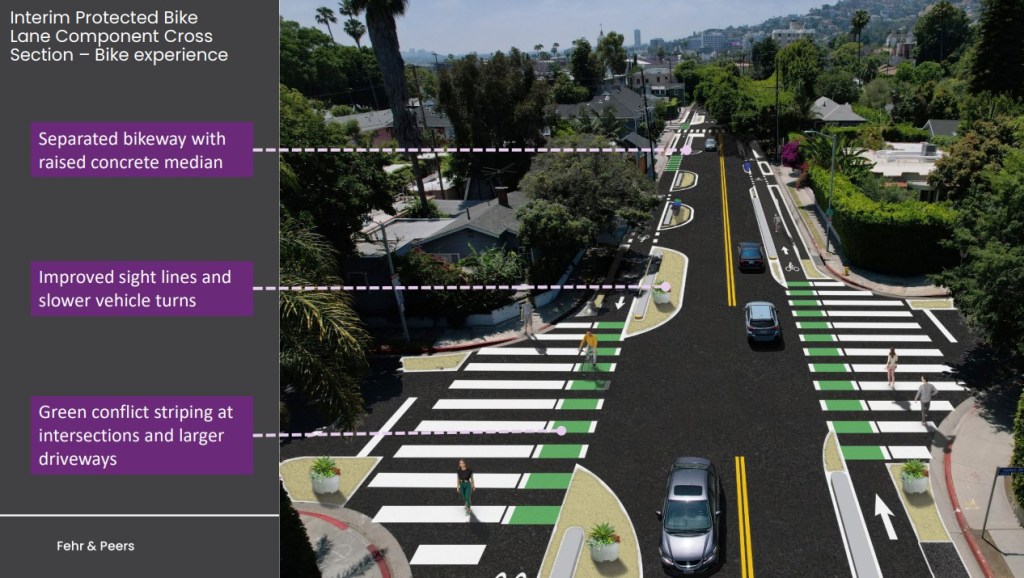
West Hollywood also needs better bike infrastructure, which is why I am so excited to see the Fountain Avenue Streetscape Project moving forward as planned with dedicated bike lanes!
Shoutout to Councilmembers Byers, Erickson, and Hang!
This is the question Streetsblog generally ends our interviews with: If you had a magic wand and could change one thing overnight – regarding your city, streets, transportation, equity, livability – what would you change?
It would have to be something tied to homelessness, which is extremely multifaceted. Can I say housing for all? Is that too unspecific? I’m gonna say it. And since housing is technically just one thing, that would automatically include housing of all types including supportive, interim, and transitional housing so that the service element is addressed. Don’t quote me on the logic there.
My urban experience is honestly pretty great, despite the pitfalls that I rant about. That’s a privileged position to be in while others sleep on our streets.
Anything else you’d like to share with SBLA readers?
I want to impart on them what I am seeing out there on the internet. People are hungry for livable cities… RAVENOUS for them (especially young people). But that’s not entirely new. What I do see shifting is that more people are starting to understand urbanism and see it as a legitimate tool of resolving the unsettledness and unsteadiness they are feeling in their lives.
Now is a more critical time than ever to share our message, however we wish to share it. But even when our efforts feel futile, they are not. Someone’s listening. I was once that quiet, contemplative guy in the back of the classroom listening to my planning professors. In fact, that was a mere four years ago. Look at what I do now: scream what I absorbed in those moments from the rooftops!
Never underestimate the power of a single conversation, or heck, a single statement in a single conversation. The little moments add up and ultimately bring more people into this coalition we are all trying to build, together.