South El Monte Puts 45 Day Moratorium on Data Center and Battery Facility Development
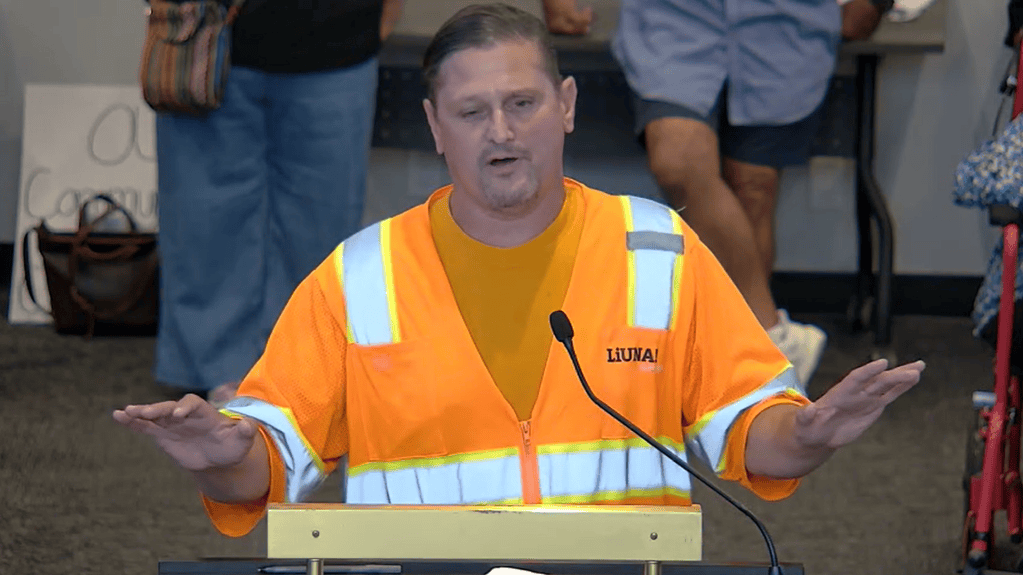
South El Monte’s city council unanimously approved a pair of urgency ordinances placing a 45 day moratorium on development for data centers and battery energy storage systems (BESS) on Tuesday. The council will be looking at the question of banning data centers and BESS entirely at a future meeting.
As with other recent public debates over AI data center development (see Monterey Park, which instituted a total ban), the council chambers were divided between residents opposed to the infrastructure over concerns about water supplies, energy costs, and fire risk, and industry lobbyists and trade union representatives who believe that building more data centers is economically critical for Southern California.
Though no data centers are currently in development in South El Monte, some locals are concerned about what might become of the recently rejected Lexington-Gallatin Warehouse project by Magellan Value Partners.
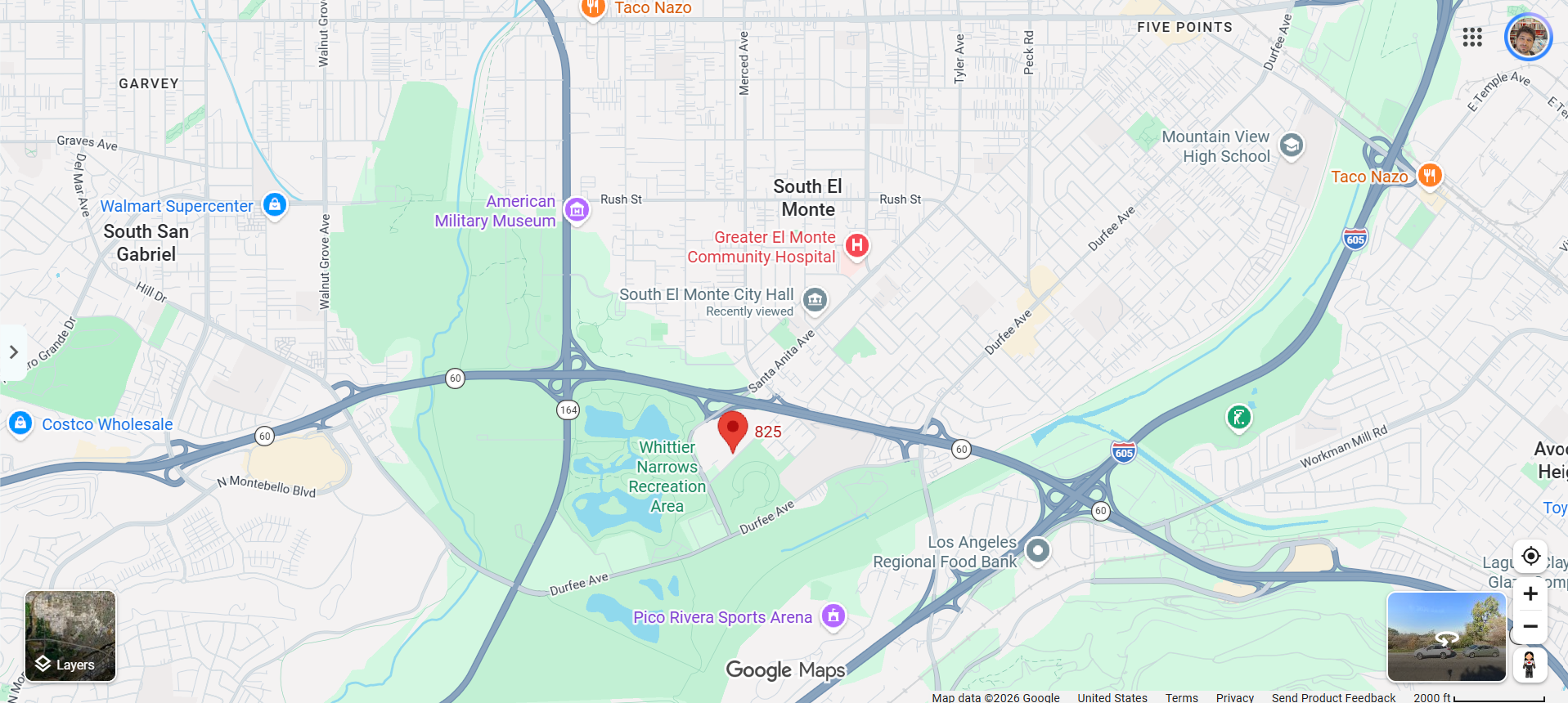
During public comment, Amy Smith said that’s why community organizers want the city to take preemptive action.
“These facilities negatively affect our air, our water, our electricity, our health, our safety, and our peace of mind,” Smith said. “This is no longer hypothetical. Just a few weeks ago, the battery storage unit exploded in La Verne, and some schools had to shelter in place. Evacuations of homes and campuses. Days later, even the fire officials warned that the batteries could still reignite.”
Cherie Cabral, a spokesperson for the Western Steel Council and California Construction Labor Management Trust, counterargued that data centers and BESS pose no clear and present danger, and thus a moratorium would be illegal.
“Data centers can create a constant hum that could be audible,” Cabral said. “This is a direct contradiction to the statutory requirements under Government Code 65858, that the findings must establish that the banned activity would result in a threat to public health, safety, or welfare, and that the threat must be a current and immediate harm in order to raise to the level to require an urgency ordinance.”
Messaging from the tradespeople who spoke was somewhat mixed. They all agreed that they were there to make a living, but didn’t seem to reach the same conclusions about how residents would be affected by data centers and BESS.
Cesar Lamas, a Pico Rivera resident and member of the Los Angeles Laborers Union, didn’t want to touch on those controversies at all.
“I’m going to just be 100% honest. I got to put food on the table somehow,” Lamas said. “Everybody has their own agenda. My agenda is to essentially try to reach my retirement and try to obtain more work for my brothers and sisters.”
Jason Baez of Labor International Union North America took an opposite tack, handwaving residents’ concerns.
“It’s very unfortunate that in today’s world, almost everything we touch or get near is considered in some way dangerous or harmful to our health,” he said, gesturing at the council’s water bottles. “It’s unfortunate, but if someone is looking to point something out, you can find something to point out about everything in this world today. That’s just a fact we live with. But the good thing is that these developers want to utilize union labor, and union labor provides a living wage.”
And Frankie Jimenez from Iron Workers Local 416 (and Norwalk) pivoted yet another way to say that data centers could be made to operate safely.
“Other forms of development are evaluated through established planning and permitting processes,” Jimenez said. “Data centers should be subject to a reasonable review process as well. I agree with that. If additional standards and safeguards are needed, those can be developed through the normal planning process.”
Jimenez also added that skilled laborers in the region need jobs closer to home in order to be present for their families. Otherwise, he said, these projects will simply be built further away.
Multiple residents claiming membership in various unions spoke against the idea of making a living from a project opposed by the community, though.
Araceli Del Campo Lopez shared her experiences struggling to get work, but ultimately said that her concern about climate change exacerbated by warehouse development outweighed her willingness to take certain jobs.
“I’ve been unemployed for six years as a single mom, but I never gave up on finding employment,” Del Campo Lopez said. “I had my license as a crane operator, but then it was difficult to raise my baby, so I went back to school and got educated and finished my degrees.”
“I’m telling you that there’s an El Nino coming, and you see other states that are underwater,” she went on. “If that were to happen here, there’ll be no work. We’ll be all working for free, working in the community to get things working.”
Mayor Gloria Olmos ended public comment by addressing the tradespeople.
“We do appreciate you. We do feel for your jobs. We are not non-union,” the Mayor said. “However, if you’re gonna gain the whole world and lose your own soul, and you sell out the people that you need to take care of, then that is something that is very, very wrong.”
Olmos then called for a permanent ban to be brought up as a future agenda item, and the council voted 5-0 to institute the moratorium on data center and BESS development.
Streetsblog’s San Gabriel Valley coverage is supported by Foothill Transit, offering car-free travel throughout the San Gabriel Valley with connections to the A Line Stations across the Foothills and Commuter Express lines traveling into the heart of downtown L.A. To plan your trip, visit Foothill Transit. “Foothill Transit. Going Good Places.”Sign-up for our SGV Connect Newsletter, coming to your inbox on Fridays!

Read More:
Streetsblog has migrated to a new comment system. New commenters can register directly in the comments section of any article. Returning commenters: your previous comments and display name have been preserved, but you'll need to reclaim your account by clicking "Forgot your password?" on the sign-in form, entering your email, and following the verification link to set a new password — this is required because passwords could not be carried over during the migration. For questions, contact tips@streetsblog.org.