Metrolink Cut Service; Budget Pressure Could Mean More Cuts, Fare Increases

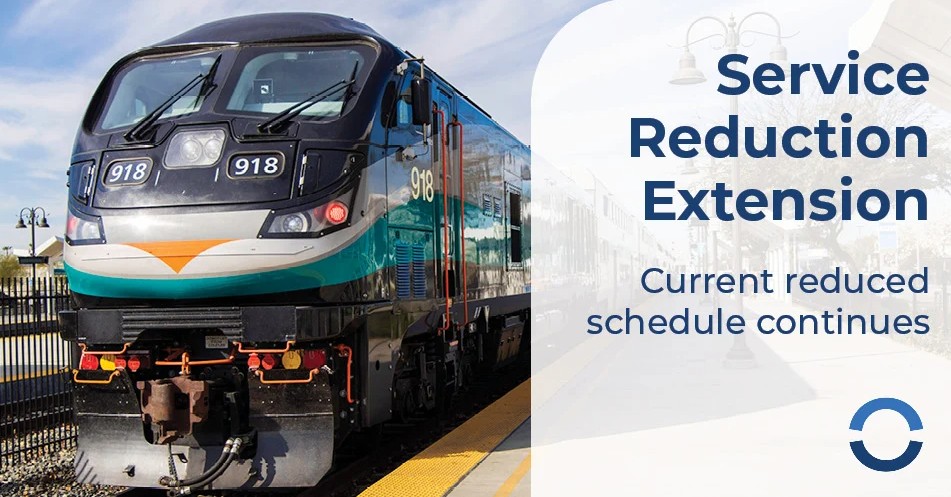
Southern California commuter rail operator Metrolink is cutting commuter rail service. Metrolink is facing increased operational costs, and shortfalls in fares and annual county contributions. Advocates are pushing for the state and L.A. and Orange Counties to step up to prevent further service cuts.
Recently, Metrolink has experienced reliability issues with its newer diesel locomotives.
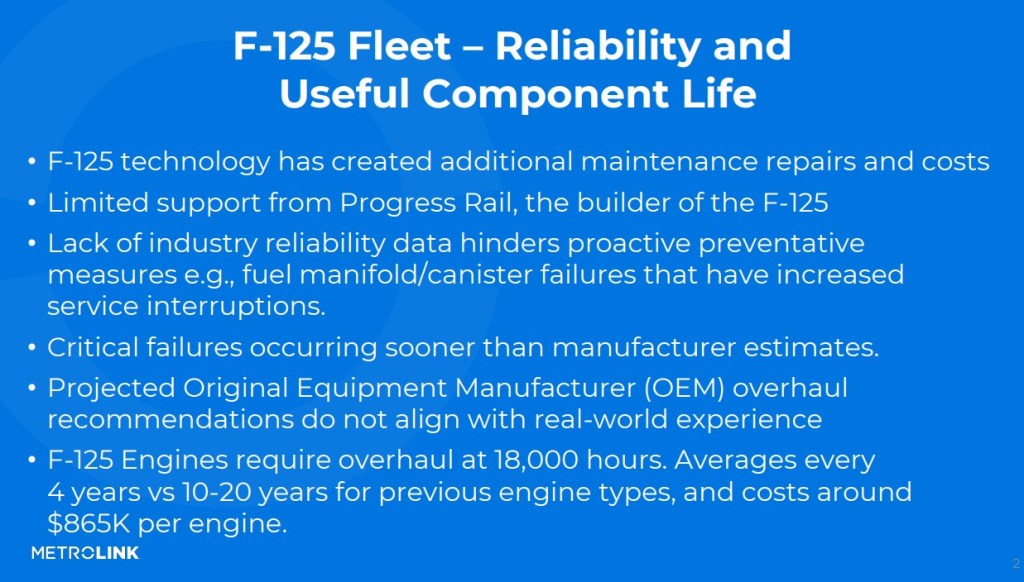
Per a March Metrolink staff report, “Persistent parts shortages have negatively impacted the Agency’s ability to repair trains when mechanical issues arise.” The shortage led to trains being taken out of service for extended periods. Metrolink CEO Darren Kettle decided to “temporarily reduce service on trains with modest ridership” effective March 23.
This week, CEO Kettle announced that the temporary service cuts will remain in place. The agency announcement webpage cites the aforementioned “mechanical issues and supply constraints” plus “additional financial pressures.” It goes on to note that Metrolink is “evaluating more significant service reductions and a potential fare increase that could take effect as early as October.”
Those additional financial pressures are coming from a couple of directions.
After adding service in 2024, Metrolink saw increased ridership, especially on weekends. Nonetheless, ridership remains below pre-pandemic levels and below expectations. The So Cal Transiteer reports that low ridership has resulted in a $15 million shortfall in Metrolink’s annual budget.
Additionally, proposed budgetary belt-tightening at Metro and OCTA – Metrolink’s two largest funding sources in its six-county network – could reduce those agencies’ annual contributions, creating a ~$10 million dollar hole in Metrolink’s budget.
Californians For Electric Rail (CER) worries that things could get worse:
Unless Metrolink finds more revenue, they will revert to peak-only schedules and cancel weekend service improvements – increasing costs per rider, and failing to serve increased off-peak demand that will be generated by the World Cup and Olympics. This threatens to send Metrolink into a “death spiral” of declining ridership, further deficits, and cuts.
CER, Move CA, and Streets for All are urging concerned people to contact state electeds, and Metro and OCTA leadership to support full Metrolink service. Use this Action Network webpage to customize and send your own letter to decision makers.
Metro’s budget is expected to be approved at its May 28 board meeting, after a May 21 committee hearing. The OCTA budget is anticipated to be approved in June.
The shape of potential state funding (and its timeline) is less clear. It is possible for the state to directly fund Metrolink (perhaps as a one-time investment bridging World Cup/Olympics/Paralympics events), or to advance some kind of loan similar to what was done for the Bay Area earlier this year. The ~$30 million Metrolink needs now is more than an order of magnitude smaller than that loan, but it’s not clear how Metrolink would generate a future surplus to repay.
CER is further urging reforms to Metrolink structural/governance issues that led to the current crisis. One vehicle for reforms is in recommendations from the LOSSAN (Los Angeles – San Diego) corridor working group. The LOSSAN working group is charged with advising the state on how to better fund, manage, and operate much of the very service that Metrolink is cutting.
Metrolink has delayed approving its annual budget – typically done in May, now pushed back to August – as the agency scrambles for solutions.
Thank you to The SoCal Transiteer and Californians for Electric Rail for providing extensive background for this post. Follow their websites and Streetsblog for further developments.
Streetsblog has migrated to a new comment system. New commenters can register directly in the comments section of any article. Returning commenters: your previous comments and display name have been preserved, but you'll need to reclaim your account by clicking "Forgot your password?" on the sign-in form, entering your email, and following the verification link to set a new password — this is required because passwords could not be carried over during the migration. For questions, contact tips@streetsblog.org.