Ahmaud Arbery’s Death, mobility justice, and the open streets debate

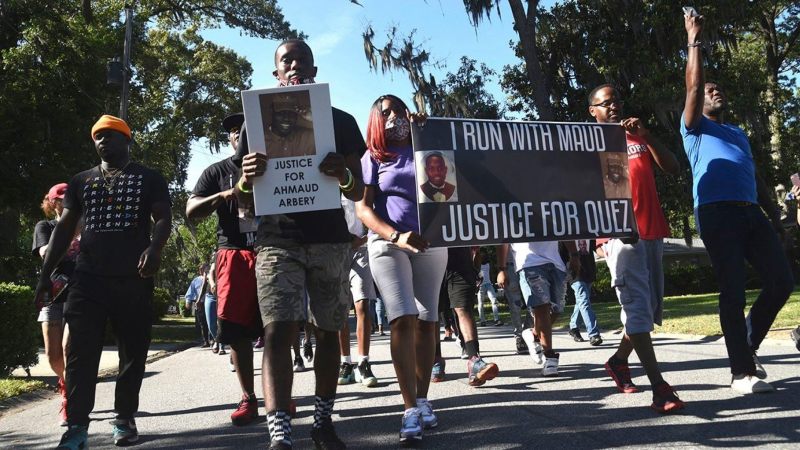
Many BIPOC (Black and Indigenous People of Color) mobility justice advocates are pointing to the killing of Ahmaud Arbery as yet another example of why many African-American and Latinx people do not feel safe in public space.
Arbery was out for a run on February 23 when he was confronted and killed by two white men, who weren’t arrested or charged until a video of the shooting surfaced earlier this month. Though this tragedy happened in Georgia, you would be wrong to attribute the killing to racism that is unique to the south. Racism is present in every state and city. It is systemic and not just present in the actions of individuals.
Racism was behind 20th Century decisions to carve highways through thriving Black communities, and the use of new expressways to reenforce segregation. Racism is behind the ongoing problem of overpolicing in Black and Brown neighborhoods. Along with racism, sexism, homophobia, transphobia, xenophobia, and ableism are also at play as factors in unequal access to safe public space.
A manifesto by The Untokening mobility justice collective titled “Untokening Mobility: Beyond Pavement, Paint and Place” states, “When people live at the intersection of multiple vectors of oppression, unfettered access to public space and unfettered mobility are not guaranteed, regardless of street design.” By narrowly focusing on the number of crashes in a given community, for example, many other important safety factors are left unaddressed.
Mobility justice advocates have recently raised this question of who has free access to public space as part of the conversation about opening city streets for walking and biking during the COVID-19 pandemic. One of the central figures in the open streets movement is Warren Logan, policy director of mobility and interagency relations for the mayor of Oakland’s office. He is leading that city’s innovative Slow Streets program, which is prohibiting through traffic on 74 miles of roadways to make room for socially-distanced transportation and recreation.
Recently on Twitter Logan, who’s African-American, floated the idea of special zoning for “shared streets/play streets/performance streets,” as a possible next phase of the Slow Streets initiative. In response, a white self-described mobility justice advocate inappropriately implied that Warren’s tweet was tone-deaf. “This is a really strange comment to make with #AhmaudAbrey trending,” the man posted. “Who is included in ‘play streets’? How are you engaging with the radically different experience of Black folks in public space?”
After Warren rightly chastised the guy for “mansplaining to Black men” about issues impacting African-Americans, he shared his own lived experience navigating a society where racial bias still influences many aspects of daily life. “At night now, I cough loud enough to alert people when I’m ten feet behind them. I smile and waive when they turn so they aren’t afraid a Black man is sneaking up behind them.” He also discussed his experiences with microaggressions, like when people assume he is a new intern at his workplace, when he’s actually in upper-level management.
Those in the “design solves everything” crowd would do well to listen to mobility justice advocates. While I support bringing a Slow Streets program to Chicago, I don’t consider myself a member of the “design solves everything” faction. I recognize that for Black and Brown people to feel completely safe walking, biking, or just existing in public space, we need to make fundamental changes in the way our society is structured.
I also recognize that there’s a lot to learn when it comes to equity-focused mobility advocacy. I’m grateful to the members of the Untokening collective for “Untokening Mobility: Beyond Pavement, Paint, and Place,” which has been helpful in shaping my understanding of this issue.

Streetsblog has migrated to a new comment system. New commenters can register directly in the comments section of any article. Returning commenters: your previous comments and display name have been preserved, but you'll need to reclaim your account by clicking "Forgot your password?" on the sign-in form, entering your email, and following the verification link to set a new password — this is required because passwords could not be carried over during the migration. For questions, contact tips@streetsblog.org.