Don’t Blame Hills for Pittsburgh’s Pedestrian Injuries

The Pittsburgh Post-Gazette recently published an in-depth investigation of the city’s pedestrian safety record. The paper reported that 2,100 collisions injured or killed pedestrians in the city between 2006 and 2013.

That should be a wake-up call, says Bike PGH Executive Director Scott Bricker on the organization’s blog. But some local traffic engineers are trying to deflect blame to the city’s famously hilly topography. In a letter to the editor published in the Post-Gazette and on the Bike PGH blog, Bricker says blaming the city’s hills is a copout:
The suggestion by Todd Kravits, Pennsylvania Department of Transportation District 11 traffic engineer, that it is our topography that is at fault is confusing and unfounded. He suggests that if Pittsburgh had more streets resembling “nice flat tables,” it would enable our streets to be engineered more safely; in reality, according to the article’s accompanying map, our flattest stretches of roadway are seeing the highest number of crashes with pedestrians. Mr. Kravits’ assertion that our hills are at fault in some way for these crashes simply does not jibe with the data here.
Norway, home of the vertical city of Oslo, has the second-lowest pedestrian fatality rate in Europe. How do they do it? By putting people, not cars, first in their planning and roadway engineering. For 50 years engineers in the United States have done the opposite. Righting this wrong will not only save lives but also create great, walkable places at the same time.
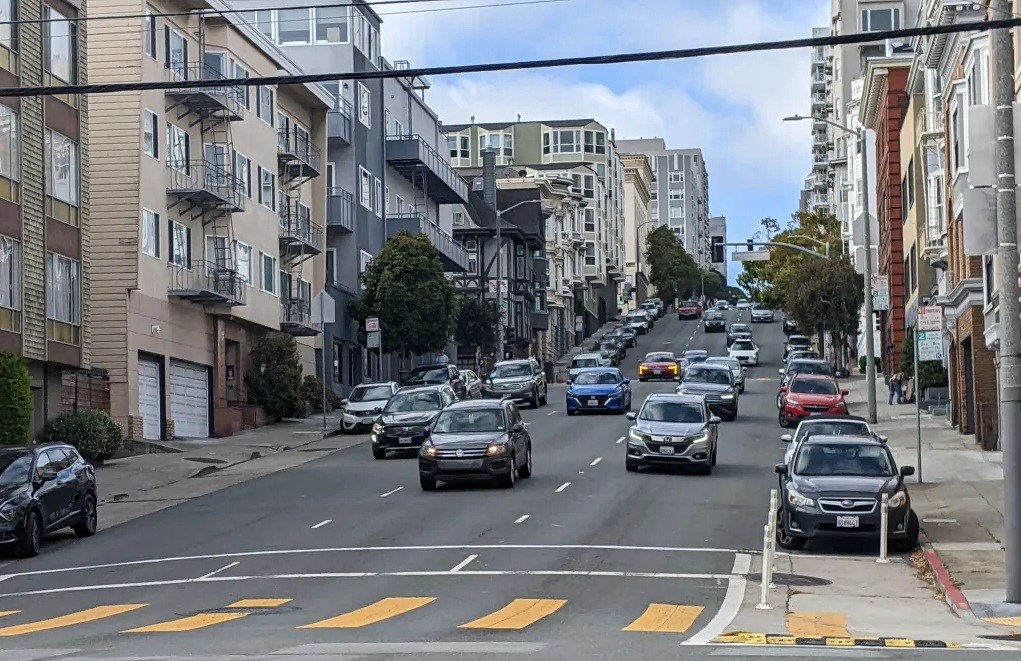
The city of San Francisco, another famously hilly city, recently announced its adoption of “Vision Zero,” a plan to completely eliminate all traffic fatalities and severe injuries by 2024. I urge Pittsburgh and its partners at PennDOT to do the same. Adopting a Vision Zero policy will set in motion the strategies needed to eliminate serious crashes locally by uniting design and engineering, enforcement, legislation and public health into a singular vision for the safety and vibrancy of our streets.
Elsewhere on the Network today: Strong Towns wonders whether it’s wise to count streets as public assets, rather than liabilities. And Mobilizing the Region reports that New Jersey legislators are finally attempting to piece together a solution to the state’s transportation funding problems.

Read More:
Streetsblog has migrated to a new comment system. New commenters can register directly in the comments section of any article. Returning commenters: your previous comments and display name have been preserved, but you'll need to reclaim your account by clicking "Forgot your password?" on the sign-in form, entering your email, and following the verification link to set a new password — this is required because passwords could not be carried over during the migration. For questions, contact tips@streetsblog.org.