Bike Signals Get the Green Light From Engineering Establishment

Think of it as a Christmas gift: On December 24, the gatekeepers who determine which street treatments should become standard tools for American engineers decided to add bike signals to the Manual on Uniform Traffic Control Devices, sometimes called “the bible of traffic engineering.”

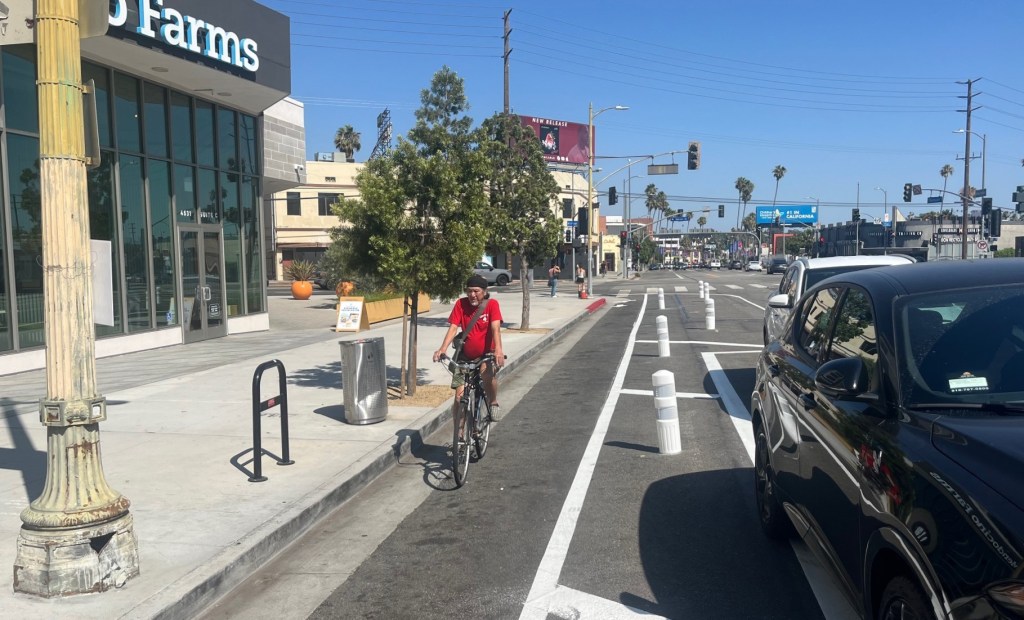
The decision should lead to more widespread use of bike signals, which can be used to reduce conflicts between people on bikes and turning drivers, give cyclists a head start at intersections, or create a separate phase entirely for bicycle traffic. They are often used in tandem with protected bike lanes.
Prior to the Christmas Eve vote by the committee that updates the MUTCD, bike signals were considered “experimental.” Communities seeking to install them first had to fund expensive engineering studies.
But no longer. In a memo regarding the approval, Federal Highway Administration officials noted that bike signals have been shown to improve safety outcomes as well as compliance with traffic rules by cyclists. Crash rates involving cyclists have been reduced as much as 45 percent following the installation of bike signals, FHWA reports.
Michael Andersen at People for Bikes’ Green Lane Project notes that bike signals reduce the risk to cyclists at intersections, which are where most collisions occur.

Read More:
Streetsblog has migrated to a new comment system. New commenters can register directly in the comments section of any article. Returning commenters: your previous comments and display name have been preserved, but you'll need to reclaim your account by clicking "Forgot your password?" on the sign-in form, entering your email, and following the verification link to set a new password — this is required because passwords could not be carried over during the migration. For questions, contact tips@streetsblog.org.