Remembering When Our Streets Belonged to Everyone

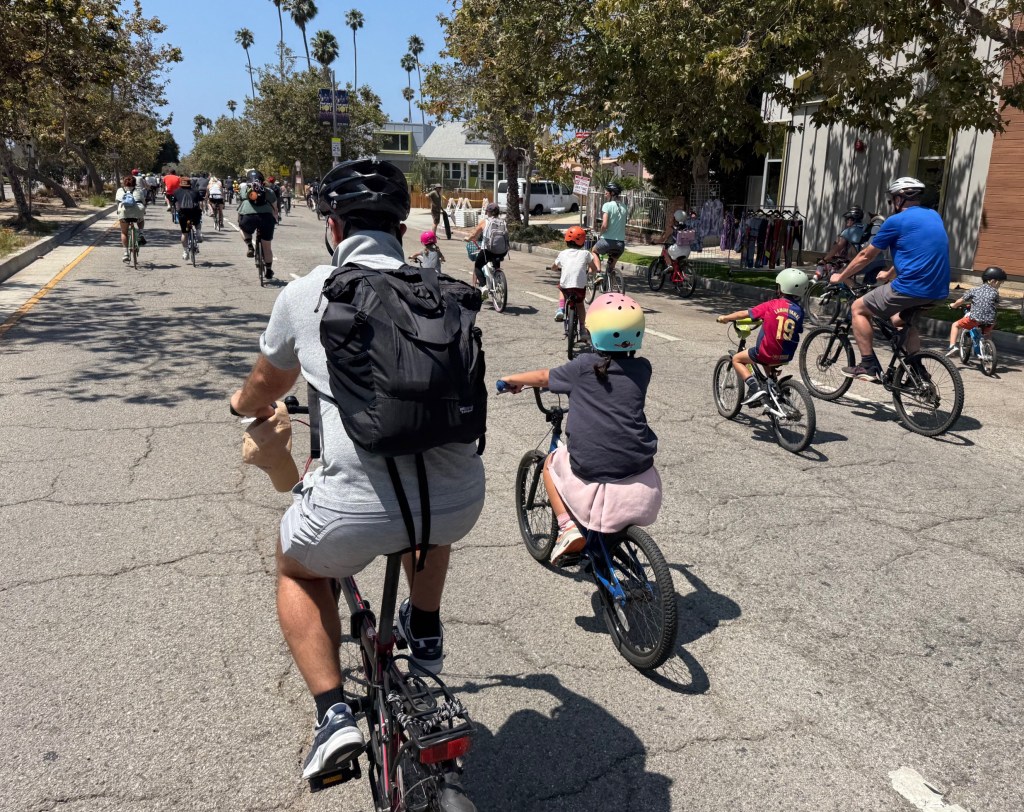
Just a few generations ago, streets were places of commerce and play, places to socialize, places where public life happened. The author of the Chicago-based Get Around Blog just finished reading Peter Norton’s book, Fighting Traffic, which outlines in fascinating-yet-depressing detail how the rise of the automobile rudely interrupted this whole way of life.

We’re not going to delve too deeply into history except to offer this quote from a judge, shortly after cars came on the scene: “It won’t be long before children won’t have any rights at all in the streets.”
The Get Around Blog takes the opportunity to show just how far we’ve traveled from the notion of the streets as a public space:
In the century since the automobile first muscled its way to the top of society’s transportation food chain, we have legislated other modes of transportation into a thin sliver of grudgingly reserved leftover space: pedestrians may cross the street at the occasional crosswalk; bicyclists, while technically allowed to operate in the same space and under the same restrictions and protections as cars, are mostly just in the way (and liable to be harassed) if they don’t yield space; and transit users in all but a handful of North American cities suffer poor service and shabby facilities. To add insult to injury, we often turn a blind eye even when cars overstep their formal bounds.
In recent decades, ironically, one solution to the menace of the motor car has been to further “privatize” the streets, by creating dead-end cul-de-sacs, virtually assuring that only immediate residents will make use of the roadway. The net effect is that more and more of our municipal resources are being used to care for “public” space that is for all intents and purposes anything but.
This is to say nothing of on-street parking – the notion that one has the unquestioned right to store their private property in the public way. A few years ago, I interned for a non-profit downtown civic organization in the small town where I grew up. The city was mulling a proposal to remove median parking from the road that separates the downtown from the the Snake River in order to improve access to the popular parkland along the banks. Item #1 on every person’s list of complaints: where am I going to park my car when I go to work? That’s not to say I don’t understand their concern, but this illustrates how far we’ve gone down this uncharted path: where once we railed against the car’s invasion of our public space, we now rebuff nearly all attempts to re-allocate even a modicum of roadway to truly public use.
Elsewhere on the Network today: Boston Biker offers a more balanced approach to bike safety than Boston’s Public Health Commission has adopted in its widely criticized helmet campaign. Human Transit says that auditors shouldn’t be making decisions about which transit lines are expendable. And Grid Chicago highlights the city’s plans to eliminate a particular danger to pedestrians over the next few years: channelized right turns.

Read More:
Streetsblog has migrated to a new comment system. New commenters can register directly in the comments section of any article. Returning commenters: your previous comments and display name have been preserved, but you'll need to reclaim your account by clicking "Forgot your password?" on the sign-in form, entering your email, and following the verification link to set a new password — this is required because passwords could not be carried over during the migration. For questions, contact tips@streetsblog.org.