Cleveland: Building Public Support With Pop-up Cycling Infrastructure

Decisions about cycling infrastructure don’t really come down to money, or technical knowhow, or even the availability of street space. Ultimately, if you establish community consent and political will to make streets safe for cycling, the rest will follow.
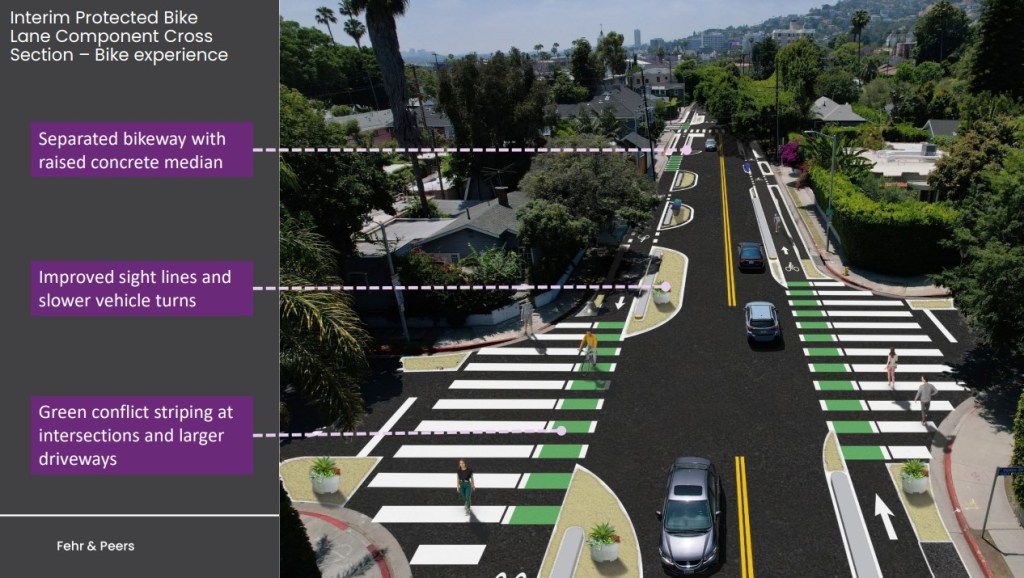
Here’s an interesting method to build the needed support: pop-up cycling infrastructure. This exercise in tactical urbanism was recently undertaken by a group of graduate students in Cleveland, Ohio. For one week, a downtown street was converted to a two-way cycle track — the first ever on Cleveland streets.
Cleveland is especially ready for pop-up cycling infrastructure. The city recently adopted a complete streets ordinance, and what better illustration for city staff, as well as the general public, than a live demonstration of the desired outcome. Network blog Bike Lane Living shared the above video, as well as this account from the Kent State University Cleveland Urban Design Center, which led the project, about the lessons that came out of the one-week experiment:
Going beyond two-dimensional drawings used in typical public meetings, Pop Up Rockwell allows people to physically experience a future vision of the city in three dimensions, in a real environment, and provide feedback before large financial and political investments are made.
The project is led by graduate students at Kent State University’s Cleveland Urban Design Collaborative, but involves partnership with several stakeholder groups representing advocacy organizations, non-profits, municipal government, federal agencies and local businesses. The temporary installations include Cleveland’s first cycle track, storm water bio-filtration benches, enhanced transit waiting areas and wind animated public art. Lessons learned from the short-term project may influence permanent changes, which support the City of Cleveland’s Complete & Green Streets Ordinance.
Those involved with the project say many of the surrounding businesses are now advocating for the cycle track to be made a permanent part of the streetscape.
Elsewhere on the Network today: Extraordinary Observations points out that gas really isn’t that expensive, compared with some of the other major costs of car ownership. Reno Rambler shares the inventive way (public shaming) a Russian organization is targeting people who park illegally in bike lanes and on sidewalks. And the Rhode Island Bicycle Coalition ponders its home state’s 39th-place finish in the League of American Bicyclists’ bike-friendly state rankings.

Read More:
Streetsblog has migrated to a new comment system. New commenters can register directly in the comments section of any article. Returning commenters: your previous comments and display name have been preserved, but you'll need to reclaim your account by clicking "Forgot your password?" on the sign-in form, entering your email, and following the verification link to set a new password — this is required because passwords could not be carried over during the migration. For questions, contact tips@streetsblog.org.