Commentary: Does “Locking the Gates” and All the Associated Costs Even Make Fiscal Sense?

(Dana Gabbard is a Board Member of the Southern California Transit Advocates and an occasional contributor to Streetsblog. When he opines, he does so on behalf of himself as a long-standing transit watcher. Gabbard has written about the fare gate issue several times since Metro first proposed putting up gates in 2008.)
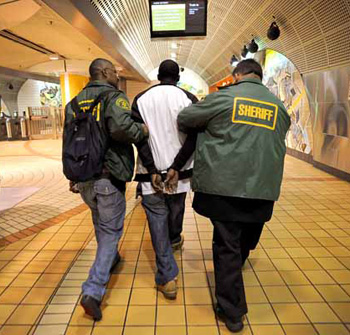
One justification offered for the need to gate Los Angeles’ rail system is that the present “Proof-of-Payment” system is evaded by a large number of people and that gates will increase revenue collection. This presumes only gating can reduce the level of fare evasion occurring. But as shown by Tri-Met in Portland, Oregon over the past year catching scofflaws and sending the message to users that fare evasion will not be tolerated can be achieved cost effectively by increasing the number of roving fare enforcers.
Metro’s current gating plan involves dedicating 160 Sheriff Assistants (which is 60 more than we currently have for the entire Metro Rail system) to watching fare gates. Wouldn’t it make more sense to have them as part of an enhanced roving fare inspection program? Consider that unlike the gate sentinels that these enforcers will be able to provide assistance aboard vehicles as they move through the system and have flexibility in targeting the stations where evasion problems are most numerous without the draconian choke point effect on patron flow patterns imposed by gating.
Think of all the money saved by pulling out the gates and ending the payments Metro makes to Cubic for renting them. And despite claims by Metro staff it is not too late to do this. All it takes is for the Metro management and the Board to own up to the gating being a money pit fiasco and consider this better alternative.
I’m not holding my breath the foregoing will happen. But I at least wanted to share that gating is not the only solution–and that in my view it is the equivalent of using a hammer to get rid of a fly.

Streetsblog has migrated to a new comment system. New commenters can register directly in the comments section of any article. Returning commenters: your previous comments and display name have been preserved, but you'll need to reclaim your account by clicking "Forgot your password?" on the sign-in form, entering your email, and following the verification link to set a new password — this is required because passwords could not be carried over during the migration. For questions, contact tips@streetsblog.org.