Cycling: What’s Holding Women Back?

The question of why more women aren’t cycling is a subject that could probably fill volumes. But it doesn’t get enough play on blogs of this type.

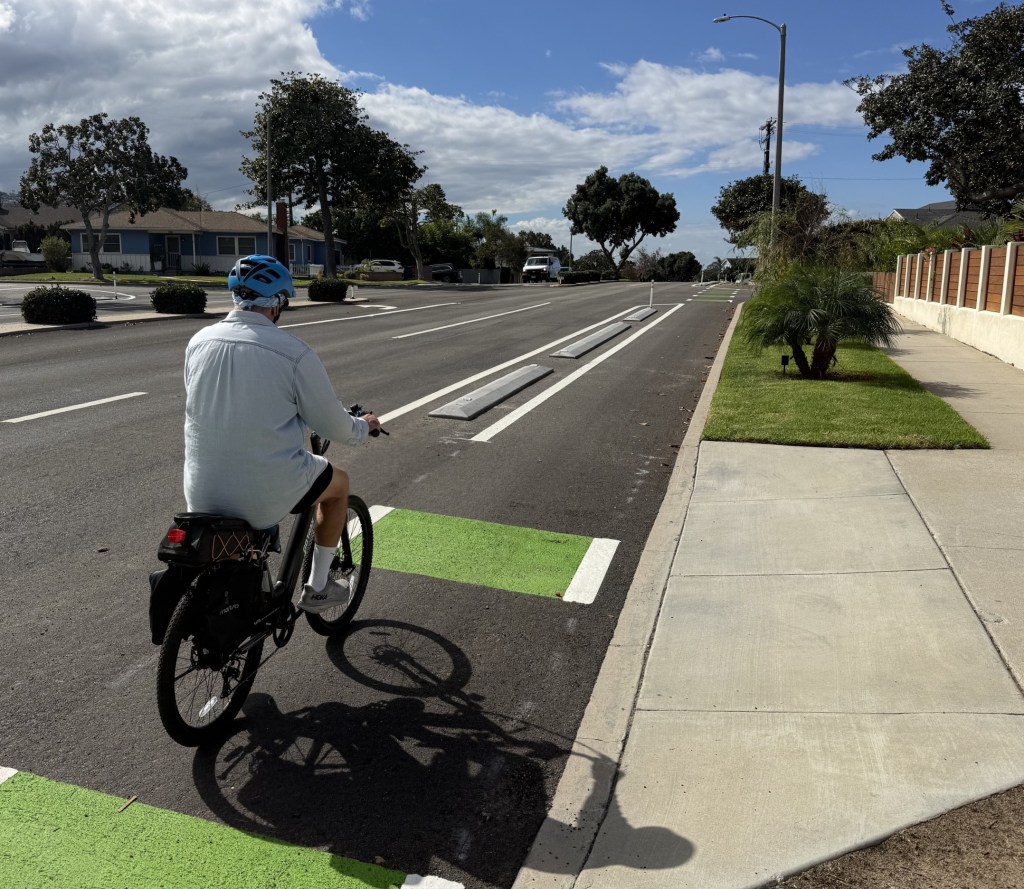
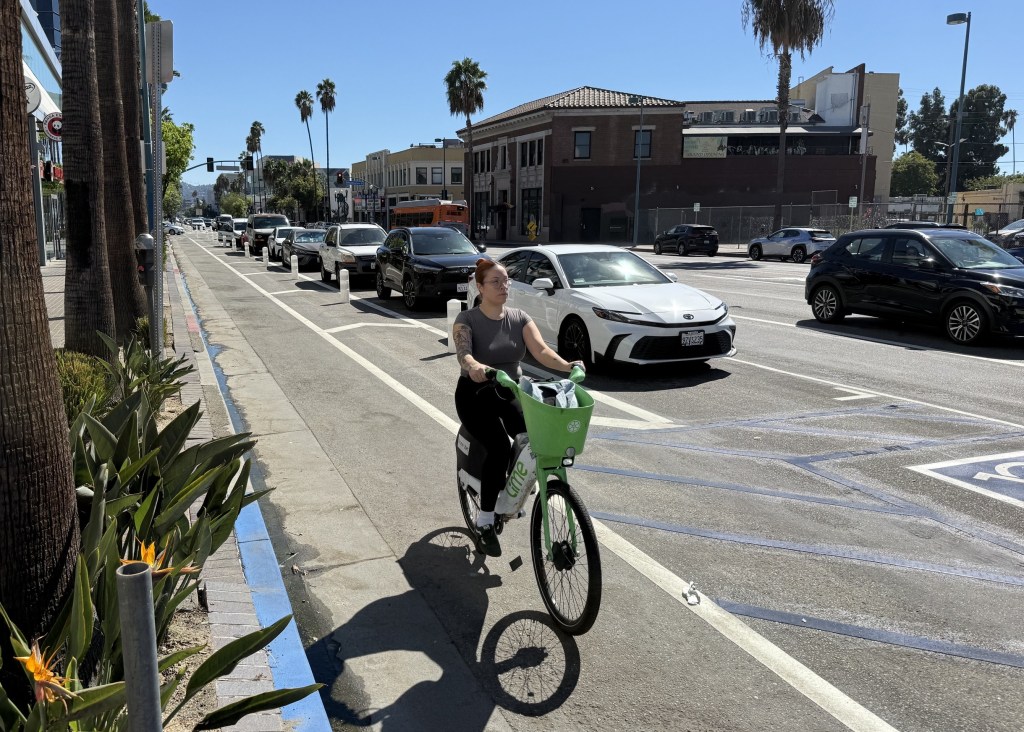
What stops more women from cycling? Photo: Grist
So I was glad to see Elly Blue at Network blog Grist take on this big question in a recent post. From Blue’s perspective, discussion of women and cycling has focused too intently on fear and fashion:
Before we commit to blaming women’s transportation practices on our timidity and vanity, I think it’s worth looking at some other potential factors. Like the economy.
She notes that women are more likely to be poor than men, which could put cycling gear out of reach. She also seizes on the fact that women continue to handle a disproportionate share of domestic duties.
Bicycling takes time. And this is something that, by the numbers, women have less of than men. In 2004, employed women reported an average of one more hour of housework per day than their employed male counterparts.
These kinds of responsibilities add up to more complicated transportation needs. Women make more trips than men, with diverse kinds of trips chained together. And twice as many trips as men’s are at the service of passengers — that is to say, the school drop-off, soccer practice, and the play date wedged in there between the grocery run and the commute to work.
Blue concludes that in order for more women to take part in cycling, they need better roads, cargo bikes and some patience from our less encumbered biking counterparts. These are good points.
But I wanted to say, in my experience, I think the problem is broader, and harder to pinpoint. Additional family responsibilities haven’t been a burden for me as a female cyclist, and neither have financial issues. That strengthens Blue’s point, on one hand; I continue to cycle.
On the other hand, my experience as a female cyclist hasn’t been without obstacles. In addition to poor infrastructure and weak legal protections that afflict men and women cyclists alike, I would say the biggest issue I have had to overcome is a sense of incredulity from family members, coworkers and friends.
My mom worries — and she worries a lot more, I think, than if I were a 28-year-old man. I once had a boss order me, in all seriousness, not to bike on busy streets. I agreed with her just to set her mind at ease, even though I had no plans to change my transportation habits. She was well-meaning. Just a little old-fashioned.
None of this has stopped me from biking. But I am a very strong-willed person who isn’t easily steered by societal norms. Not every woman is that way.
I think the problem for a lot of women is that on some societal level, bicycling is at odds with many of our ideals about what it means to be feminine. I would argue that the fashion explanation shouldn’t be discounted. There is a certain percentage of women who just aren’t going to leave the house in the morning and enter a business setting without a pair of high heels. And it’s not because these women are vain; they are adhering to a social norm. And the business world, and society in general, can be harsh to women who don’t conform.
The high heeled shoe is a symbol of femininity in America. And the fact that they prevent women from being physically active isn’t an accident. They help embody this aspect of traditional femininity: women aren’t supposed to be physically active, at least in a public setting.
Women are encouraged in explicit and subtle ways to aspire to traditionally feminine roles. Unfortunately, cycling just isn’t one of them. Powerful social norms, again, dictate that women shouldn’t make themselves spectacles on crowded streets, especially while ducking the norm and riding a bike — without high heels and while possibly a little sweaty.
I agree with Elly that women need better infrastructure, cargo bikes and more help from their male partners. But I think if cycling is to become truly mainstream, what women need more is Jessica Alba on a commuter bike in a starring role in a romantic comedy. They need to be told by mainstream society that it is okay, even attractive, for women to bike.
Elsewhere on the Network today: Urban Milwaukee reports that the city is testing out bike sharing. Say Yes to the Honolulu Rail System offers poll results that show the city’s rail project is much more popular with the region’s younger residents, falling in line with national trends regarding youth and transit. And Pattern Cities celebrates the installation of Denver’s first cycle track.

Read More:
Streetsblog has migrated to a new comment system. New commenters can register directly in the comments section of any article. Returning commenters: your previous comments and display name have been preserved, but you'll need to reclaim your account by clicking "Forgot your password?" on the sign-in form, entering your email, and following the verification link to set a new password — this is required because passwords could not be carried over during the migration. For questions, contact tips@streetsblog.org.