L.A. City Council Extends Taxi Franchises

Yesterday, the Los Angeles City Council voted unanimously to extend the city’s current taxi franchise agreements. Existing city franchises are set to expire December 31st 2010, so today’s vote allows for L.A.’s dysfunctional taxi system to roll along for five more years.

The vote was the culmination of more than a year of contentious debate over the future of the city’s taxi system. In 2009, in anticipation of the approaching deadline, the city commissioned a taxi study to guide future decisions. In either haste or impropriety, the city’s awarding of the taxi study contract was tainted by dubious processes, then terminated. Remaining funding was deemed insufficient for the study’s completion. Taxi company interests pressured the council to extend lucrative franchises essentially unchanged. Taxi workers pressed for completion of the city study, expecting results to include steps toward labor and environmental reform.
In June 2010, Councilmembers Tony Cardenas and Paul Krekorian introduced council motion 10-0996 which proposed extending existing taxi franchises for five years, with environmental provisions for conversion to fuel-efficient vehicles. Taxi companies backed Cardenas’ five-year extension, which ends up more likely to be a seven-year extension, via a provision allowing the Board of Taxicab Commissioners to approve two one-year extensions. Taxi workers pressed for an alternative proposal, supported by Mayor Villaraigosa, for a two-year extension during which the aborted taxi study could be completed.
Two weeks ago, the City Council Transportation Committee approved the five-year extension motion, sending it to the full city council.
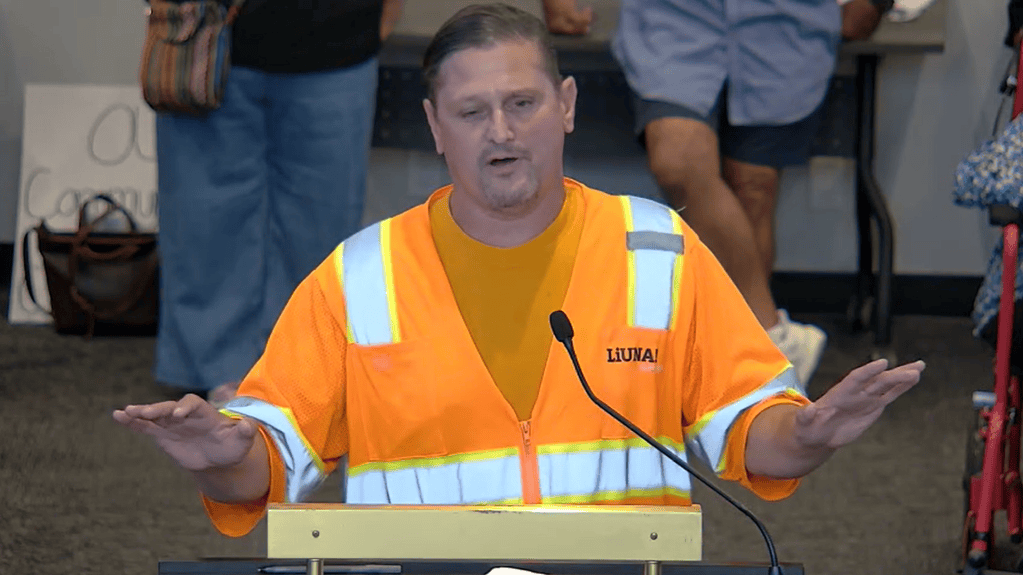
Yesterday, taxi companies packed the council chambers with hundreds of supporters, mostly taxi drivers wearing purple “Respect Me” T-shirts. A couple of these drivers admitted that they were paid $100 to attend the council meeting. Taxi drivers and passengers spoke in support of the company, er, Cardenas motion.
Speaking against the motion (and in favor of a two-year extension) were environmentalists, including the Natural Resources Defense Council and Green L.A. Coalition, and a smaller unpaid contingent of taxi drivers, represented by the Los Angeles Taxi Workers Alliance.
While the council’s decision was cloaked in rhetoric of doing the green thing (and converting the bulk of the taxi fleet to cleaner fuels is a worthwhile tangible environmental benefit), the undertone appeared to be more-or-less relieved exasperation: pushing off a contentious issue for next five years so someone else can deal with it then. Why put a difficult item off for two years, what you can put it off for five?
One additional fig-leaf, tacked-on to the franchise extension, was an amending motion, initiated by Councilmember Richard Alarcon, which would urge Taxi companies “voluntary compliance” in not retaliating against workers who fail to toe the company line. While it’s worthwhile that Alarcon lends a bit of visibility to this serious issue (taxi workers have been fired for their organizing activities), any environmentalist understands the ineffectiveness of a regulator applying toothless voluntary measures to a regulated party.
As Los Angeles Times’ Christopher Hawthorne described recently, the transportation landscape in Los Angeles is shifting, arguably rapidly. Los Angeles’ changing demographics are intersecting with new rail lines, dedicated bus lanes, car-share options, and plenty of other livability projects that Streetsblog readers are familiar with. Los Angeles’ formerly cars-first cars-pretty-much-only approach appears to be firmly on a path toward more balance. A healthy taxi system will be an integral part of this emerging healthy and resilient transportation network. Taxis can be especially important for first-mile/last-mile connections and for bridging late-night transit service gaps.
While yesterday’s council decision took a small step forward on taxi tailpipe pollution, it sidestepped many larger issues that make L.A.’s taxi transportation system marginal and unsustainable. The system currently primarily benefits a select few, to the detriment of passengers, drivers and the broader environment. Under great pressure, the council had a difficult situation to untangle, leading ultimately to a difficult decision and a missed opportunity. Hopefully, in five to seven years (or sooner), when the taxi dilemma re-enters their chambers, the council may show greater courage.
Streetsblog has migrated to a new comment system. New commenters can register directly in the comments section of any article. Returning commenters: your previous comments and display name have been preserved, but you'll need to reclaim your account by clicking "Forgot your password?" on the sign-in form, entering your email, and following the verification link to set a new password — this is required because passwords could not be carried over during the migration. For questions, contact tips@streetsblog.org.