Villaraigosa Steps Up Case for “30 in 10” in D.C.

Days after pitching the Senate environment committee for federal help with expediting his ambitious “30/10” package
of new transit projects, Los Angeles Mayor Antonio Villaraigosa was
back on the Hill yesterday meeting with lawmakers as part of a broad
campaign for more investment in California infrastructure.
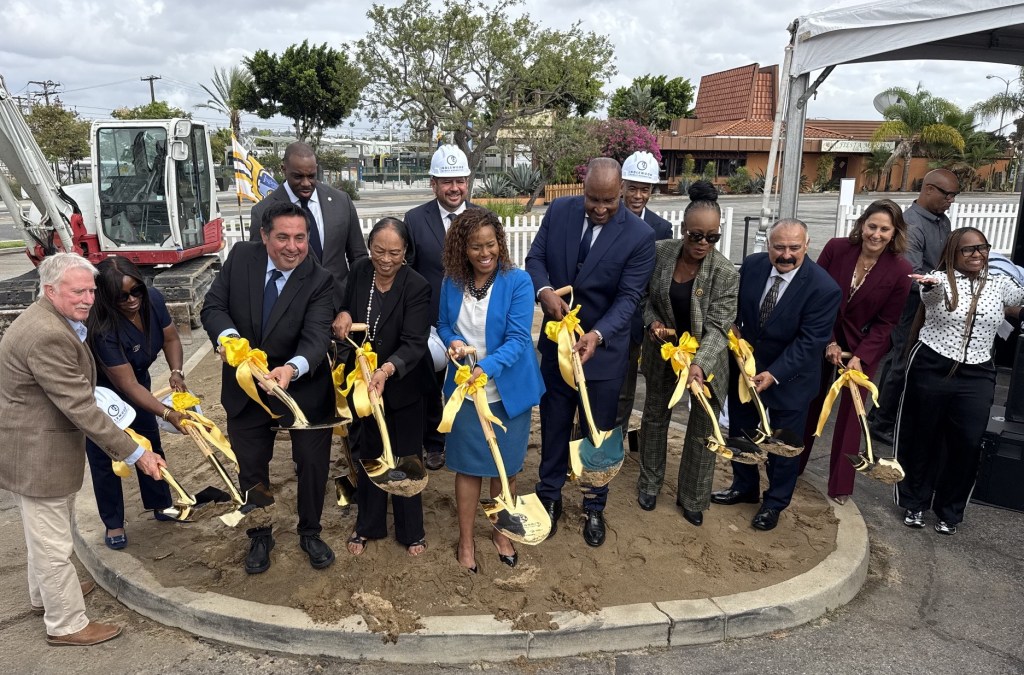
 Villaraigosa, at left, flanked by Sen. Barbara Boxer (D-CA). (Photo: Life)
Villaraigosa
joined the Los Angeles Chamber of Commerce and a delegation of regional
business owners estimated at 200-strong for meetings with the
environment panel’s chairman, Sen. Barbara Boxer (D-CA), as well as
Sens. Dianne Feinstein (D-CA) and John McCain (R-AZ).
Immigration topped the agenda for the McCain meeting, according to Southern California Public Radio, and the L.A. Business Journal reported
that the Southern California group visited with White House adviser
Valerie Jarrett. But Villaraigosa’s meeting with Boxer focused on the
potential for speedier progress on the dozen transit extensions and
expansions that make up the “30/10” list.
In his Senate testimony last week, Villaraigosa indicated that existing federal funding programs such as Build America Bonds and
the Transportation Infrastructure Finance and Innovation Act (TIFIA)
could prove helpful for his transit push. However, he also issued a
highly relevant challenge to federal officials struggling for new ways
to close the revenue gap for the next long-term federal transportation bill:
[T]he federal government can
and should do more, especially for cities and regions that are coming
to the table with money in hand to create a true federal-local
partnership. We have begun conversations with leaders in the Senate
and House, the White House, and key federal agencies to strategize
about how we can partner together to leverage local voter-approved
funding in a way that will create jobs and improve sustainability.Because
we plan to finance much of the 30/10 construction, we believe a
combination of multi-year direct loans, loan guarantees, interest rate
subsidies, and innovative repayment terms would enable us to fund
construction of all 12 of our transit projects over the next decade.
This could become the model for a new paradigm in federal
transportation funding, or – at a minimum – an innovative partnership
model.
The
key words in the mayor’s remarks were “leverage local voter-approved
funding,” which L.A. did in 2008 under Measure R, a sales tax increase
approved to pay for new transportation projects. If Villaraigosa can
use voters’ willingness to pay new taxes — and the $4 billion-plus
that he estimates would be saved by building the transit projects in 10
years rather than 30 — to win extra federal commitment, it would be a
major victory for his city.
To create a template for other
cities to replicate, however, Villaraigosa’s allies must hope to avoid
the scenario facing Denver, where regional leaders are seeking
another sales-tax hike after revenue from their initial increase failed
to keep pace with cost estimates for the Fastracks transit plan. The
fiscal woes facing Fastracks reportedly stem from land costs that
exceeded expectations, rising construction inflation, and too-rosy
estimates of sales tax revenue; all are pitfalls that could arise for
any city planning major transit investments.

Streetsblog has migrated to a new comment system. New commenters can register directly in the comments section of any article. Returning commenters: your previous comments and display name have been preserved, but you'll need to reclaim your account by clicking "Forgot your password?" on the sign-in form, entering your email, and following the verification link to set a new password — this is required because passwords could not be carried over during the migration. For questions, contact tips@streetsblog.org.