Blogging Cyclist Calls for Truce in Car v Bike Culture Wars
Bravo! I couldn't have said it any better myself. As more and more cyclists take to the road in the era of $4 gasoline, Gary's writings could be a useful guide for all street users, and are worth checking out no matter your commuting choice.
It seems like everywhere you turn these days, you can find a news story about the growing cultural war between bicyclists and car drivers. Locally, the Mandeville Canyon Crash has shed a startling light on the violent attitudes some motorists have towards the two-wheeled users of the road, and similar stories have been reported in Seattle, Park City, Utah, Portland and New York City. For their part, cyclists explain their issues with bike riders by pointing at scores of bike riders who ride the wrong way against traffic, run red lights and stop signs or blocking traffic.
Seeking to cool down the somewhat super-heated rhetoric, some cyclists are calling for a truce in the daily street fight over road space. Realizing the best place to iron out differences probably isn’t on the road, especially since most verbal exchanges between cyclists and drivers is after some sort of dangerous or bothersome incident, the conversation has moved to the Internet. We’ve already discussed some efforts by cyclists in Long Beach to help cyclists ride safer and today we’ll focus on a blog called Gary Rides Bikes which is hoping to explain to cyclists and drivers how best to safely coexist.
Last month, Gary Rides Bikes announced “Coexistence,” a series of articles that explains why many bike riders do things that may irk drivers but do so for safety’s sake and with the full blessing of the law. What makes Gary’s writing so useful beyond the hallelujah chorus of
other cyclists is it doesn’t lay blame at the feet of motorists for the
problems on the road
For example, the second piece in the series, entitled, “Bicycles Taking The Lane,” looks at why cyclists don’t always “ride to the right,” as some wish riders would. Gary points out why the right isn’t always the safest place for a rider to be.:
The right shoulder of the road is often in the worst condition.
Although cyclists are generally expected to ride there, often times
when roads are repaved the right shoulder is skipped over. Large
potholes, deep cracks, broken glass, and storm grates with openings
wide enough to swallow bike tires are some of the things that can force
cyclists further to the center of the lane. Bike tires are much thinner
and at higher pressure then car tires so more care must be taken to
avoid such obstacles when cycling. In a nutshell, when the road gets
rough, cyclists need more clearance then usual to avoid hazards.
Bravo! I couldn’t have said it any better myself. As more and more cyclists take to the road in the era of $4 gasoline, Gary’s writings could be a useful guide for all street users, and are worth checking out no matter your commuting choice.
If anyone knows of a website or blog that focuses on how drivers should behave around cyclists that is both constructive and from a driver’s point of view, please pass it along to damien@streetsblog.org. I haven’t been able to find one in my own searches.
Streetsblog has migrated to a new comment system. New commenters can register directly in the comments section of any article. Returning commenters: your previous comments and display name have been preserved, but you'll need to reclaim your account by clicking "Forgot your password?" on the sign-in form, entering your email, and following the verification link to set a new password — this is required because passwords could not be carried over during the migration. For questions, contact tips@streetsblog.org.
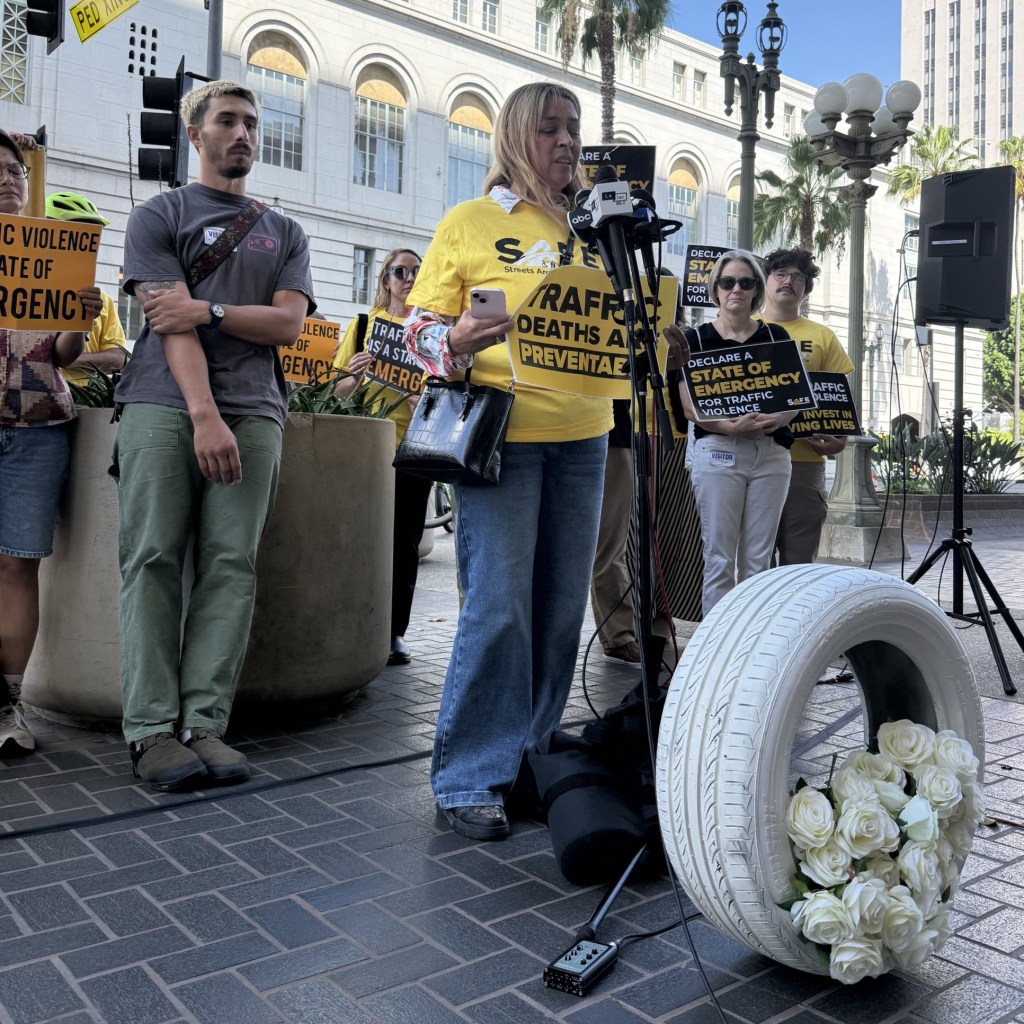
"I've been struggling just to survive daily. This is what happens to a parent when they lose a child." "Please help us so that another parent doesn't have to go through what I'm going through presently right now."
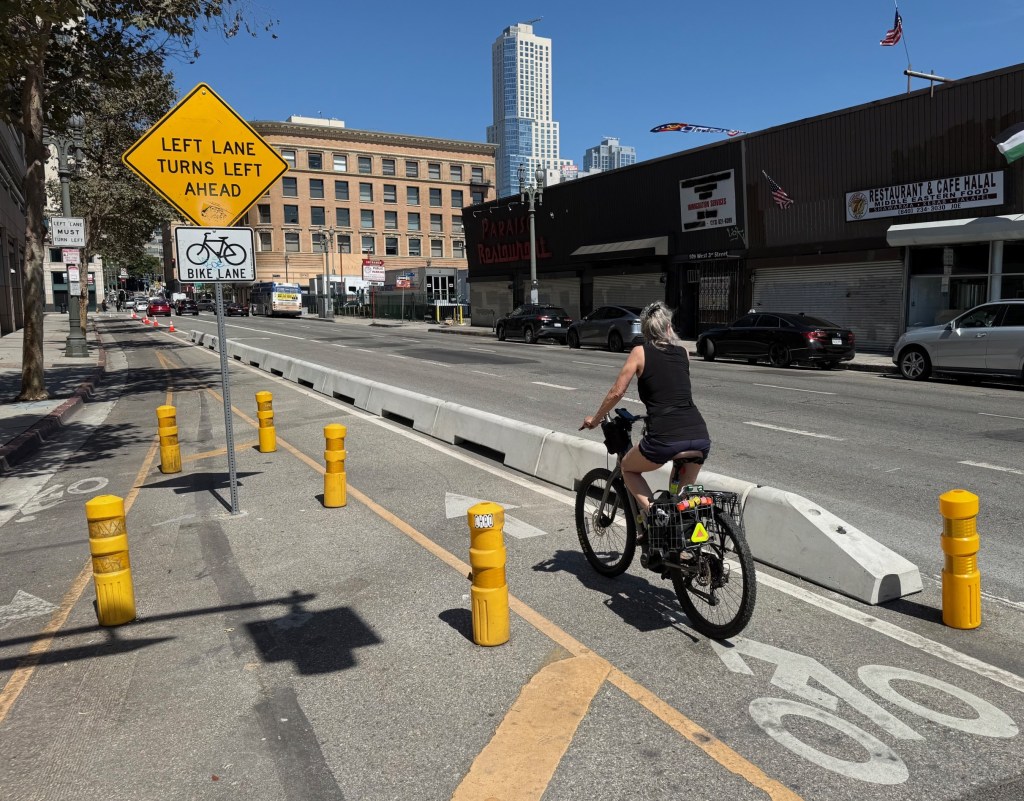
From July 2025 through June 2026, the city added 7.5 lane-miles of new bikeways, removed 5.3 miles of existing bikeways, and upgraded 14.1 miles of existing bikeways