Metro Wants Developers to Pay Congestion Mitigation Fee

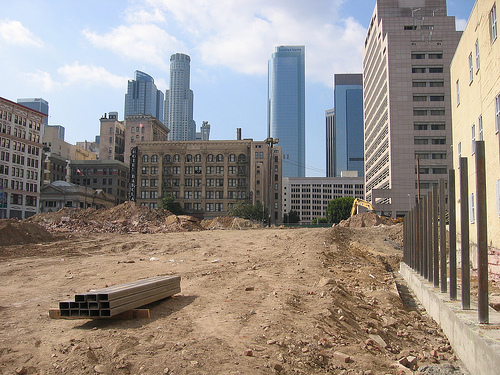
Have you ever looked at a major construction project and wondered how it would affect your commute? Most times, those developments add a lot of traffic to LA’s already congested roads, but unless you’re living in one of five small zones in the city, such as the Warner Center, that require it; they don’t bring in any money for transportation improvements.
Metro is looking to change that.
Since 2003, Metro has been working on the framework that would allow LA County municipalities to adopt “Congestion Mitigation Fees” which would be charged to developers based on the amount of trips their development will create. While Metro would create the guidelines, it will be up to individual municipalities to adopt the ordinances to create the program and collect the fees.
Nevertheless, the members of the City Council Transportation Committee expressed some concerns about the program at yesterday’s meeting.
Councilmember Tom LaBonge expressed frustration that Metro would be placing barriers in the way of developers. After discovering that “Congestion Mitigation Fees” were being pushed by the state and not USDOT, LaBonge took Metro to task, “I feel the agency is getting away from stuff like building transit systems and road systems.”
For Councilmember Richard Alarcón, the concern wasn’t with the program, but with how fees would be spent. The Councilmember wanted to make sure that these fees wouldn’t go into a general fund, but would be used for improvements in the community that sees the development.
Metro is still over a year away from presenting its final plan. In the meantime, they have prepared a series of “Guiding Principles” to help guide them in crafting the program. They are:
Fees should be structured to mitigate congestion from new development without discouraging economic development.
Fees are to augment other regional funds, not replace or redirect them. The intent of the Congestion Mitigation Fee program is not to shift regional resources or regional responsibility, but rather to help local jurisdictions mitigate the regional impacts of new development by increasing funding options that can generate needed revenue.
Local jurisdictions identify local projects with regional benefit consistent with agreed upon guidelines.
Local jurisdictions adopt, collect, and administer congestion mitigation fees. Local jurisdictions are responsible for adopting a fee program authorizing them to collect the congestion mitigation fee, and also retaining the congestion mitigation fee revenues in their own accounts.
Local jurisdictions build projects (or local jurisdictions may choose to participate in multi-jurisdictional or regional projects, if mutually desired).
Local jurisdictions with existing fee programs receive dollar-for-dollar credit for local projects with a regional benefit consistent with agreed upon guidelines.
Fees should be structured to support transit-oriented development, and to exempt mixed use and high-density residential development within 4 mile of rail stations consistent with CMP statute.
The program will be developed in a manner to encourage certainty and predictability among local jurisdictions, business, environmental and development communities.
Of greater concern than how the money is collected is how the money is spent. Metro will not be responsible for how jurisdictions spend their congestion fees, so it will be up to the individual communities to make certain that they are spent on projects that will move the most people and not just be a new set of funds to widen roads and highways.
Photo: Ax2Groin/Flickr

Streetsblog has migrated to a new comment system. New commenters can register directly in the comments section of any article. Returning commenters: your previous comments and display name have been preserved, but you'll need to reclaim your account by clicking "Forgot your password?" on the sign-in form, entering your email, and following the verification link to set a new password — this is required because passwords could not be carried over during the migration. For questions, contact tips@streetsblog.org.