A Lesson from Barcelona from 1859

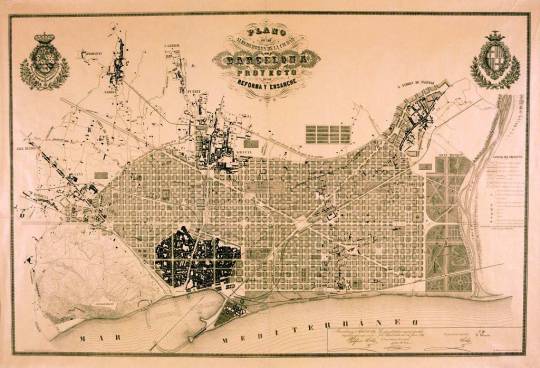
A Map of the Barcelona of the Future from The Project for the Reform and Extension of Barcelona in 1859
In 1859, Ildefons Cerdá released an urban plan for the city of Barcelona called “The Project for the Reform and Extension of Barcelona” which called for expanding the city around what we would today call transit even though urban transit lines didn’t exist. When Cerdá first saw a steam engine on a visit to France, he realized that transportation would be changing and urged a complete redesign of Barcelona to prepare for this new opportunity.
The theories and plans of Cerdá are being featured in an exhibit in the Huntington Beach Central Library. For those of you who aren’t planning a trip to Orange County anytime soon, you can see many of the posters for the exhibit at this website. For those of you that are planning to head to Huntington Beach, there will be a reception and lecture this Sunday.
Cerdá envisioned Barecelona as an “Integrated City.” Integrated Cities provide public transportation to every street in the city, recognize that every street is a miniature world with unique needs, and accommodate multiple modes of transportation. Barcelona embraced Cerdá’s proposals and is still thankful that they did. The Barcelona Metro still has a station named after him.
In Barcelona, a city with 3.1 million people, the city has a variety of transit options featuring a subway system, a TRAM system, a bus system, and even an aerial cable car system. In March of 2007, the city began a bike share system with over 100 different stations. 50,000 people subscribed to the bike share system in the first three months. Wikipedia has a great summary of Barcelona’s public transportation initiatives.
By comparison, here in Los Angeles urban planners made a decision to base our transportation network around the automobile. And we know how that’s turned out. Instead of celebrating the integration of transit modes, we’re still debating whether or not we should be increasing road capacity even if it would damage the local economy and provide a physical barrier that separates the community.
There is some good news, if Los Angeles embraces mutli-modalism at some point in the next nine months, we’ll be less than 150 miles behind Spain.
The exhibit at Huntington Beach will be there through the end of the month.
Image: 1898.mforos.com

Streetsblog has migrated to a new comment system. New commenters can register directly in the comments section of any article. Returning commenters: your previous comments and display name have been preserved, but you'll need to reclaim your account by clicking "Forgot your password?" on the sign-in form, entering your email, and following the verification link to set a new password — this is required because passwords could not be carried over during the migration. For questions, contact tips@streetsblog.org.