L.A. City Reconnecting MacArthur Park Plan Calls for Closing Parts of Wilshire Boulevard
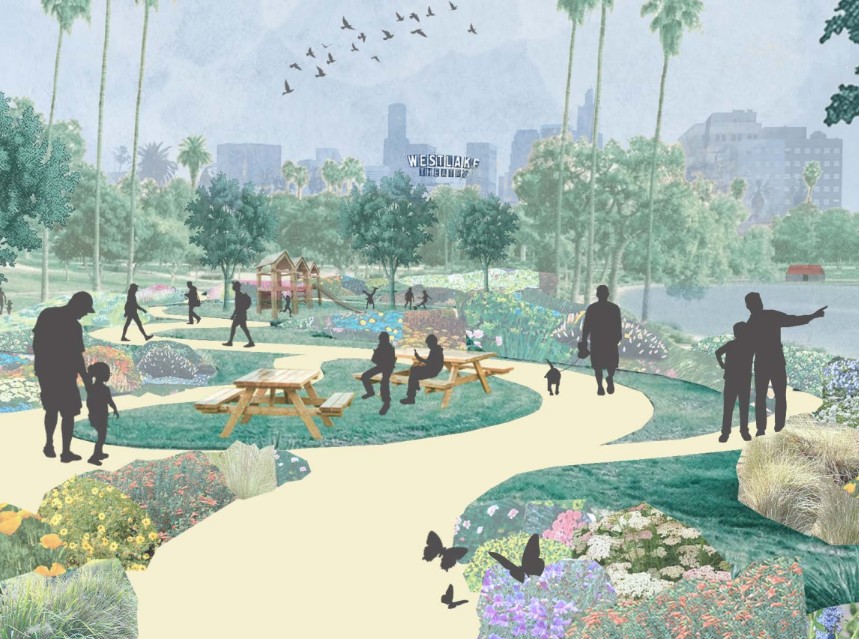
Last week, City Councilmember Eunisses Hernandez announced L.A. City plans to close Wilshire Boulevard through MacArthur Park. “Reconnecting the park is one part of our broader commitment to invest in this neighborhood and create public spaces that are safer, greener, and more welcoming for everyone,” proclaimed Hernandez. The city’s Reconnecting MacArthur Park initiative recently completed its initial project study, and will now enter the environmental review phase.
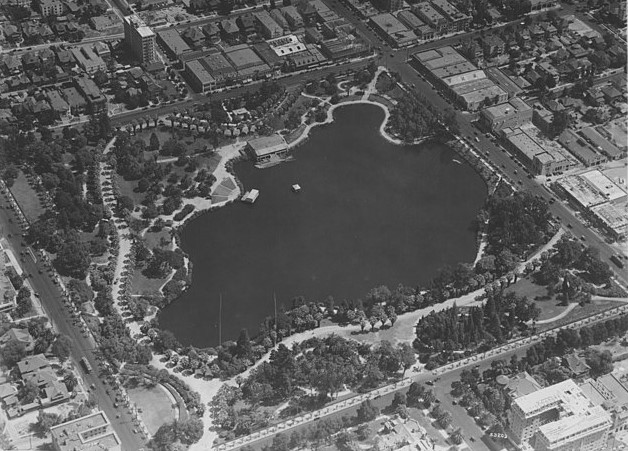
MacArthur Park opened in the late 1800s, then named Westlake Park. In 1934, the park was severed in half when the city sliced Wilshire Boulevard through it.
The current Reconnecting MacArthur Park initiative received federal grant funding in early 2024, and kicked off an extensive community engagement process in July 2024. Councilmember Hernandez’ office partnered with the nonprofit Central City Neighborhoods Partners (CCNP), the city Transportation Department (LADOT), and the Southern California Association of Governments (SCAG). The city contracted with a team of consultants led by Nelson\Nygaard.
The study considered five alternatives:
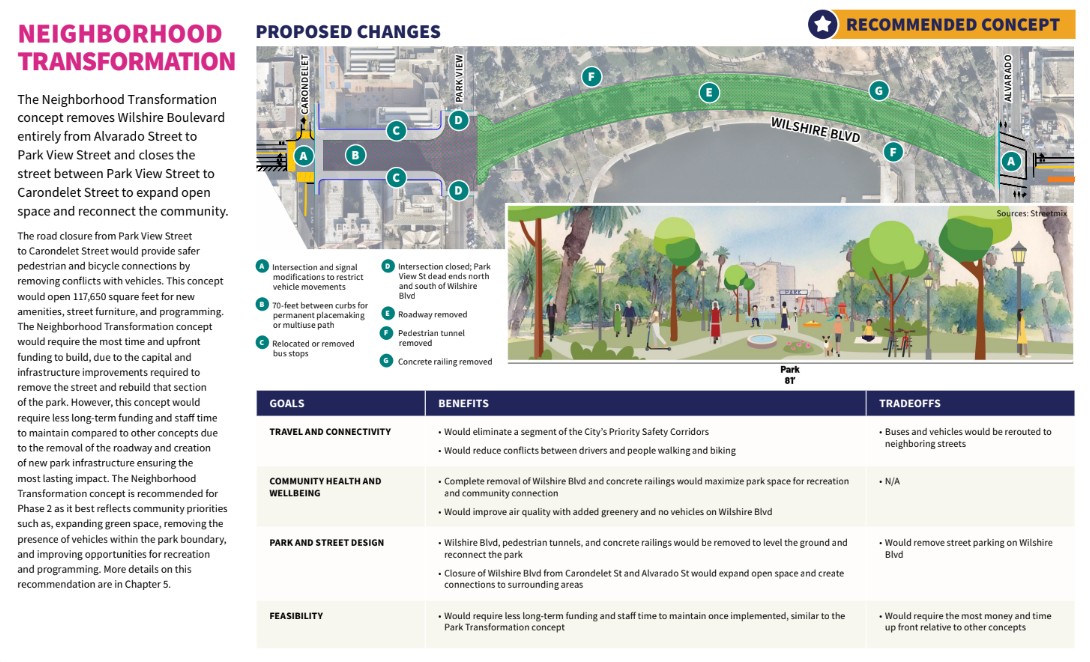
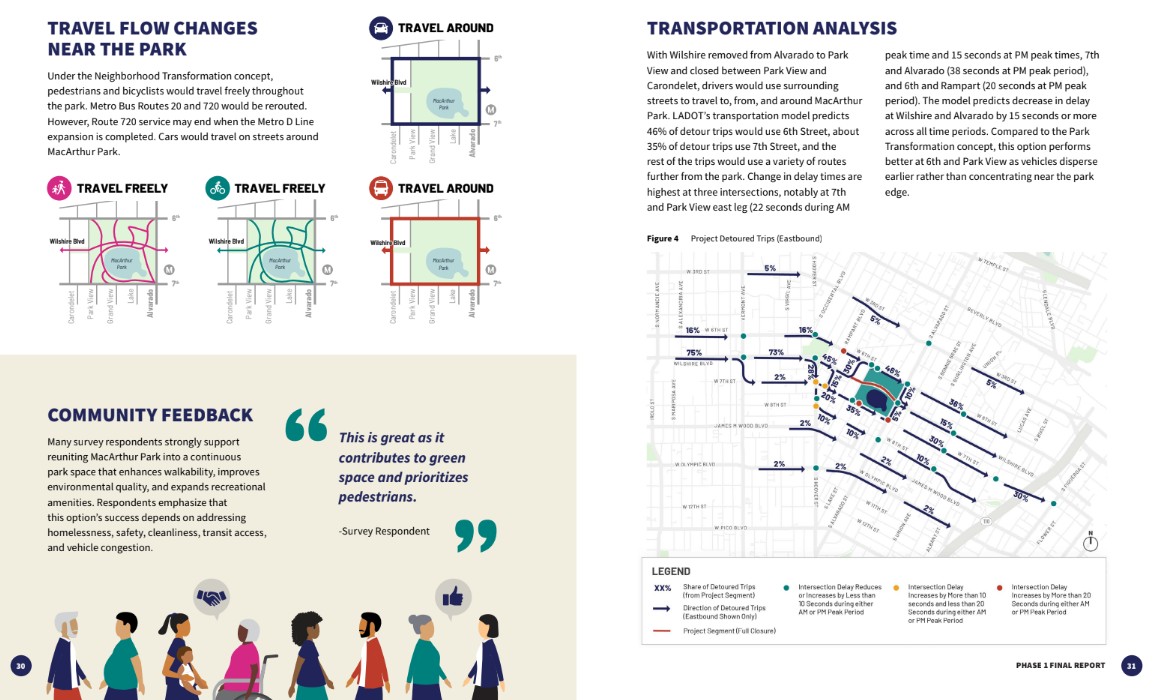
Neighborhood Transformation – removes Wilshire Boulevard through park, and additionally permanently closes Wilshire from Park View Street to Carondelet Street. This alternative restores two acres to the park, replacing existing unusable sloped areas and a tunnel many park users avoid. This design also most effectively removes car traffic from the park’s core and perimeter. This is the most far-reaching alternative, and is the recommended alternative.
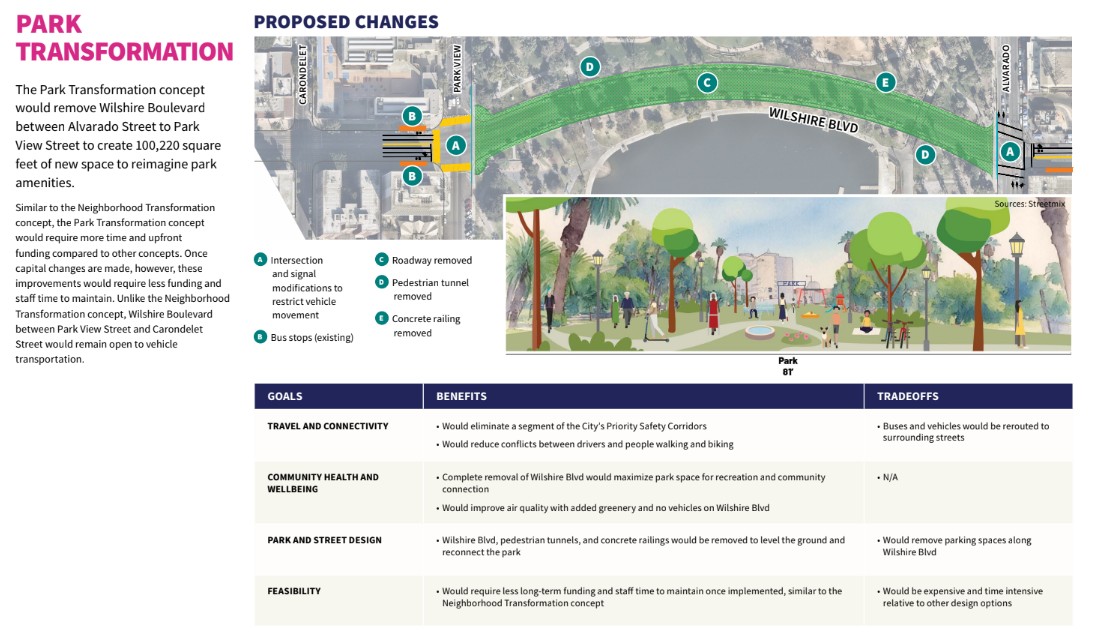
Park Transformation – removes Wilshire Boulevard through park, and leaves Wilshire from Park View to Carondelet open to cars.
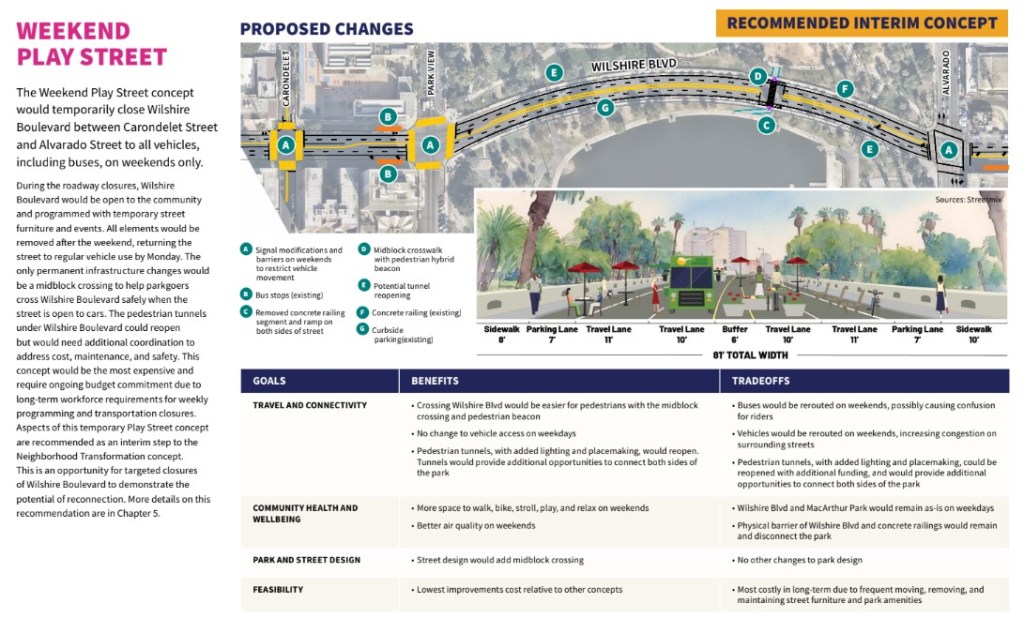
Weekend Play Street – closes Wilshire Boulevard between Carondelet and Alvarado Street to all vehicles, including transit, only on weekends. This alternative is recommended as a low cost interim design.
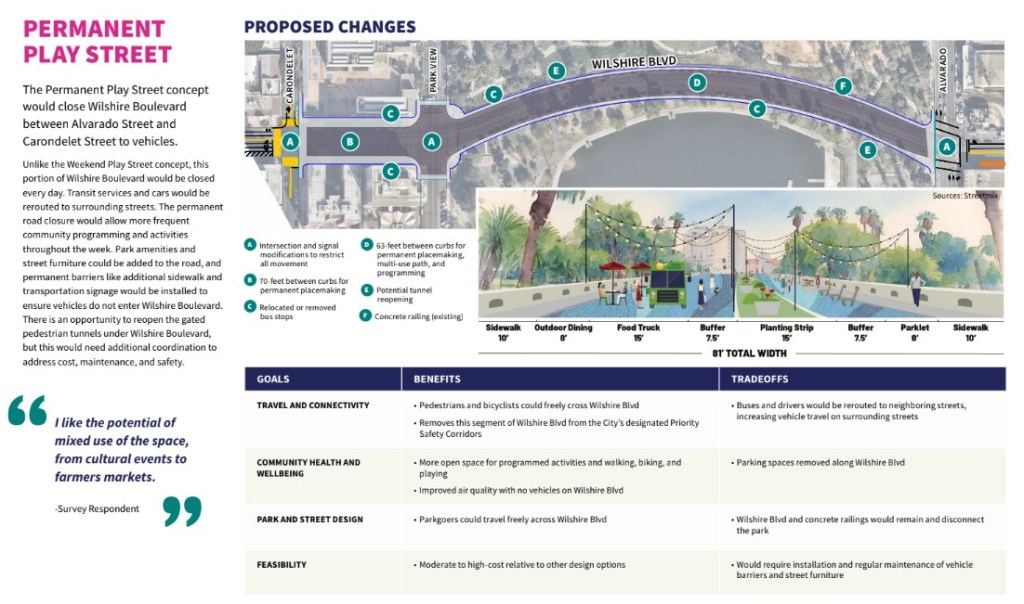
Permanent Play Street – permanently closes Wilshire Boulevard to all vehicles, including transit, opening space for community programming and play.
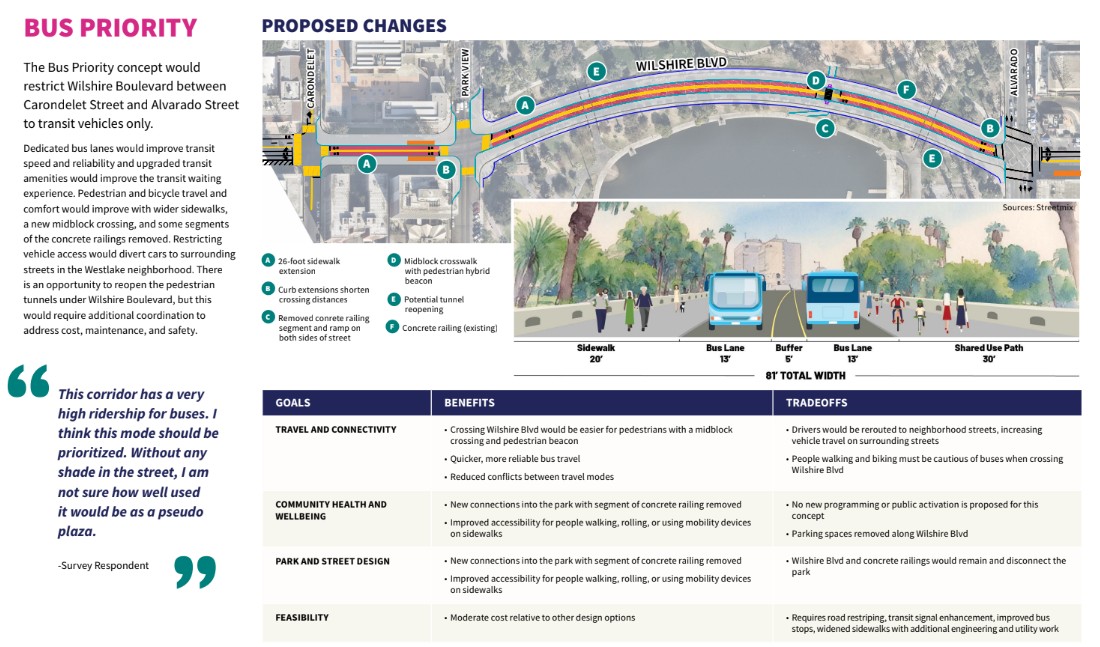
Bus Priority – restricts Wilshire to transit only, adding wider sidewalks for walking and bicycling.
All of the alternatives have impacts on car traffic, so the report dedicates hundreds of appendix pages to impacts on drivers. Below is a summary of the traffic analysis for the preferred alternative.
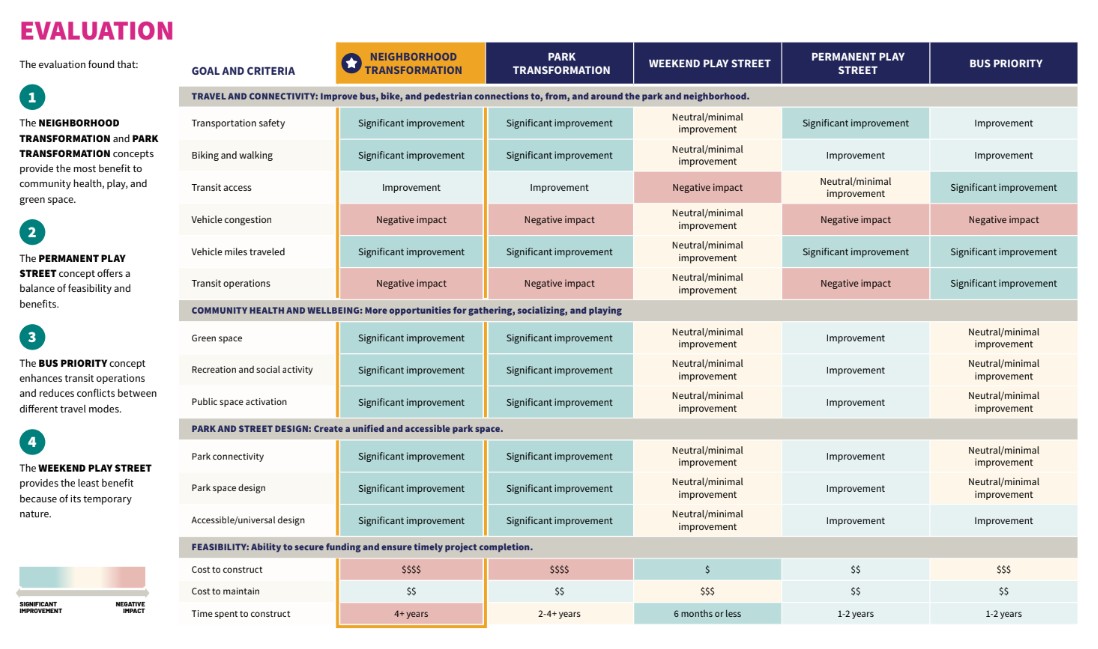
The report compares the varied positive and negative impacts of the various alternatives.
The full phase 1 Reconnecting MacArthur Park report is a very readable 33 pages, plus another thousand pages of appendices, mostly related to car traffic.
The next step will be the environmental review process. All five alternatives, plus a no-build concept, will be evaluated under the National Environmental Policy Act (NEPA) and California Environmental Quality Act (CEQA). This will include furthering preliminary designs and cost estimates for the restored/expanded park.
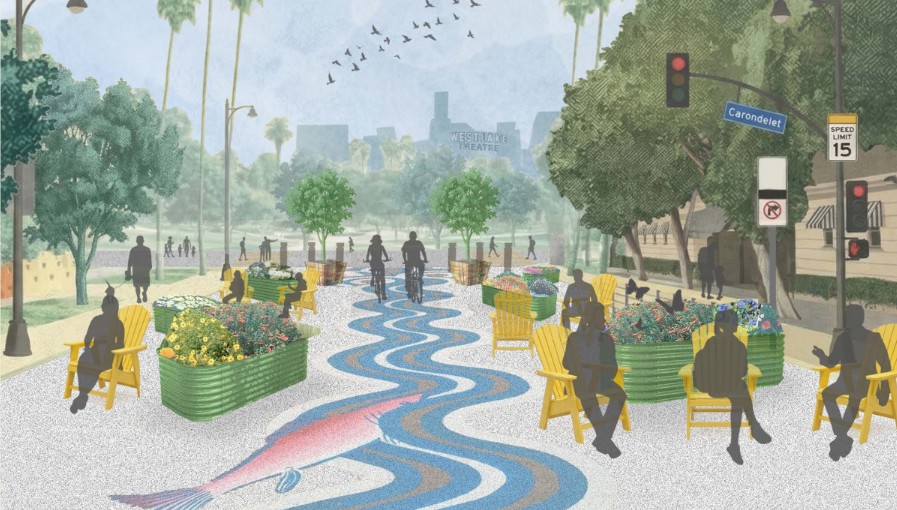
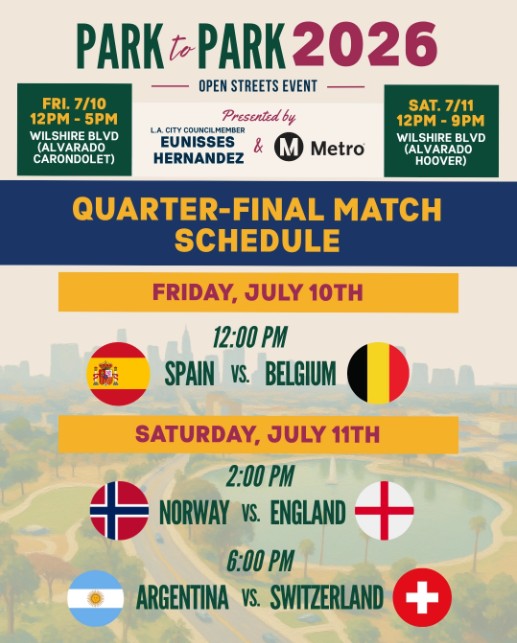
Learn more about Reconnecting MacArthur Park, and get a taste of Wilshire’s car-free future at the Park to Park open streets event this week. On Friday July 10 (tomorrow) and Saturday July 11, the city will close portions of Wilshire from MacArthur Park to La Fayette Park, opening the street to vendors, music, arts, World Cup watching, and much more.
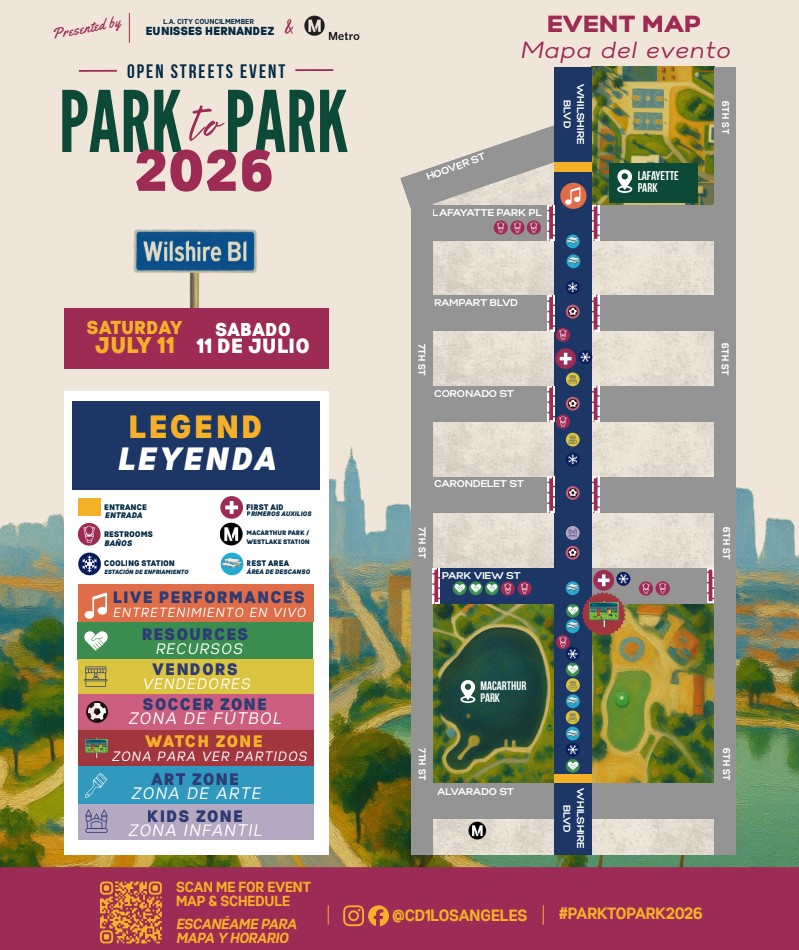
The free Park to Park event will take place
- Friday 7/10 from 12-5 p.m. on Wilshire from Carondelet to Alvarado Street (two long blocks)
- Saturday 7/11 from 12-9 p.m. on Wilshire from Lafayette Park to Macarthur Park (Hoover Street to Alvarado Street – just over half a mile)
Find more Park to Park event details at the city’s event page.
Read More:
Streetsblog has migrated to a new comment system. New commenters can register directly in the comments section of any article. Returning commenters: your previous comments and display name have been preserved, but you'll need to reclaim your account by clicking "Forgot your password?" on the sign-in form, entering your email, and following the verification link to set a new password — this is required because passwords could not be carried over during the migration. For questions, contact tips@streetsblog.org.