Eyes on the Street: L.A. Street Reconfigurations for Outdoor Dining
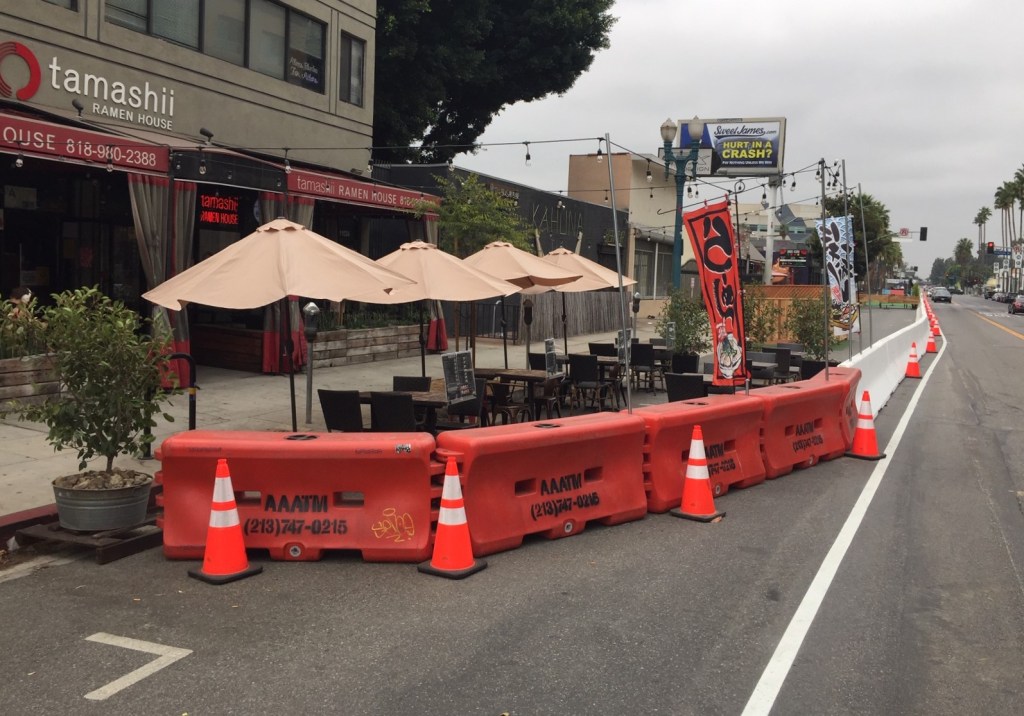
Under the COVID-19 pandemic, many cities are scrambling to reconfigure streets to facilitate safer outdoor dining. The city of Los Angeles “L.A. Al Fresco” program is “temporarily relaxing the rules that regulate outdoor dining.” The Transportation Department (LADOT) has “earmarked 55 percent of all the resources and applications approved for [L.A. Al Fresco] …for BIPOC (Black, Indigenous, People of Color) businesses or businesses located in areas that have suffered the greatest job loss due to COVID-19.” Reportedly, the city Transportation Department (LADOT) is doing larger-scale Al Fresco street closures/reconfigurations in Little Tokyo, Leimert Park, and Silver Lake.
Not all outdoor dining is created equal. With huge amounts of street space given over to drivers, outdoor dining can crowd out pedestrians. In some cases, sidewalk dining has blocked wheelchair access.
Streetsblog reported earlier on Culver City, which has among the most impressive repurposing of street space under COVID-19. Downtown Culver City has expanded outdoor dining and added new bus lanes by taking over a travel lane and on-street parking spaces. Long Beach has also been a leader in pioneering parklet spaces for outdoor dining.
In L.A., what appears to be the most common outdoor dining treatment is the repurposing of parking spaces, which arguably proves that the city’s parking requirements are the shoddy counter-productive pseudoscience that Donald Shoup always said they were.
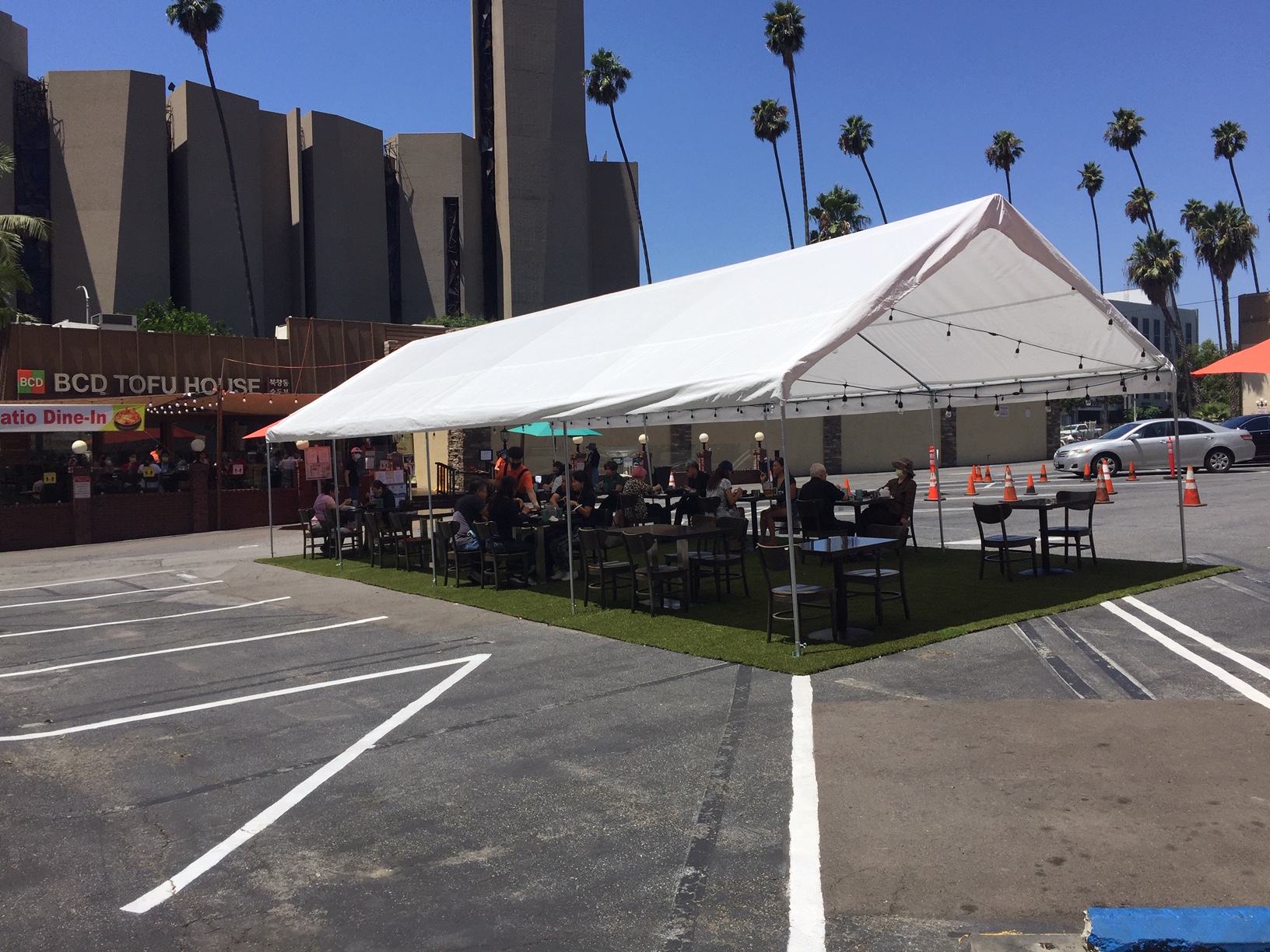
Below is a parking lot example on Wilshire Boulevard in Koreatown.
Streetsblog has recently observed a couple of larger-scale projects on L.A. streets – in Silver Lake and North Hollywood.
On Sunset Boulevard in the Silver Lake neighborhood, the city used concrete barriers to repurpose space formerly allocated to on-street parking. The sidewalk now serves diners, and people walk in the former parking spaces.
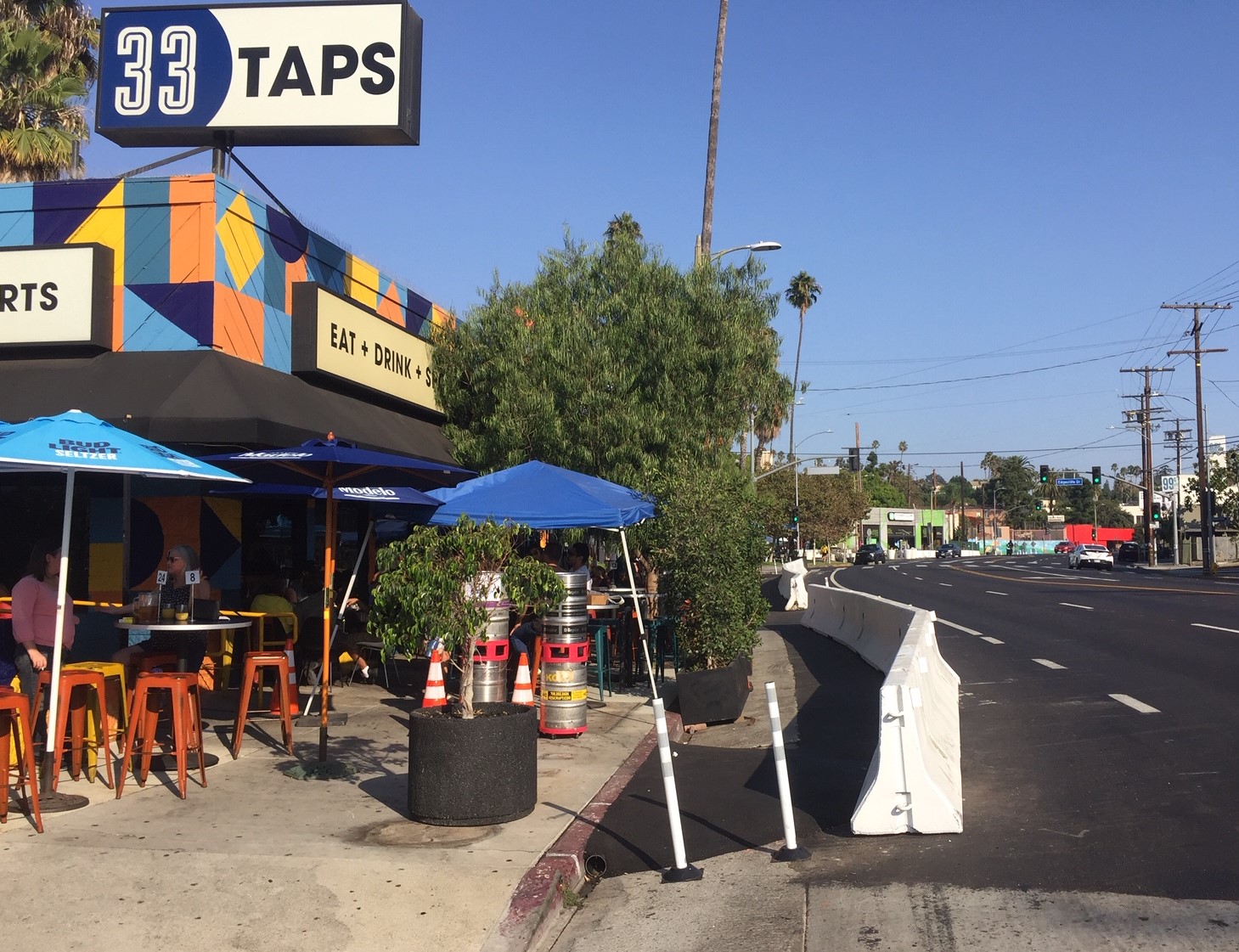
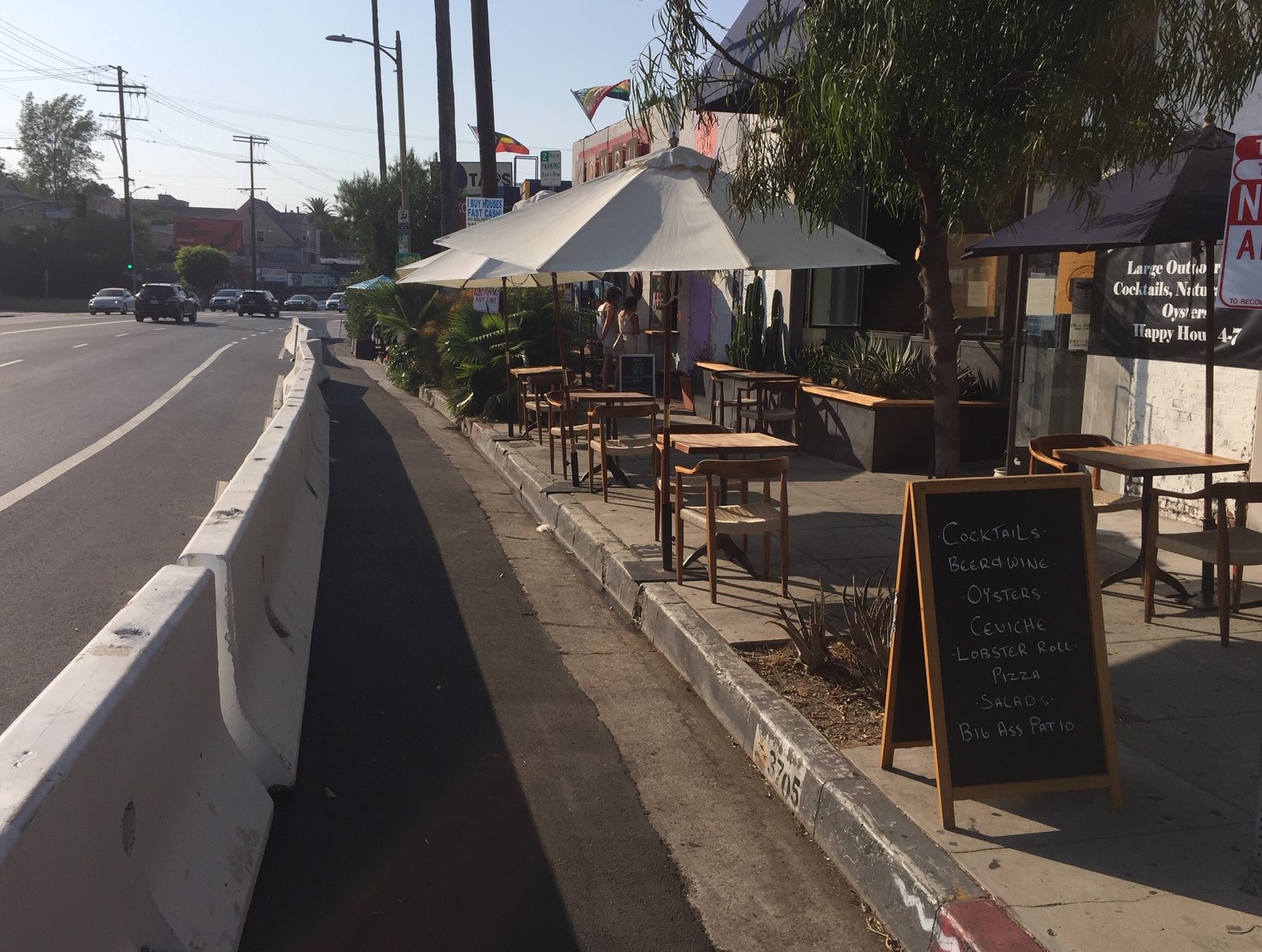
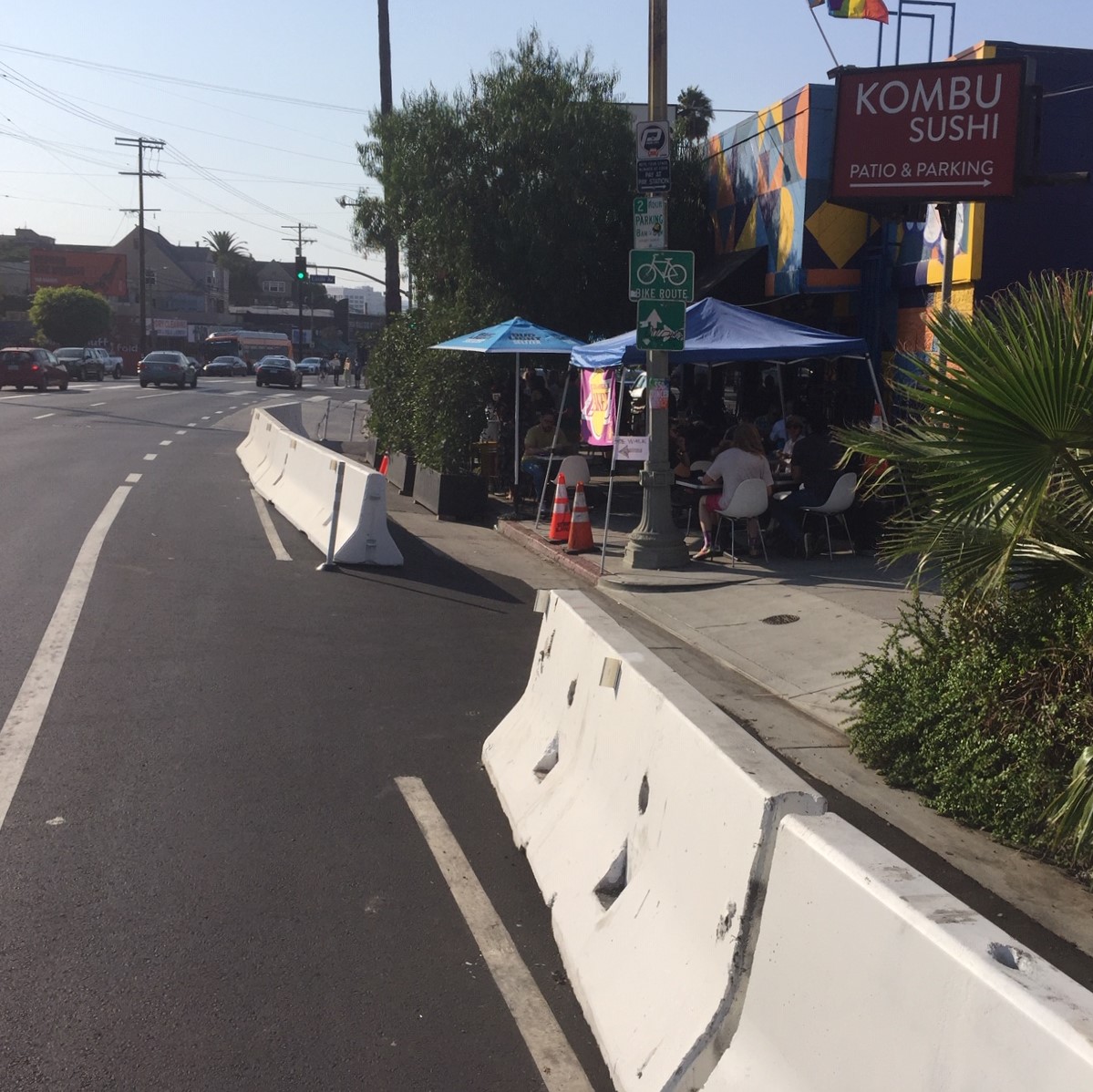
Though some have been critical of the still-inadequate space for pedestrians, at least the city is re-allocating space from cars to people.
On Magnolia Boulevard in North Hollywood there is a somewhat similar large-scale repurposing.
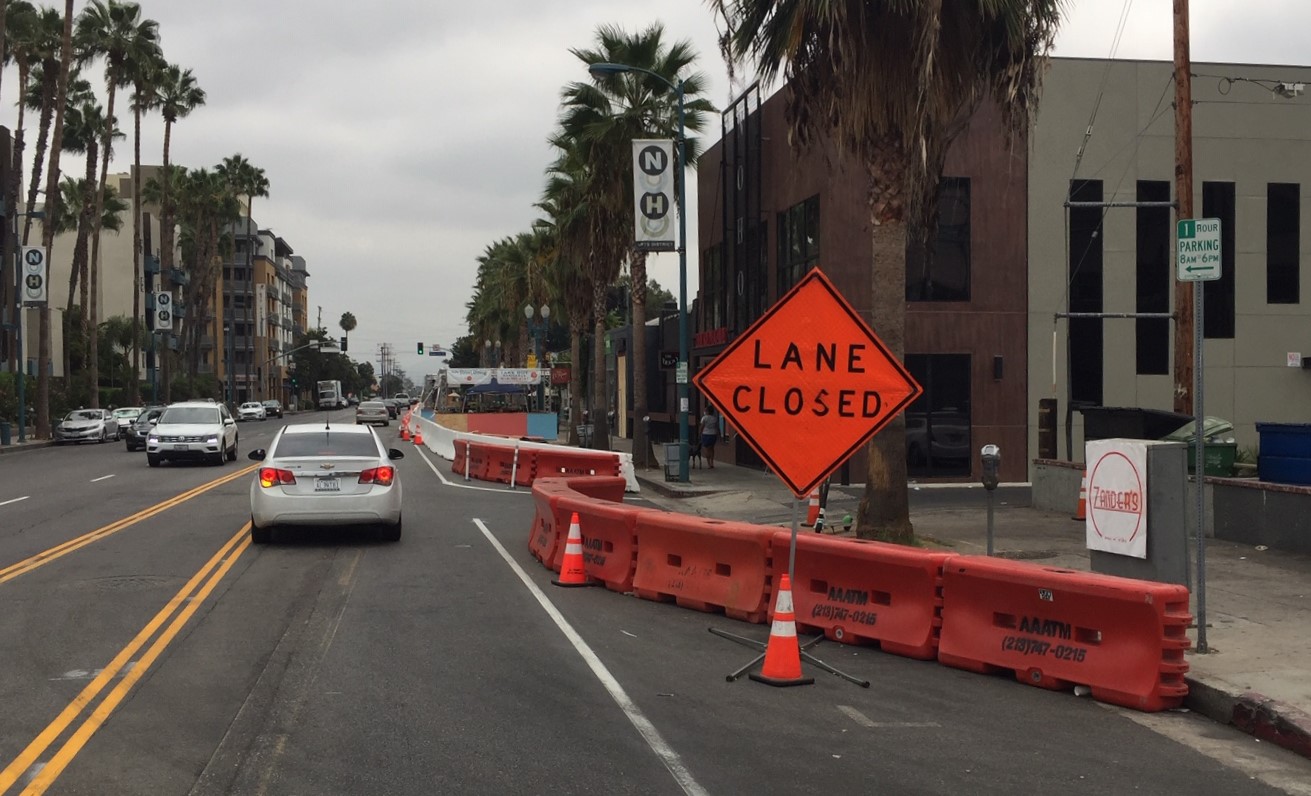
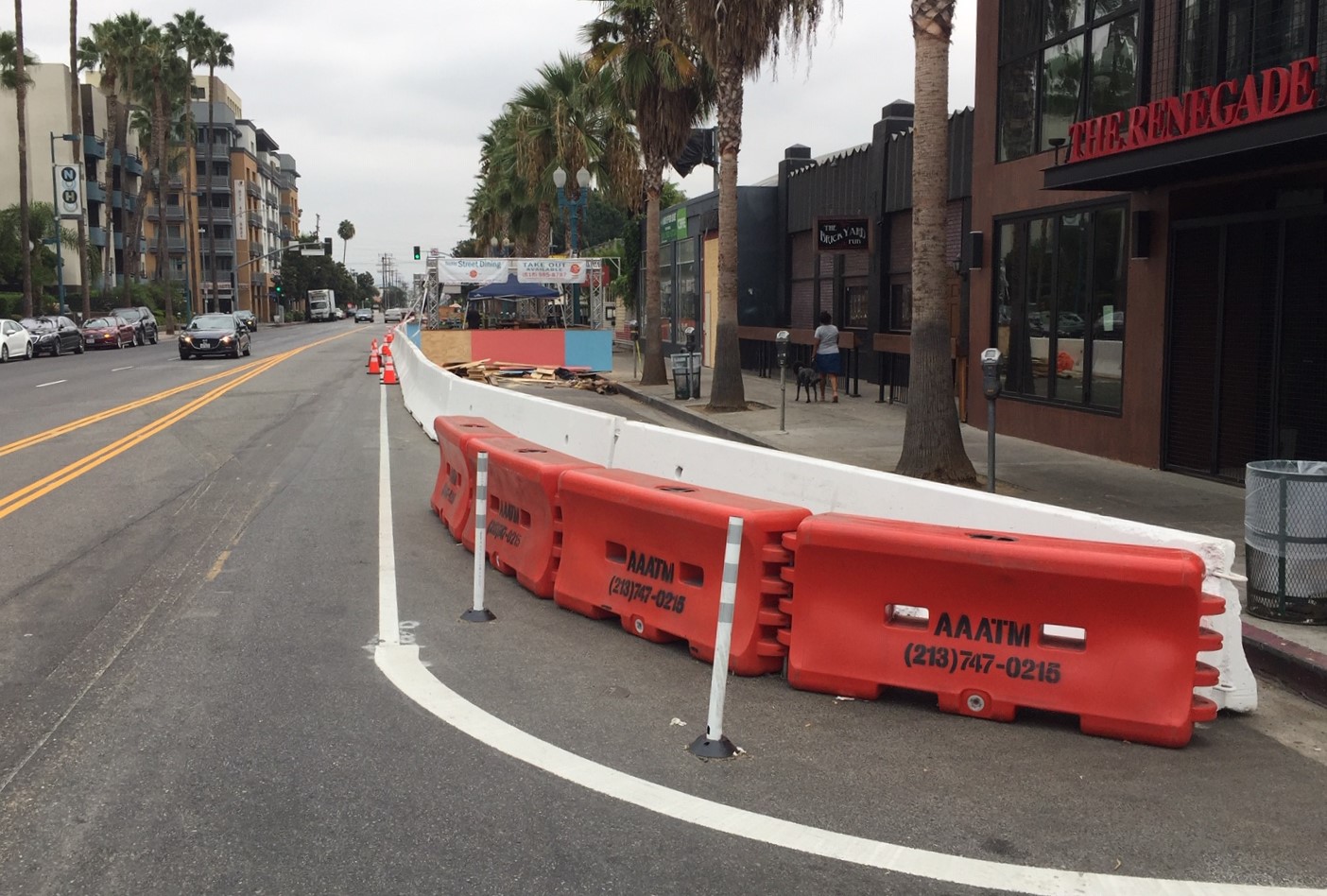
In NoHo, the sidewalk is still for pedestrians, while one lane of parking and one travel lane have been re-allocated to outdoor dining.
Readers – what are your thoughts on expanding space for outdoor dining? Where are the best and worst examples of repurposing space? Are L.A.’s Al Fresco projects a step in the right direction – or is this all just fighting over the crumbs after cars have already been given the lion’s share of street space? How can cities learn from the present situation and re-think streets and parking in the post-COVID-19 future?
Streetsblog has migrated to a new comment system. New commenters can register directly in the comments section of any article. Returning commenters: your previous comments and display name have been preserved, but you'll need to reclaim your account by clicking "Forgot your password?" on the sign-in form, entering your email, and following the verification link to set a new password — this is required because passwords could not be carried over during the migration. For questions, contact tips@streetsblog.org.