Bill to Incentivize Bike Parking in New Housing Moves to State Senate

Building parking is expensive, and drives up the cost of housing, even affordable housing, especially where cities require a minimum amount of parking to be built per unit. Research shows that a lot of this parking is unnecessary, and in response some cities have reduced or eliminated their minimum parking requirements.
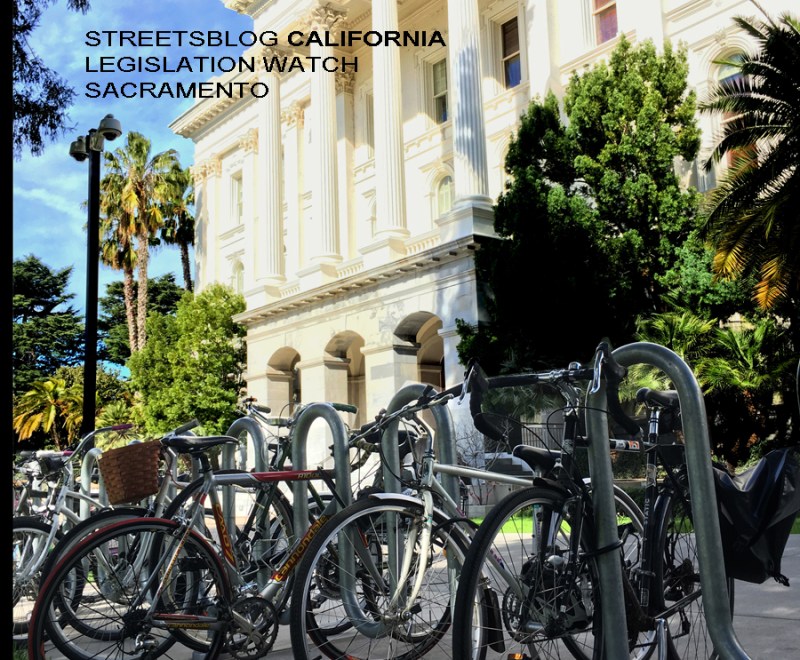
State law generally leaves rules on minimum numbers of spaces to local discretion, but a bill sponsored by the California Bicycle Coalition that was passed by the Assembly today would change that, slightly. It would require cities to allow housing developers who provide parking for either bikes or car-share in new buildings to reduce that parking requirement. This in turn would reduce the cost of building that housing as well as give residents a safe place to store their bike, making it more likely that they will own and use one.
A.B. 3153, said its author Assemblymember Robert Rivas (D-Hollister), “challenges us to think creatively about parking. It would provide flexibility on meeting parking requirements if [developers] provide bike or car share parking.”
“Minimum parking requirements can drive up the cost of housing, and reduce the number of units that are built,” he said. Also, providing a safe place to keep a bike “could encourage more biking and less driving… which is certainly what we need in this state.”
He said the bill originated with a constituent, who sent it in as part of “our first ever ‘There Ought to Be a Law’ program” that reached out to California residents for bill ideas.
Its passage in the Assembly, said CalBike Executive Director Dave Snyder, “sends an unmistakable statement about where legislators would like to put their transportation priorities.”
Under A.B. 3153, a city or county must allow a developer to reduce the number of required vehicle parking spaces by two spaces for every one guaranteed car-share space, and by at least one – but no more than two – spaces for every four long-term bike parking spaces.
Long-term spaces could be lockable enclosures, bike rooms, or lockers with permanently anchored racks, for example.
The incentive is capped at fifteen percent of parking spots for affordable housing and market-rate developments close to transit, and at thirty percent for affordable housing close to transit. Cities that already require a certain amount of bike parking, like Davis, can count those minimums towards fulfilling this percentage.
Of course, nothing is stopping a developer from providing more bike parking, nor a city from encouraging that.
The bill passed in the Assembly today on a vote of 52-11, with Assembly Transportation Chair Jim Frazier (D-Oakley) sitting it out.

Read More:
Streetsblog has migrated to a new comment system. New commenters can register directly in the comments section of any article. Returning commenters: your previous comments and display name have been preserved, but you'll need to reclaim your account by clicking "Forgot your password?" on the sign-in form, entering your email, and following the verification link to set a new password — this is required because passwords could not be carried over during the migration. For questions, contact tips@streetsblog.org.