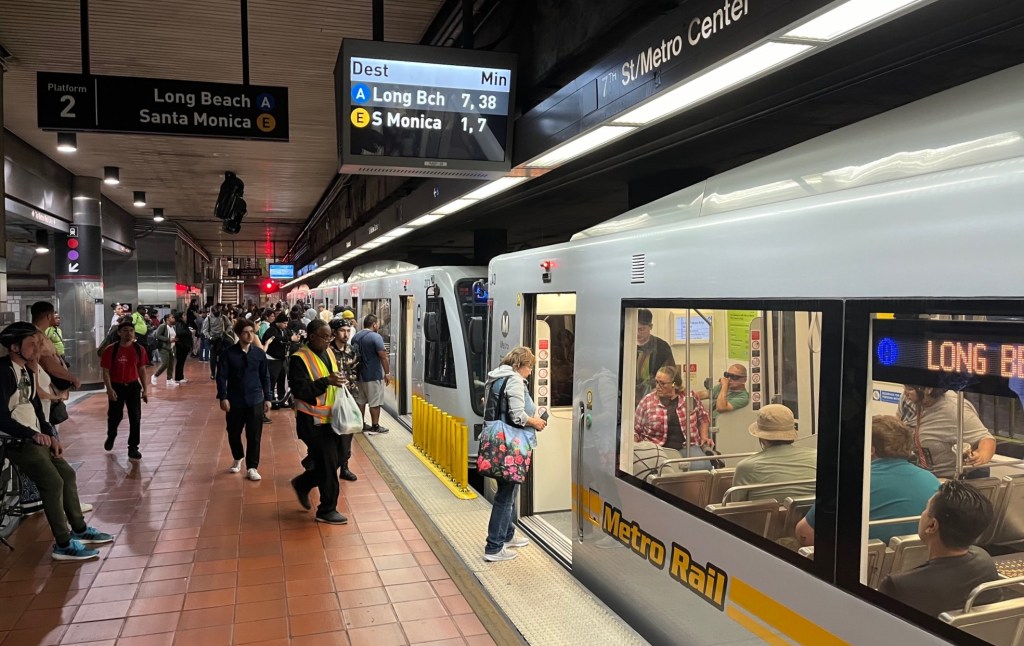
New Safe Streets Advocacy Guide from L.A. Walks and Best Start

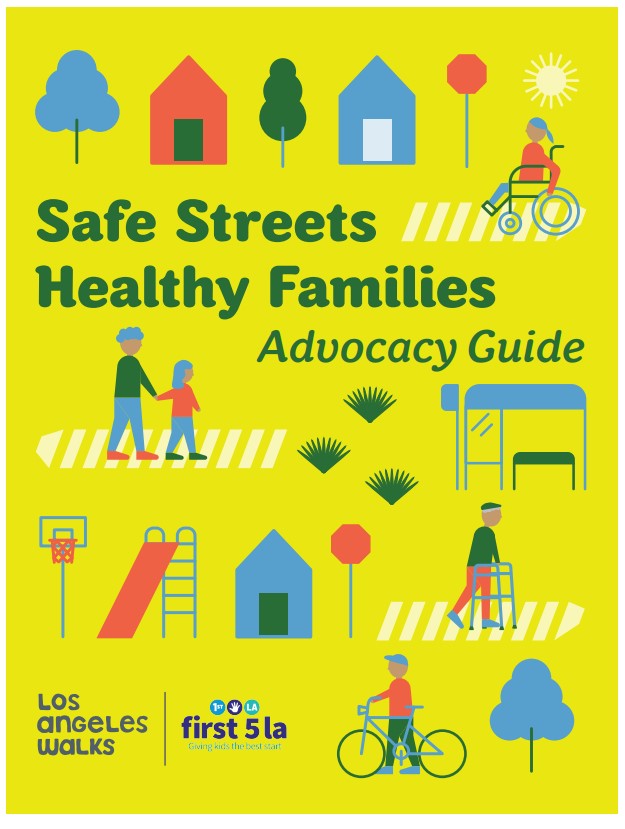

There is a new guide available for neighbors wanting to improve their streets. Safe Streets, Healthy Families Advocacy Guide was created by Los Angeles Walks, Best Start Metro L.A., Best Start Panorama City, and Best Start Wilmington partnering with Para Los Niños, Providence Health & Services, El Nido Family Centers, and First 5 Los Angeles.
In her introduction to the report, First 5 L.A. Executive Director Kim Belshé stresses that L.A.’s families need thriving communities where “children learn to engage with the world around them,” and “an important part of a thriving community is a walkable neighborhood that promotes physical activity and a safe environment where children can get to school, medical services, and outdoor recreation.”
In an email to Streetsblog, L.A. Walks Executive Director John Yi states, “This guide serves as both a legacy of the great community organizing work of our partners and a roadmap for other communities to come.” The introduction to the guide states:
Safe Streets, Healthy Families was created for residents who want to see safer streets and who support the pedestrian experience. The streets of Los Angeles have been designed to give priority to vehicular traffic, not to the diverse users of the street like people who walk. For example, the children who walk to school, the mothers who cross wide avenues to connect to public transit, or the grandparents who walk with their grandchildren to the park all use the streets of Los Angeles daily. We deserve our streets to be safe so that families who use them daily can walk safely and live healthy lives.
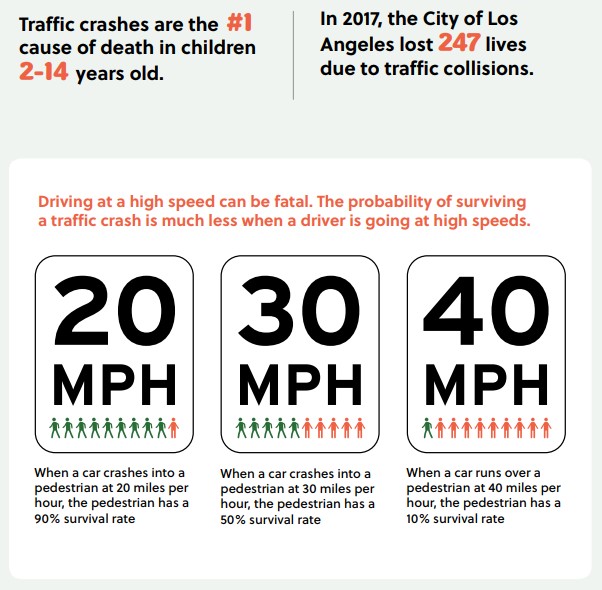
The guide lays out some basic traffic safety facts – regarding car crashes, speed, Vision Zero, and L.A. City’s High Injury Network streets.
The guide then highlights three local examples of safe streets advocacy – from seeking funding for an improved crosswalk to hosting a block party.
Then the guide spells out a step-by-step process for identifying problems, organizing, meeting, growing capacity, and making change happen.
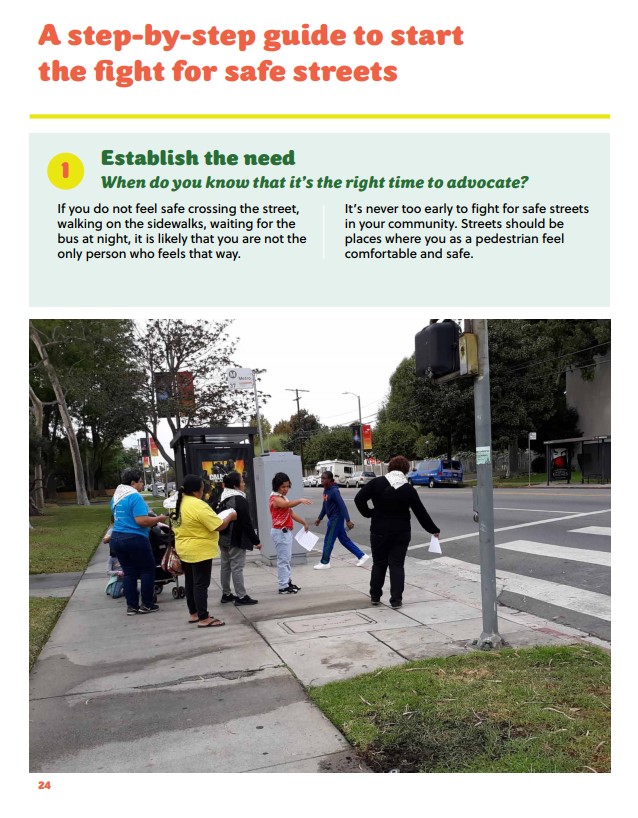
The guide is filled with great photos, tips, tools, and resources – and it is all in easy-to-understand jargon-free language.
Belshé, in her introduction, invites “government and business leaders, and community members” to use the new guide to “partner with others to take action to support safe streets and healthy families… [to] make things work better for children and their families in Los Angeles County.”
Read More:
Streetsblog has migrated to a new comment system. New commenters can register directly in the comments section of any article. Returning commenters: your previous comments and display name have been preserved, but you'll need to reclaim your account by clicking "Forgot your password?" on the sign-in form, entering your email, and following the verification link to set a new password — this is required because passwords could not be carried over during the migration. For questions, contact tips@streetsblog.org.