Bill to Allow Bikes to Treat Stop Signs as Yield Signs Spiked

Note: GJEL Accident Attorneys regularly sponsors coverage on Streetsblog California. Unless noted in the story, GJEL Accident Attorneys is not consulted for the content or editorial direction of the sponsored content.
Last week, the authors of a bipartisan bill that could have brought the so-called Idaho Stop to California—wherein bicycle riders could treat stop signs as yield signs—was amended to instead create a pilot program in three cities rather than statewide. A controlled pilot program would have had the added benefit of providing much-needed safety data, but even that wasn’t enough for insurance industry representatives, who remained opposed to the idea. This is despite the law having been in place in Idaho for many years, and despite Delaware’s recent adoption of a similar law.
The authors, Assemblymembers Jay Obernolte (R-Big Bear) and Phil Ting (D-San Francisco), opted to pull the bill in the face of the opposition. Because there is a deadline for last year’s bills to be passed by their house of origin by Friday, that effectively kills it.
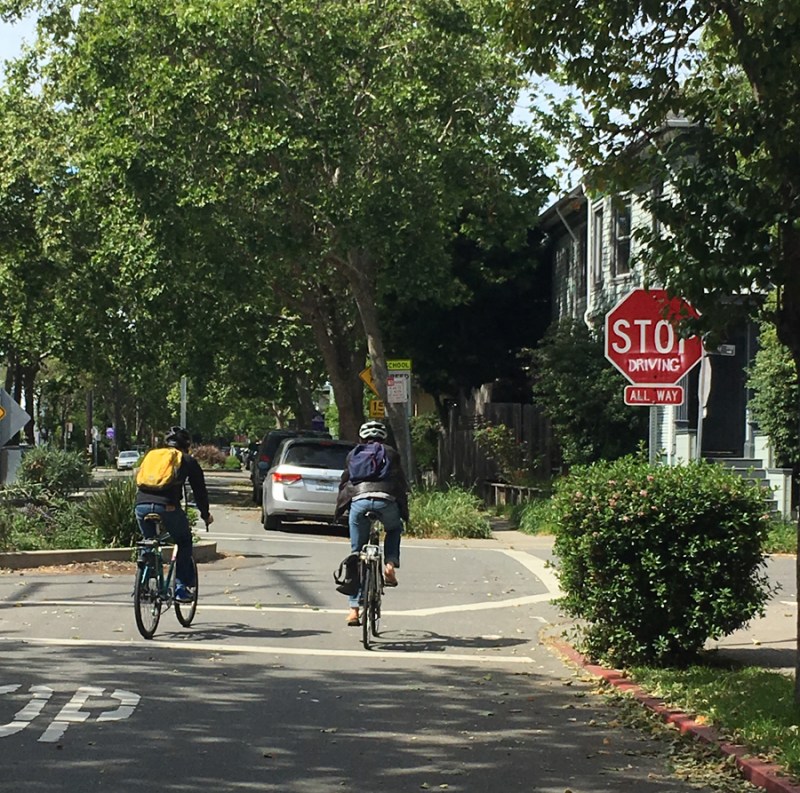
The proposed change to state law would have recognized that stop signs are part of a traffic control system designed for cars, which approach and move through intersections differently than people on bikes. Although the idea seems to anger people who don’t ride bikes, it shouldn’t. The law would not create a free-for all, and would still require caution by bicycle riders at intersections. It just doesn’t require them to come to a full stop. Allowing a bicycle to yield at a stop sign brings many benefits to all road users: it can help a bicyclist maintain momentum, keep better control of the bicycle, and move through an intersection more quickly and efficiently, avoiding unnecessary collisions.
In his testimony on the bill last May, Assemblymember Obernolte pointed out that “this bill does not change the rules on right of way. The problem is, it’s against the law to do what most bikes do. . . because of the physics of riding bikes.”
“Bikes are not cars; they have very different strengths, and very different weaknesses. To treat them the same is doing a disservice to everyone in California,” he said.
The California Bicycle Coalition had pointed out that if California is serious about encouraging bicycling as a regular mode of travel, it needs to recognize that penalizing bike riders with unnecessary enforcement at stop signs has the opposite effect.
But all the opposition could see was potential chaos, which they blame on people who are not in cars. For example, the California Teamsters objected that “this bill would insert unpredictability into the traffic safety equation, and our members, driving 80,000 pound vehicles, would be left to wonder whether any approaching bicyclist is going to stop or dart out into the intersection.”
Much of the opposition, as expressed in letters to the bill’s authors, focused on unfounded fears and assumptions that changing the rules as they now stand would be unsafe and “detrimental to all road users,” as AAA put it. Rather than seeing that a pilot program could test the idea and provide important safety data, they charged that creating “different rules across local jurisdictions” would just confuse people.
Dave Snyder of Calbike responded to the death of the bill graciously. “We are grateful for Assemblymembers Obernolte and Ting for trying to insert some common sense into traffic law,” he said. “It’s a hard sell. We learned some lessons about how to promote this idea and look forward to future efforts.”

Read More:
Streetsblog has migrated to a new comment system. New commenters can register directly in the comments section of any article. Returning commenters: your previous comments and display name have been preserved, but you'll need to reclaim your account by clicking "Forgot your password?" on the sign-in form, entering your email, and following the verification link to set a new password — this is required because passwords could not be carried over during the migration. For questions, contact tips@streetsblog.org.